
Blanchard & Rotary Surface Grinding Coolants and Oils
Explore Blanchard and rotary surface-grinding fluids, segmented abrasives, magnetic and nonmagnetic workholding, coolant delivery, flatness, parallelism and finish.
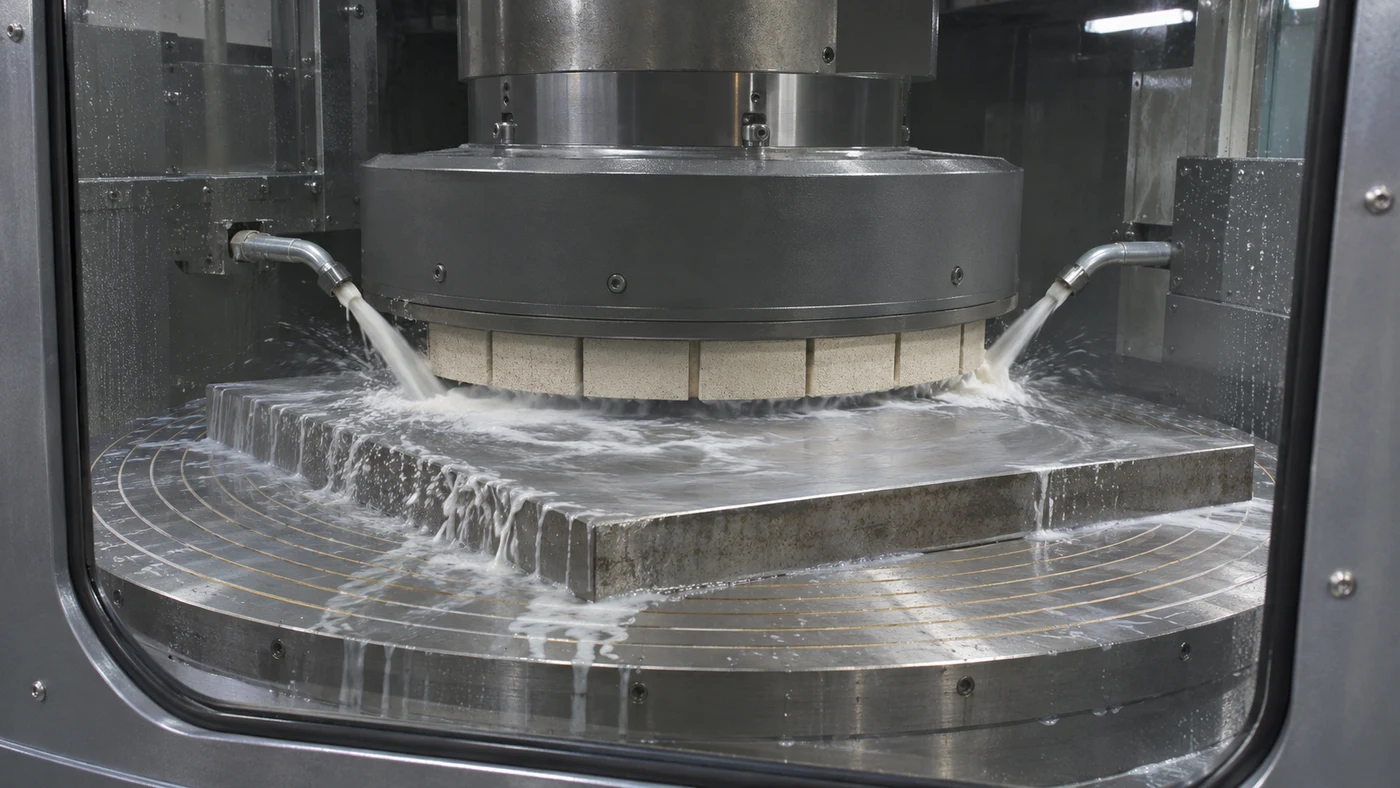
Watch: Blanchard & Rotary Surface Grinding Coolants and Oils
Blanchard & Rotary Surface Grinding
Blanchard is a machine brand, and its name is also commonly used when discussing vertical-spindle rotary surface grinding. The work is carried on a rotating table while the working face of the abrasive removes material from the exposed surface. This differs from a typical horizontal-spindle process that uses a wheel's periphery above a reciprocating table. Plates, rings, machine components and suitable batches of parts can be candidates, but the actual machine, abrasive and holding arrangement define the application. Begin with the drawing. Identify the material condition, incoming shape, stock allowance, finished thickness and the required flatness, parallelism and surface finish. Those are related requirements, but they are not interchangeable. QA has coolant and grinding-oil options for evaluation with the permitted machine configuration and the actual material. This guide focuses on the process questions needed for that review, rather than providing universal settings.
Review the Table Load and Working Contact
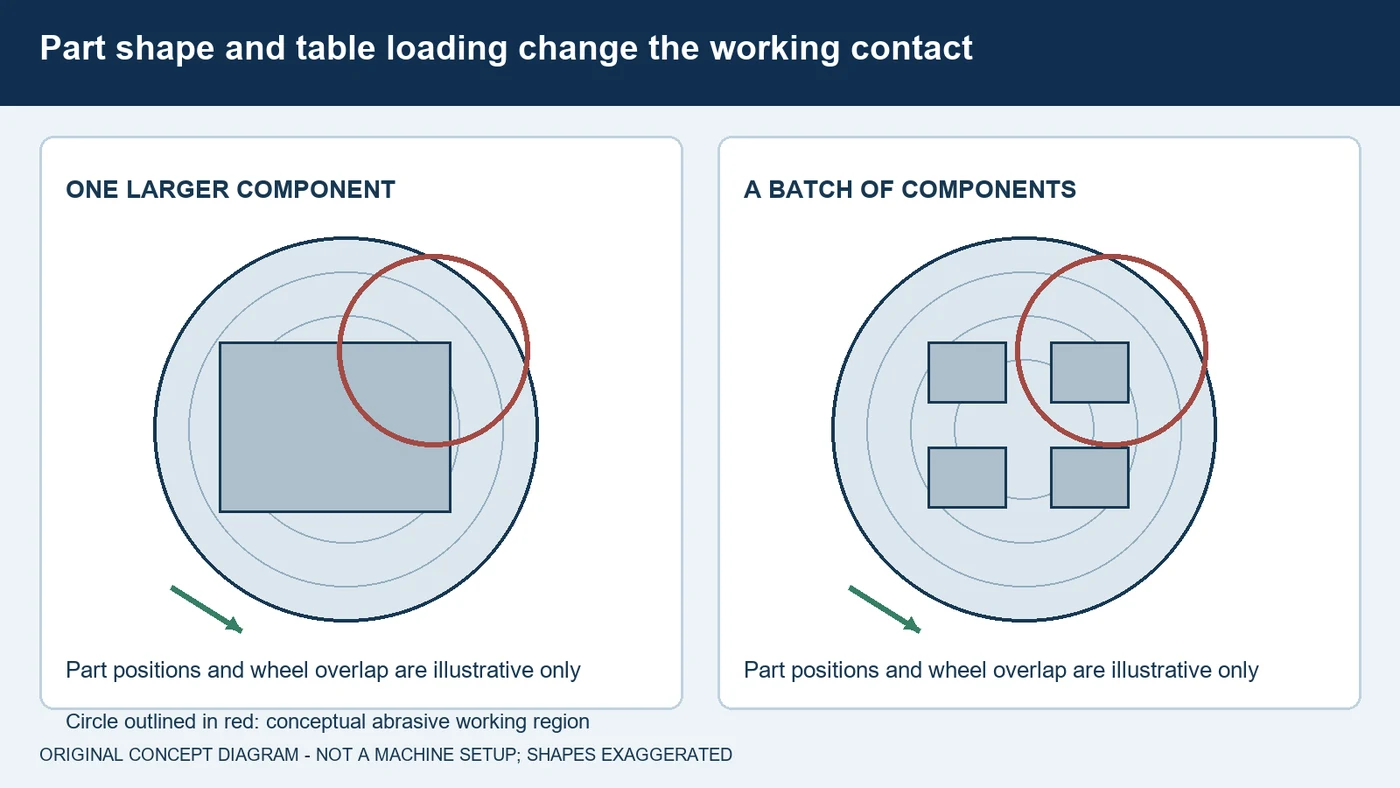
A rotary table repeatedly carries the work through the abrasive's working region. One large plate and a batch of smaller parts do not necessarily present the same contact or load. The part outline, openings, thickness and positions can change how much material engages the abrasive through a revolution. Record the complete loading arrangement when comparing results. Do not transfer a removal rate from another batch without reviewing the differences. Confirm machine capacity, permitted part envelope and the abrasive's supported contact with the equipment suppliers. Wheel size, table size and machine power are not universal instructions for arranging parts. Keep stops, fixtures and fluid access in the approved configuration. Review incoming stock consistency as well: a changing allowance or initial shape can make a documented process appear unstable. A useful coolant trial compares a known loading arrangement and accepted-part measurements instead of relying on visible spark or spindle sound alone.
Match the Chuck and Support to the Part
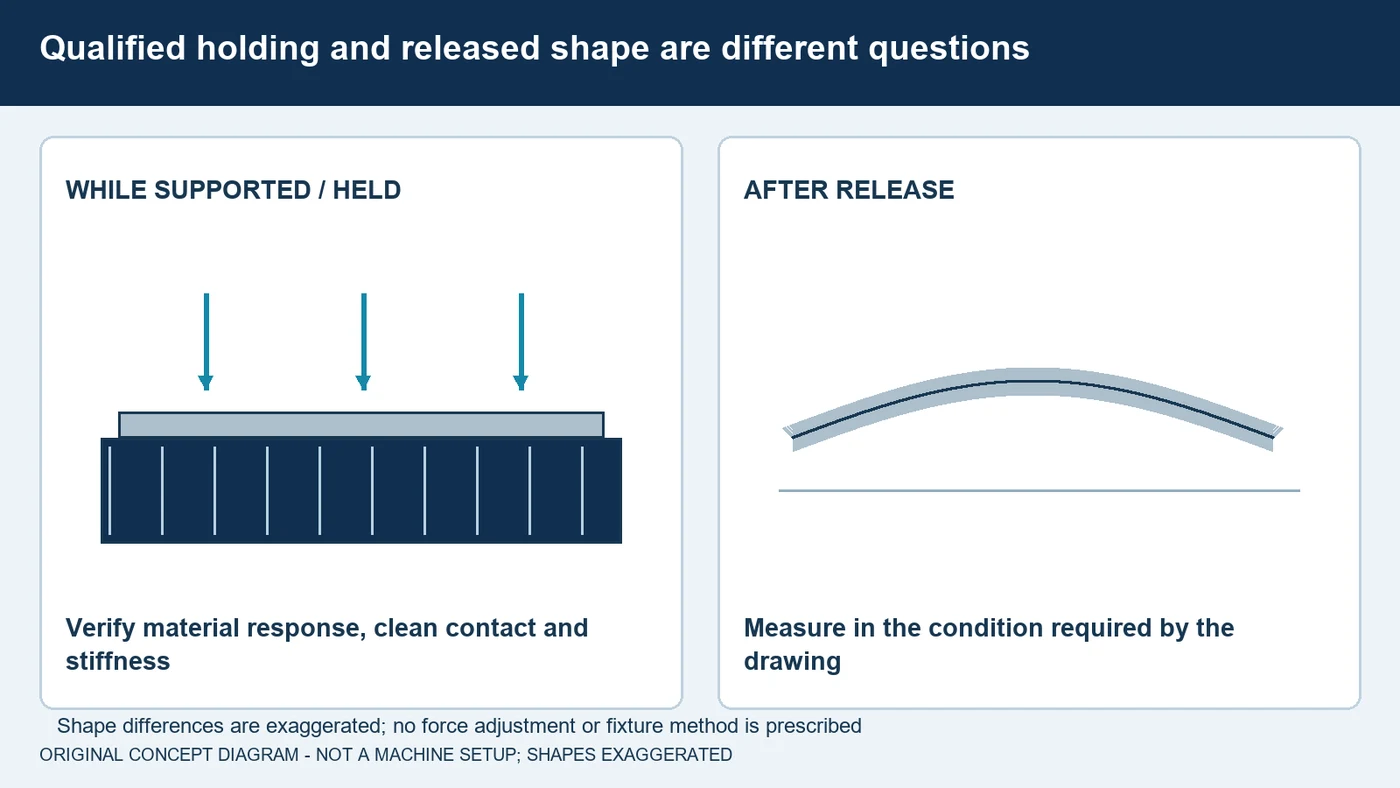
A magnetic chuck is suitable only when the work and the complete arrangement provide the required holding capability. Material response, part thickness, contact area and surface condition matter. Aluminum and many stainless grades cannot be treated as ordinary ferromagnetic steel. They may need a qualified mechanical, vacuum or other workholding arrangement supported by the machine. Keep the chuck and contact surfaces clean and in their specified condition. Burrs, trapped debris or an unsuitable support can affect how a part sits. Thin or initially distorted components need particular care because the held shape may differ from the released shape. Define how the part will be supported and inspected after grinding, according to the drawing. Do not improvise a magnetic-force reduction or fixture change to chase flatness. Ask the equipment and workholding suppliers to qualify the arrangement, including any required release or demagnetization procedure.
Treat Segments, Holders and Dressing as a System
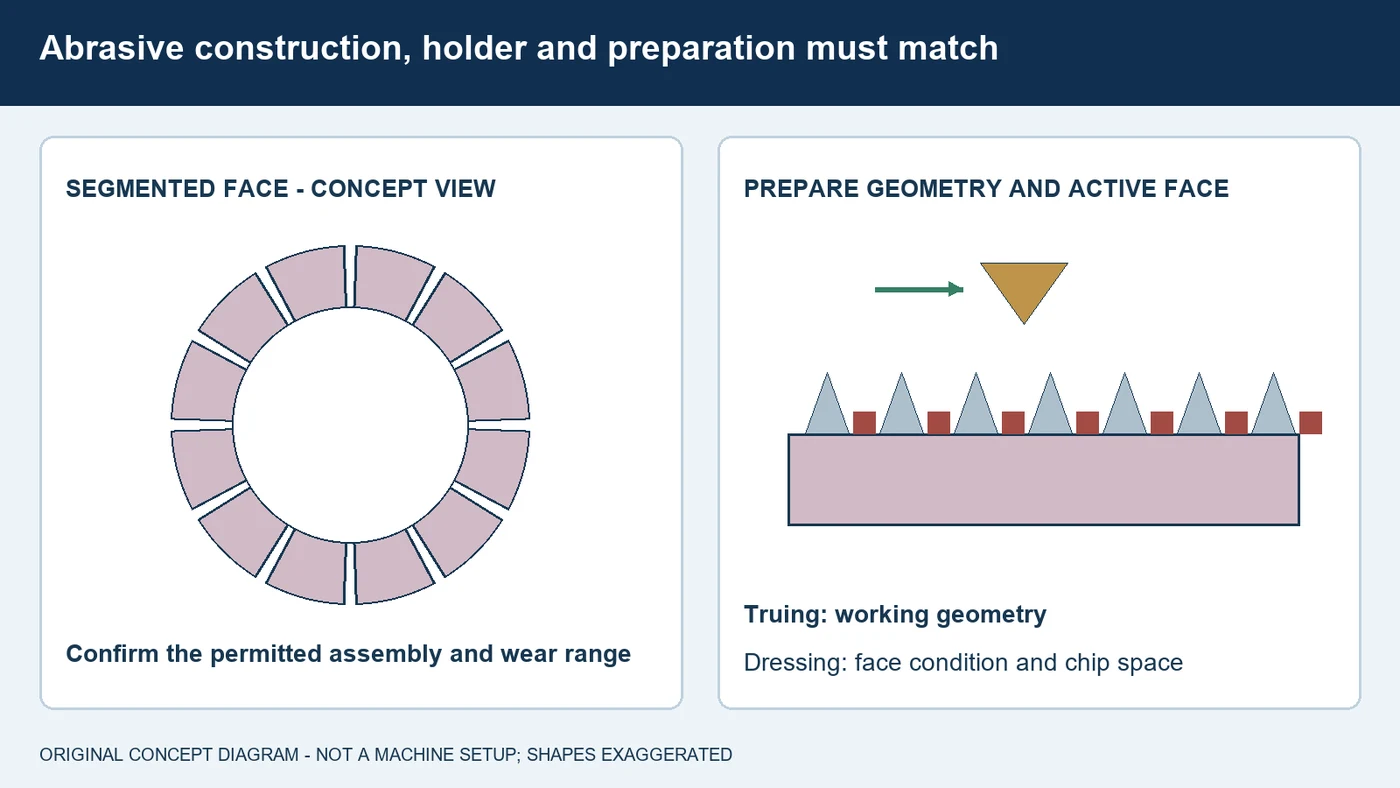
Vertical-spindle rotary grinders may use abrasive segments, solid or slotted rims, or other machine-specific wheel constructions. These are not interchangeable merely because their nominal diameters appear similar. Confirm the holder, mounting system, operating limits and permitted wear range with the machine and abrasive suppliers. A segment adjustment or replacement must follow the actual assembly instructions. Choose the abrasive specification around the material, stock removal, working contact and required result. Conventional and superabrasive systems have different application and preparation requirements. Truing concerns working geometry, while dressing renews the active face and chip space; the supported method depends on the abrasive and bond. Loading, glazing, uneven wear and dresser condition can all influence the process. Document those conditions before changing fluids. A coolant comparison is more useful when wheel preparation and the incoming work remain controlled and the accepted finish is measured.
Reach the Face Contact and Return the Swarf
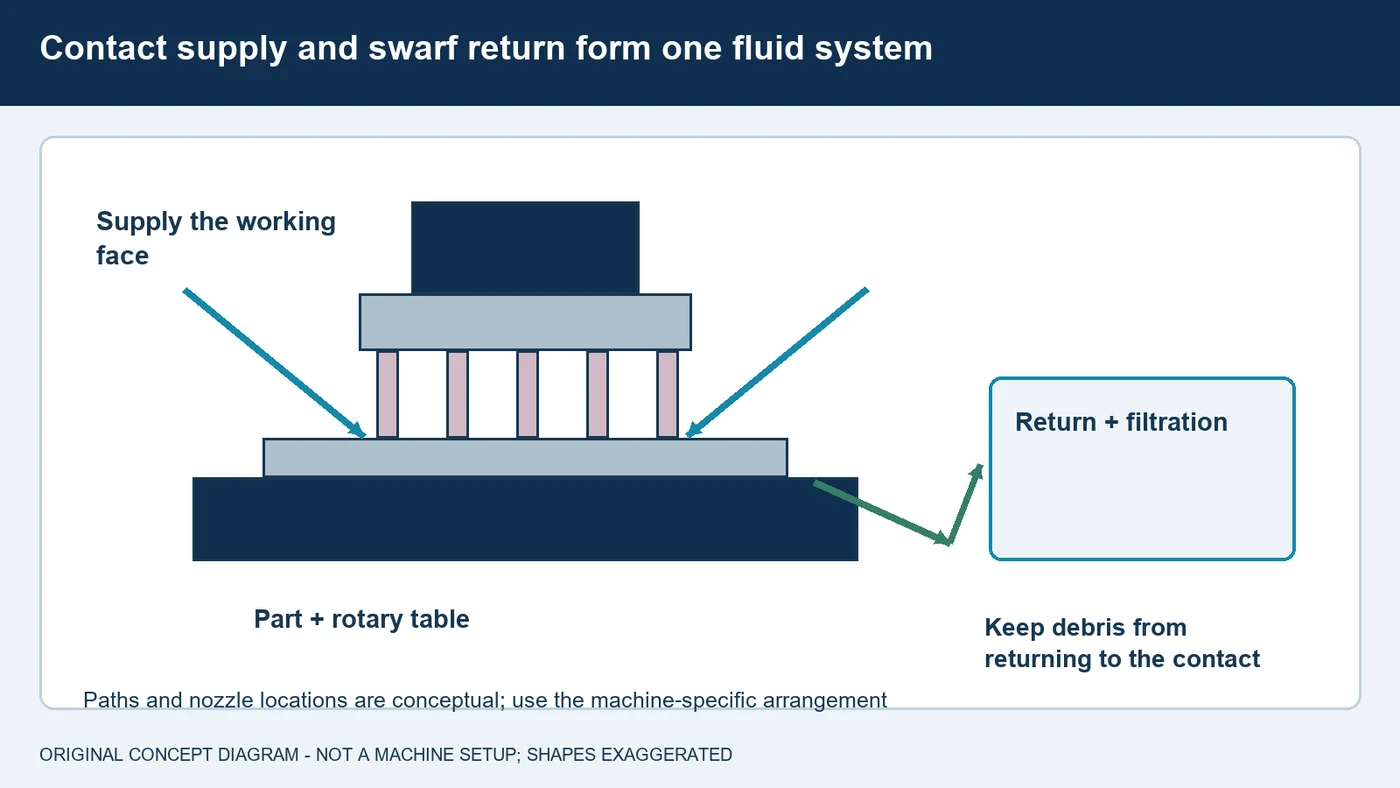
The visible outside of a rotary grinder can be wet while delivery to part of the working contact remains inadequate. Review supply with the table, work and abrasive in their actual operating positions. Large parts, fixtures and changing contact can influence where fluid reaches the face and how grinding debris leaves. The supply arrangement may need to serve several duties, including process cooling, wheel cleaning and flushing swarf toward the return system. Coordinate those duties with the machine and nozzle suppliers instead of treating all visible splash as useful contact supply. Keep drains, returns and the filtration system in the process review. A blocked return or accumulated sludge can change the condition of fluid reaching the wheel. Use only the supported nozzle arrangement and operating procedure; increasing pressure or flow by itself is not a complete solution. Record delivery conditions during the trial so their effects are not mistaken for a formulation change.
Select and Maintain the Actual Grinding Fluid
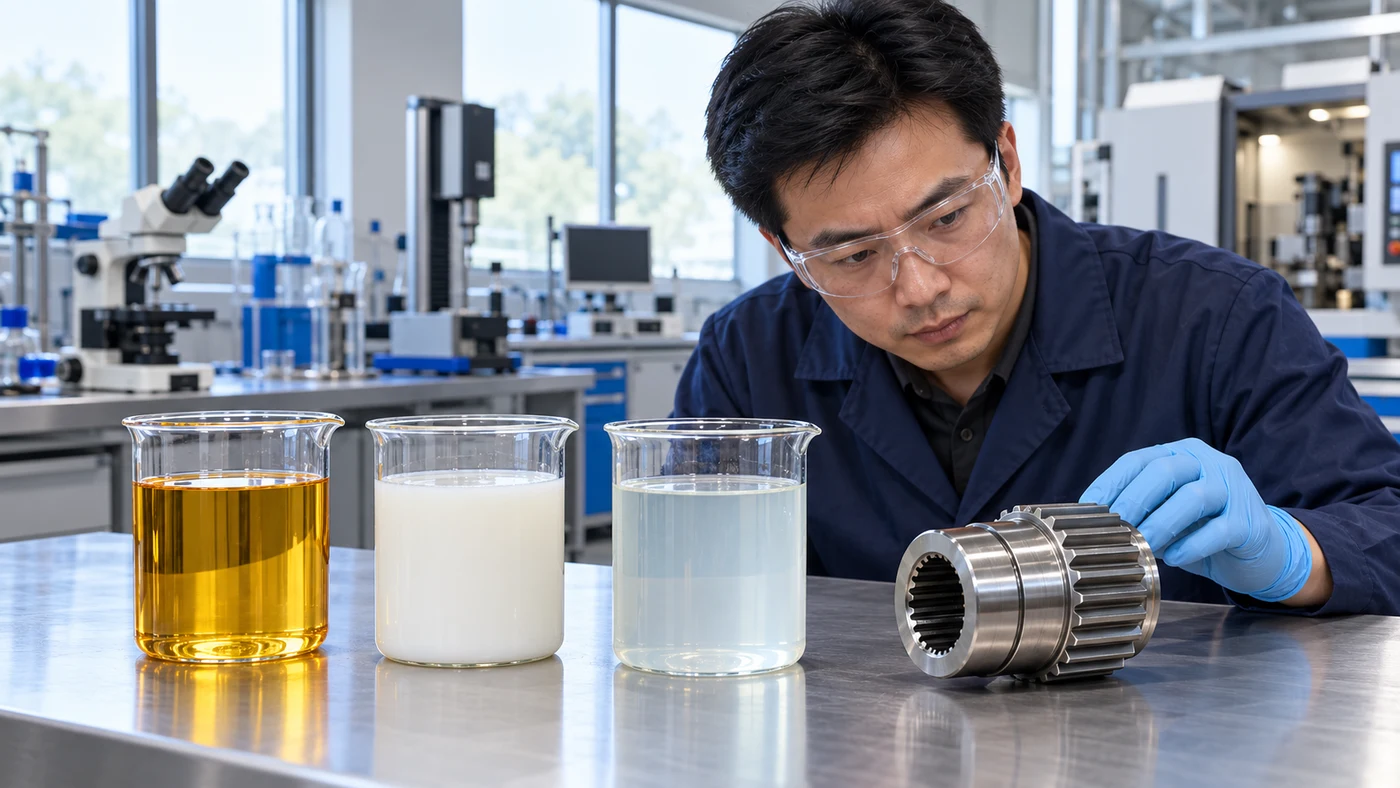
The machine manufacturer's permitted fluid types are the starting point. Within those limits, evaluate the actual formulation for lubrication, heat removal, corrosion protection, foaming, residue and subsequent cleaning. A product-family name does not establish its suitability for every rotary surface-grinding application. Include all materials sharing the system and verify compatibility with the abrasive bond and filtration equipment. Aluminum and copper alloys need application-specific staining checks. Cobalt-bonded carbide requires an explicit review of binder compatibility. For a water-miscible product, use the specified water quality, mixing procedure and concentration range, including the product's refractometer factor where required. Remove abrasive and metal particles before fluid returns to the contact. Maintain the machine's specified temperature-control and stabilization conditions, including the chuck where applicable. QA has coolant and grinding-oil options for evaluation; confirm the permitted formulation and the maintenance plan with the suppliers before the production trial.
Verify Thickness, Flatness and Parallelism Separately
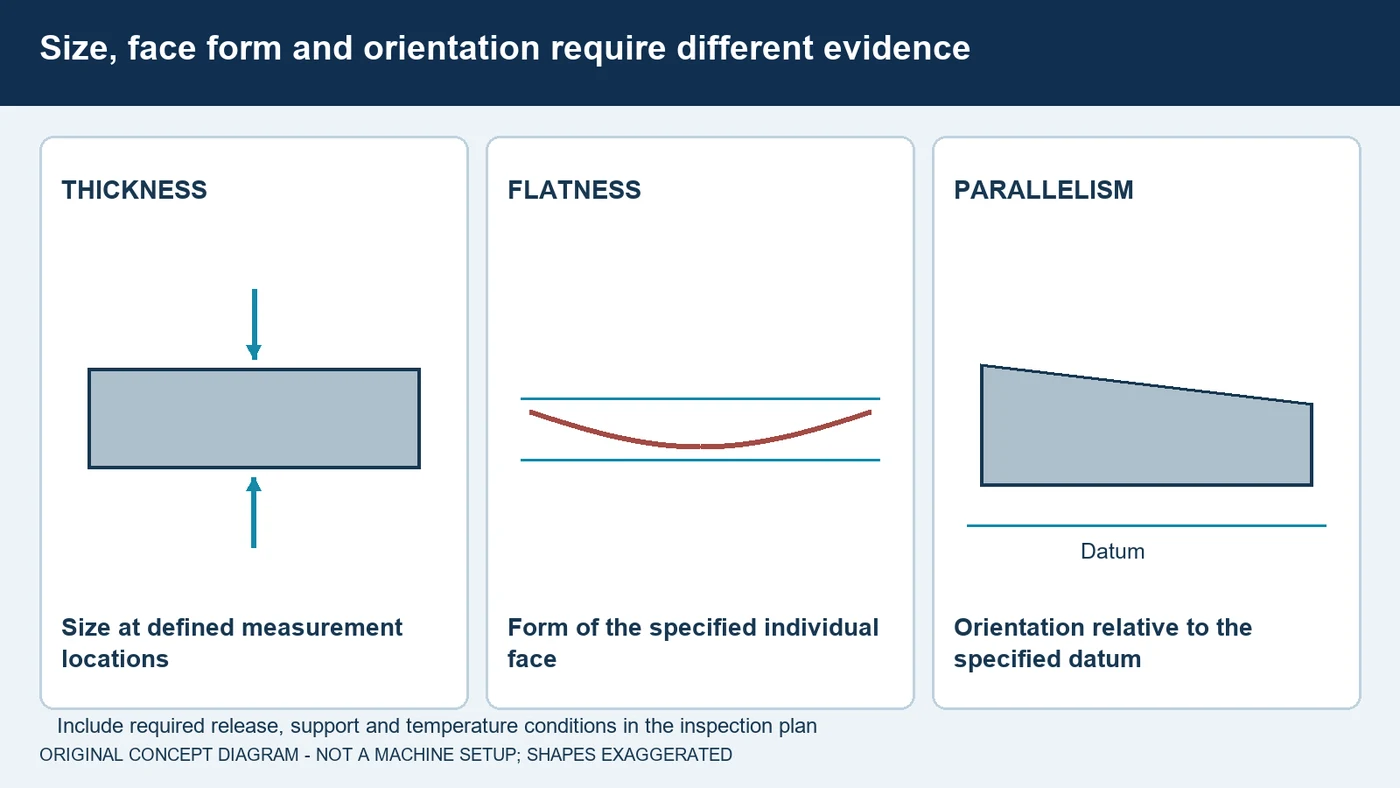
A characteristic rotary grinding pattern is not proof of flatness, parallelism or acceptable surface integrity. Define an inspection plan that resolves the drawing's different requirements. Thickness at a few locations, the form of one face and the relationship between two faces provide different information. Record the support condition, datum scheme and temperature when those affect the measurement. A part that changes shape after release or cooling needs investigation of the complete process, including workholding, initial condition, stock removal and thermal effects. A supported multi-step or two-face strategy may be appropriate, but it must be qualified for the actual component rather than copied as a fixed sequence. If there is chatter, size drift, scratching or a thermal concern, review machine condition, abrasive preparation, fluid supply and cleanliness as possible contributors. Make a documented change, then repeat the relevant acceptance measurements before approving the result.
Bring QA the Complete Rotary-Grinding Job
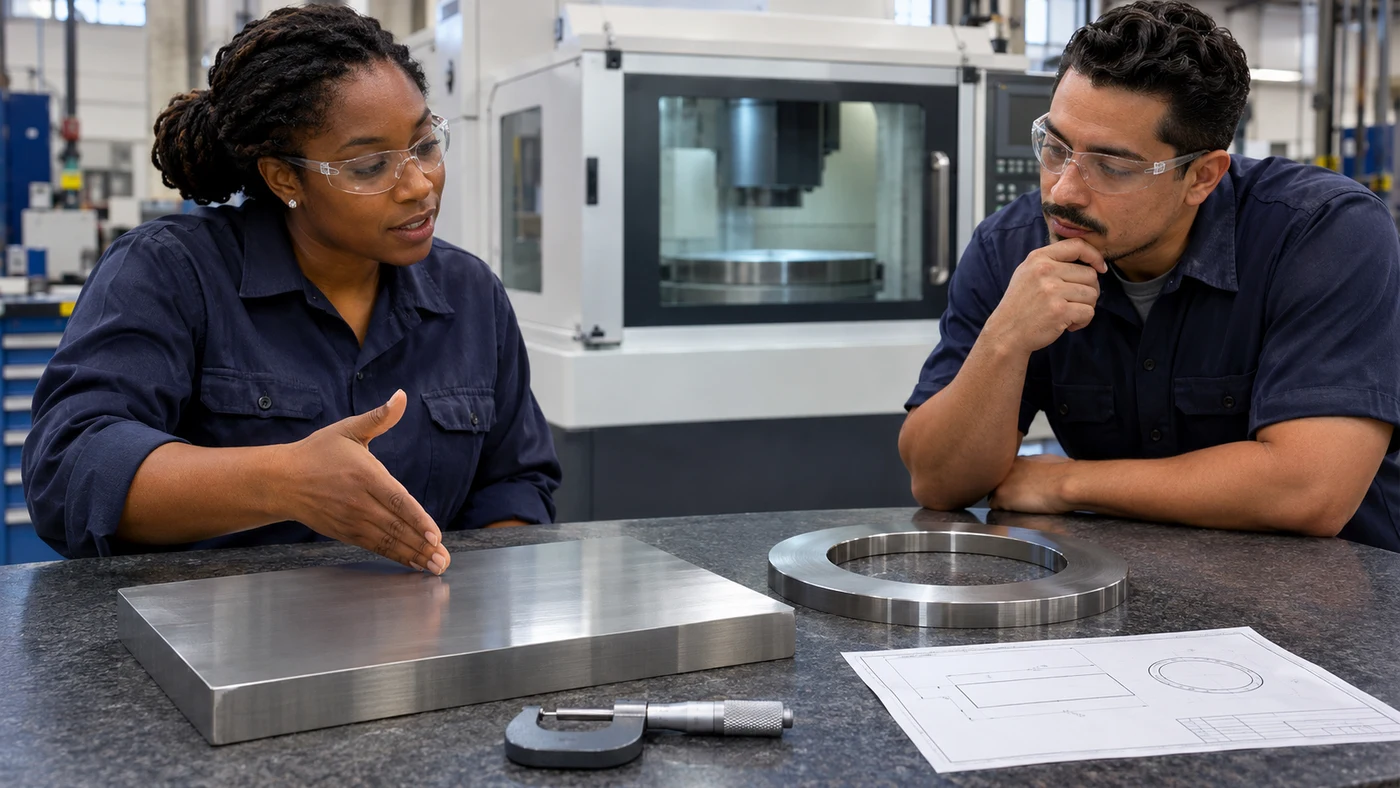
For a Blanchard or rotary surface-grinding inquiry, send QA the part drawing, material grade and condition, incoming shape, stock allowance and required thickness, flatness, parallelism and finish. Describe whether the machine handles a single component or a batch, and include the supported loading and workholding arrangement. Provide the abrasive and holder details, dressing procedure, current fluid, actual supply and filtration information. For diluted coolant, include water quality and concentration readings. Explain how parts are released, cleaned and inspected, and identify the specific issue you want to improve. QA has coolant and grinding-oil options and can help evaluate a suitable formulation with the permitted machine setup. Agree on the trial conditions, preserve the before-and-after measurements and compare accepted parts under consistent inspection conditions. Confirm the final fluid and operating instructions with the relevant suppliers before adopting the revised process.
Fluid selection by material
Use these as evaluation questions, not blanket product approvals.
| Material | What to evaluate | What to confirm |
|---|---|---|
| Carbon, alloy and tool steels | Evaluate the formulation for the actual hardness, contact and thermal requirements. | Abrasive specification, stock allowance, chuck arrangement and required inspection. |
| Cast iron | Review fine-swarf handling, cleanliness and corrosion protection. | Incoming condition, support, filtration and accepted finish. |
| Stainless steels and nickel alloys | Confirm alloy-specific abrasive and fluid compatibility. | Magnetic response, qualified holding, loading, delivery and downstream cleaning. |
| Aluminum and copper alloys | Verify nonstaining chemistry and an approved nonmagnetic holding arrangement. | Material condition, abrasive loading, residues and part stiffness. |
| Cobalt-bonded carbide | Confirm binder compatibility and the supported abrasive-bond system. | Qualified workholding, swarf control, formulation and supplier instructions. |
Questions about blanchard / rotary surface grinding fluids
Is every rotary surface grinder a Blanchard?
No. Blanchard is a machine brand. The name is often used when discussing vertical-spindle rotary surface grinding, but other manufacturers and different machine constructions exist.
What makes rotary face grinding different from a common reciprocating surface grinder?
The process described here combines a rotating work table with the working face of a vertical-spindle abrasive. A common horizontal-spindle reciprocating process uses the wheel periphery. Confirm the actual machine configuration.
Will a magnetic chuck hold aluminum or every stainless steel?
No. Holding depends on the material response and the complete arrangement. Aluminum and many stainless grades need a qualified alternative workholding method.
Does the rotary grinding pattern prove the part is flat?
No. Finish appearance, thickness, flatness and parallelism are different acceptance questions. Use inspection suited to the drawing and its required support and temperature conditions.
Can the same coolant be used on every rotary surface grinder?
No. Start with the fluid types permitted by the machine manufacturer, then review the actual formulation with the work material, wheel bond, delivery, filtration and downstream requirements. QA has fluid options for evaluation.
Should a plate always be ground in the same two-face sequence?
No. The supported sequence depends on initial condition, stock allowance, workholding, stress and acceptance requirements. Qualify the actual process and inspect the part in the required released condition.
Discuss your application with QA
QA Lubricants has coolant and oil options. Send us the operation, alloy, hardness, tooling, current fluid and the problem you want to solve.
Discuss My ApplicationShop Water Diluted CoolantsShop Straight Cutting OilsTechnical references
- Bourn & Koch: Blanchard surface-grinding machine arrangement
- DCM Tech: rotary-table motion and application-specific workholding
- DCM Tech: IG Series rotary surface-grinding applications and maintenance
- Eclipse Magnetics: material, contact and thickness in chuck selection
- Industrial Magnetics: chuck condition and thermal stabilization
- South Bay: conventional and superabrasive face-grinding arrangements
- Noritake: truing and dressing by abrasive and bond
- Norton: wheel, dressing, delivery and machine-condition interactions
- DCM Tech: filtration supplies and grinding coolant as a system
- FUCHS: fluid selection and downstream requirements
- Blaser Swisslube: product-specific coolant concentration measurement
- UNITED GRINDING: fluid cleanliness and thermal regulation
- Master Fluid Solutions: carbide-binder and abrasive-bond compatibility example
- DCM Tech: qualified multi-step grinding and workholding options
Original educational content and illustrations. Confirm current machine, tool and fluid instructions. Trademarks belong to their respective owners.