
Centerless Grinding Coolants & Oils: Through-Feed, In-Feed and Roundness
Explore centerless grinding coolant and oil selection: through-feed and in-feed methods, regulating wheels, work-rest blades, roundness, delivery, filtration and finish.
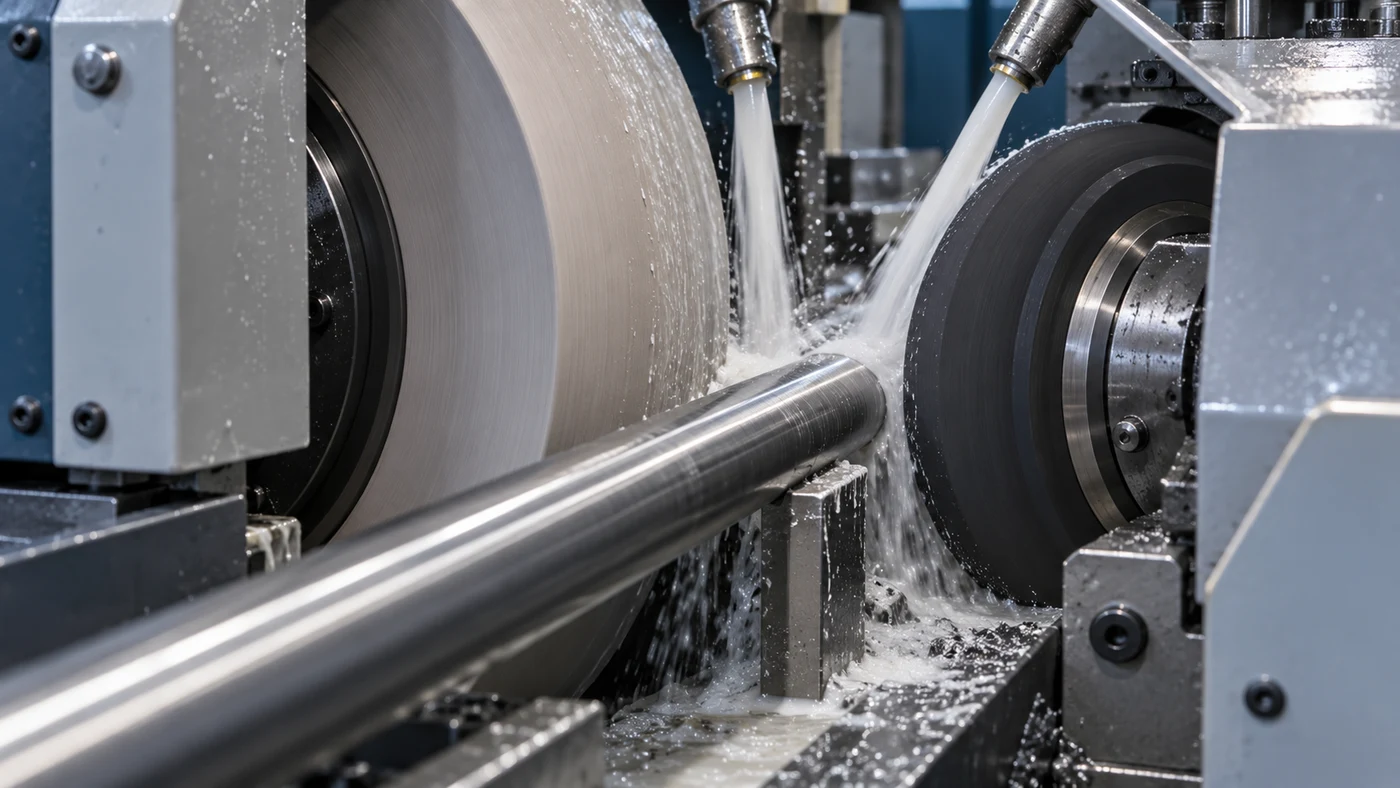
Watch: Centerless Grinding Coolants & Oils: Through-Feed, In-Feed and Roundness
Centerless Grinding: Support Without Centers
Centerless grinding finishes an outside surface while the workpiece rests on a support blade between a grinding wheel and a regulating wheel. The part is not held between centers as in a center-type cylindrical grinder. The grinding wheel removes material; the regulating wheel helps control the workpiece's movement. This arrangement is used for suitable pins, rollers, bars and other round components, with the method chosen around the feature. Begin with the drawing and the incoming part. Identify the surfaces to be finished, material condition, stock allowance, length, diameter and required inspection. A stepped component does not necessarily follow the same route as a straight bar. Fluid selection is part of this complete process. QA has coolant and grinding-oil options for review with the machine, wheel and material requirements. This guide explains the questions to ask, rather than supplying a universal machine setup.
Separate Through-Feed from In-Feed Grinding
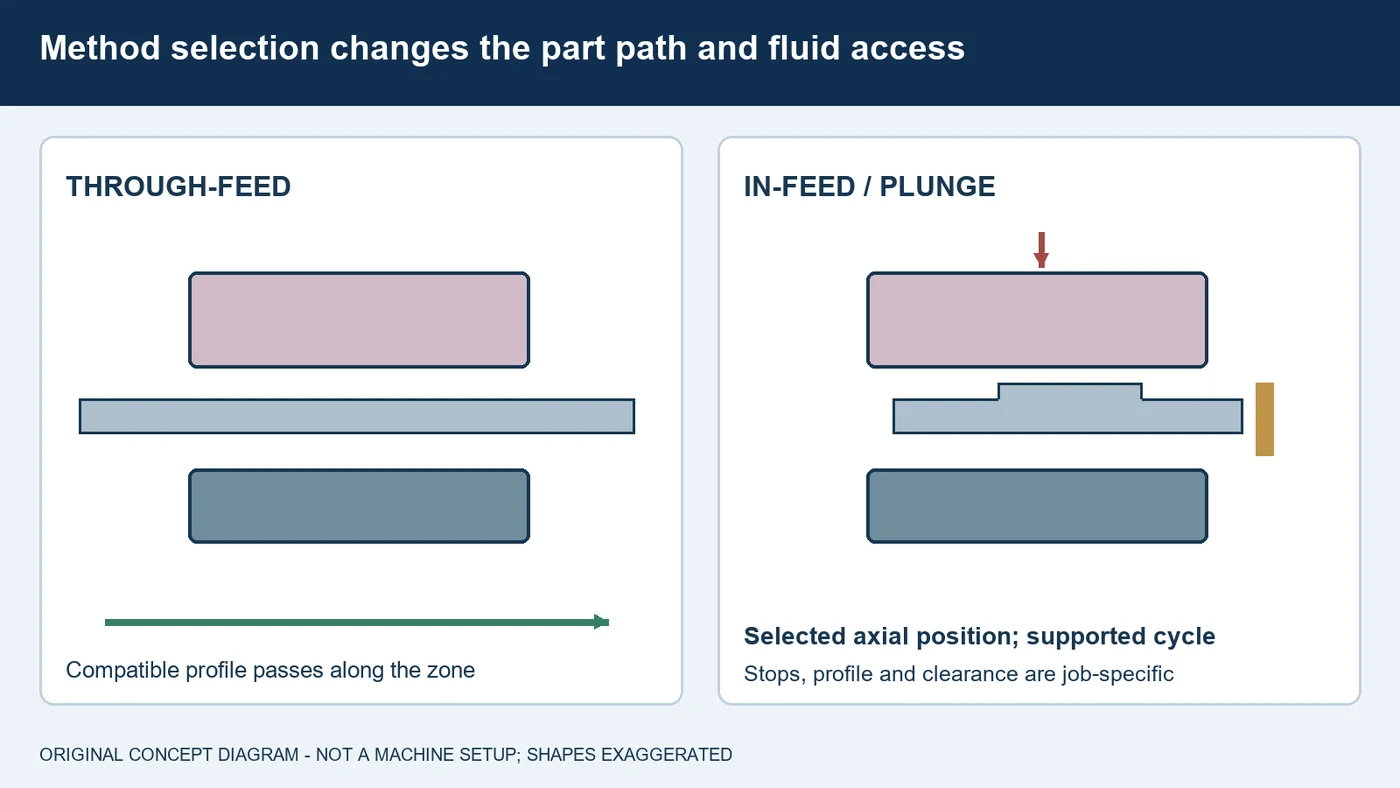
In through-feed centerless grinding, a compatible workpiece travels along the grinding zone. Straight cylindrical parts and bars are common applications. A shoulder that cannot pass through the arrangement changes the method selection. In-feed, also called plunge centerless grinding, works with the component at a selected axial position while the supported cycle removes material. It can suit particular stepped or profiled surfaces when the machine and tooling are configured for them. End-feed arrangements are another specialized case and must be reviewed with the machine supplier. Record the actual method on the process sheet; the term centerless alone is not enough. Consider how the part enters, how it is supported and how it leaves, including space for nozzles and fluid return. Keep the handling and machine safeguards in their approved configuration. The fluid inquiry should describe this sequence so an application review addresses the real contact and access conditions.
Roundness Begins with the Mechanical Arrangement
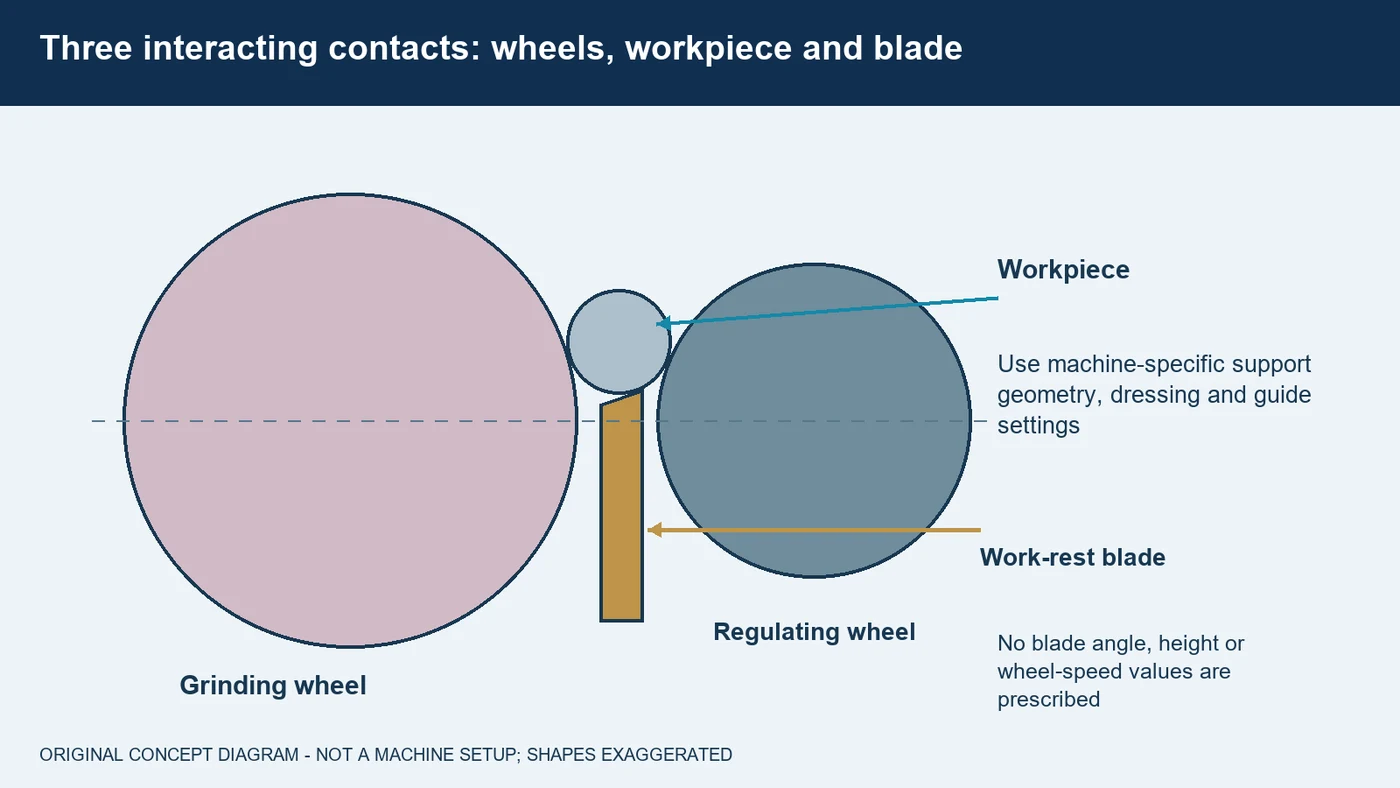
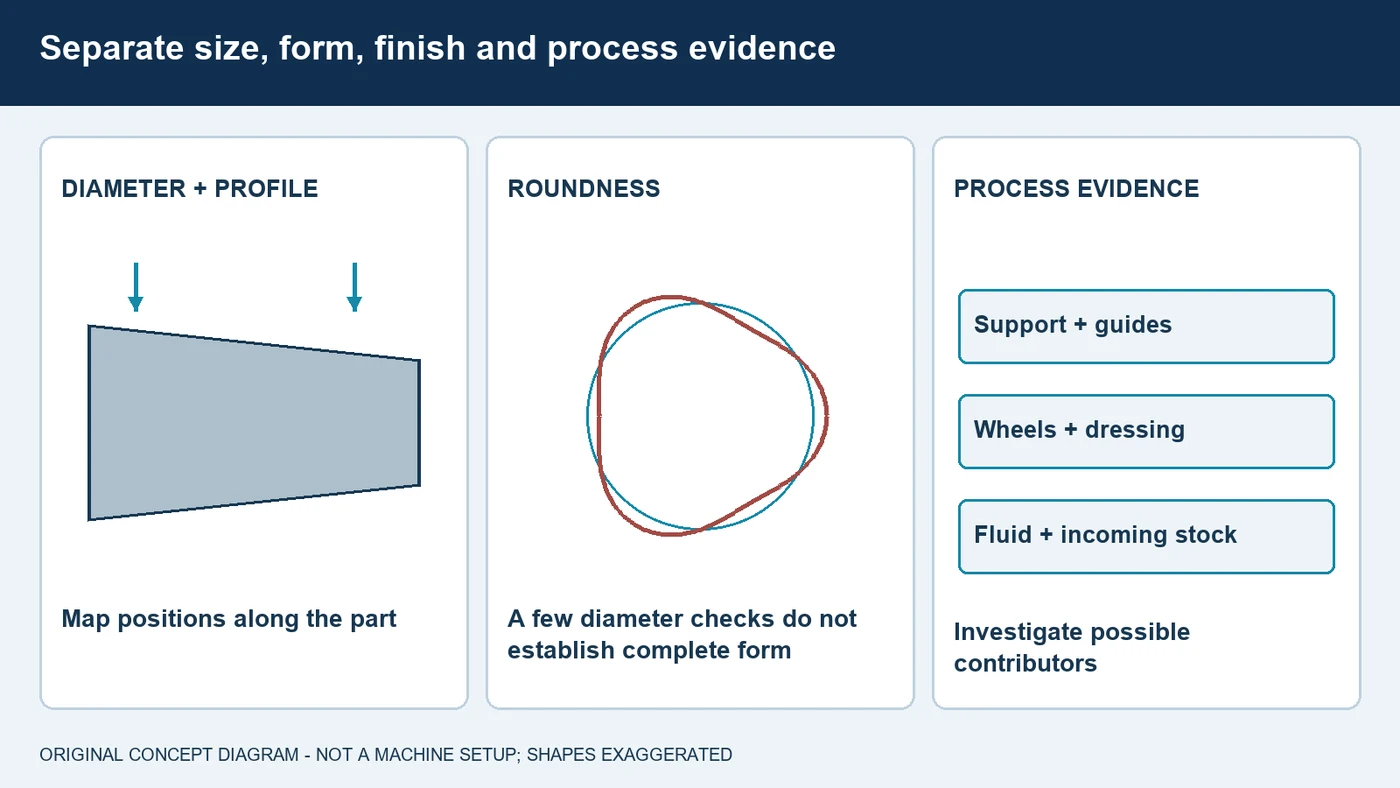
The support blade, grinding wheel and regulating wheel form an interacting arrangement. Blade condition and the workpiece position influence support; regulating-wheel preparation and the machine's settings also influence the result. Follow the equipment supplier's setup procedure instead of copying an angle, center height or speed from a different part. Through-feed guide transitions deserve particular attention because a discontinuity can influence the profile as a part enters or leaves. Roundness also requires the right inspection. A diameter that appears consistent at a few measuring positions does not establish that the complete surface is round. Where the drawing calls for it, use a suitable form-measurement method and record the inspection conditions. If lobing or lengthwise size variation appears, investigate the documented mechanics and tooling with the machine specialist. Changing coolant chemistry alone is not a dependable correction for an unsuitable support or guide arrangement.
Supply the Working Width and Preserve Control
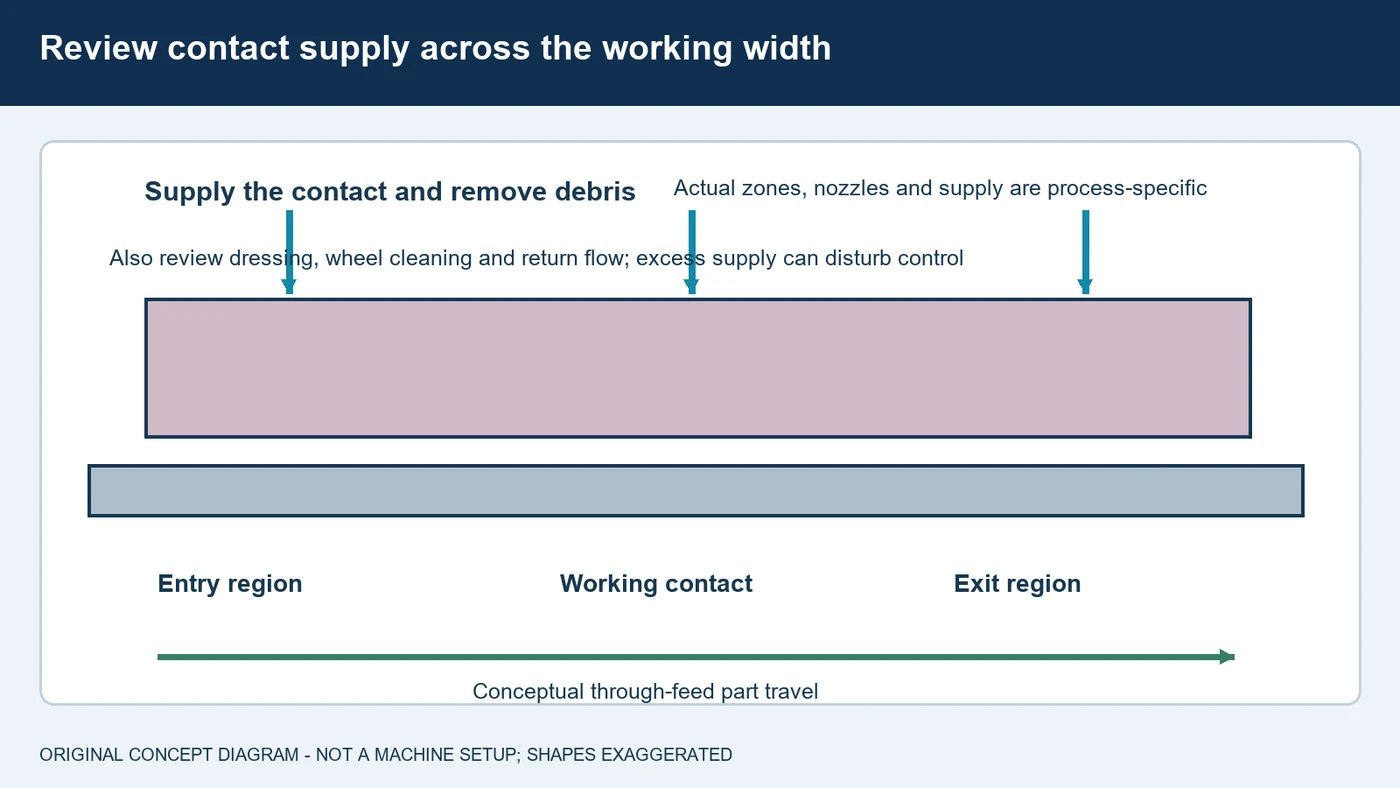
Centerless grinding needs more than coolant splashing near a wheel. Review delivery to the active contact across the working width, particularly where a profile or shoulder restricts access. In through-feed work, conditions can vary from entry to exit; in plunge work, several features may need coordinated supply. Wheel cleaning, dressing and flushing the machine are additional tasks, and their supply requirements need not be identical. The rotating wheel can influence whether a stream reaches the intended region. Work with the machine and nozzle suppliers on the complete arrangement, including the fluid return route. More flow or pressure is not automatically better. Excess fluid at the blade or regulating-wheel contact can interfere with the supported process, so delivery must be evaluated with workpiece control. Do not adopt a universal nozzle position, jet speed, flow or pressure. Document what reaches the contact during the approved cycle and whether parts remain stable.
Coordinate Wheel Preparation and Stock Removal
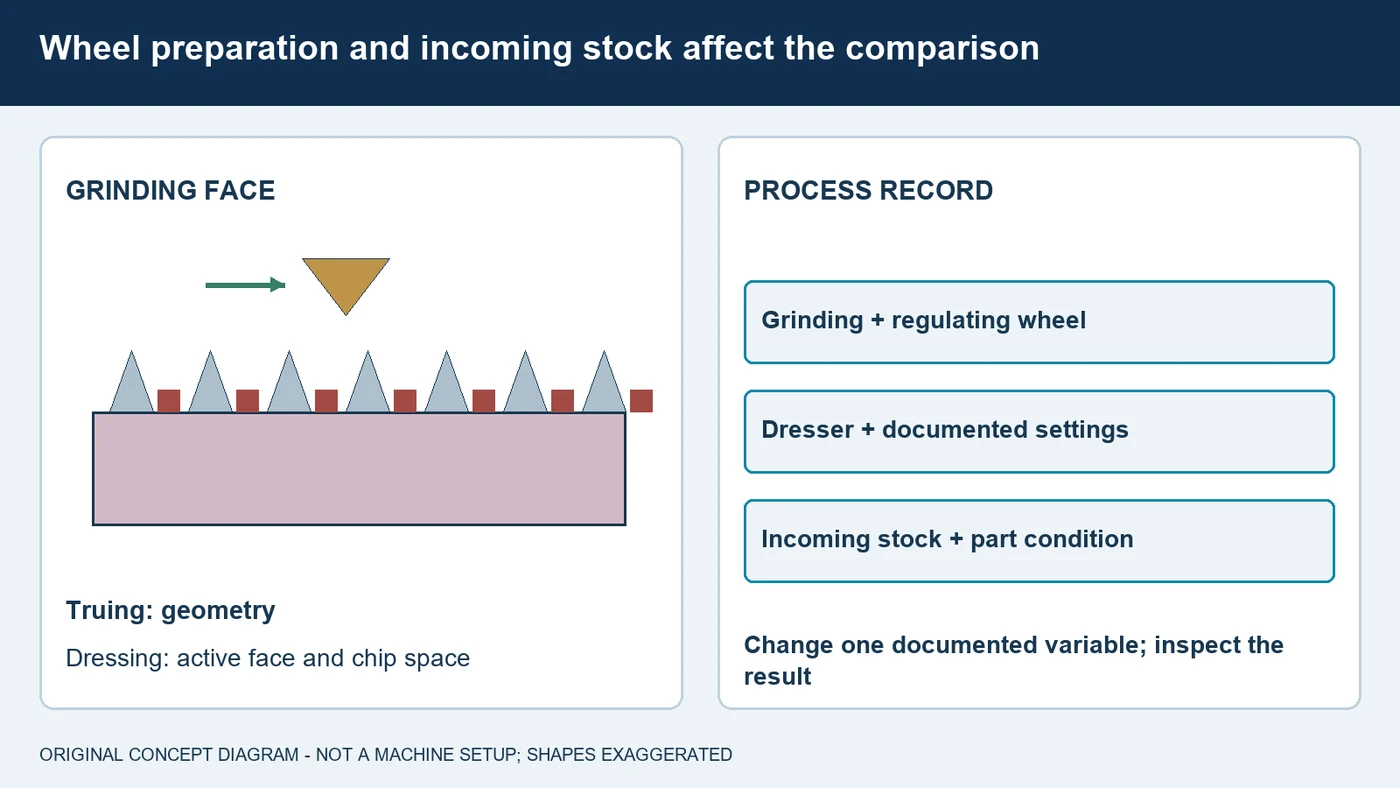
A centerless grinding wheel needs an application-specific abrasive specification and preparation method. Review the material, hardness, required finish, stock removal and the actual contact with the abrasive supplier. The regulating wheel has its own preparation requirements; it should not be treated as merely a smaller grinding wheel. Truing concerns working geometry, while dressing renews the active abrasive face and chip space. The appropriate procedure depends on the wheel and bond. A fine finish, a cutting face that remains effective and controlled thermal behavior must be evaluated together. Record wheel wear and dresser condition during a trial. Also examine incoming stock, part straightness and consistency; unexplained variation in incoming parts can obscure a fluid comparison. Keep permitted operating limits and the machine's supported feed strategy in the process plan. Make a documented change, measure the outcome, and identify which variable changed before crediting the result to a different coolant.
Match the Formulation to the Material and System
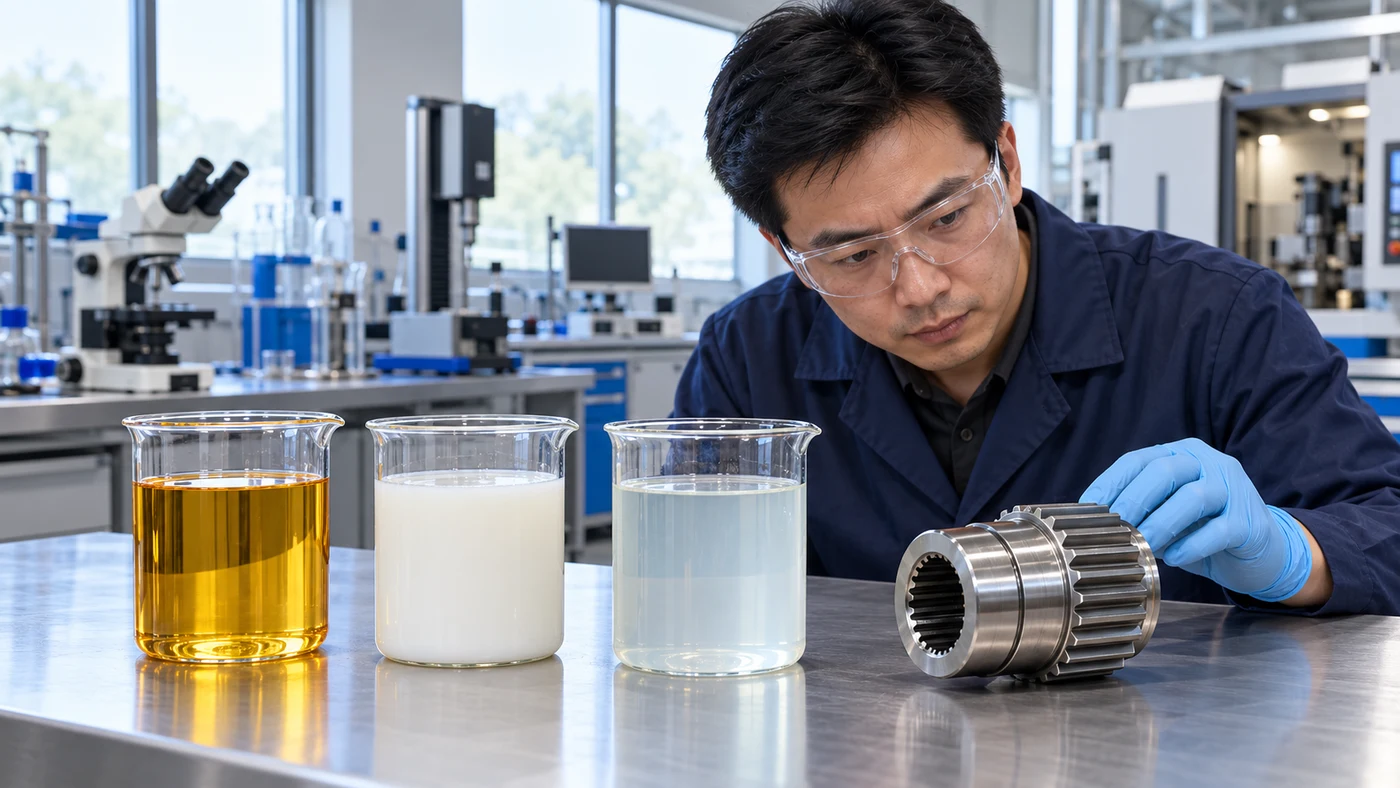
Compare the actual formulations rather than assuming that every synthetic coolant, emulsion or grinding oil behaves alike. Discuss lubrication, heat removal, corrosion protection, foam, residue and downstream cleaning with the fluid supplier. Confirm compatibility with the machine, filtration system and abrasive bond. For aluminum and copper-containing materials, verify the required staining and material-compatibility limits. For cobalt-bonded carbide, review binder compatibility explicitly; a general machining label is not a substitute for that confirmation. Water-miscible products need the specified water quality, mixing procedure and concentration measurement. Use the product's refractometer factor where required. Remove metal and abrasive debris before it returns to the contact, and maintain the machine's specified temperature-control conditions. Fine swarf, accumulated sludge or unstable temperature can affect a process even when the fluid's concentration appears acceptable. QA has coolant and grinding-oil options; a product match should be confirmed against these requirements before the trial.
Diagnose the Pattern, Then Verify the Result
Record the defect and where it occurs. Is the concern roundness, taper, an hourglass or barrel-shaped profile, chatter, scratches, size drift or a surface-integrity requirement? These are different observations. Review guides and support, wheel preparation, machine condition, fluid delivery, cleanliness and incoming parts as possible contributors. A photograph of a defect cannot establish a single cause. Compare measurements at defined positions and under consistent conditions through the run. Review thermal concerns using the required acceptance procedure; a visually attractive finish does not prove that every surface-integrity requirement has been met. Likewise, a few diameter checks do not replace specified roundness or cylindricity inspection. Keep the troubleshooting record useful: identify the variable changed, the supporting reason, the fluid condition and the measured outcome. Recheck the relevant quality characteristics before accepting the revised process or selecting a different fluid for regular production.
Bring QA Your Centerless-Grinding Application
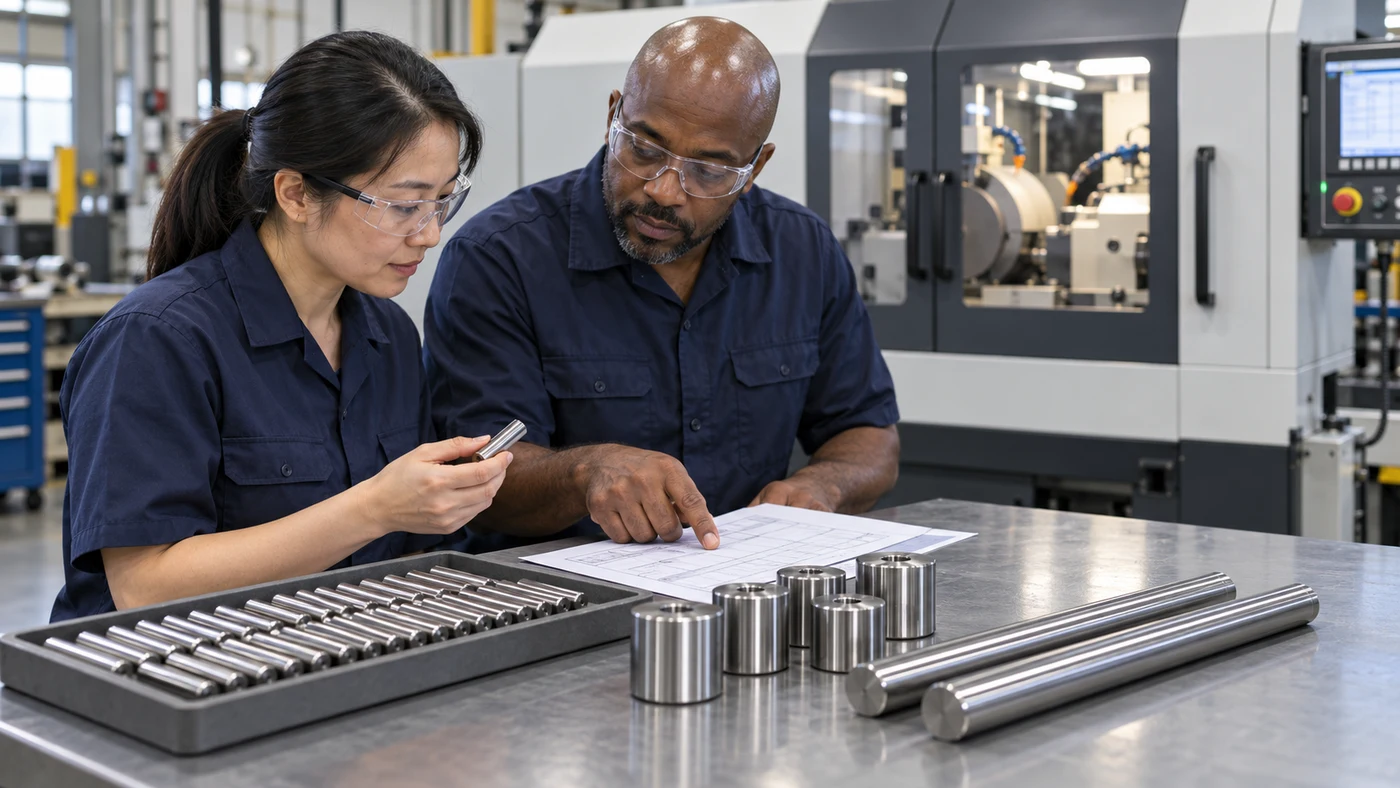
For a centerless-grinding fluid review, tell QA whether the job is through-feed, in-feed or a specialized arrangement. Include the part drawing, material grade and hardness, incoming condition, stock allowance and required size, form and finish. Describe the machine, blade, grinding and regulating wheels, dressing method and fluid-delivery system. Provide the current product, water quality where applicable, concentration readings, filtration, temperature-control conditions and the issue you want to improve. Photos of the approved setup and measured defect patterns can help clarify the inquiry. Discuss downstream cleaning and other materials sharing the system. QA has coolant and grinding-oil options, and can help evaluate a suitable match without treating one product family as the answer to every centerless job. Agree on the trial, document its conditions, and compare accepted-part quality with the original process. Confirm the final formulation and operating instructions with the relevant suppliers.
Fluid selection by material
Use these as evaluation questions, not blanket product approvals.
| Material | What to evaluate | What to confirm |
|---|---|---|
| Carbon and alloy steels | Evaluate heat removal, lubrication and corrosion protection for the specified condition. | Grade, hardness, stock allowance, wheel and thermal acceptance requirements. |
| Stainless steels | Review the formulation and abrasive for the actual alloy and loading tendency. | Wheel preparation, support, delivery, cleanliness and downstream cleaning. |
| Aluminum and copper alloys | Confirm nonstaining compatibility and the supported abrasive arrangement. | Exact alloy, incoming condition, residue and inspection requirements. |
| Cast iron | Review fine-swarf handling and corrosion control with the fluid system. | Part condition, filtration, wheel specification and accepted surface quality. |
| Cobalt-bonded carbide | Require explicit binder and wheel-bond compatibility for the selected formulation. | Qualified process, swarf management, fluid condition and supplier instructions. |
Questions about centerless grinding fluids
What is the difference between through-feed and in-feed centerless grinding?
Through-feed passes a compatible part along the working zone. In-feed or plunge grinding works at a selected axial position and can suit supported stepped or profiled features. Machine and part geometry determine the arrangement.
Does centerless grinding use a chuck or centers?
In the conventional external process described here, the part is supported by the blade and wheel arrangement rather than held between centers. Specialized machines and handling systems have their own instructions.
Will increasing coolant flow always improve the result?
No. Delivery must reach the active grinding region while preserving workpiece control. Excess supply near the regulating-wheel or blade contacts can be problematic; evaluate the complete supply arrangement with the equipment suppliers.
Can a micrometer prove that a centerless-ground part is round?
A few diameter readings do not establish complete roundness. Use inspection suited to the drawing, including form measurement where required.
Which coolant family is best for every centerless operation?
There is no universal family recommendation. Review the actual formulation with material, wheel bond, machine, supply, filtration and downstream requirements. QA has coolant and grinding-oil options for application review.
Should coolant be changed first when parts show lobing or taper?
Investigate the measured pattern and the complete setup, including blade, guides, wheel preparation, machine condition and actual fluid supply. A chemistry change does not substitute for a supported mechanical setup.
Discuss your application with QA
QA Lubricants has coolant and oil options. Send us the operation, alloy, hardness, tooling, current fluid and the problem you want to solve.
Discuss My ApplicationShop Water Diluted CoolantsShop Straight Cutting OilsTechnical references
- Norton: through-feed centerless geometry, guides and troubleshooting
- SLR Maschinen: external centerless through-feed and plunge processes
- Grindaix: centerless contact-zone supply and different supply tasks
- Norton: wheel preparation, machine condition and grinding finish
- UNITED GRINDING: clean fluid and temperature regulation
- Blaser Swisslube: product-specific coolant concentration measurement
- Master Fluid Solutions: carbide-binder and abrasive-bond compatibility example
- FUCHS: application-specific cutting-fluid selection factors
- Mitutoyo: form inspection and diameter-measurement limitations
Original educational content and illustrations. Confirm current machine, tool and fluid instructions. Trademarks belong to their respective owners.