
CNC Turning Coolants & Lathe Cutting Oils
Explore lathe cutting oil and CNC turning coolant selection for steel, stainless, aluminum and difficult alloys, with guidance on chip control, delivery, finish and fluid maintenance.
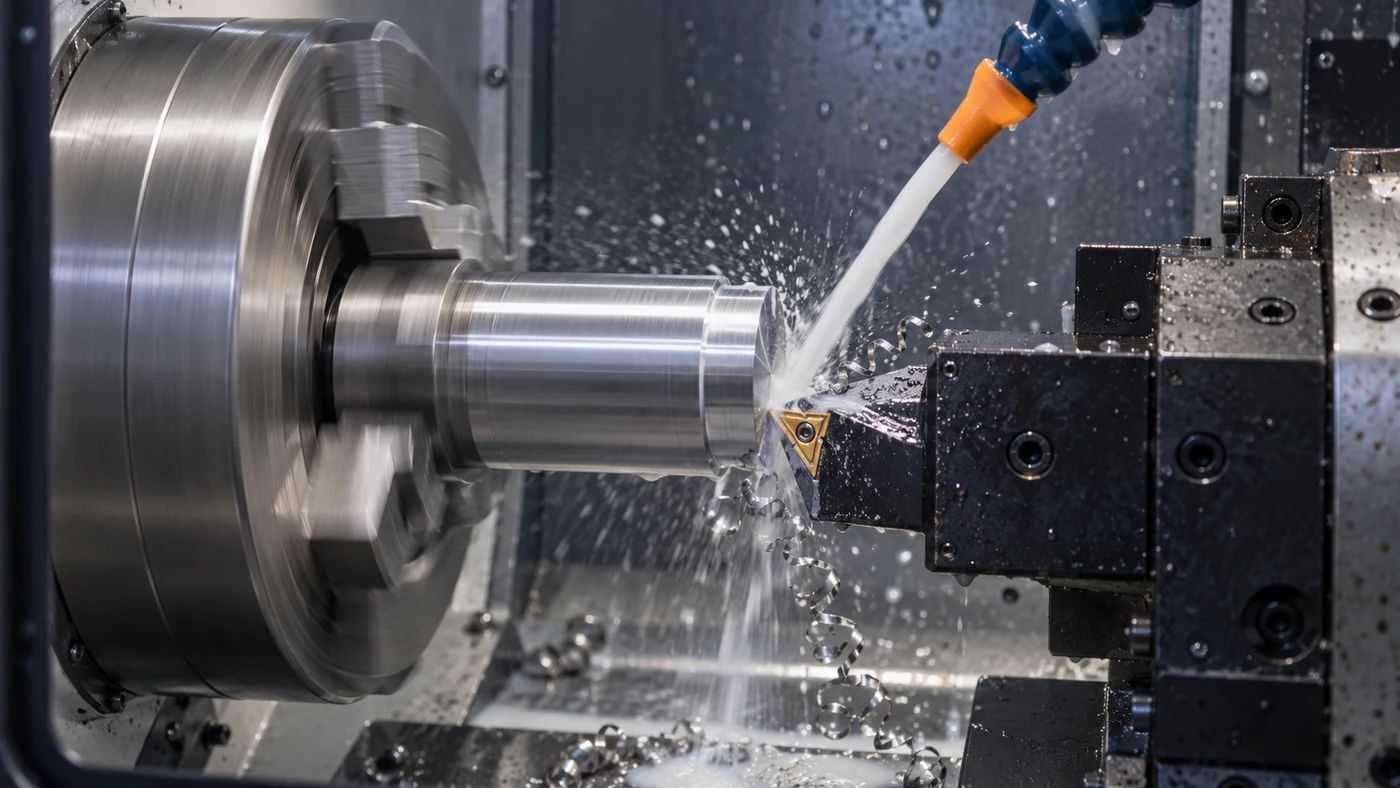
Watch: CNC Turning Coolants & Lathe Cutting Oils
Turning: Match the Fluid to the Job
What should you look for in a lathe cutting oil or CNC turning coolant? Start with the part, the metal and the cut. A finishing pass on an aluminum component is a different application from rough turning stainless steel or machining a hardened shaft. Turning normally removes material with a single point tool while the workpiece rotates. The fluid has to work with that tool and with the machine's chip handling system. This QA Lubricants guide explains the questions behind a useful fluid recommendation. We will cover the operation, material, delivery, chip control and fluid maintenance. QA has coolant and oil options, but a product should be matched to the complete application rather than chosen from a family name alone. Our original images explain concepts; follow the actual machine and tooling instructions for setup.
Longitudinal Turning, Facing & Profiling
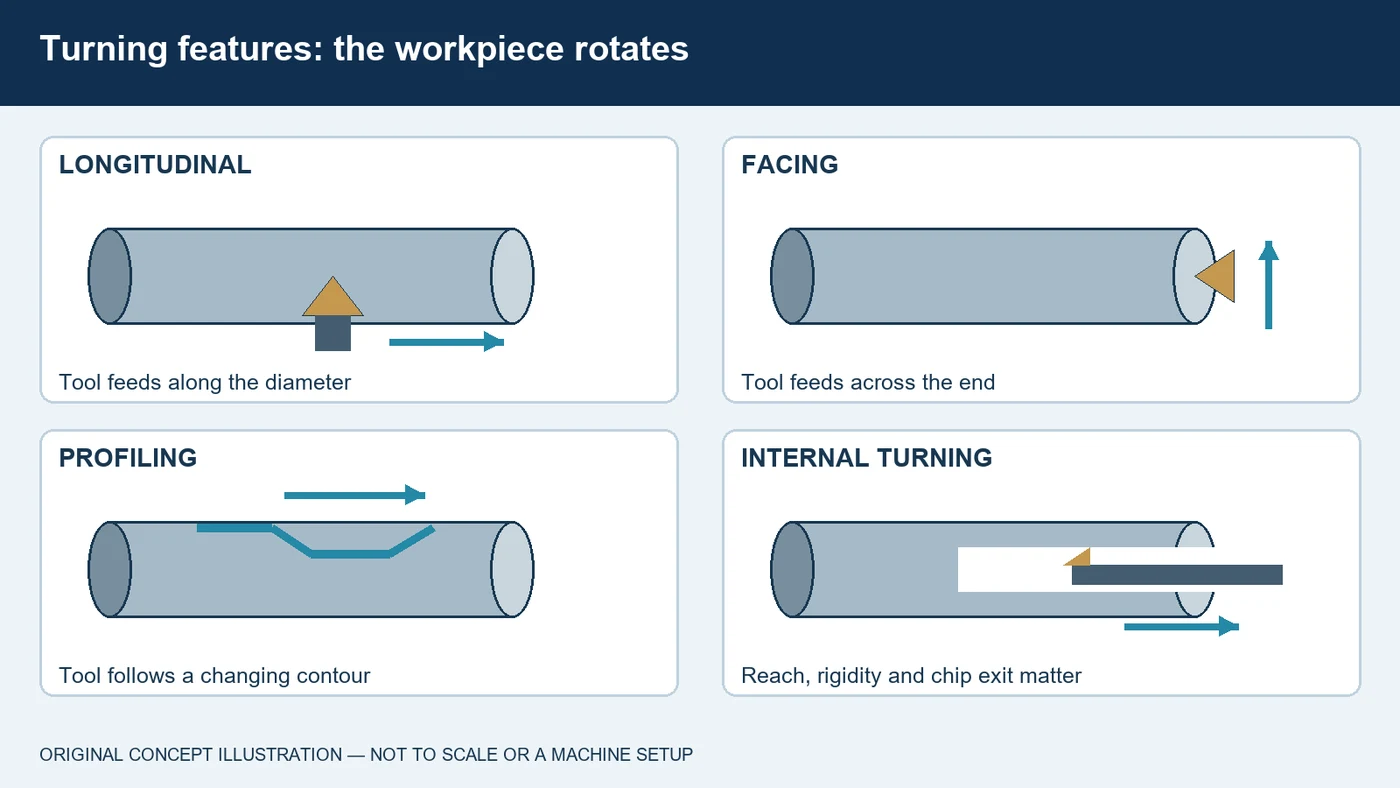
Longitudinal turning moves the cutting tool along the rotating component to produce a diameter. Facing cuts across the end, and profiling follows a contour. Internal turning works inside an existing opening and brings additional challenges with reach, rigidity and chip escape. Roughing and finishing also have different priorities. A roughing pass removes stock, while finishing must meet the specified surface and dimensions. Describe whether the cut is continuous or interrupted, how the part is supported, and whether the feature is thin walled or slender. A part that deflects under load can be difficult to hold to size even when the fluid is suitable. Drilling, threading, grooving and other operations may share the same lathe sump. Include those operations when defining what the selected fluid must support.
Chip Control Is More Than Coolant
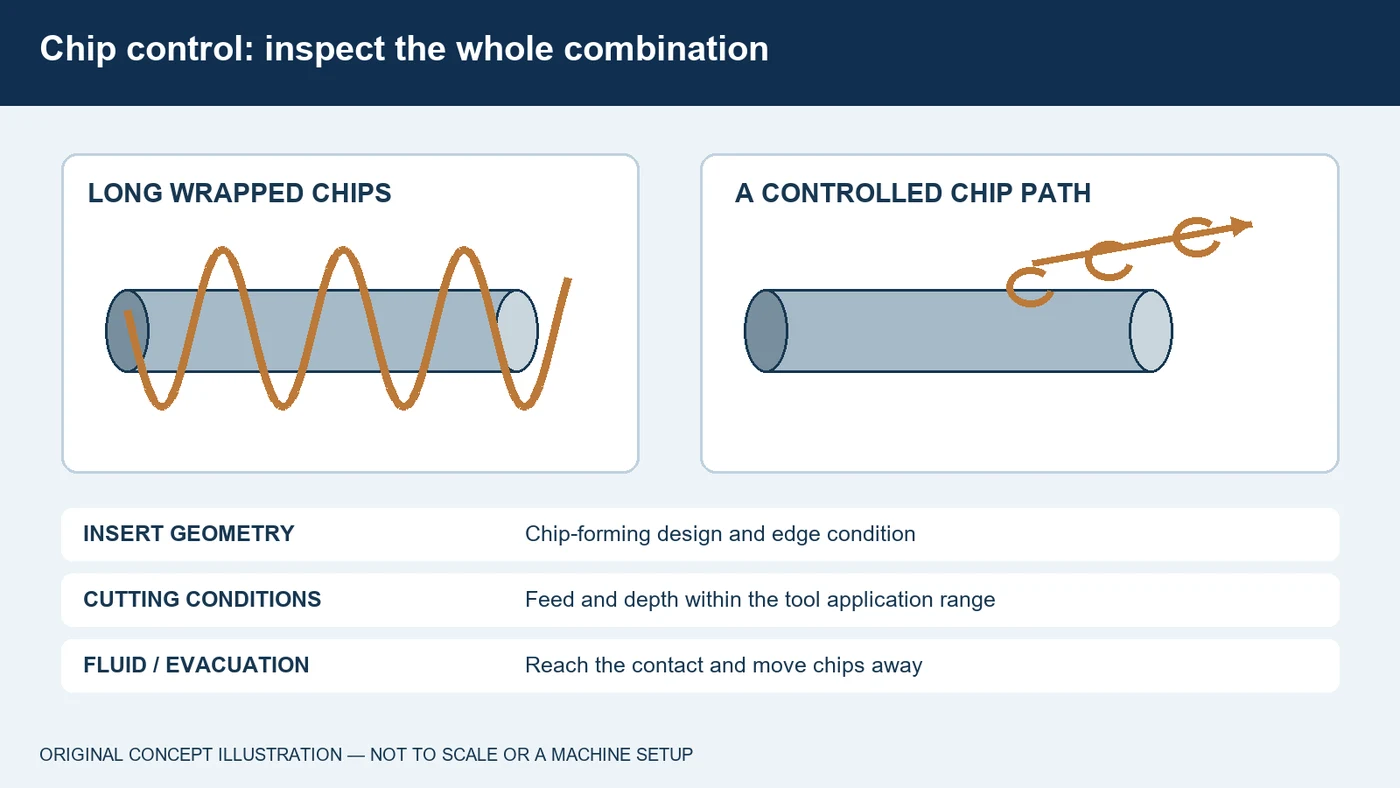
Long, unbroken chips can wrap around the work or collect at the tool. They can interrupt production and mark an otherwise good surface. Short chips are not automatically proof of an ideal cut either: overly aggressive chip breaking can load the edge heavily. Sandvik Coromant's troubleshooting guidance connects these symptoms with insert geometry, feed, depth of cut and tool arrangement. Coolant delivery is one part of that assessment. Before changing fluid or increasing pressure, compare the actual cutting conditions with the insert supplier's application range. Record where the chip travels and whether it contacts the finished component. Remove chips only through the machine's approved safe procedure. Never pull wrapped chips from a rotating part. A useful trial measures repeatable chip evacuation and acceptable components, not simply how much splash is visible.
Flood, Precision & Through-Tool Delivery
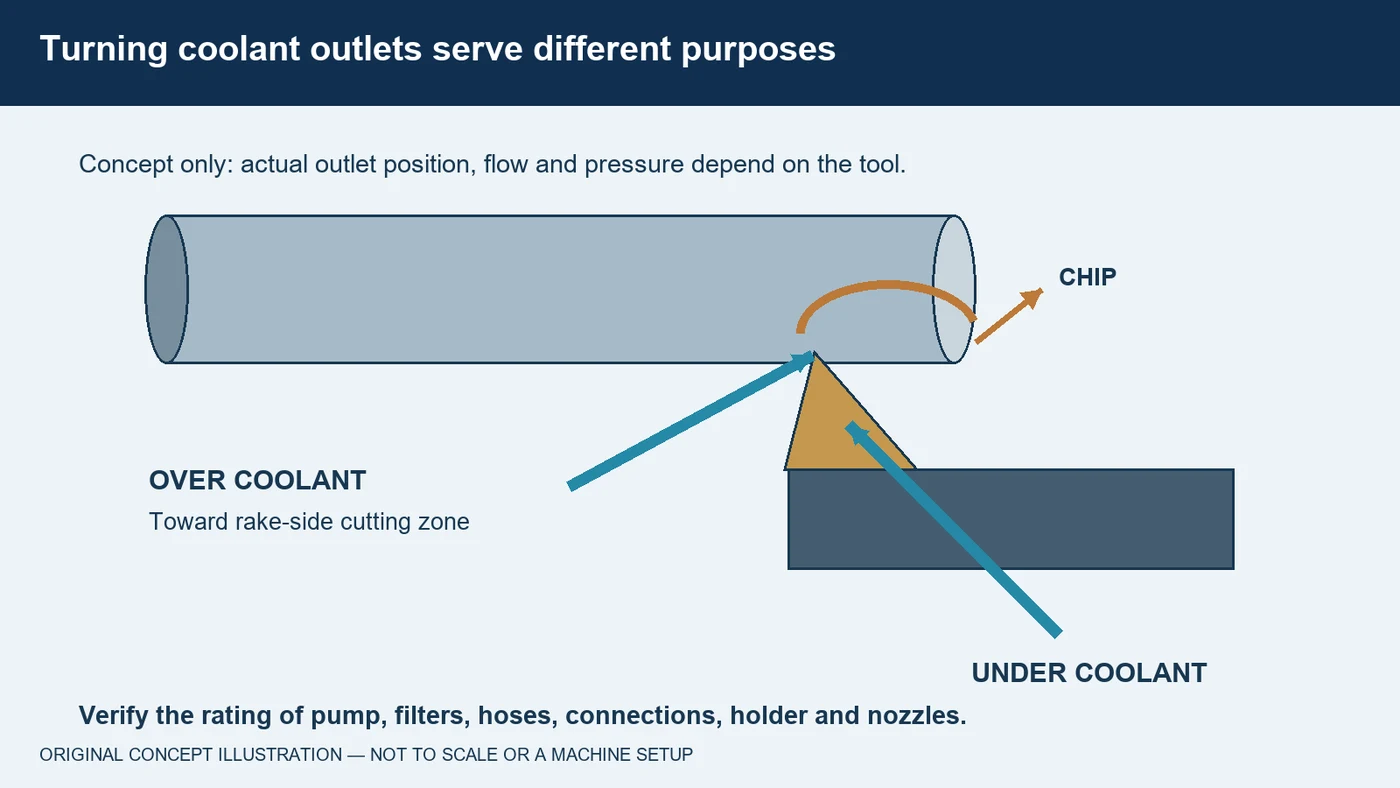
Conventional flood delivery washes fluid over the tool and component. Precision delivery directs a more focused stream toward the working edge. Some turning holders provide internal passages for over coolant on the rake side, under coolant on the flank side, or both. The useful arrangement depends on the insert, material and cutting conditions. Pressure is not a universal setting that should be copied from another machine. The pump, filters, hoses, connections, holder and nozzles must all be intended for the proposed service. Do not connect a conventional adjustable nozzle to a high pressure supply unless the complete assembly is approved for it. Verify flow at the tool as well as the machine's indicated pressure. A blocked filter or poorly aligned outlet can prevent the intended delivery from reaching the cut.
Steel, Stainless, Aluminum & Specialist Alloys
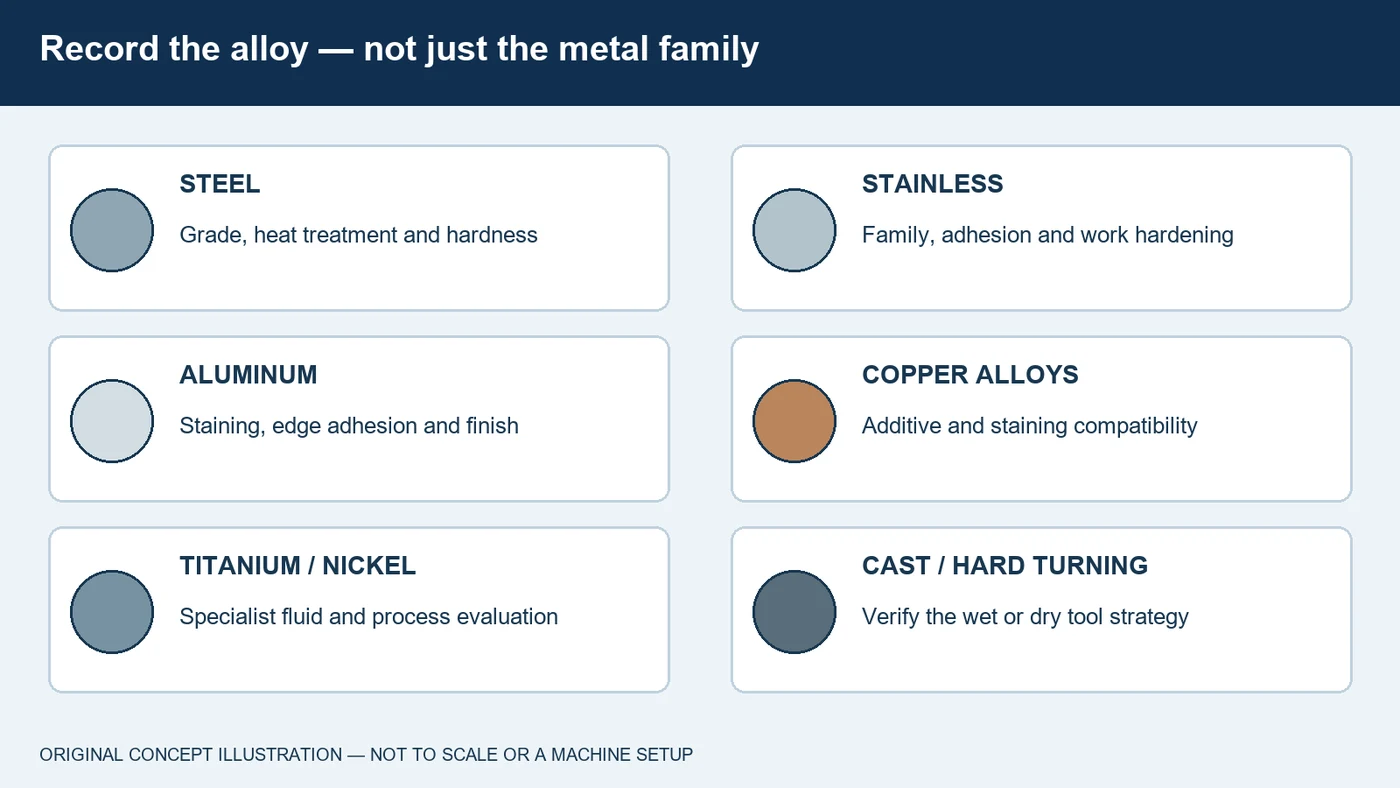
Steel is not one machining condition. Low carbon material may create adhesion and difficult chip breaking, while alloy content and heat treatment change wear and cutting resistance. Stainless steels also cover several groups; identify the actual grade before discussing heat, work hardening and the insert strategy. For aluminum, evaluate edge adhesion, finish and a formulation compatible with the alloy. Copper, brass and bronze add a staining question, so check additive compatibility rather than assuming that a steel cutting oil is suitable. Titanium and nickel alloys need specialist evaluation of cooling, lubrication and tool performance. Cast iron and hard turning can involve tool systems intended for dry operation. More fluid does not automatically improve every application. State the alloy designation, hardness, insert grade and process requirements when asking QA to narrow the candidates.
Choose and Maintain the Fluid System
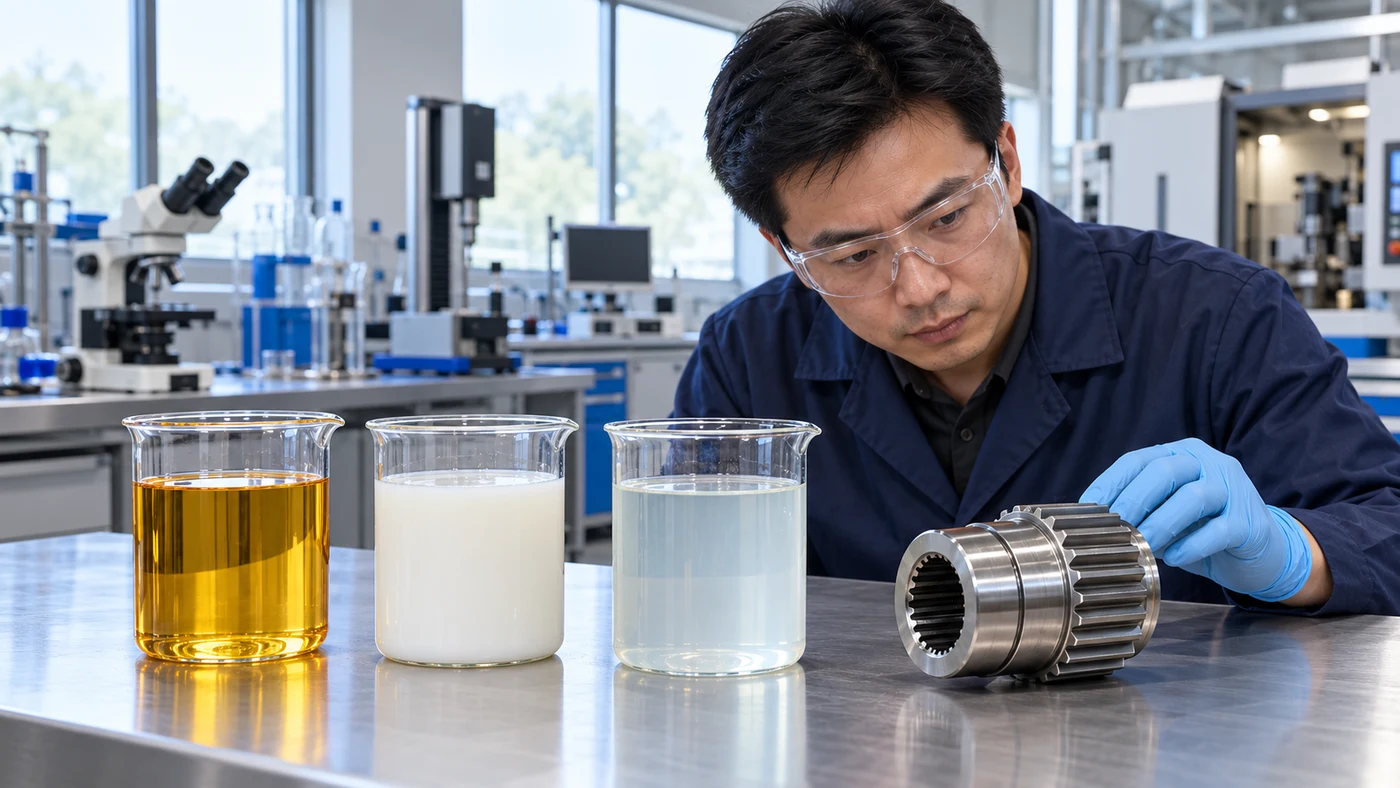
Water diluted fluids include soluble oils, semi synthetic coolants and full synthetics. Neat cutting oils are used without water dilution in compatible machine and tooling applications. Specialized minimum quantity or cryogenic systems are separate processes with their own equipment requirements. Do not treat them as a change that can be made by substituting a different liquid in a standard sump. For a water diluted turning coolant, use the supplier's application instructions and make up water guidance. Measure the mixture with a calibrated refractometer and apply the correct product factor. Check tank condition, filtration, tramp oil, foam and corrosion protection on a routine schedule. With a neat oil system, review the specified oil condition and contamination. Color, clarity and odor alone cannot establish that a fluid is performing correctly. Include seals, machine compatibility and part cleaning in the evaluation.
Evaluate Finish, Dimensions & Tool Wear
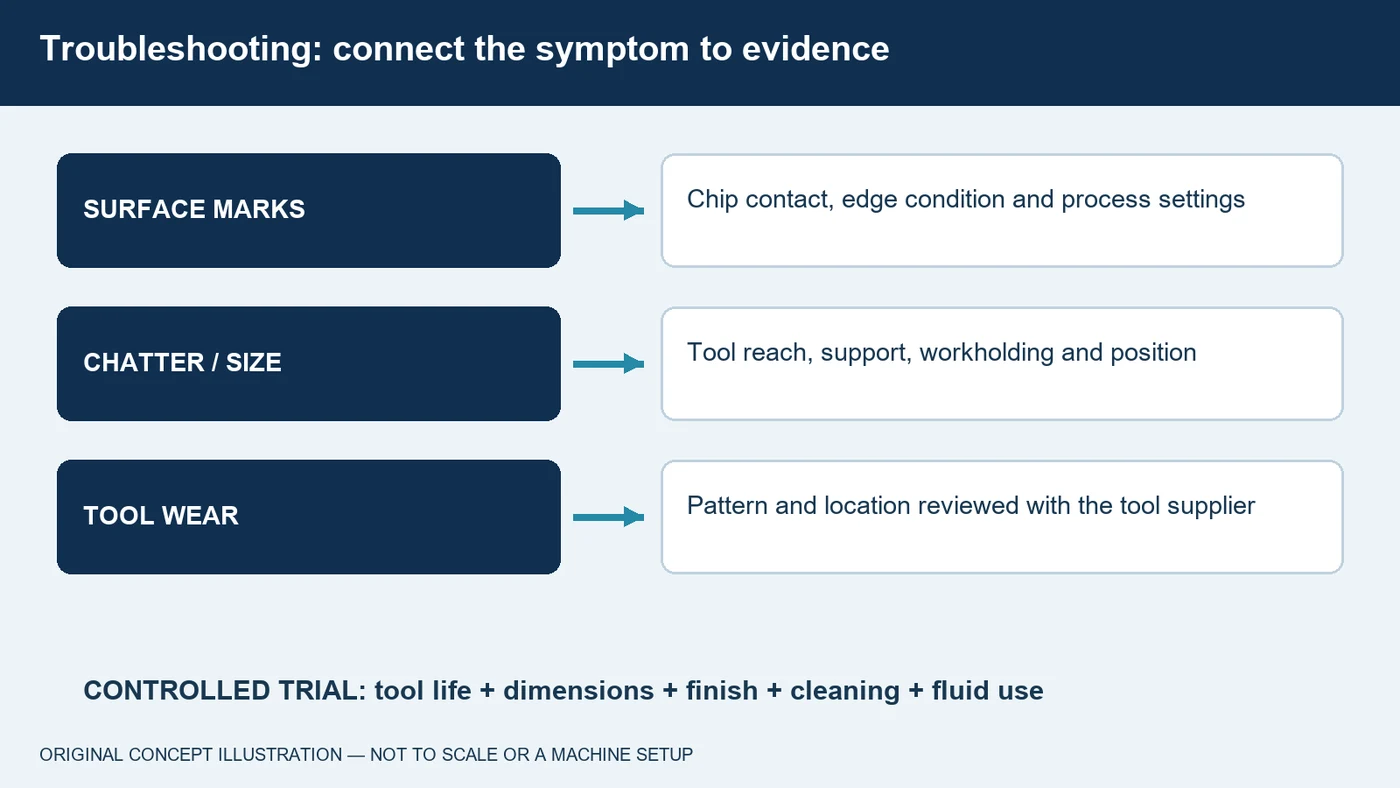
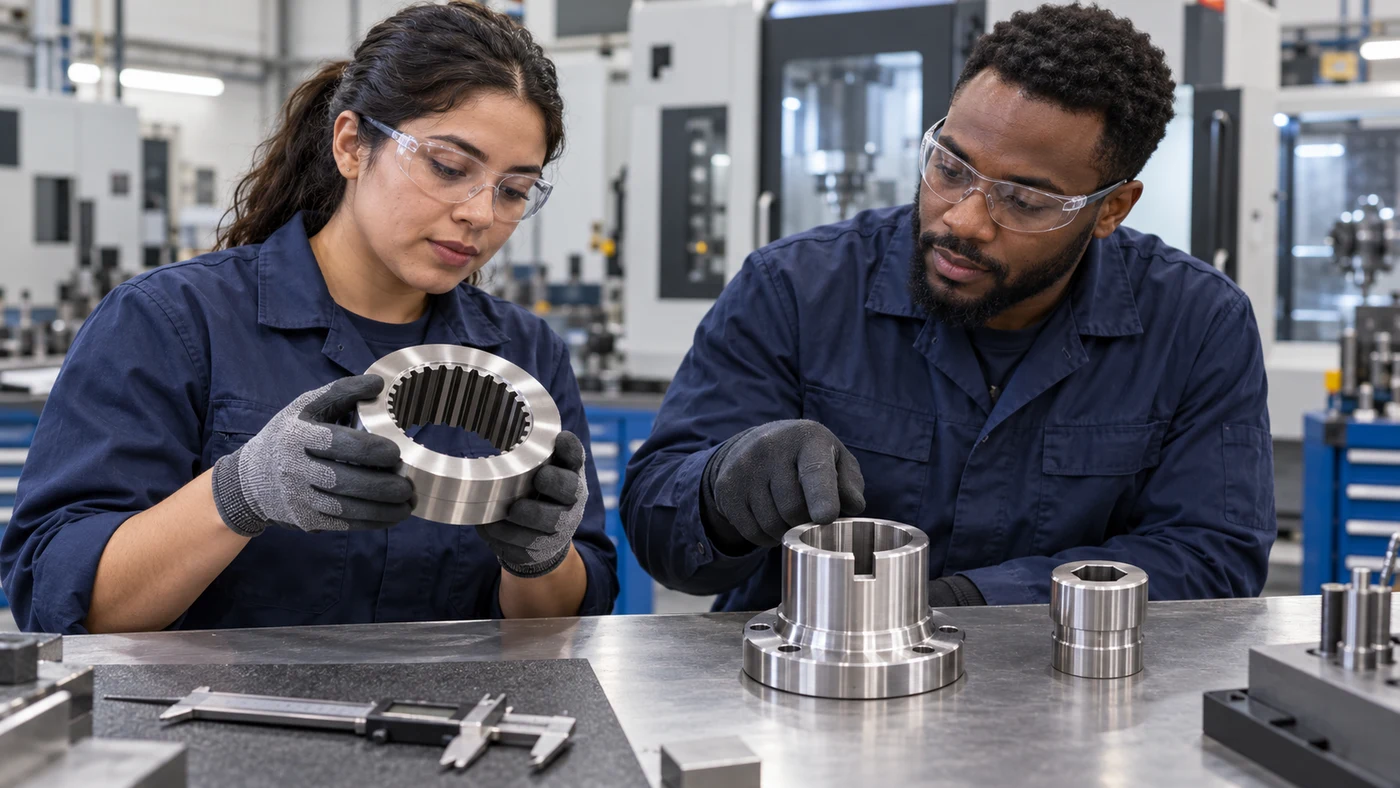
When a turned surface changes, record the symptom before choosing a remedy. Chip contact, a damaged edge, unsuitable cutting conditions or instability can each leave marks. Chatter and dimensional variation call for checks of tool overhang, workholding, support and the tool's position, along with the fluid system. The pattern of wear can help the tooling supplier distinguish different causes. A fluid trial should begin with a stable baseline and an agreed definition of success. Record tool life, finish, dimensions, chip evacuation, cleaning and fluid use under comparable conditions. Change one variable at a time where practical. A single attractive part does not demonstrate an improvement in production. The useful outcome is a repeatable process with a defensible cost per acceptable component.
Build Your Turning Fluid Recommendation
To discuss a turning coolant or lathe cutting oil with QA Lubricants, tell us the operation, material and hardness, machine and insert, current fluid and delivery arrangement. Include whether the cut is roughing or finishing, internal or external, continuous or interrupted. Describe the challenge: chip wrapping, poor finish, short tool life, foam, difficult washing or another concern. Tell us which other operations share the sump and any customer restrictions on the process or residues. QA has coolant and oil options and can help identify candidates for a controlled trial. We will check application guidance rather than assume one product suits every lathe. Find more fluid information and machining guides at QA Lube dot com, or call one, eight seven seven, eight seven seven, six two two one. Thank you for watching this QA Lubricants turning guide.
Fluid selection by material
Use these as evaluation questions, not blanket product approvals.
| Material | What to evaluate | What to confirm |
|---|---|---|
| Carbon and alloy steel | Evaluate lubricity, chip control and the specified delivery strategy. | Identify the alloy, heat treatment and hardness; soft and hardened steels behave differently. |
| Stainless steel | Evaluate adhesion, heat, work hardening and chip evacuation. | Identify the stainless family, insert grade and geometry, and current tooling guidance. |
| Aluminum | Evaluate nonstaining lubricity, edge adhesion and clean chip transport. | Confirm alloy, finish, part washing and downstream requirements. |
| Copper, brass and bronze | Evaluate a compatible nonstaining formulation. | Check the exact alloy and additive restrictions, particularly active-sulfur compatibility. |
| Titanium and nickel alloys | Evaluate specialist cooling, lubrication and reliable delivery. | Confirm tooling recommendations, process restrictions and controlled-trial results. |
| Cast iron and hard turning | Evaluate the specified wet or dry tooling strategy. | Do not assume that adding fluid improves every ceramic or CBN application. |
Questions about turning fluids
What is the best coolant for CNC turning?
Match the formulation to the alloy, insert, operation and machine. Fluid family alone does not establish suitability. QA can help evaluate coolant and cutting-oil options for the application.
Can higher coolant pressure solve long stringy chips?
Delivery can help, but chip formation also depends on insert geometry, feed, depth of cut and material. Use only pressures and equipment approved for the complete system.
Does hard turning always need coolant?
No. Some tool and material combinations are intended to run dry. Follow the particular insert manufacturer's guidance before changing an established process.
Is CNC lathe coolant concentration the same for every job?
No. Follow the selected fluid's instructions for the operation and make-up water. Measure with a calibrated refractometer and the correct product factor.
Discuss your application with QA
Read this guide in the QA online store
QA Lubricants has coolant and oil options. Send us the operation, alloy, hardness, tooling, current fluid and the problem you want to solve.
Discuss My ApplicationShop Water Diluted CoolantsShop Straight Cutting OilsTechnical references
- Sandvik Coromant: general turning
- Sandvik Coromant: coolant and cutting fluid in turning
- Sandvik Coromant: turning different materials
- Sandvik Coromant: troubleshooting turning
- Sandvik Coromant: external turning
- Sandvik Coromant: component quality in turning
- Haas Automation: maintaining the coolant mixture
Original educational content and illustrations. Confirm current machine, tool and fluid instructions. Trademarks belong to their respective owners.