
Cut Tapping Fluids, Oils & Coolants
Explore tapping fluid selection, blind-hole and through-hole chip control, tap-drill preparation, lubrication and thread-quality troubleshooting with QA Lubricants.
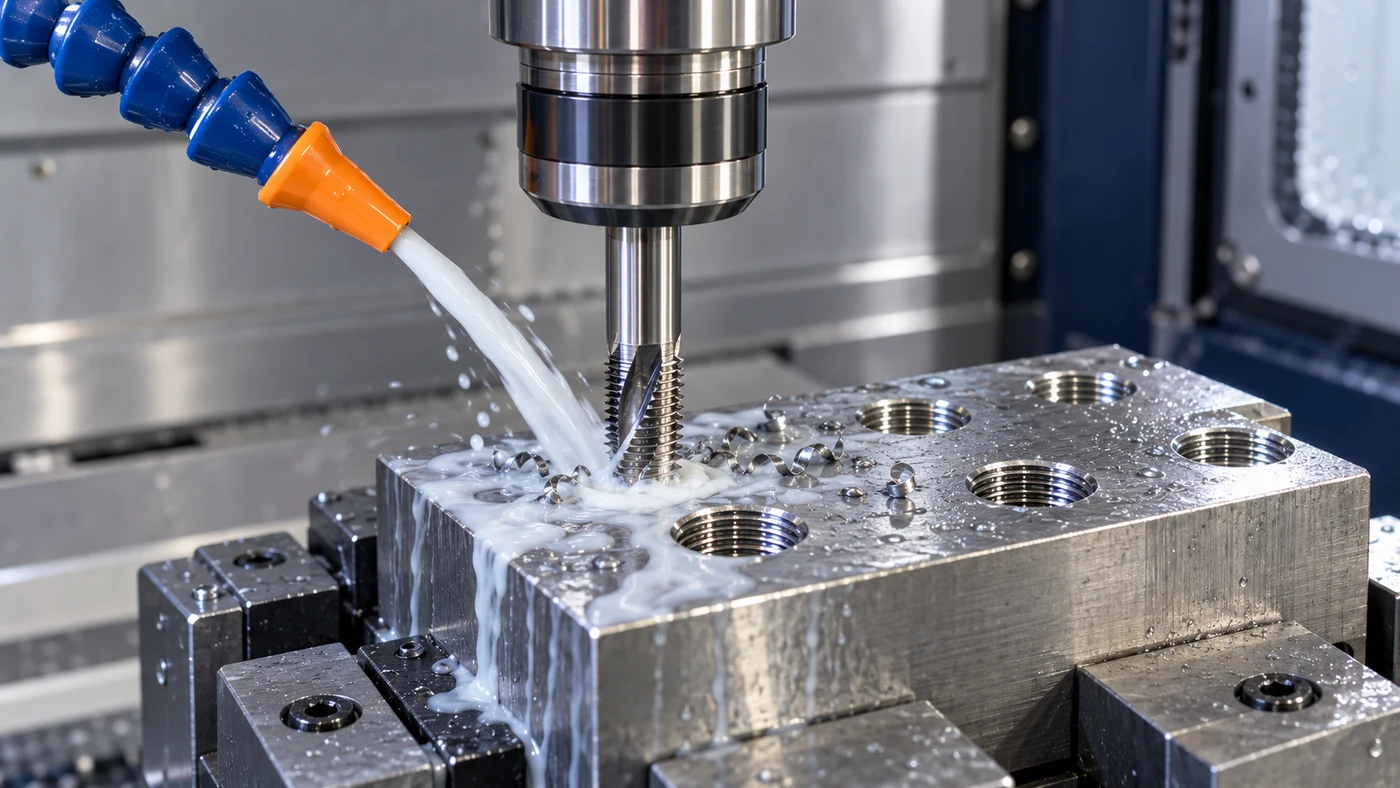
Watch: Cut Tapping Fluids, Oils & Coolants
Cut Tapping: Make the Thread & Manage the Chips
What should a tapping fluid do when a cutting tap makes an internal thread? It must support lubrication at the cutting teeth and help the process manage chips in a confined space. Cooling, delivery and the condition of the drilled hole matter too. A broken tap or torn thread is not automatically proof that the coolant is wrong. In this QA Lubricants guide, we explain cut tapping, blind and through holes, fluid selection and practical troubleshooting. Cutting taps remove material and generate chips. Forming taps use a different process and different hole-preparation requirements, so we cover them separately. QA has coolant and oil options for metalworking applications. Our original photographs and diagrams illustrate principles, rather than supply a universal tapping cycle or a substitute for the machine and tool instructions.
Match the Tap to the Chip Direction
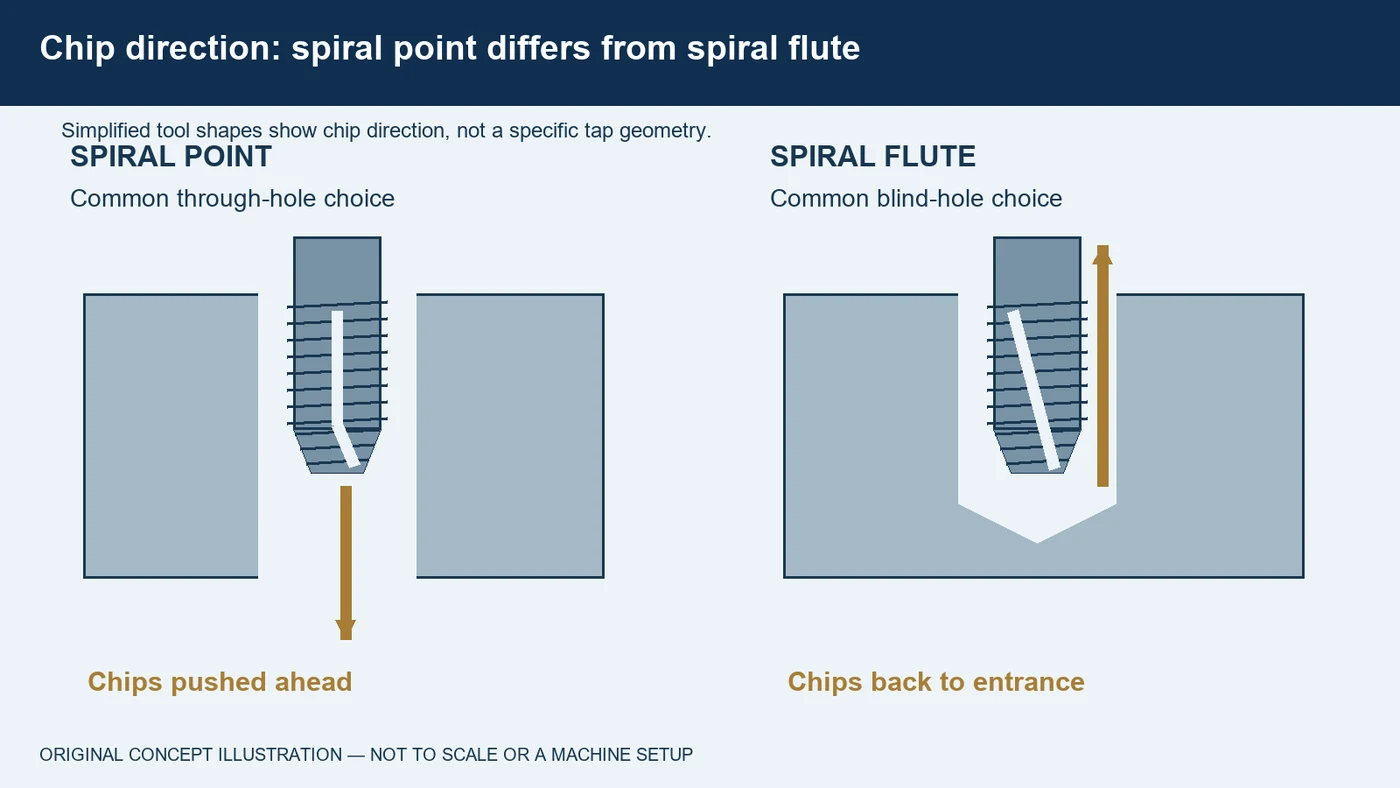
The names spiral point and spiral flute describe different tool features. A spiral-point cutting tap typically pushes chips forward and is a common choice for through holes in long-chipping material, with room for the chips and the tool to pass beyond the required thread. A spiral-flute tap transports chips back toward the entrance and is commonly used for blind holes in those materials. Straight-flute and specialized designs may be appropriate for short-chipping materials or other applications. None of those descriptions replaces the actual tap maker's selection guidance. Match the geometry, chamfer and coating to the material, thread and hole. A flute packed with chips is a process warning, not a reason to keep forcing the same cycle. Review both the direction chips should travel and the space available for them before judging the fluid.
Tap-Drill Size & Blind-Hole Clearance
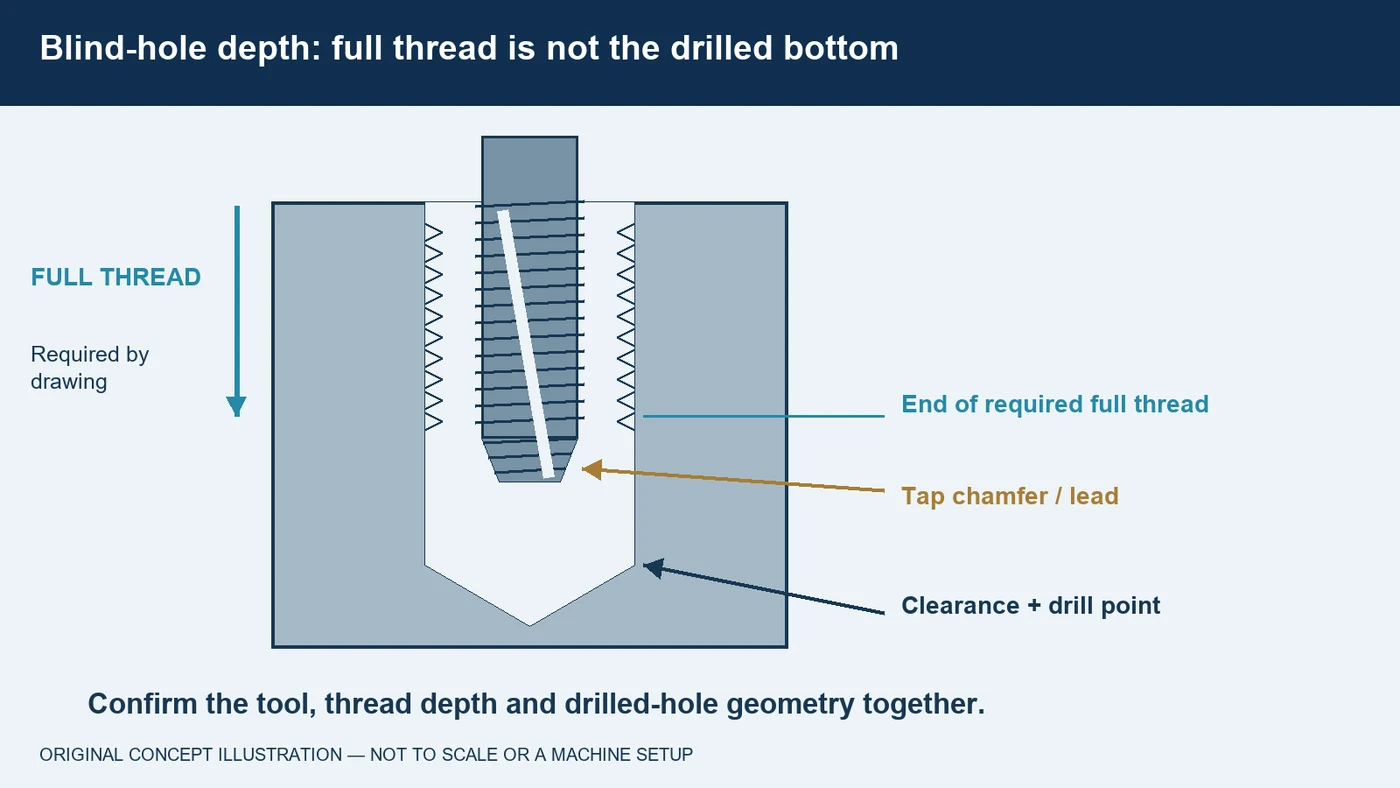
The nominal thread size does not by itself define a complete tapping setup. Confirm the specified thread form, pitch, tolerance and required full-thread depth, then use the correct tap-drill recommendation. Check the hole that was actually produced, including its size and condition. Cutting taps and forming taps do not use interchangeable drill sizes. In a blind hole, the full thread ends before the entire tool reaches the drilled bottom. The tap's chamfer, any point and the drill-point geometry all affect clearance. A bottoming-style tap still has a cutting lead and is not permission to drive the tool into the bottom. Do not enlarge a hole or shorten a thread beyond the drawing to reduce torque. If a change is needed, review it with the tooling supplier and the responsible manufacturing or quality team.
Get Tapping Fluid to the Working Teeth
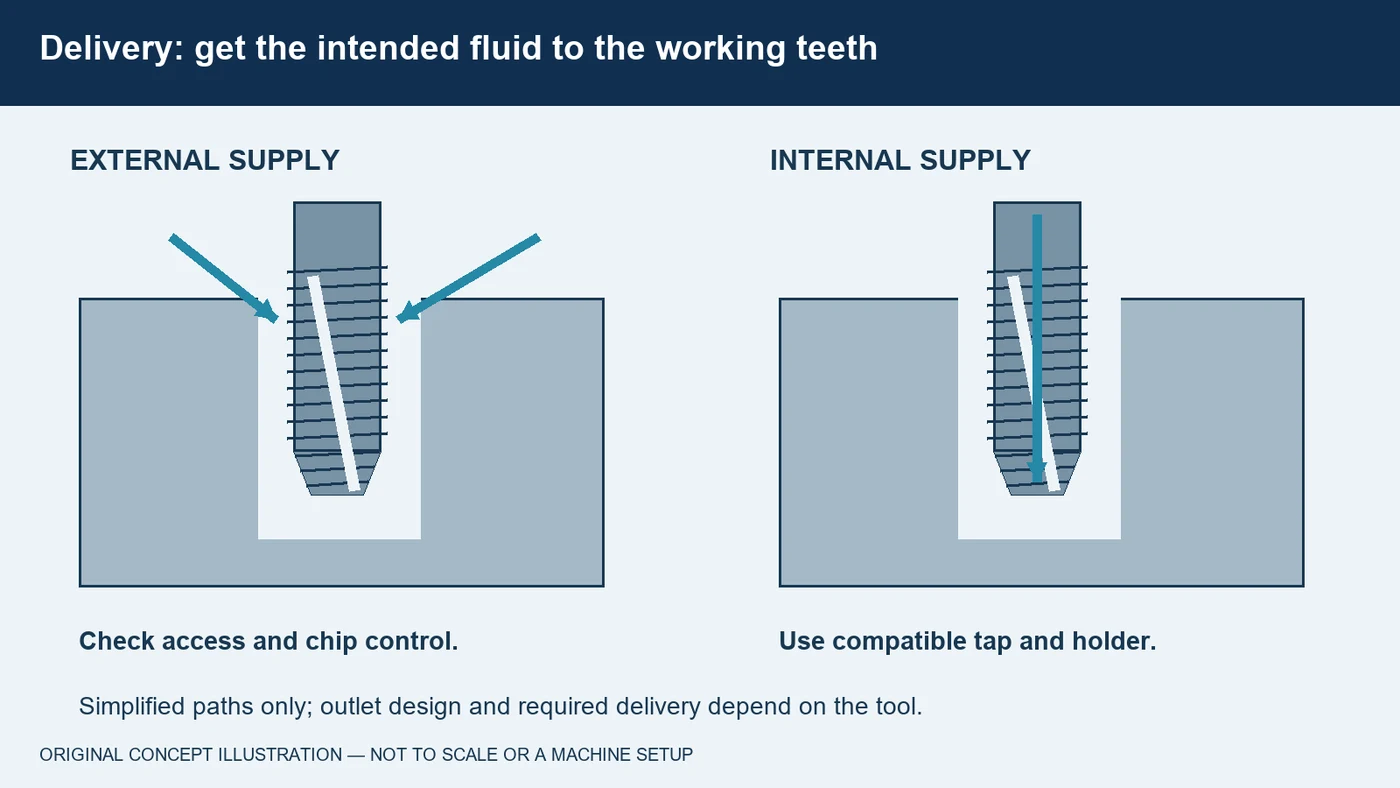
Fluid delivery influences chip removal, thread quality and tool life. An external nozzle can be useful when it reaches the intended region and chip formation is controlled. Internal coolant delivery can take fluid through a compatible tap toward the working area, particularly where access and evacuation are difficult. The complete machine, holder and tool arrangement must support that delivery. Check supply and restrictions using the approved procedure, and stay within the equipment ratings. More pressure or a larger visible splash is not a universal answer. The fluid must be suitable for the operation as well as present at the hole. If a shop uses a separate tapping lubricant, review its compatibility with the machine coolant, sump and part-cleaning process before introducing it. Do not add an unknown tapping oil or additive to a shared system by guesswork.
Choose Lubrication for the Material & Process
Water-miscible coolants and straight cutting oils can both be tapping-fluid candidates where the equipment and process permit them. Soluble, semi-synthetic, synthetic and vegetable-derived formulations vary in their application capabilities. Do not rank every product from its family name or appearance alone. Evaluate the actual formulation, delivery and required thread quality. Stainless steel and difficult alloys can place demanding requirements on lubrication and chip control. Aluminum raises questions about adhesion and nonstaining compatibility. Brass and copper-containing alloys need compatible additive chemistry, including any active-sulfur restrictions. Include the downstream washing or finishing operation and every material that shares the fluid system. For a diluted coolant, follow the selected product's recommended application range. Increasing concentration without checking its guidance can create other problems and is not a replacement for correct tooling or hole preparation.
Separate Fluid Problems from Setup Problems
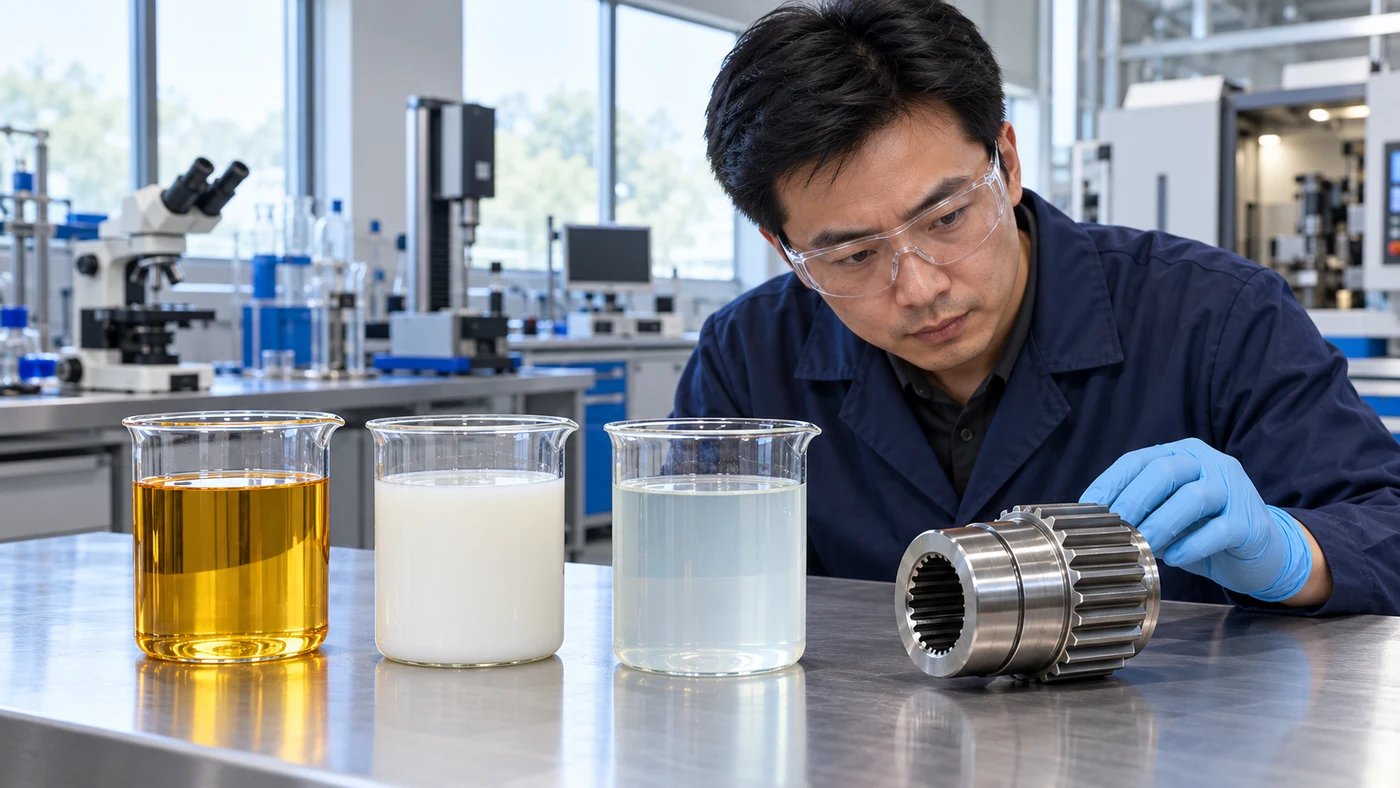
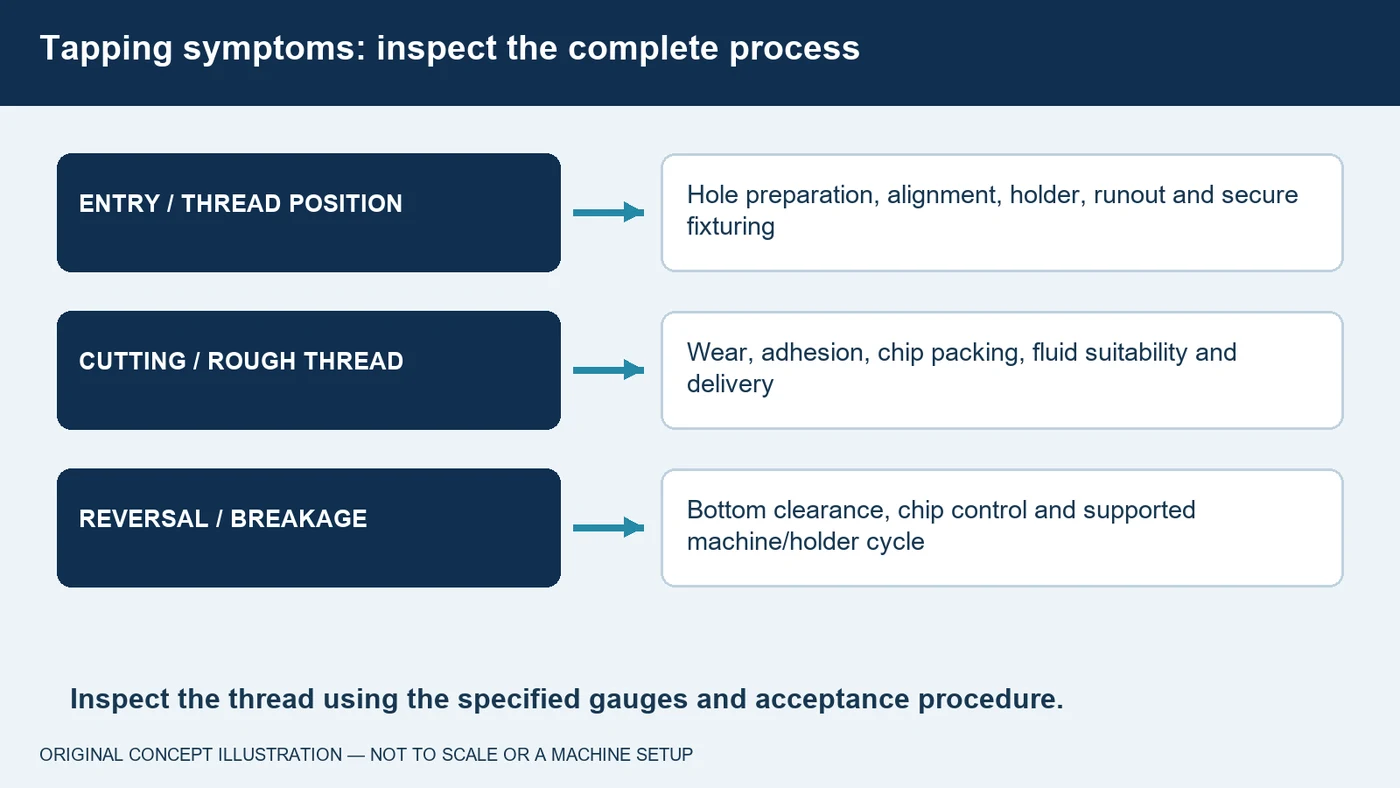
If a tap breaks, wears quickly or leaves a rough thread, record whether the symptom occurs during entry, forward cutting or reversal. Check tool wear, adhesion, chips and the drilled hole before making a chemistry change. Holder condition, runout, alignment and secure fixturing can also influence the result. The machine's tapping cycle and holder must provide the supported relationship between spindle motion and the thread lead, including reversal. Do not copy settings from a different attachment or machine. A lubricant cannot correct the wrong cycle or a tap striking the hole bottom. Inspect the finished thread with the specified gauges and measurement procedure; an attractive surface alone does not establish conformity. For a fluid trial, compare thread acceptance, tool life and chip control with a stable baseline, and record any simultaneous tool or program change.
Keep the Fluid & Inspection Record Consistent
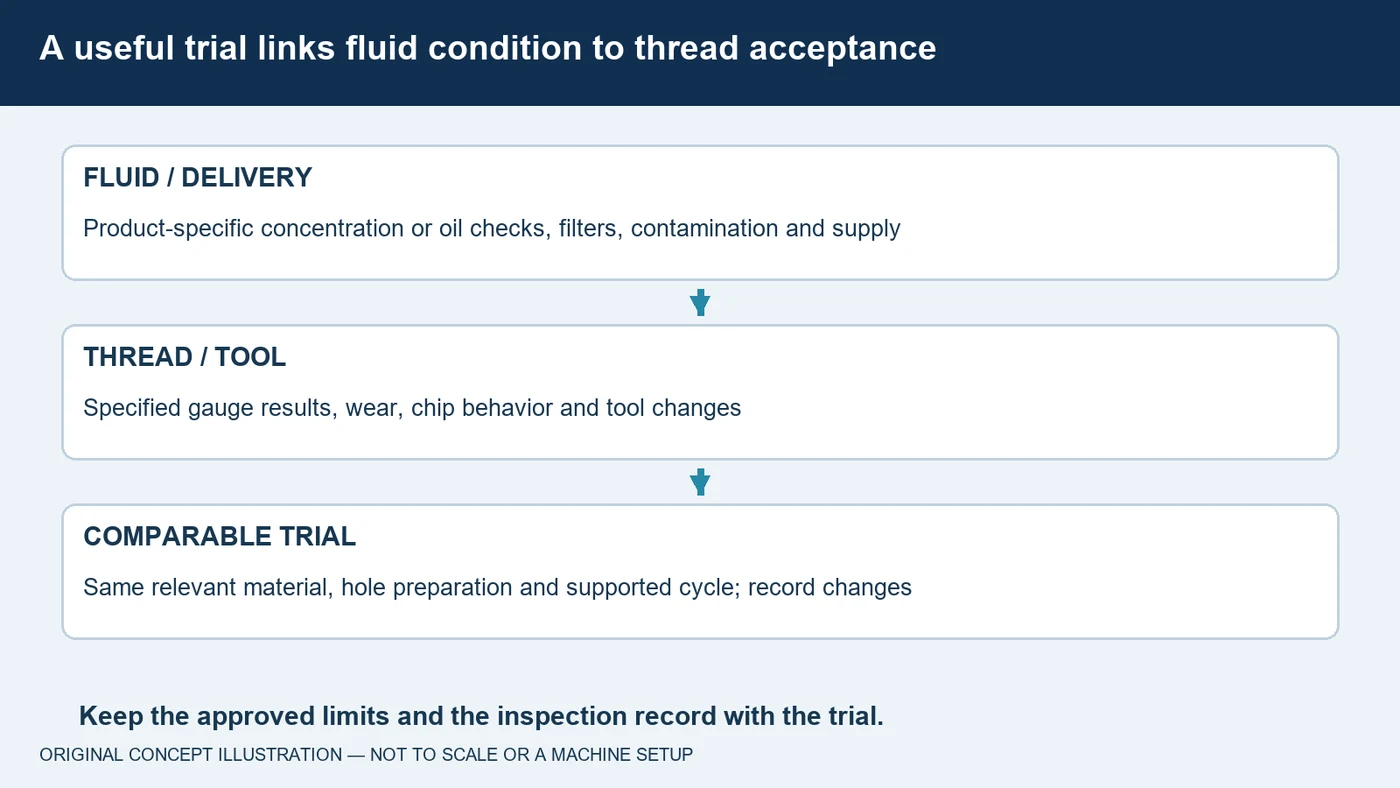
A suitable fluid needs consistent maintenance. Use the selected coolant's concentration range and the correct refractometer factor or table. An instrument reading is not automatically the actual mixture percentage. Follow the supplier's water-quality, mixing and maintenance instructions, and maintain the delivery and filtration system. Neat cutting oil requires its own condition checks rather than a water-dilution measurement. Record contamination, top-ups and any corrective action. During a tapping trial, also track thread-gauge results, tool changes, chip behavior and part cleaning. Those records help distinguish a fluid issue from a worn tap or a change in the drilled hole. Check performance across the relevant materials and thread depths, rather than judging only the easiest feature. Use the machine's approved safe procedure for inspection and servicing, with moving equipment stopped as required.
Bring QA Your Tapping Application
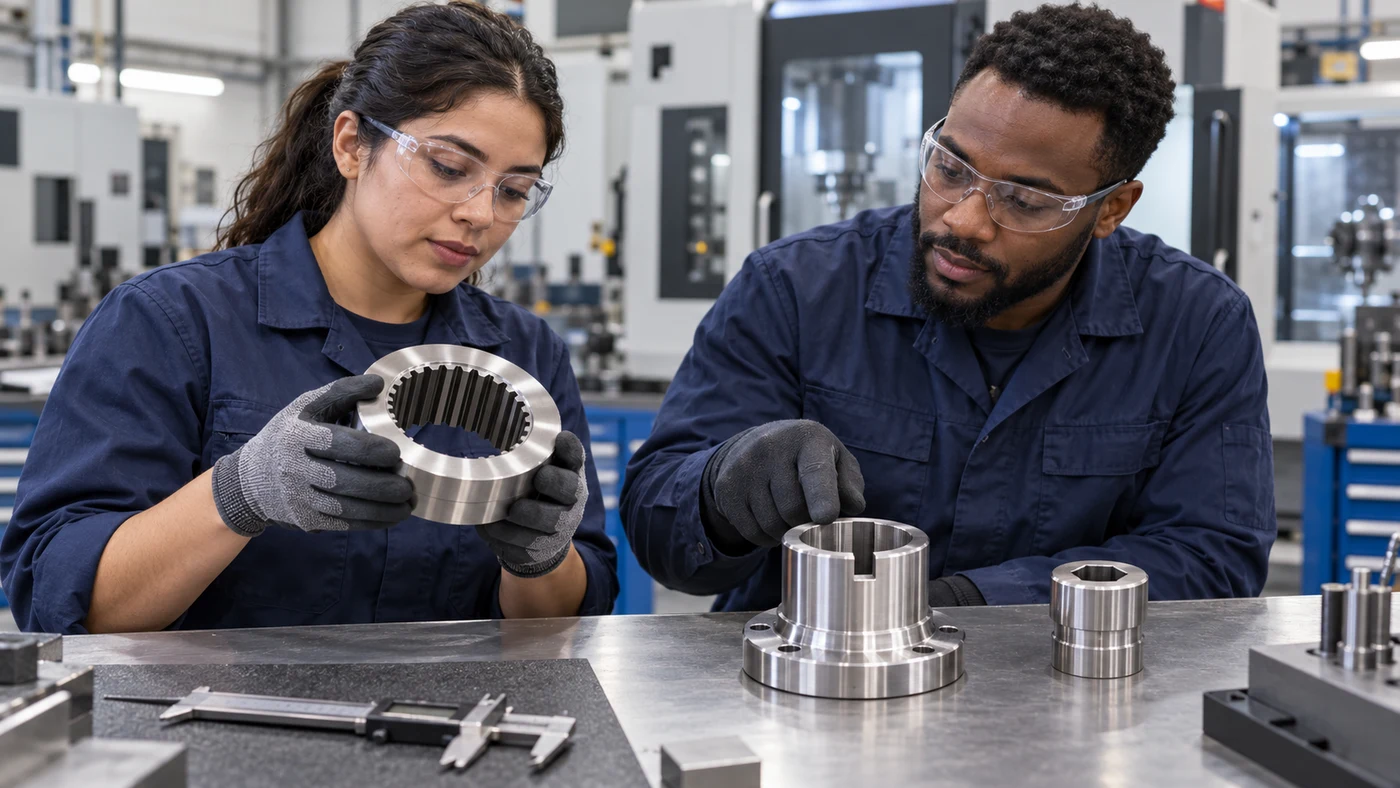
To discuss a tapping fluid with QA Lubricants, send the material and hardness, thread form and size, required depth and blind or through-hole configuration. Include the drilled-hole size, cutting-tap type, machine, holder and delivery arrangement. Tell us the current product and concentration-control method where applicable. Explain the problem you want to improve: breakage, tool life, torn threads, chips, gauge acceptance or residue. Share any customer limits on additives or the manufacturing process. QA has coolant and cutting-oil options and can help evaluate candidates with the complete application in view. Confirm machine, tool and fluid guidance and agree on trial acceptance criteria before making a change. Explore more metalworking guides at QA Lube dot com, or call one, eight seven seven, eight seven seven, six two two one. Thank you for watching.
Fluid selection by material
Use these as evaluation questions, not blanket product approvals.
| Material | What to evaluate | What to confirm |
|---|---|---|
| Carbon and alloy steel | Evaluate lubrication, chip evacuation and thread finish at the specified hardness. | Tap geometry, coating, hole preparation, thread tolerance and current process. |
| Stainless steel | Evaluate lubricity and resistance to adhesion with reliable fluid access. | Exact alloy, drilled-hole condition, chip behavior and tool-maker guidance. |
| Aluminum alloys | Evaluate adhesion control, nonstaining compatibility and part cleaning. | Alloy, tap design, hole size and downstream surface-treatment requirements. |
| Brass, bronze and copper | Evaluate nonstaining chemistry and the alloy's actual chip behavior. | Active-sulfur compatibility, residues and materials sharing the same sump. |
| Cast iron and short-chipping materials | Evaluate the specified tap geometry and removal of chips or fines. | Material grade, wet or dry process requirements, filtration and thread inspection. |
| Titanium and nickel alloys | Evaluate a specialist tool/fluid combination under controlled conditions. | Material condition, customer restrictions and supplier application guidance. |
Questions about cut tapping fluids
What is the difference between a cutting tap and a forming tap?
A cutting tap removes material and produces chips. A forming tap displaces suitable material into a thread without making cutting chips. Their hole-preparation requirements differ; do not interchange tap-drill sizes.
Which tap should I use for a blind hole?
Spiral-flute cutting taps commonly bring chips back toward the entrance in long-chipping materials. Straight-flute or specialized designs may suit other materials. Match the actual tool to the hole, material and maker's guidance.
Can a spiral-point tap be used like a spiral-flute tap?
Do not assume they manage chips the same way. Spiral-point designs typically push chips ahead and are commonly used for through holes with adequate clearance; spiral-flute designs transport chips back toward the entrance.
Will more tapping fluid stop taps from breaking?
Not if the cause is an incorrect hole size, inadequate bottom clearance, misalignment, worn tooling or an unsuitable cycle. Check the complete process alongside fluid suitability and delivery.
What concentration should I use for tapping stainless steel?
Use the selected coolant's application range and measurement instructions. No single concentration applies to all products, taps and stainless alloys. QA has coolant and oil options for reviewing the actual application.
Discuss your application with QA
Read this guide in the QA online store
QA Lubricants has coolant and oil options. Send us the operation, alloy, hardness, tooling, current fluid and the problem you want to solve.
Discuss My ApplicationShop Water Diluted CoolantsShop Straight Cutting OilsTechnical references
- Sandvik Coromant: choosing cutting taps, thread forms and chamfers
- Sandvik Coromant: tapping operation tips and coolant delivery
- Vergnano: flute and groove geometries
- Vergnano: tapping troubleshooting and application checks
- Tapmatic: troubleshooting thread quality, breakage and holder issues
- QualiChem: water-dilutable machining coolants and tapping applications
- QualiChem: straight cutting oils and tapping applications
- Blaser Swisslube: concentration measurement and refractometer factors
Original educational content and illustrations. Confirm current machine, tool and fluid instructions. Trademarks belong to their respective owners.