
Cylindrical Grinding Coolants & Oils: OD, ID and Precision Round Parts
Compare OD and ID cylindrical-grinding fluid requirements: workholding, traverse and plunge cycles, wheel dressing, coolant delivery, filtration, roundness and finish.
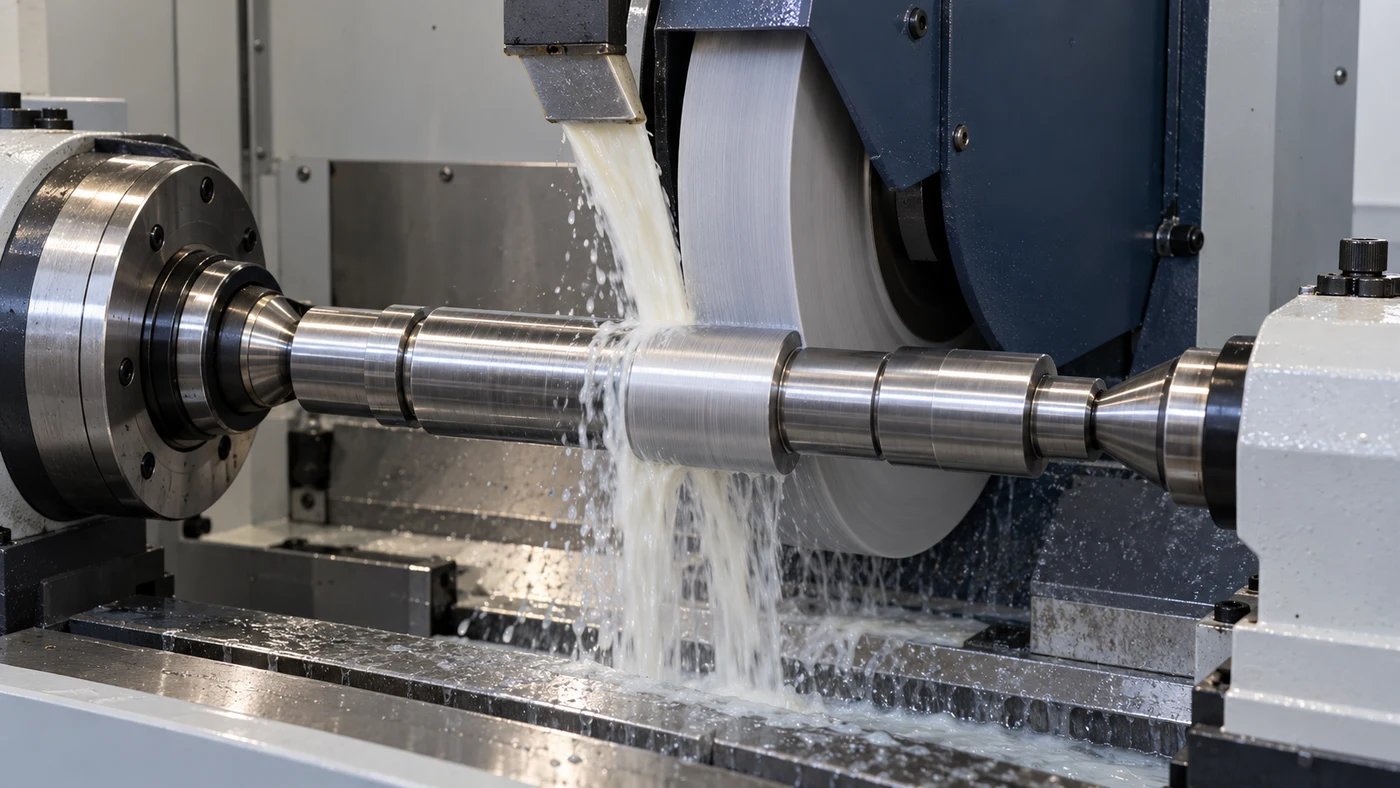
Watch: Cylindrical Grinding Coolants & Oils: OD, ID and Precision Round Parts
Identify the Diameter and Grinding Method
Cylindrical grinding finishes surfaces around a part's rotational axis with an abrasive wheel. External grinding, often called OD grinding, works on an outside diameter. Internal, or ID grinding, works inside a bore or another internal feature. The wheel and workpiece rotate, but the holding and contact arrangements differ. In center-type external grinding, a part may be supported between centers or held by a chuck or collet. Centerless grinding uses a different support and regulating-wheel arrangement and deserves a separate application review. Begin with the drawing and identify the diameter, ground length, shoulders, access and material condition. Size, roundness, cylindricity and surface finish are different requirements, so record the ones the part must actually meet. QA has coolant and grinding-oil options for these applications. The formulation should be evaluated with the machine, abrasive, workholding and acceptance requirements together.
Support and Drive the Workpiece
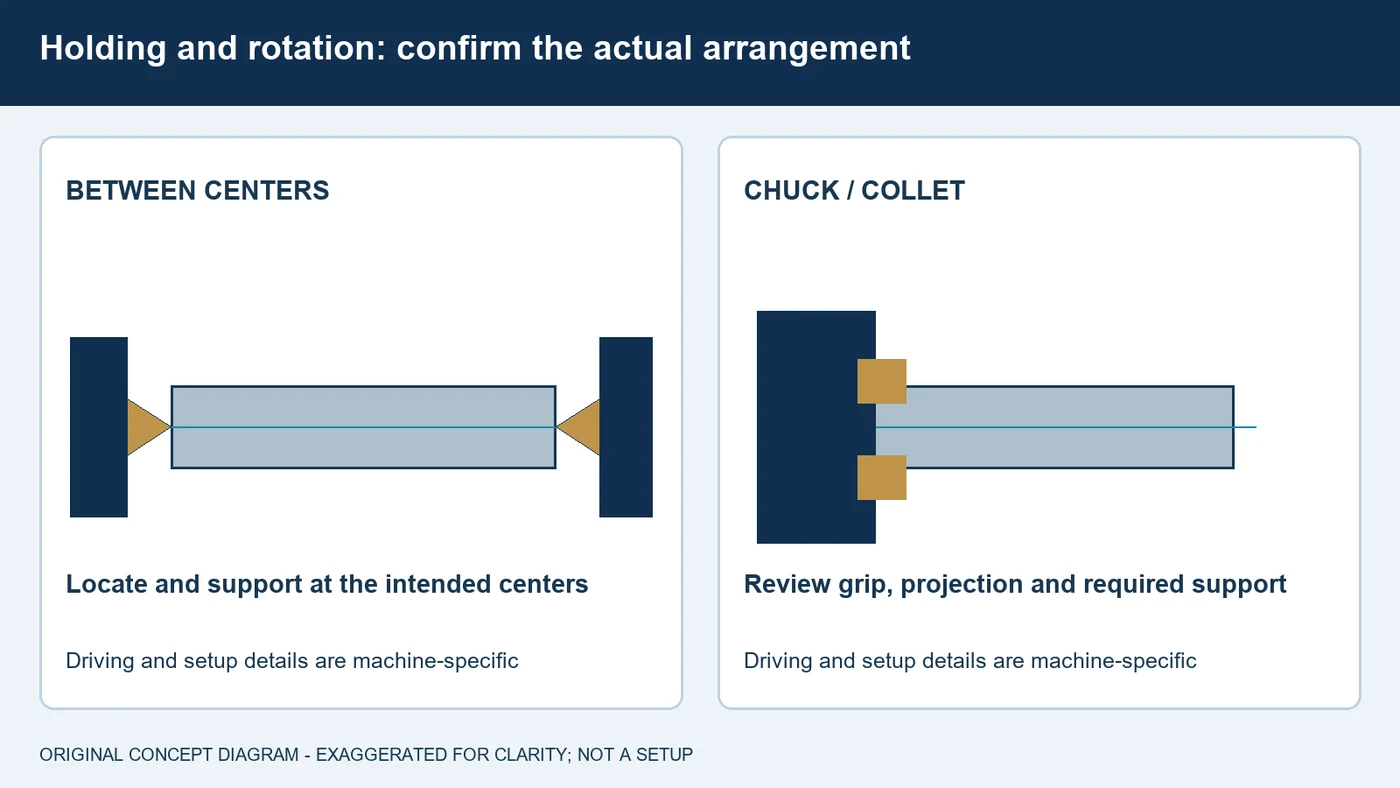
Workholding is part of the grinding process, not an afterthought to the fluid choice. Between-centers grinding needs an appropriate locating and driving arrangement. Chuck or collet work uses the workhead to hold and rotate the part, with support selected for the geometry. Some universal cylindrical grinders accommodate both modes. Their tailstock adjustments and center-pressure controls illustrate why setup must follow the actual equipment and workpiece requirements. Do not copy a center pressure or unsupported length from another machine. Inspect the locating surfaces, drive arrangement and relevant support condition before changing the fluid. Include thin walls, long sections and interrupted features in the application discussion. A coolant change cannot compensate for an unsuitable fixture or a part that moves during the operation. Establish the mechanical setup first, document it, and keep it consistent when comparing formulations or judging a change in finish and geometry.
Distinguish Traverse from Plunge Grinding
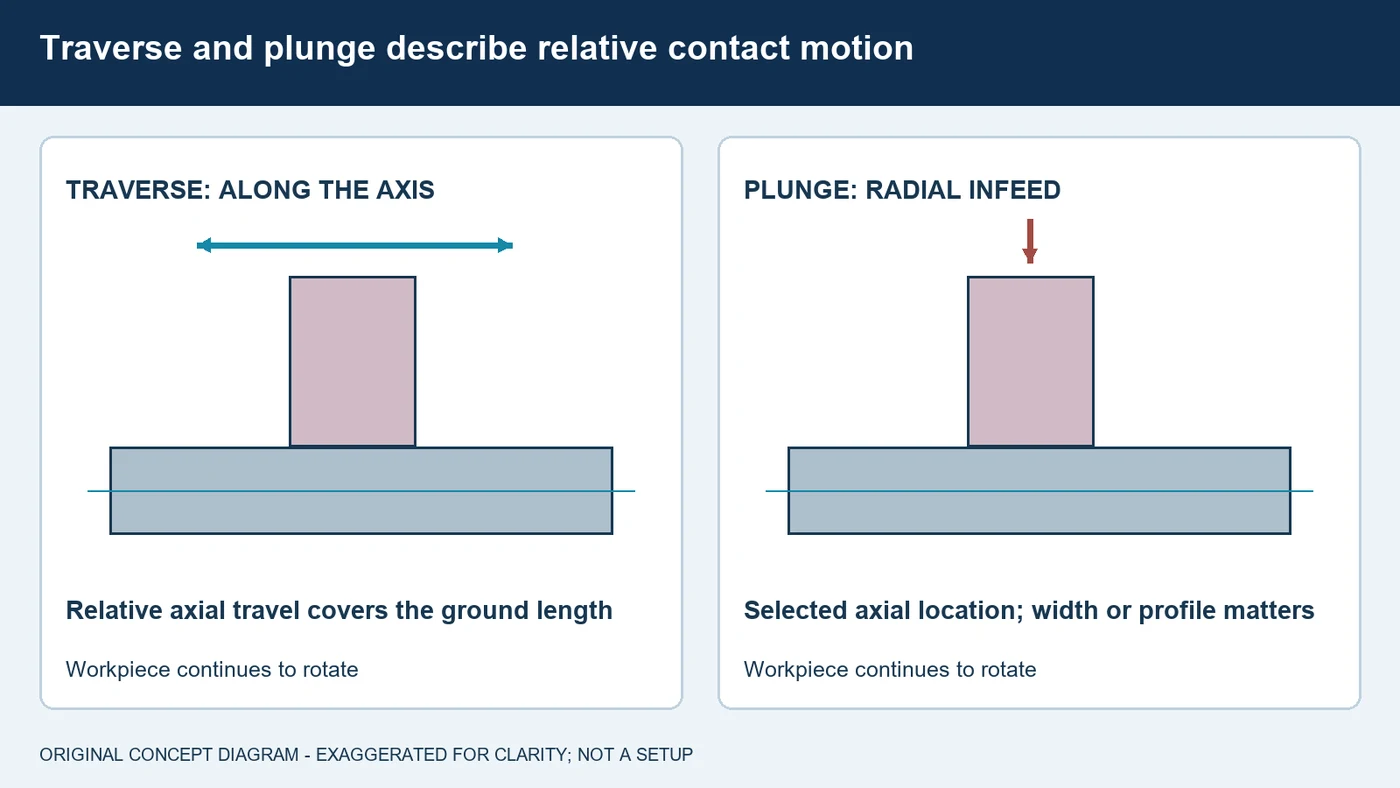
Traverse and plunge describe how the grinding contact moves relative to the workpiece. In traverse grinding, relative movement along the part's axis carries the contact across the required length. In plunge grinding, radial infeed works at a selected axial location; the wheel width or profile helps determine the section being ground. The workpiece still rotates. Actual cycles may add controlled oscillation, staged infeed or a specified finishing interval, so the simple names do not describe every machine motion. Review the selected cycle with the equipment and abrasive suppliers. A shoulder, groove or internal profile changes the available clearance and the area that needs fluid. Confirm that nozzle access and drainage remain appropriate throughout the motion. Do not treat a traverse setup as automatically interchangeable with a wider plunge contact. Document the cycle and inspect the resulting part instead of assuming one method always produces better finish or productivity.
Match the Wheel and Its Preparation
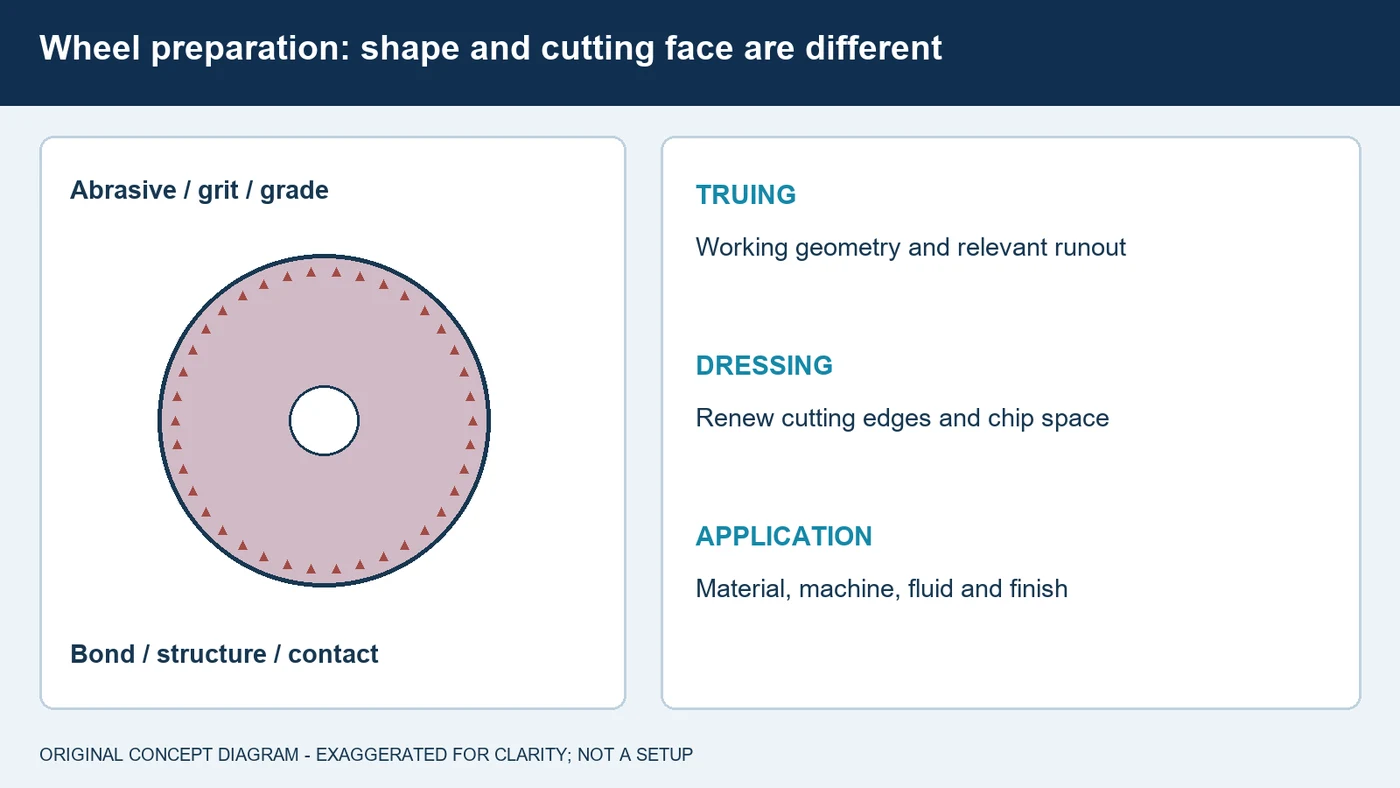
The abrasive wheel must suit the material, hardness, working contact and required result. Abrasive type, grit size, grade, bond and structure are separate choices, and the planned fluid and machine capability influence the application. A specification suited to one diameter or contact width is not automatically right for another. Wheel preparation matters as well. Truing restores working geometry and relevant runout, while dressing renews the cutting face and space for swarf. A wheel can be correctly shaped but still cut poorly if its face is loaded or dull. Match the dresser and procedure to the actual abrasive and bond. Do not prescribe one grit, grade, dressing depth or traverse rate for every cylindrical grinder. Record wheel condition before comparing fluids, and keep all use and speed limits within the wheel and machine instructions. A change in wheel preparation can change the result independently of a fluid change.
Reach the OD or ID Grinding Contact
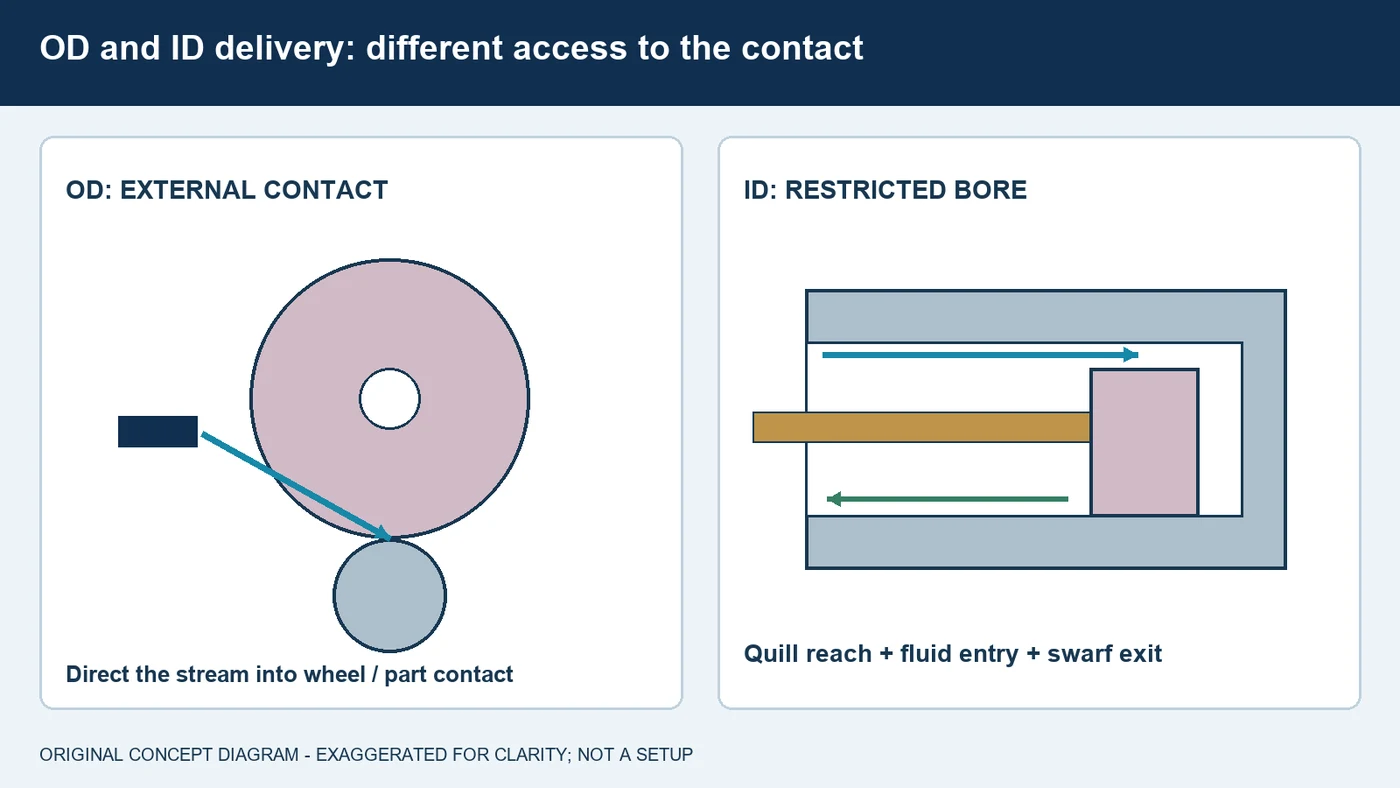
Coolant must reach the working contact rather than simply wet the enclosure. At an external wheel, the rotating air layer can interfere with a poorly directed stream. Review coherent delivery, nozzle aim, available supply and coverage with the equipment requirements. Internal grinding adds a different constraint: the small gap between wheel and bore can restrict fluid access and swarf escape. The wheel's quill must also have appropriate rigidity for the required reach. A long or flexible assembly can affect the result even when fluid is present. Do not try to correct a mechanical reach problem only by increasing pump pressure. Follow the machine, wheel and nozzle guidance for the actual arrangement, and confirm delivery through the cycle. Check return flow and contamination control as well. More visible splash alone is not evidence that a bore or external contact has dependable cooling and swarf removal.
Select and Maintain the Formulation
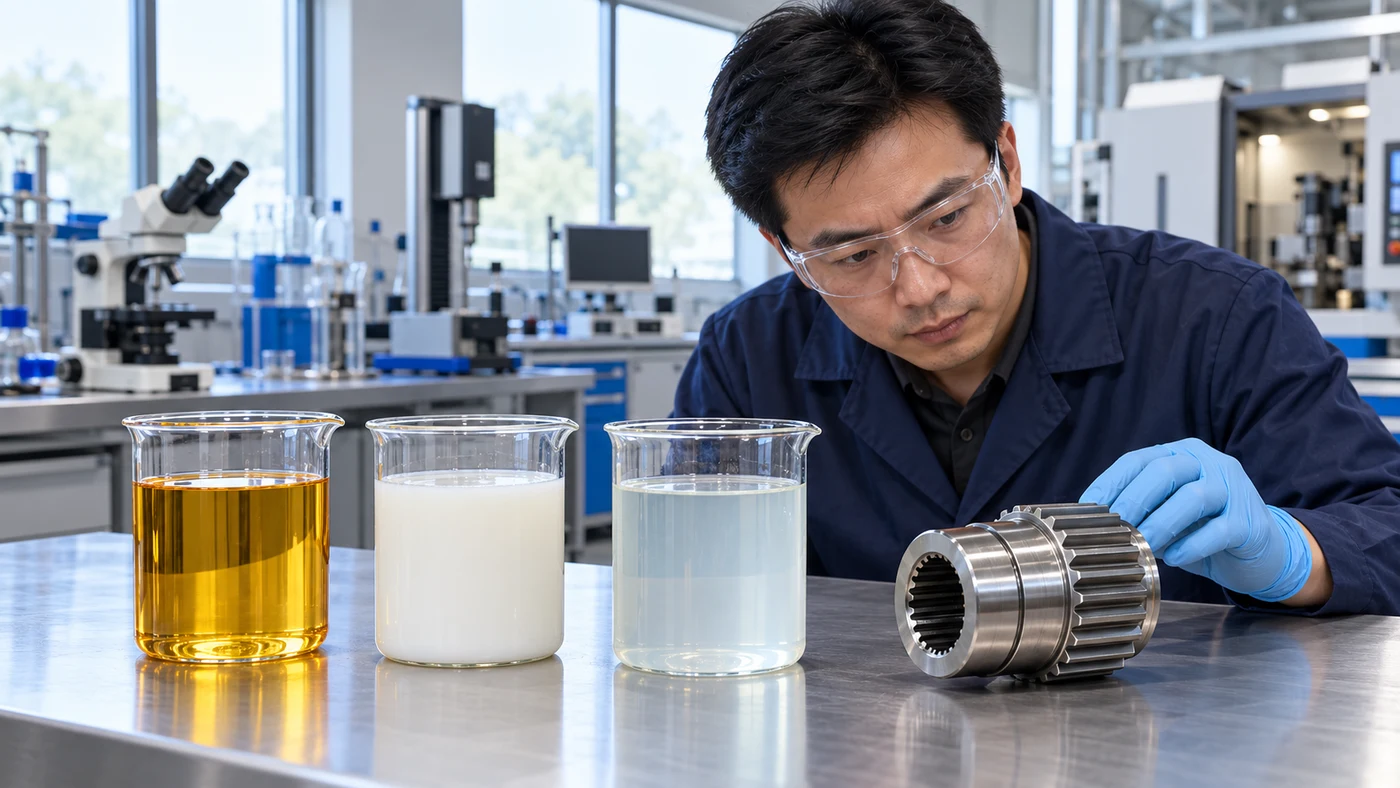
Both water-miscible coolants and grinding oils appear in cylindrical-grinding applications. A general oil or coolant label does not establish suitability. Review the actual formulation for lubrication, heat removal, corrosion protection, machine and wheel-bond compatibility, and downstream cleaning. Aluminum and copper alloys need specific staining checks. Cobalt-bonded carbide needs a binder-compatibility review rather than an assumption that any grinding fluid is acceptable. For a water-miscible formulation, follow the product's water-quality, mixing and concentration instructions, including its refractometer factor where required. Filter the returning metal and abrasive contamination using a system matched to the process; there is no universal filter rating for every diameter and wheel. Maintain dependable supply and the machine's thermal-control requirements. QA has coolant and grinding-oil options for evaluation. Compare accepted parts with the fluid condition and setup recorded, rather than judging a formulation only by appearance in the tank.
Inspect Size, Form and Surface Condition
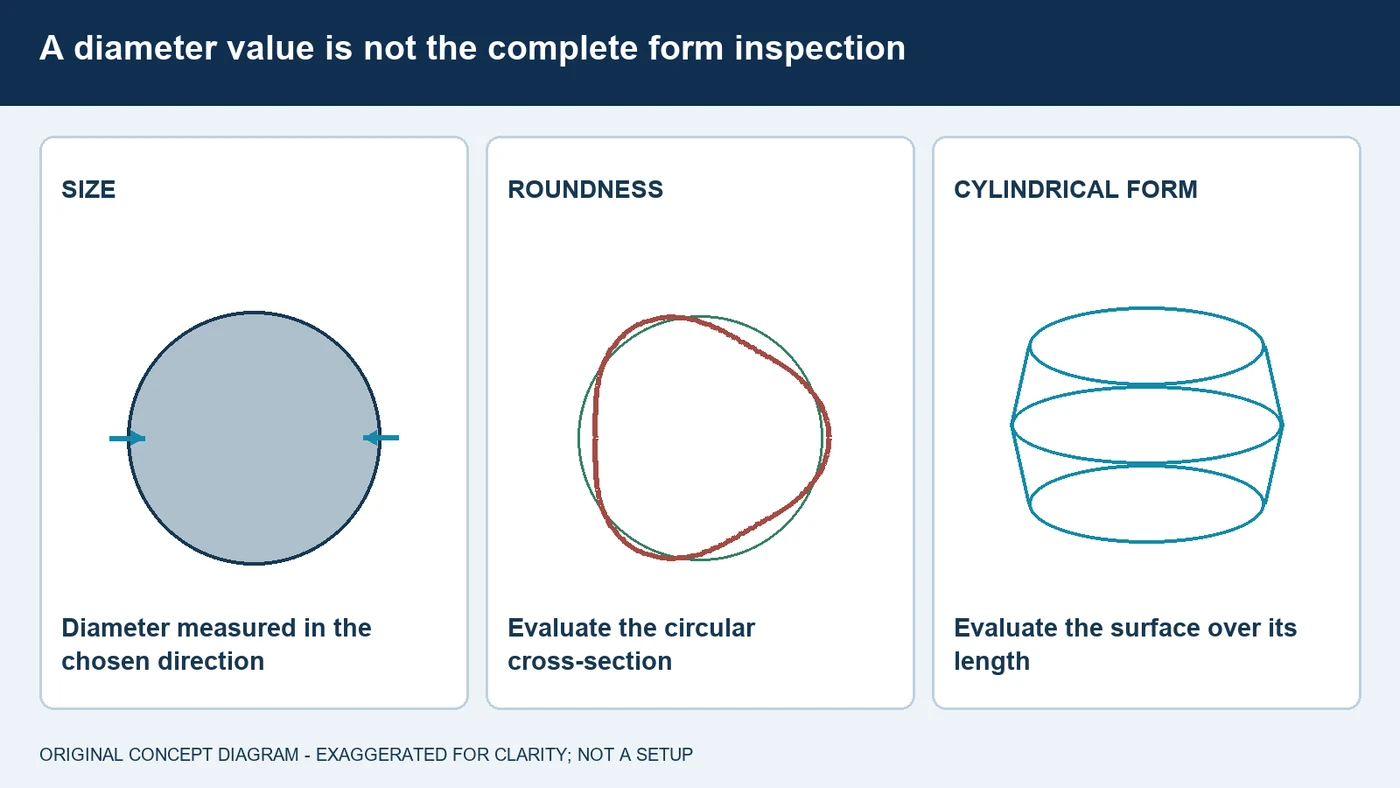
A correct diameter reading does not prove that a ground surface has the required roundness. Certain out-of-round shapes can escape a simple two-point diameter check, and cylindricity concerns the surface over its length rather than only one cross-section. Agree on suitable measurement and acceptance methods before a trial. Inspect size, form, finish and any specified surface-integrity requirements under the required conditions. Defects then help organize the investigation. Scratches can involve contaminated fluid or grinding debris; burn-related concerns require a review of heat generation and actual cooling. Repeating surface patterns can involve dressing, vibration or workholding. These are possible causes, not a one-to-one diagnosis from a photograph. Review the setup, wheel and dresser, fluid supply and cycle with the relevant suppliers. Change supported variables in a controlled way and record the inspection results so an apparent improvement can be repeated.
Bring QA the Cylindrical-Grinding Application
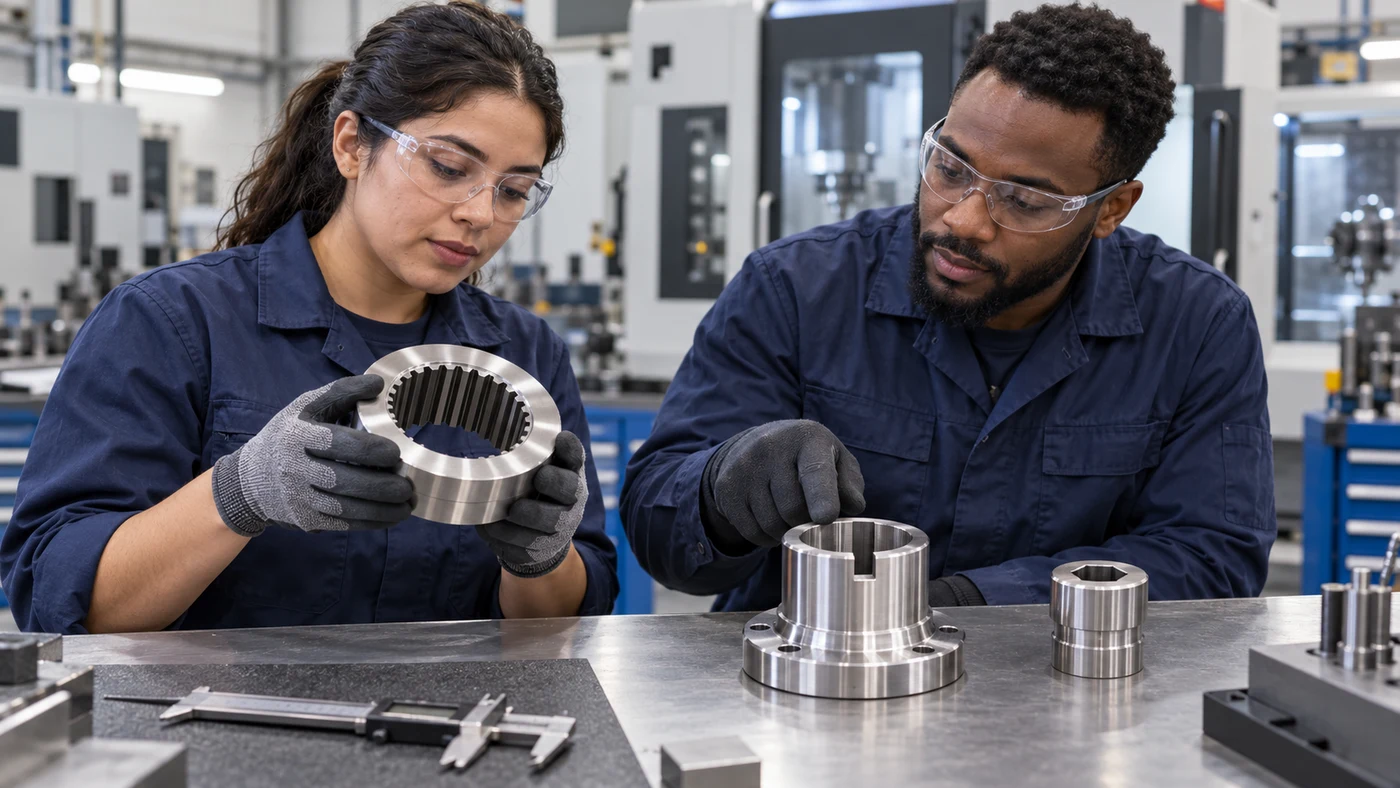
For a cylindrical-grinding fluid review, send QA the material grade, hardness, diameter and ground length, together with the drawing's size, form and finish requirements. Specify external or internal grinding and whether the cycle uses traverse, plunge or another supported motion. Include the machine, wheel specification, dressing arrangement and workholding. For internal grinding, describe the bore access, wheel and quill arrangement. Provide the current product, fluid condition, delivery, filtration and temperature-control information. Explain the result you want to improve, such as loading, burn, scratches, chatter, corrosion, cleaning or consistency of accepted parts. QA has coolant and grinding-oil options and can help review the formulation against these needs. Agree on the operating and inspection plan with the relevant suppliers before a trial. Preserve the setup and measured results so the product choice is evaluated as part of the complete manufacturing route.
Fluid selection by material
Use these as evaluation questions, not blanket product approvals.
| Material | What to evaluate | What to confirm |
|---|---|---|
| Carbon and alloy steels | Review hardness, corrosion protection and heat control at the actual contact. | Wheel specification, holding method, required form and finish. |
| Hardened bearing and tool steels | Evaluate the wheel/fluid system for the actual hardness and quality requirements. | Drawing-based size, form and surface-integrity inspection. |
| Stainless steels | Review alloy-specific grinding behavior and formulation compatibility. | Wheel condition, supply, residue removal and subsequent processing. |
| Aluminum and copper alloys | Require specific non-staining compatibility and wheel-loading review. | Alloy, holding method, abrasive choice and cleaning requirements. |
| Cast iron | Evaluate fine-swarf handling, filtration and corrosion protection. | Material condition, contamination control and accepted surface result. |
| Cobalt-bonded carbide | Verify binder and wheel-bond compatibility for the selected formulation. | Qualified wheel/fluid arrangement, filtration and supplier instructions. |
Questions about cylindrical grinding fluids
What is the difference between OD and ID grinding?
OD grinding finishes an outside diameter. ID grinding works on internal features and has different wheel, quill and fluid-access constraints. Review each actual contact and holding arrangement.
Are traverse and plunge grinding the same cycle?
No. Traverse uses relative axial movement across the length; plunge uses radial infeed at a selected location. Supported cycles may also include oscillation or staged motions.
Should every cylindrical grinder use straight oil?
No. Oil and water-miscible options are application-dependent. Evaluate the exact formulation with the machine, wheel, material and downstream requirements. QA has coolant and oil options.
Why is coolant delivery difficult inside a bore?
The wheel and quill occupy space inside the part, leaving restricted access for fluid and swarf escape. Confirm delivery and rigidity for the actual wheel, bore and reach.
Does measuring diameter prove roundness and cylindricity?
No. A two-point diameter method can miss some form errors. Use inspection suited to the drawing and surface, including the relevant cross-sections and ground length.
What information does QA need?
Send the drawing, material and hardness, OD or ID method, cycle, machine, wheel/dresser, workholding, current fluid and supply/filtration details, plus measured defects or trial requirements.
Discuss your application with QA
QA Lubricants has coolant and oil options. Send us the operation, alloy, hardness, tooling, current fluid and the problem you want to solve.
Discuss My ApplicationShop Water Diluted CoolantsShop Straight Cutting OilsTechnical references
- UNITED GRINDING: cylindrical grinding methods and workholding
- STUDER: S20 workhead, tailstock and grinding cycles
- Norton: internal grinding contact, quill rigidity and coolant access
- Norton: wheel specification factors
- Noritake: dressing and truing
- Cool-Grind: wheel air barrier and coherent fluid delivery
- Norton: bearing grinding and operation-dependent coolant choices
- FUCHS: fluid selection and downstream requirements
- Blaser: coolant concentration measurement
- Filtertech: grinding swarf and fluid filtration
- UNITED GRINDING: cylindrical-grinding defect investigation
- Mitutoyo: roundness evaluation and diameter-method limitations
- Master Fluid Solutions: carbide binder and wheel compatibility example
Original educational content and illustrations. Confirm current machine, tool and fluid instructions. Trademarks belong to their respective owners.