
Double-Disc Grinding Coolants and Grinding Oils
Evaluate double-disc grinding coolants and oils for opposing metal faces. Explore through-feed and plunge methods, wheel conditioning, filtration, thickness and parallelism.
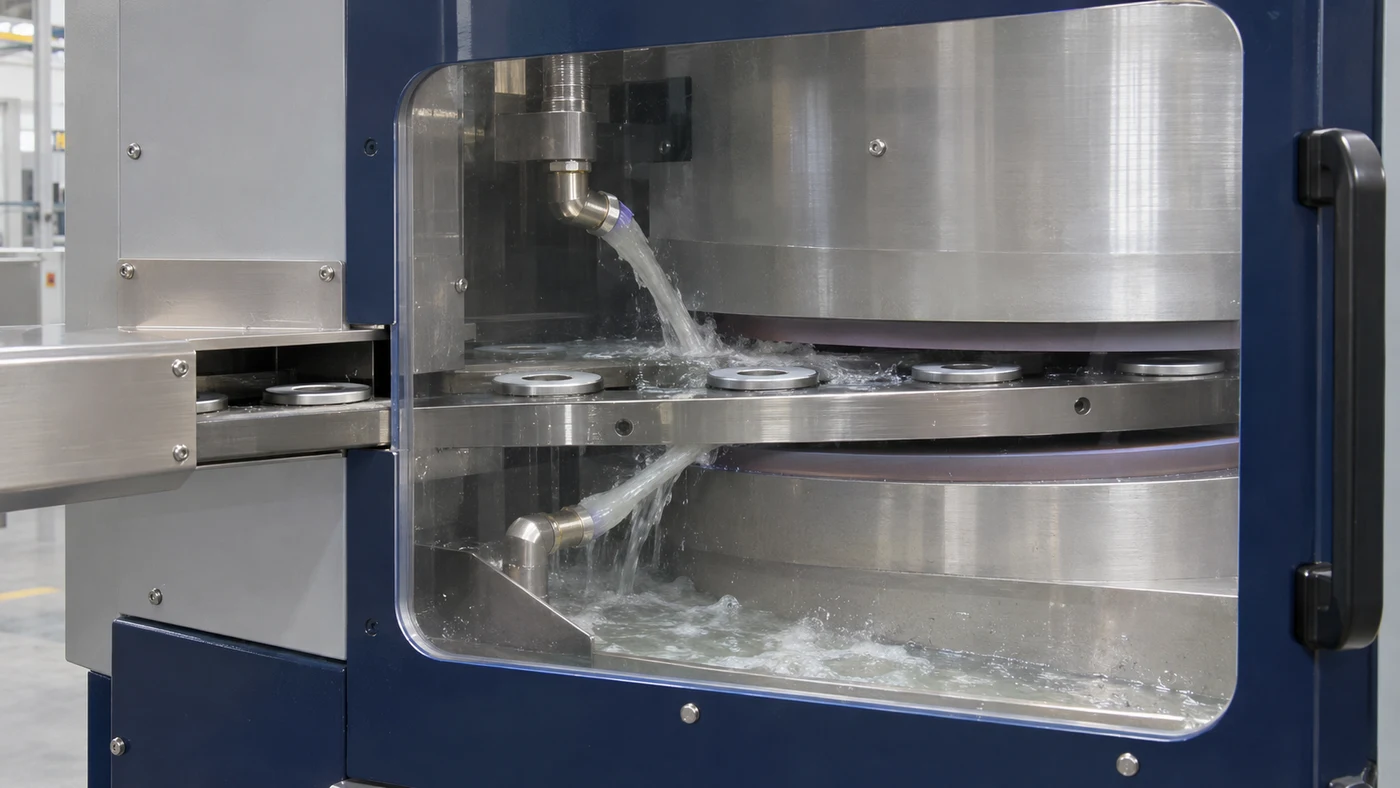
Watch: Double-Disc Grinding Coolants and Grinding Oils
Double-Disc Grinding: Two Opposing Faces Together
Double-disc grinding removes material from two opposing faces of a workpiece in the same process. Applications include bearing rings, spacers, connecting rods, plates and other components that need controlled thickness and parallel surfaces. Machines can arrange the opposed spindles horizontally or vertically, with different feeding and support systems. Identify that arrangement before choosing the fluid or evaluating delivery. The process uses bonded abrasive tools; do not assume that instructions for a loose-abrasive lapping slurry apply. The drawing determines which faces are functional and how size, flatness, parallelism and texture are accepted. QA has coolant and grinding-oil options for evaluation with the machine and wheel system. Describe the actual metal, incoming condition and material-removal requirement so the discussion begins with the part rather than a generic fluid category.
Through-Feed and Plunge Processes Use Different Paths
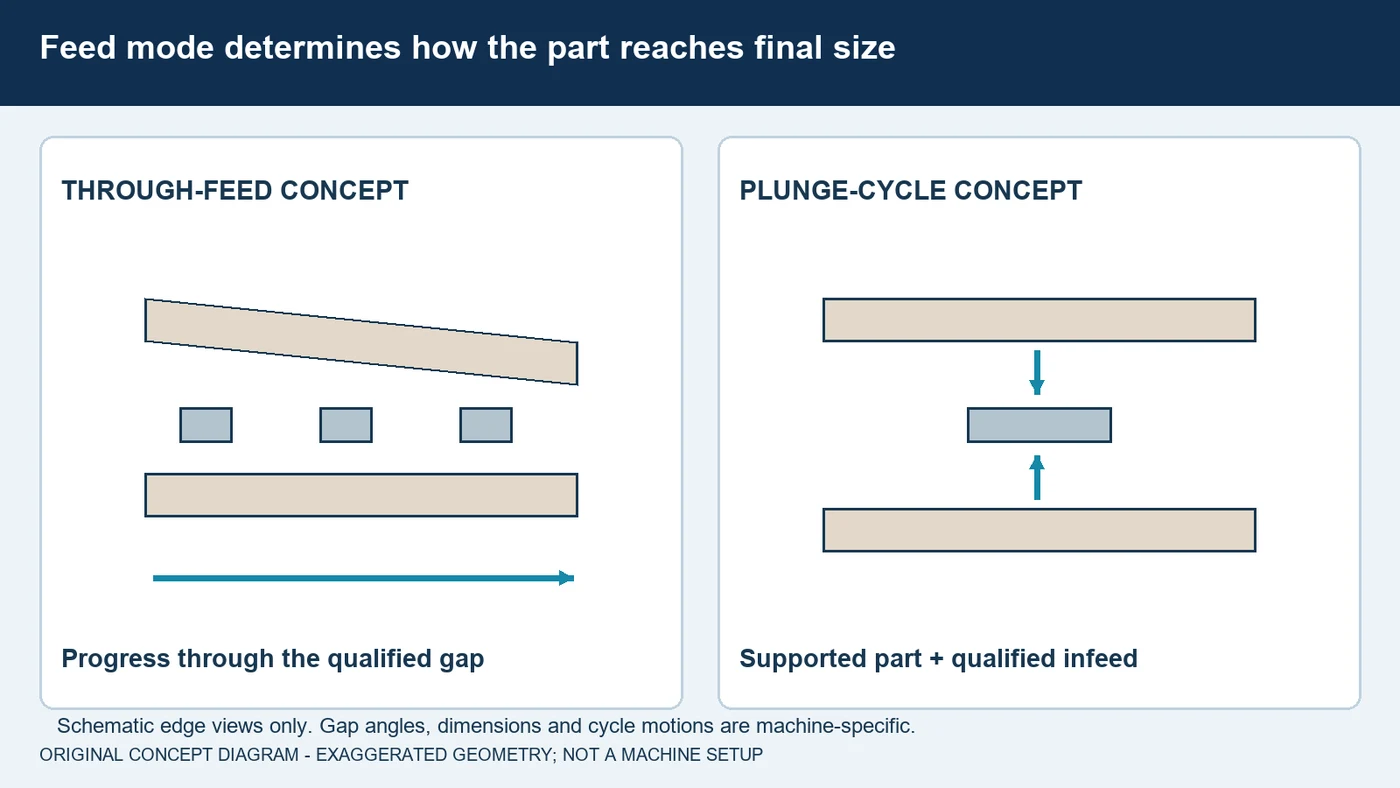
In a through-feed process, parts progress through the grinding zone and reach the required dimension as they leave the qualified working gap. A plunge process uses a different supported cycle to bring the tools and part to final size. Linear feeding, rotary carriers, indexed carriers and other arrangements are available, depending on the machine and component. Do not assume the abrasive faces must be exactly parallel during every grinding stage; some through-feed systems use a deliberately changing gap. Guides, nests and carriers control how the part enters, travels and exits. Incoming thickness variation, burrs or poor seating should be reviewed with the feeding system. Keep those conditions consistent in a fluid trial. The machine supplier determines the supported setup, not a universal tilt or feed recommendation.
Keep Both Abrasive Faces in the Review
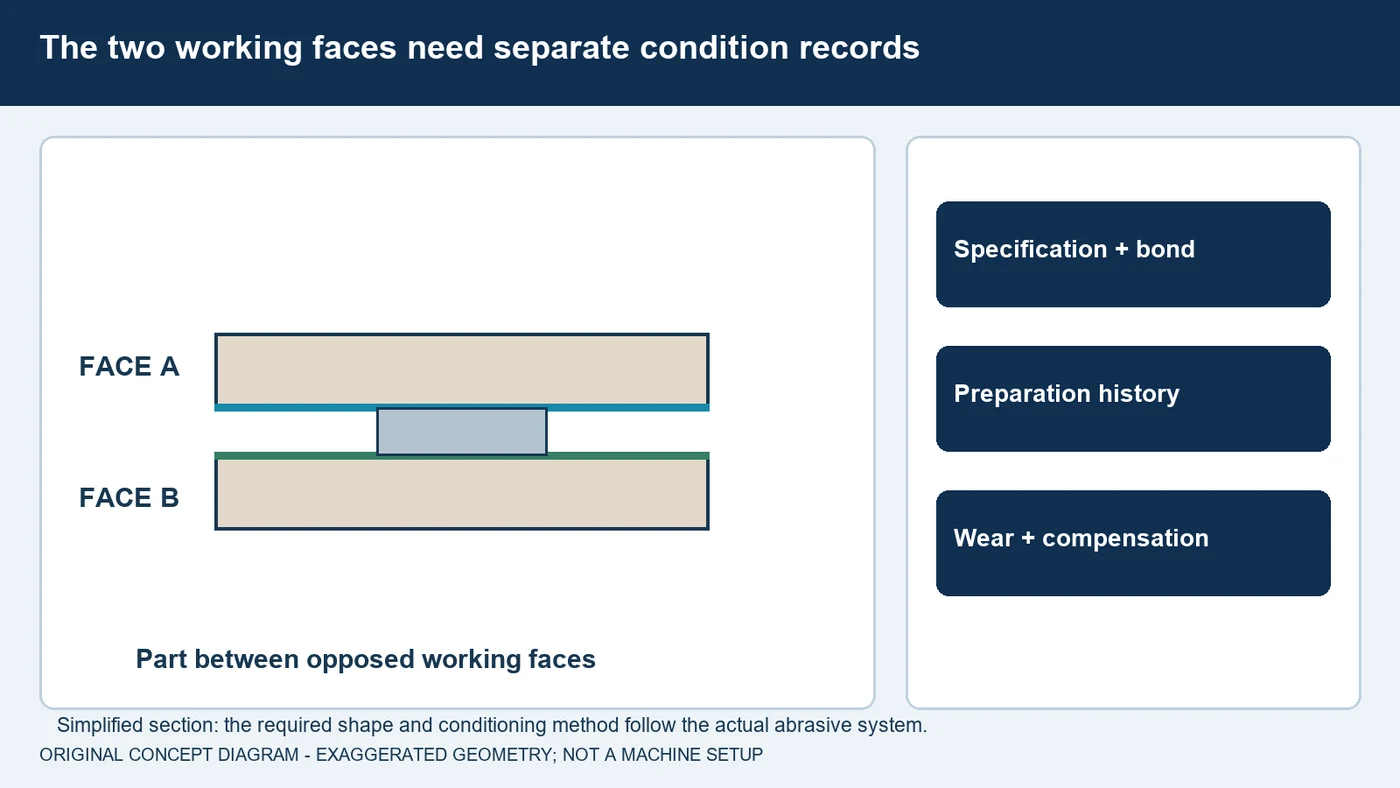
A double-disc grinder relies on two working abrasive faces, so the condition of both matters. Record the full specifications, prepared geometry and supported dressing or conditioning procedures. Truing concerns the required shape and alignment, while conditioning also establishes the active cutting surface. Changes in sharpness, loading or wear can alter removal, finish and dimensional behavior. The correct response depends on the actual machine and wheel system, rather than simply making every disc harder or finer. Inspect the dressing tools and their mounting when a problem follows a conditioning event. Compare fluid-trial parts at similar stages in the wheel cycle, including the interval between preparation steps. A formulation change should not conceal a worn dresser, unsuitable wheel or guide problem.
Supply Both Contacts and Remove Debris
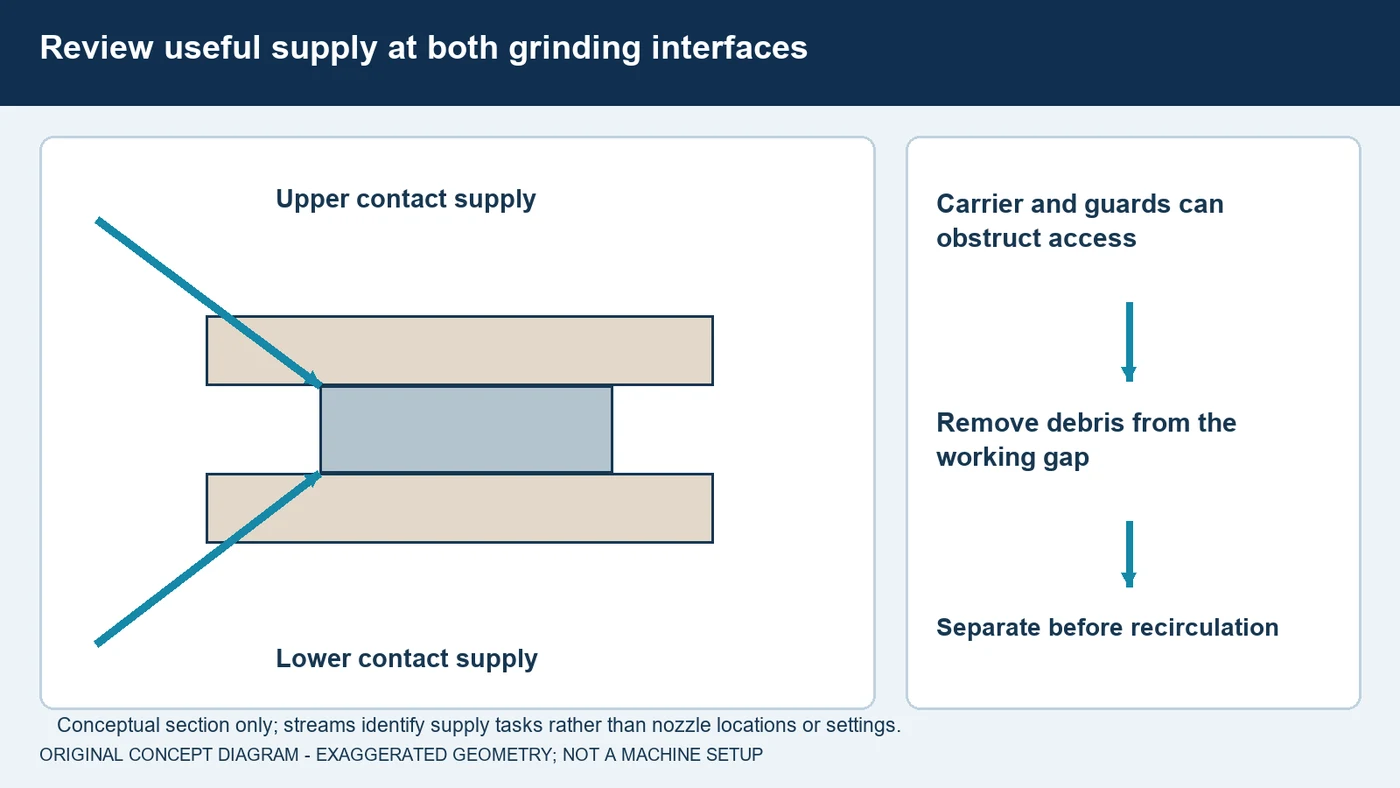
Useful coolant must reach both grinding contacts, not simply flood the outside of the machine. Parts, carrier features and guards can obstruct supply into a narrow working gap. Review the arrangement across the complete part path and at the relevant wheel condition. Depending on the grinder, supply can include external delivery or passages through the spindle; the equipment instructions determine which arrangement applies. Confirm actual delivery with the pump, filter and return system operating together. Removed metal and loose abrasive must leave the working zone and be separated before recirculation. Poorly filtered fluid can return particles that scratch a face or affect the process. Magnetic separation alone does not remove every contaminant. Establish filtration and delivery requirements from the machine, abrasive and finish specification rather than selecting a universal pressure or filter rating.
Match the Formulation to the Metal and Wheel Bond
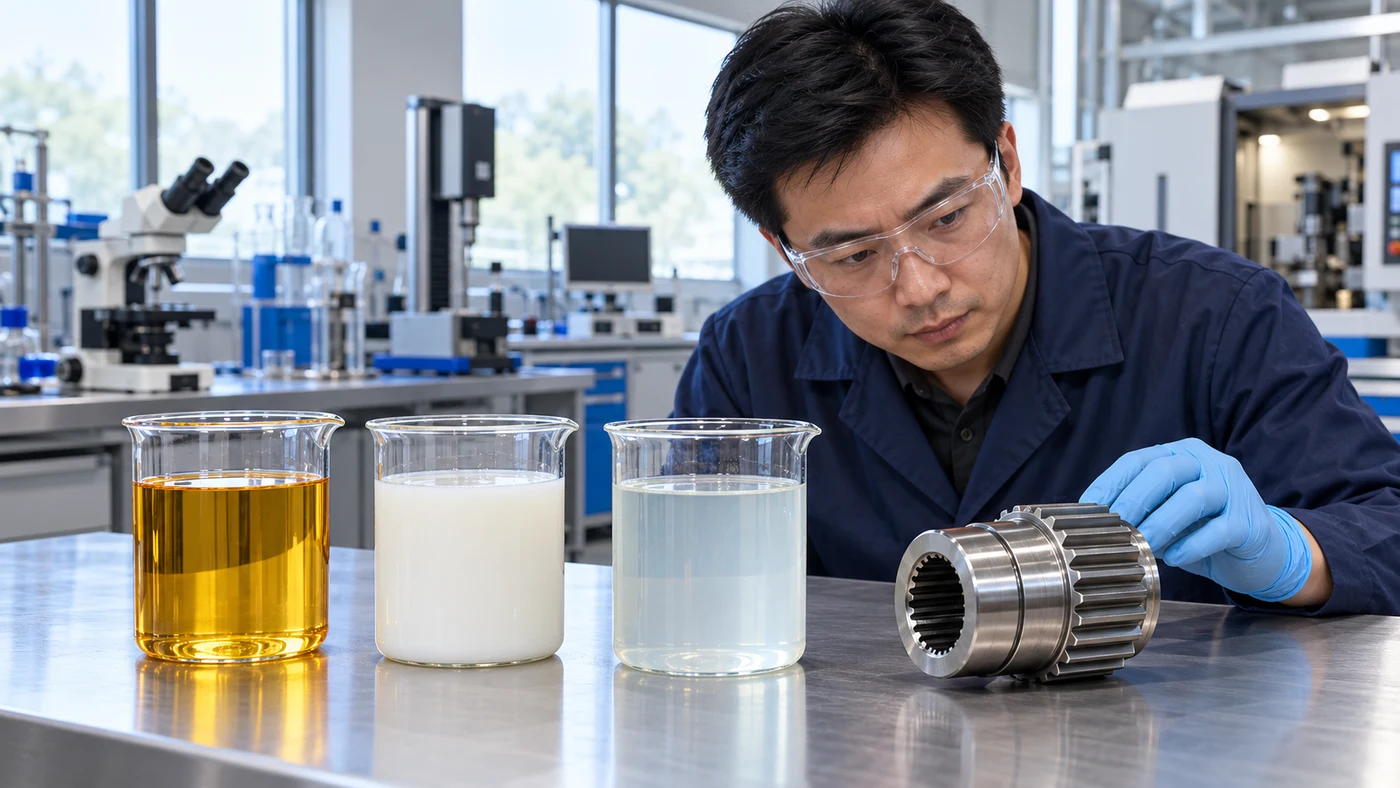
Double-disc applications include qualified water-miscible and grinding-oil systems. Choose a formulation for the actual metal, wheel bond, machine and maintenance arrangement. Hardened bearing steel, cast iron, stainless steel and aluminum present different questions; a formulation suitable for one is not automatically suitable for all. Include surface treatments or mixed-material assemblies in the review. Evaluate cooling, lubrication, wetting, corrosion or staining behavior, foam, debris handling and downstream cleaning. Verify compatibility with resin or other bond systems using current abrasive-supplier guidance. Older general concentration tables are not substitutes for the selected fluid's instructions. QA has coolant and oil options. A change between water-mix and neat oil also requires confirmation that the machine and its protective systems support the new fluid type.
Maintain the Fluid Conditions Behind Repeatability
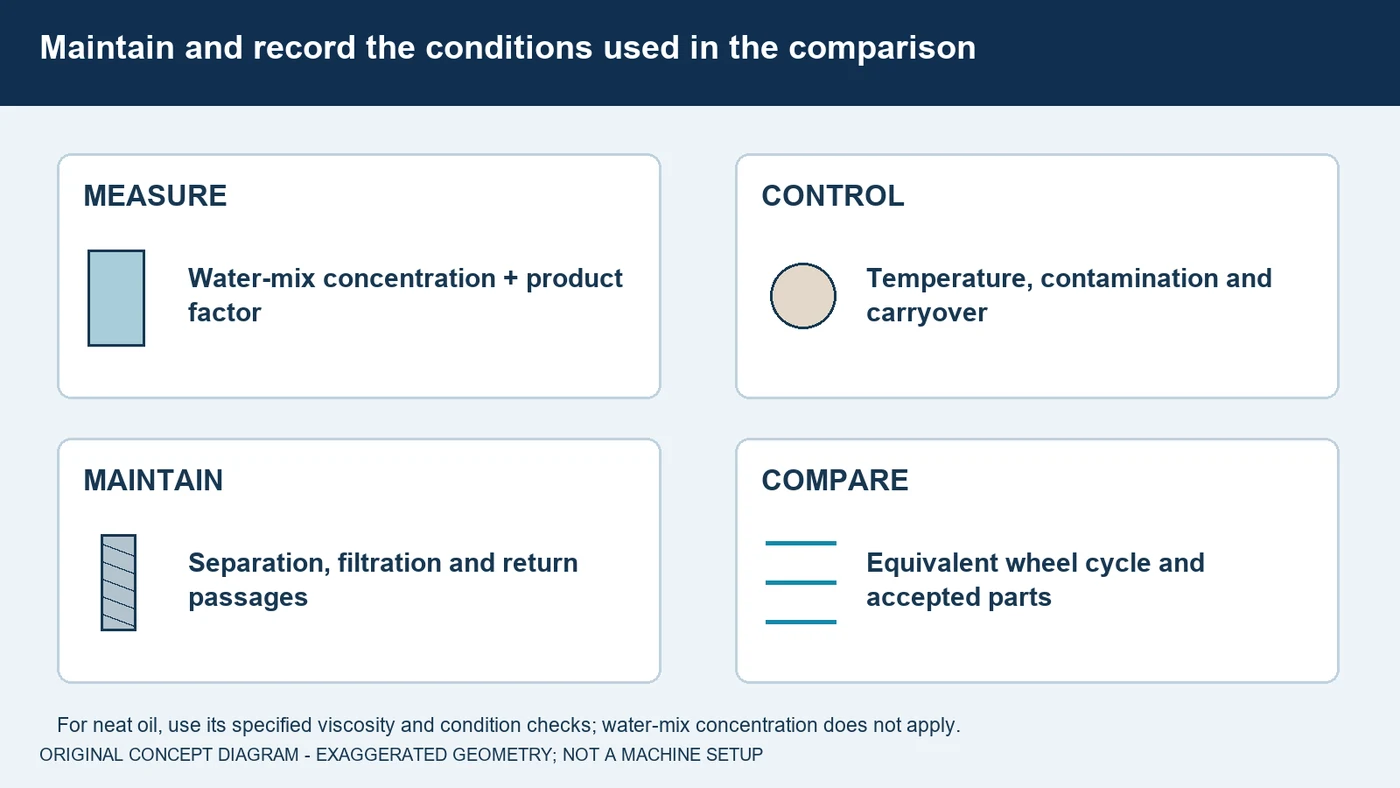
For water-diluted fluids, mix with the specified water and measure working concentration using the product-specific refractometer factor. An instrument reading is not automatically the true percentage for every formulation. Follow the supplier's procedure when contamination makes the reading unclear. Record concentration, fluid temperature, additions and relevant water-quality or analysis results. Inspect filters, return passages and the separation system so a restriction or sludge buildup does not quietly change supply. Tramp oil, cleaners or carryover from incoming parts can also change the fluid condition. With neat oils, monitor the specified viscosity, contamination and other maintenance checks instead of applying a water-mix concentration rule. Compare maintained systems during a trial; a new fluid in a cleaned sump and an uncontrolled old sump do not isolate formulation alone.
Measure Thickness, Flatness and Parallelism Separately
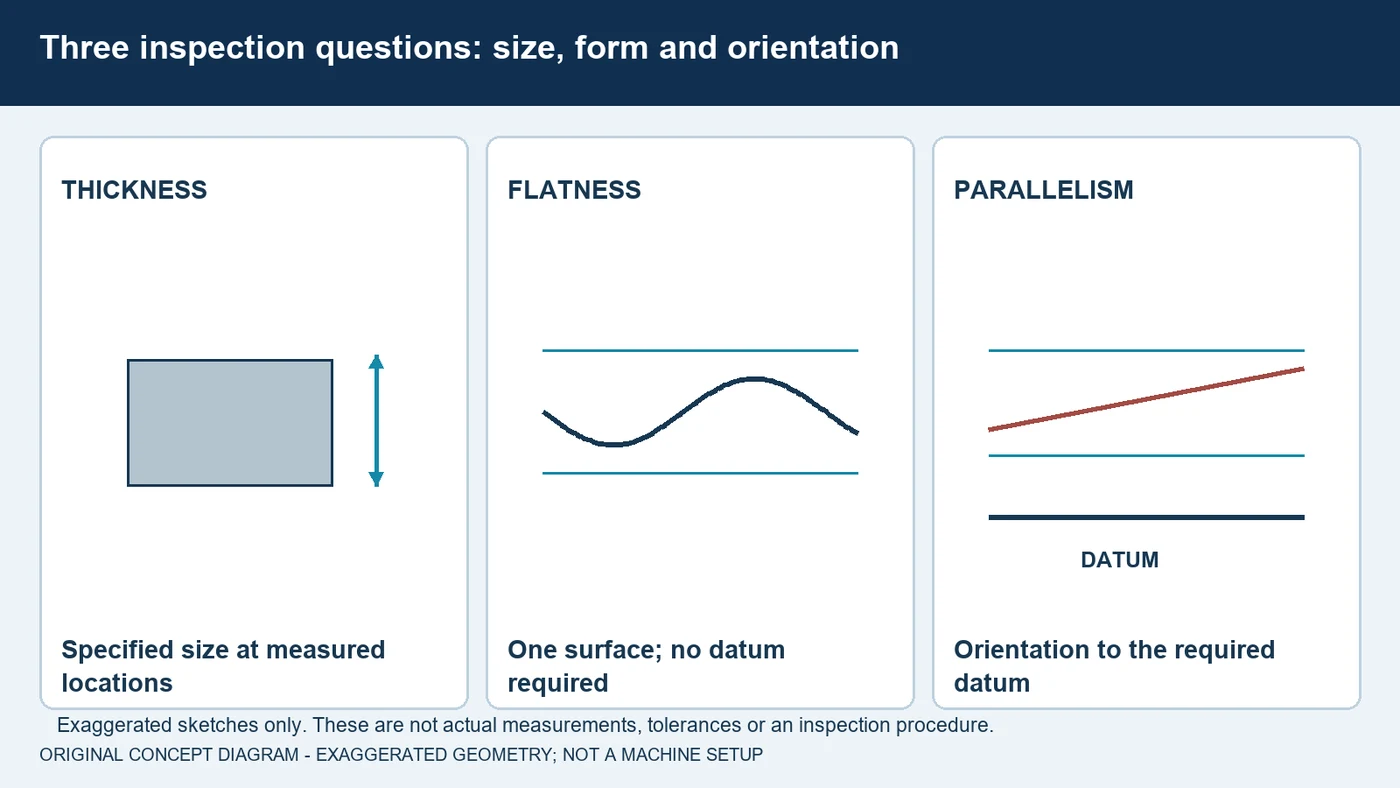
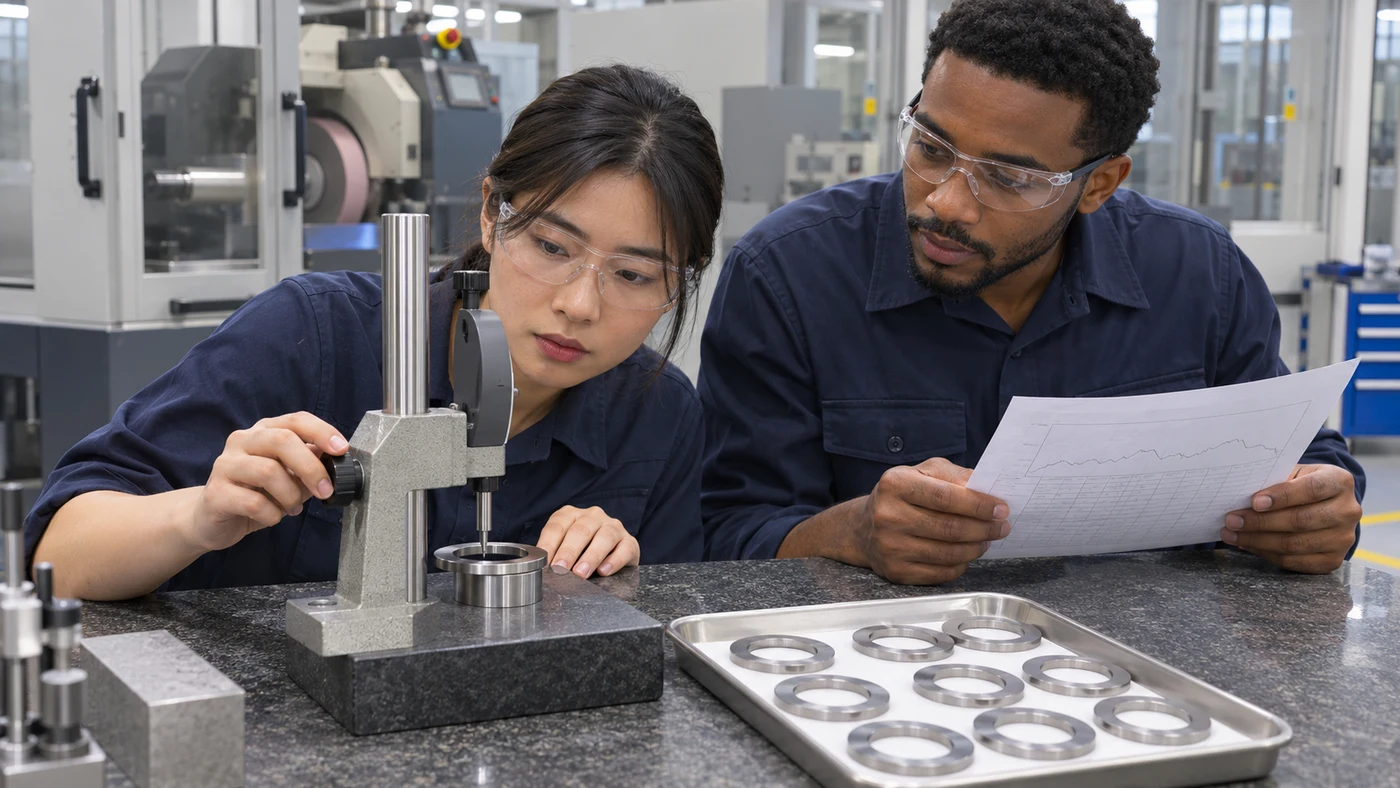
Thickness, flatness and parallelism are related acceptance concerns, but they are not interchangeable. Thickness measurements describe the specified size at the measured locations. Flatness evaluates the form of an individual surface without a datum. Parallelism evaluates orientation relative to the required datum reference. One good thickness reading cannot establish all three. Use capable measurement equipment, appropriate sampling and the drawing's support or restraint requirements, especially for thin parts. Inspect both faces for the required texture, scratches and relevant edge condition. A polished appearance does not establish freedom from grinding damage. When investigating burn or distortion, review wheel condition, removal, useful supply and material condition together, and follow the required qualified examination. Preserve the measurement method and thermal conditions so trial results can be compared meaningfully.
Plan a Controlled Double-Disc Fluid Trial
Send QA the part drawing, alloy, hardness or treatment and the two faces being ground. Include incoming thickness and condition, required removal and the acceptance limits for size, form, orientation and finish. Identify the grinder, spindle arrangement, feed method, carrier or guides, both abrasive specifications and conditioning history. Add the current fluid, useful supply, filtration, temperature and contamination records. For a diluted coolant, provide water quality and measured concentration. Describe the concern with inspection reports and where it appears during the process. QA has coolant and oil options for evaluation. Agree on a controlled trial and compare accepted parts, wheel condition and fluid behavior together. Confirm the formulation and operating instructions with the equipment and abrasive suppliers before adopting the change.
Fluid selection by material
Use these as evaluation questions, not blanket product approvals.
| Material | What to evaluate | What to confirm |
|---|---|---|
| Hardened steel rings, spacers and other parts | Identify alloy, hardness, stock allowance and both functional faces. | Qualified wheel and bond, contact supply, corrosion protection and required surface-integrity checks. |
| Cast-iron components | Match the actual iron grade, incoming condition and debris load. | Abrasive and formulation compatibility, effective filtration and required finish. |
| Stainless steel and nonferrous metals | Evaluate the exact alloy and required cooling, lubrication and material compatibility. | Corrosion or staining review, loading behavior, residues and downstream cleaning. |
| Thin, treated or mixed-material parts | Include thickness variation, burrs, surface treatment and the specified support condition. | Carrier suitability, permitted removal, formulation compatibility and geometry inspection after processing. |
Questions about double-disc grinding fluids
Does double-disc grinding mean the wheels are always parallel?
No. Some qualified through-feed systems use a changing gap, while other cycles use a different arrangement. Follow the actual machine and process instructions.
Is double-disc grinding the same as loose-abrasive lapping?
No. Double-disc grinding uses bonded abrasive tools. A loose-abrasive lapping slurry and its vehicle are a different process system.
Can one thickness measurement confirm flatness and parallelism?
No. Size, individual surface form and datum-related orientation need the specified measurement plan. One reading does not establish all of them.
Why should both sides of coolant delivery be checked?
The carrier, part and working gap can obstruct one contact differently from the other. Confirm useful supply to both grinding interfaces throughout the qualified cycle.
Can oil or water-miscible coolant be used?
Qualified examples exist for both. Confirm the machine-permitted fluid type, actual wheel bond, workpiece material and formulation together.
Which QA fluid should I choose for double-disc grinding?
QA has coolant and oil options. Provide the part, material, both abrasive specifications, feed method, delivery, maintenance and acceptance requirements for evaluation.
Discuss your application with QA
QA Lubricants has coolant and oil options. Send us the operation, alloy, hardness, tooling, current fluid and the problem you want to solve.
Discuss My ApplicationShop Water Diluted CoolantsShop Straight Cutting OilsTechnical references
- Fives: single- and double-disc machine arrangements
- Supfina: opposed-face grinding, carrier nests and wheel conditioning
- Fives: through-feed, plunge and carrier working modes
- JUNKER: SATURN double-wheel processes, guides, coolant and gauging
- Norton: automotive double-disc grinding troubleshooting
- Norton: bearing-face grinding and coolant application
- Grindaix: coolant type, targeting and grinding-system conditions
- Blaser Swisslube: measured coolant concentration and correction factors
- Norton: wheel condition, filtering and surface finish
- KEYENCE: flatness and its distinction from parallelism
- KEYENCE: datum-referenced parallelism measurement
- UNITED GRINDING: grinding burn and qualified detection
Original educational content and illustrations. Confirm current machine, tool and fluid instructions. Trademarks belong to their respective owners.