
Electrochemical Grinding: Electrolyte and ECG Process Control
Electrochemical grinding guidance for conductive metals: ECG wheels, electrolyte selection, liquid delivery, separation, tube features, edge inspection and cleaning.
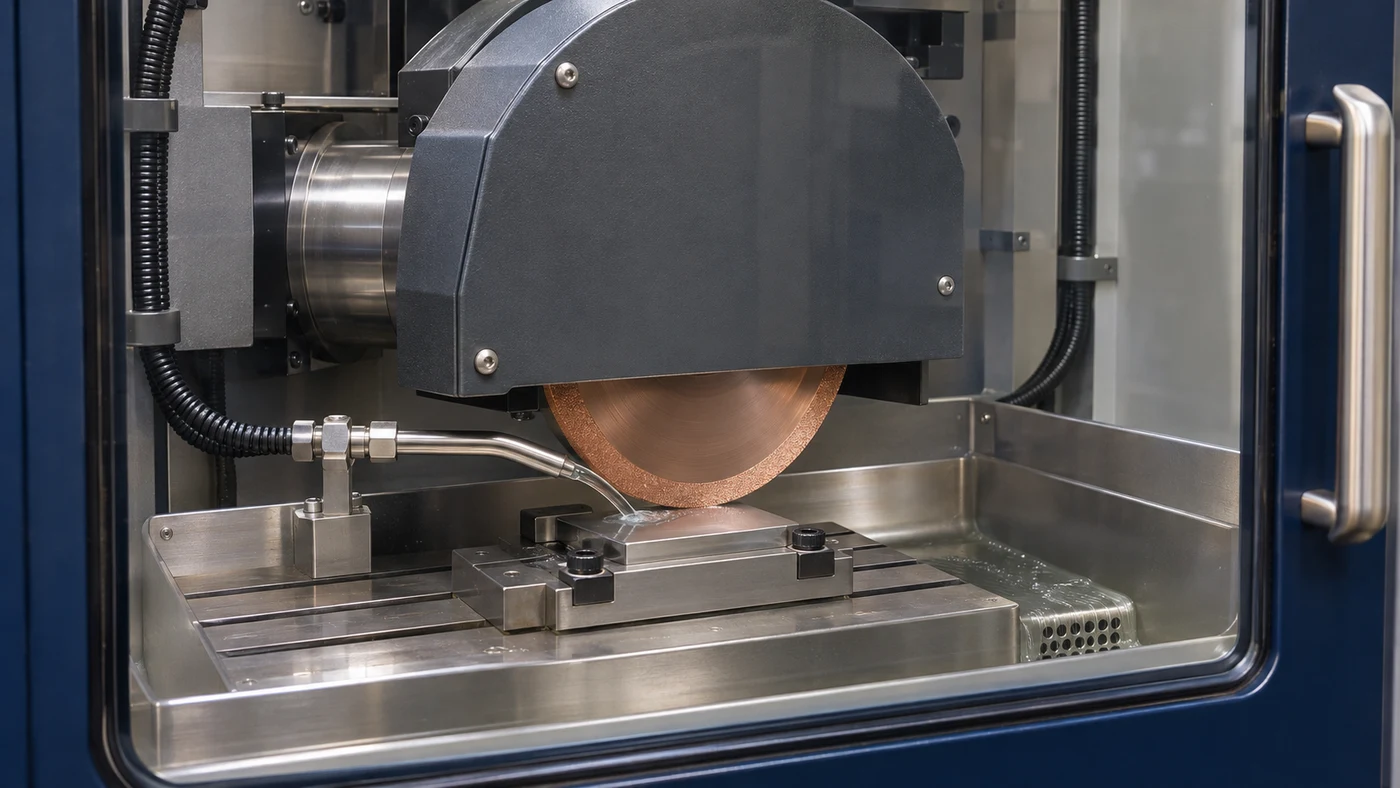
Watch: Electrochemical Grinding: Electrolyte and ECG Process Control
Electrochemical Grinding Combines Two Removal Actions
Electrochemical grinding combines electrochemical removal with the action of a rotating abrasive wheel. The workpiece is the anode, the conductive wheel is the cathode, and an electrolyte carries current through the working region. Abrasives assist removal and control the surface. This makes the process different from ordinary wet grinding and from electrical discharge machining. Intended removal is electrochemical rather than spark erosion. Applications include selected surface details, tube cutoff and point grinding. A suitable process can address difficult burrs or delicate features, but the result still needs qualification against the drawing. QA has coolant and oil options for application review. Electrochemical equipment requires its specified electrolyte; an ordinary grinding coolant is not automatically suitable.
Understand the Wheel, Electrolyte and Workpiece Interface
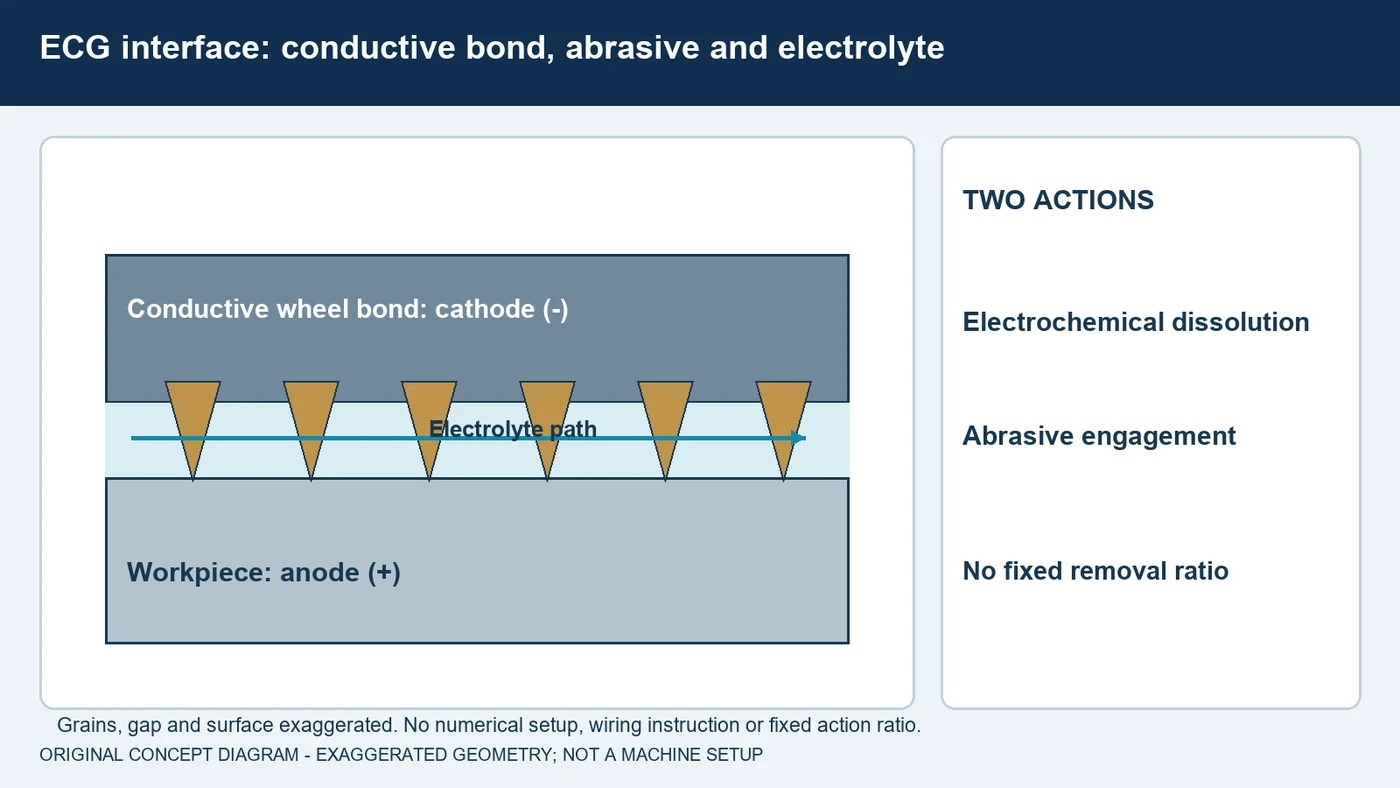
The conductive wheel and workpiece form part of a controlled electrical circuit. Electrolyte reaches the working region between them while the abrasive grains engage the surface. Electrochemical dissolution and mechanical abrasion act together. Their relative contributions change with the setup; a fixed ninety-ten split is not a universal rule. The process must balance removal, geometry, wheel condition and finish. Excessive electrical conditions can produce unwanted arcing, so visible sparks are not a target to tune toward. Review abnormal behavior with the equipment supplier using the qualified job instructions. Do not transfer an EDM pulse recipe or conventional grinding setup simply because the machine has a wheel and a liquid supply.
Match the ECG Arrangement to the Feature
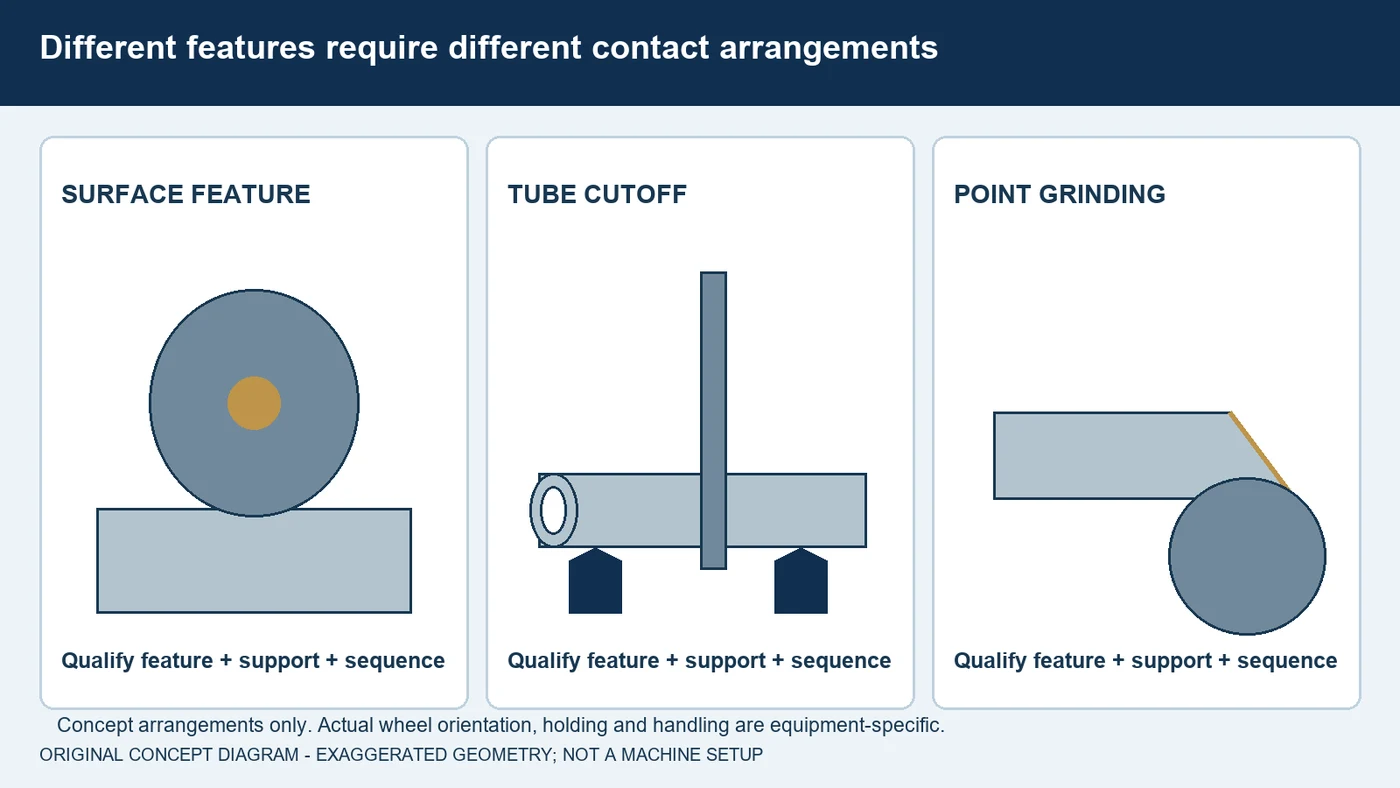
Surface grinding, electrochemical cutoff and point grinding present different workholding and contact arrangements. A notch in a thin tube needs a different setup from a flat surface or a point on wire. Equipment may include dedicated handling, indexing or multiple-part fixtures for a specific feature. Identify which surfaces must be removed and which must remain protected. For tube work, define the opening, wall condition and permitted edge geometry. Conductivity is necessary, but the actual alloy's electrochemical response also matters. Do not assume that a process qualified for one stainless tube applies unchanged to titanium or a nickel-titanium component. Begin with the feature and acceptance requirements, then review the machine, wheel and electrolyte together.
Select Electrolyte for the Material and Equipment
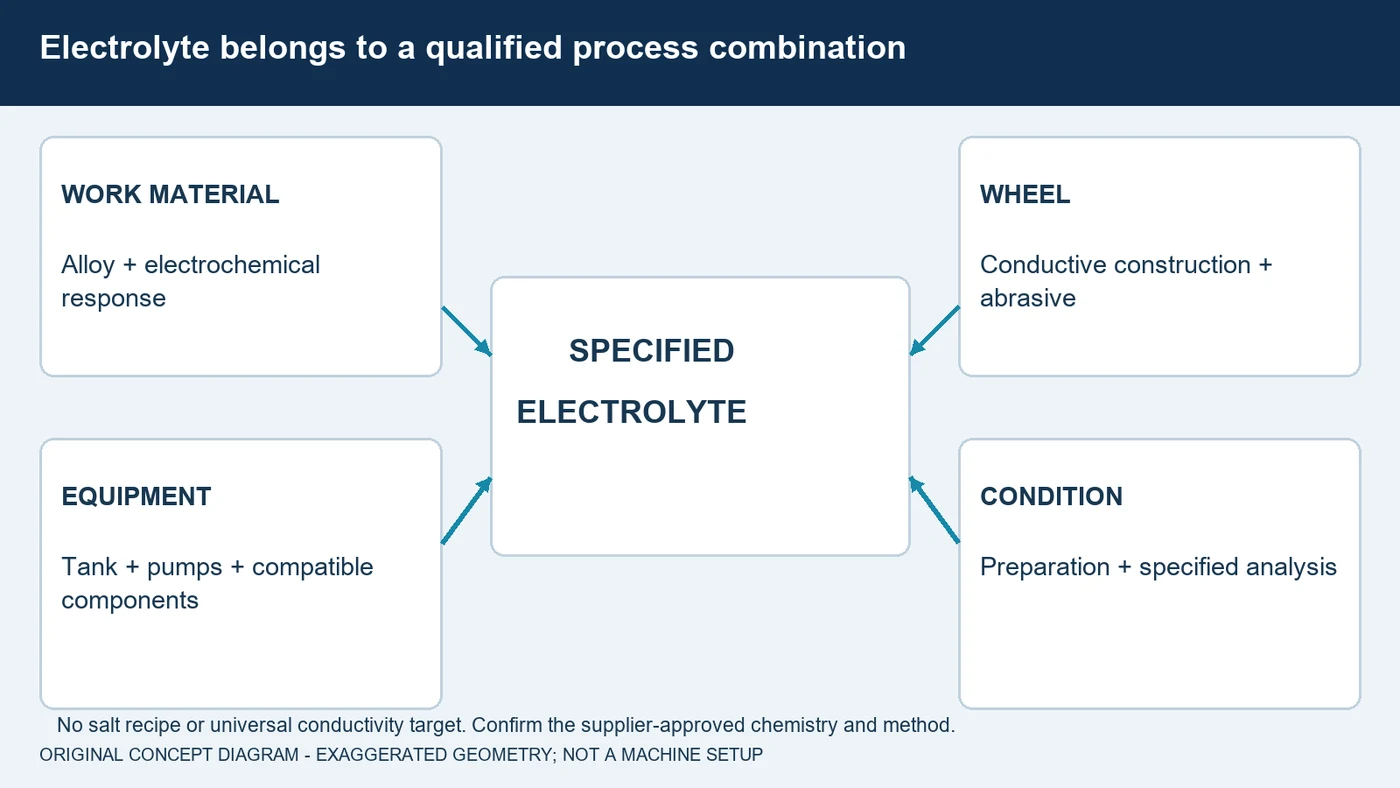
Electrolytic grinding chemistry depends on the material and the intended process. Conductive aqueous salt solutions are used, with the formulation selected for electrochemical response and system compatibility. Different alloy and carbide systems can require different chemistry. This is not an invitation to blend salts or add a general corrosion inhibitor at the machine. Confirm the approved formulation, preparation method and measurement procedure with the supplier. Include the wheel, tank, pumps, seals and exposed machine components in that review. Use the current technical and safety data sheets. A machining-coolant refractometer factor or a wire EDM water target cannot be carried over without qualification. The goal is the specified electrolyte condition for this process, not maximum conductivity.
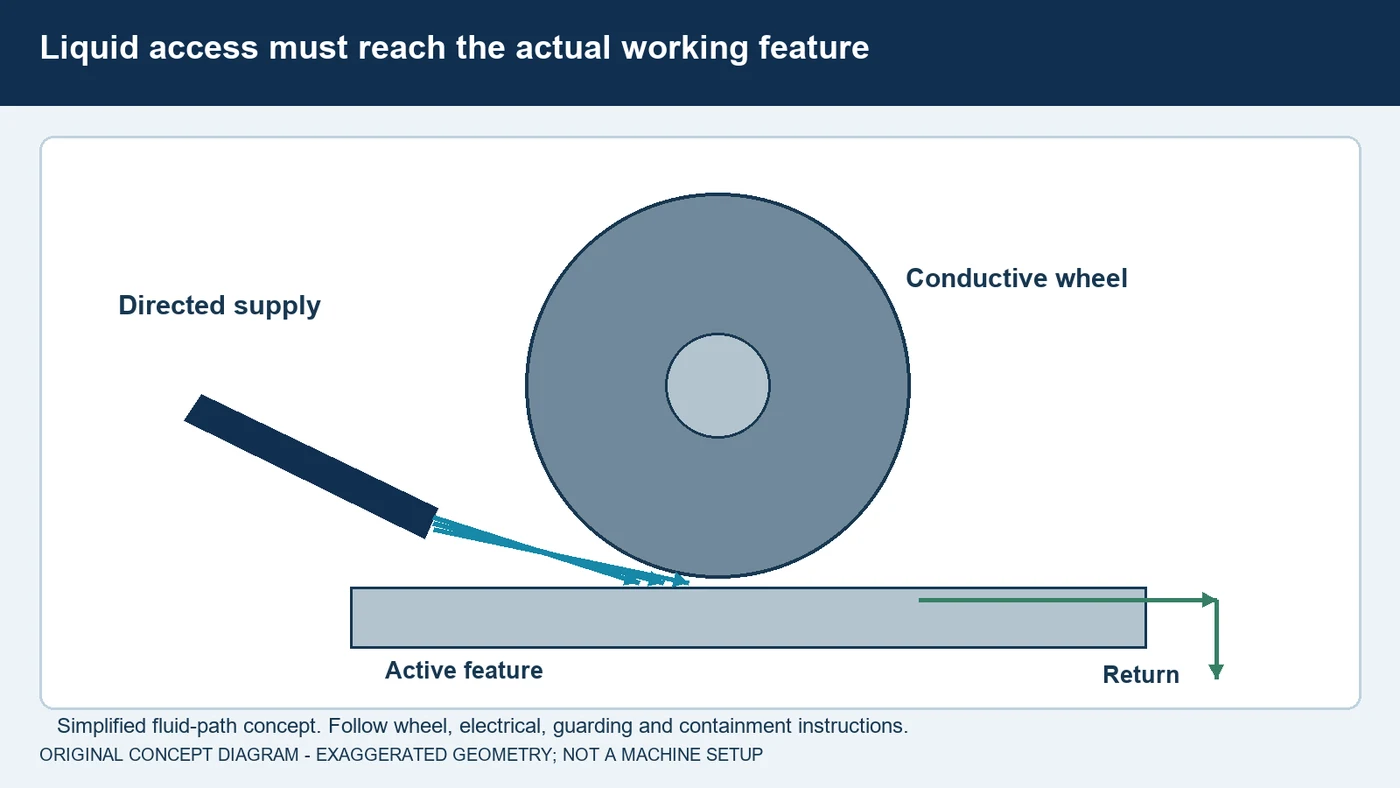
Deliver Electrolyte Through the Working Region
The electrolyte needs a consistent route into and out of the working region. Review nozzle access with the real fixture and part in position. A strong stream outside the contact does not establish the intended conditions at a recessed notch or thin feature. Check the supply, return and containment arrangements as part of the setup. Purpose-built ECG equipment includes an appropriate spindle, electrical arrangement and electrolyte-resistant components; filling an ordinary grinder with electrolyte does not convert it into an ECG machine. Follow the wheel's mounting, guarding and conditioning instructions along with the machine's electrical and fluid-system procedures. Record delivery changes so a difference in part quality can be traced to the actual process change.
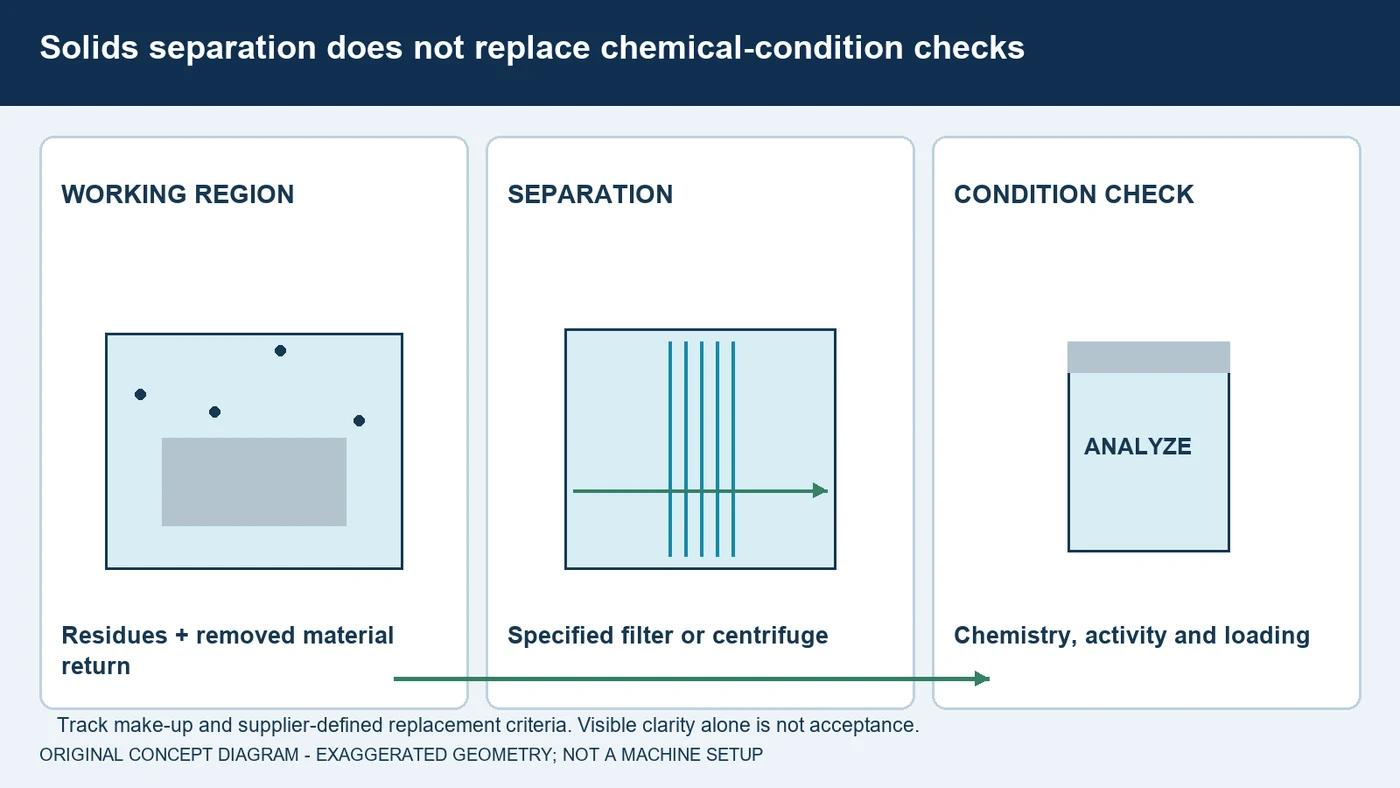
Maintain Electrolyte Condition and Separation
Electrolyte returns with process residues and removed material. Compatible filtration or centrifugation can remove solids, but that does not prove the liquid has its required chemical condition. Monitor the supplier's concentration or activity checks and replacement criteria, including the effect of accumulated metals. Distinguish liquid carried out with parts from evaporation when following the make-up procedure. Keep additions and maintenance traceable rather than assigning one service interval to every machine. Review leaks, blocked return paths, separators and the working tank as part of routine maintenance. Use the site's approved procedures for collected sludge and spent electrolyte. A clear sample alone cannot establish that dissolved contamination or electrolyte activity is acceptable for continued production.
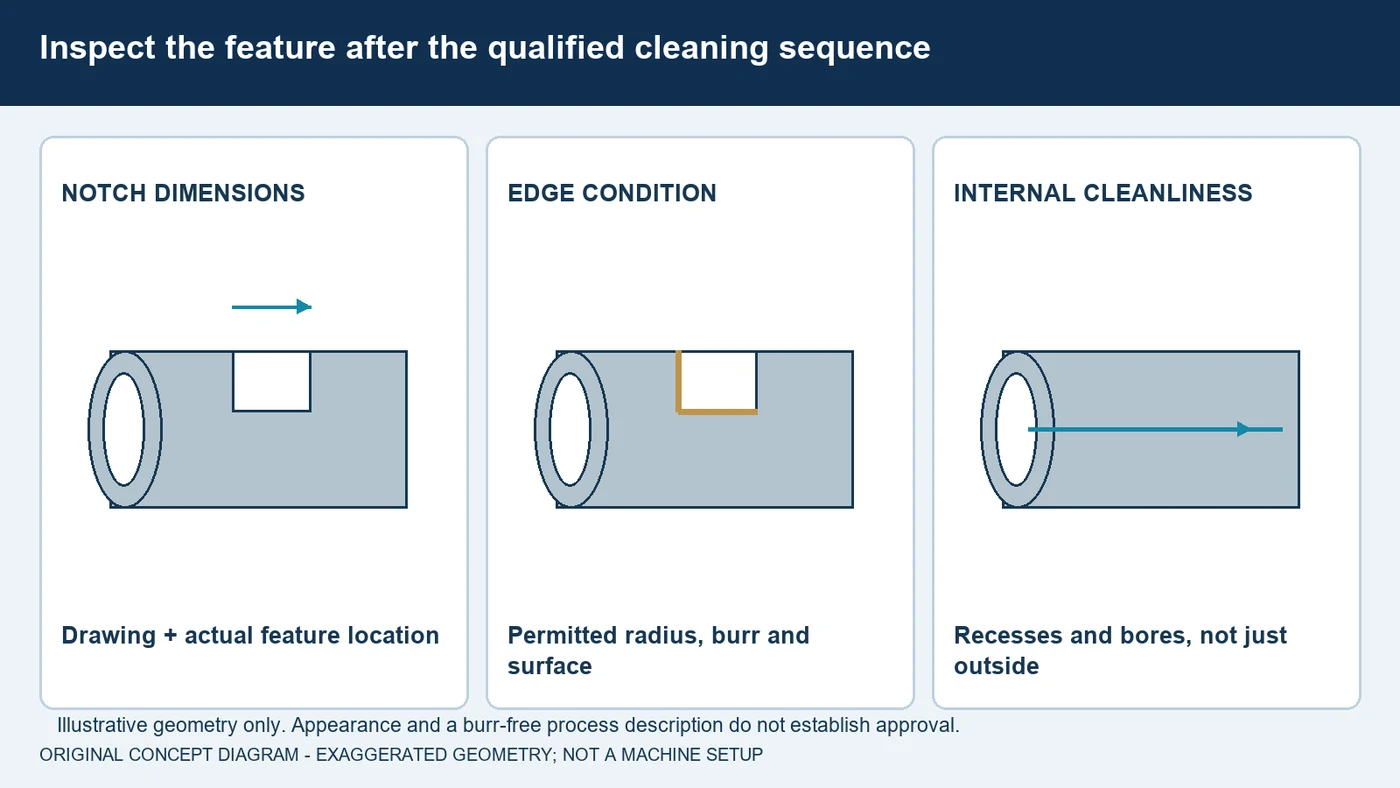
Inspect Geometry, Edges and Final Cleanliness
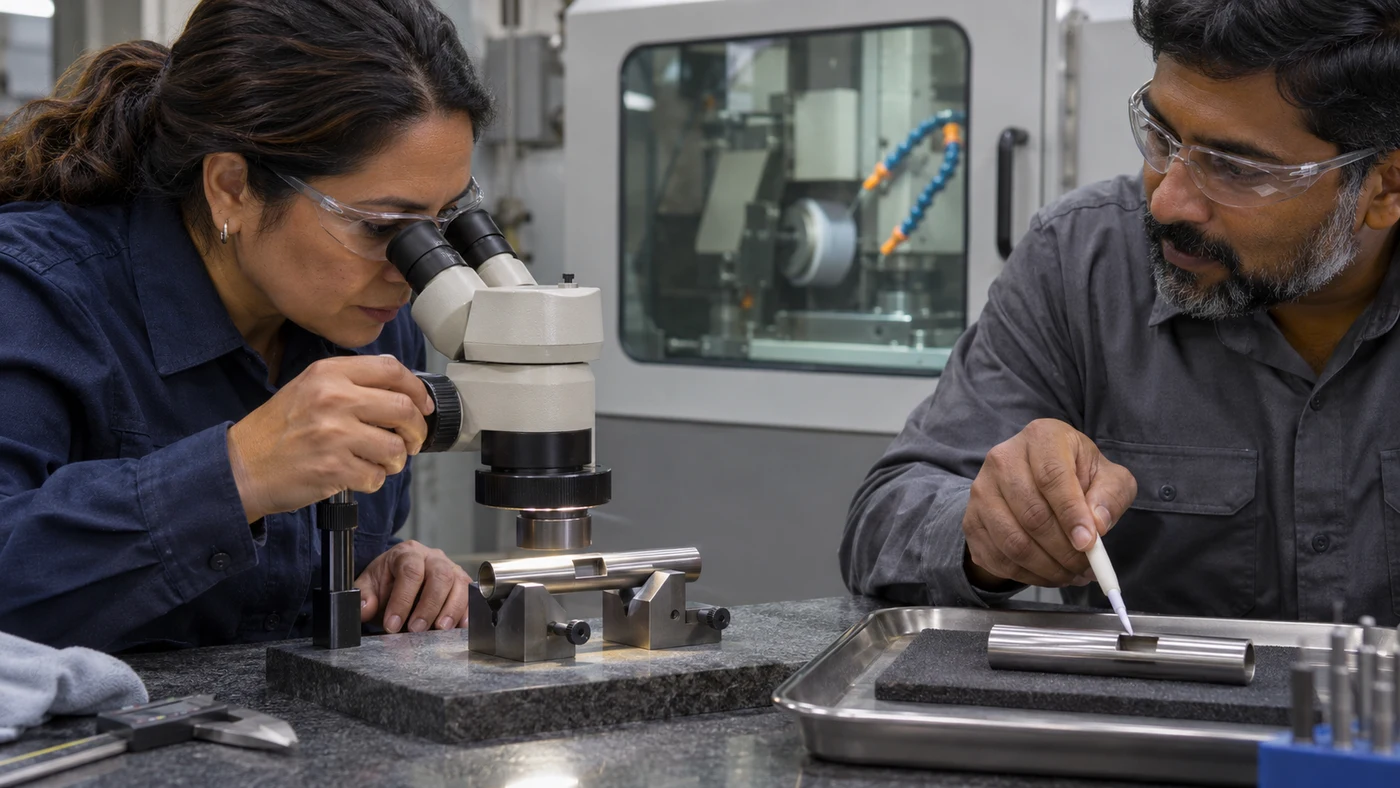
An application promoted as burr-free still needs inspection against the actual part requirement. Check the feature dimensions, surface condition and permitted edge rounding. For a notched tube, inspect the notch and adjacent wall rather than judging only an outside face. For point grinding, verify the specified point geometry and any required opening or surface condition. The electrolyte and process residues must also be removed by a qualified cleaning sequence, including locations that are difficult to access. Inspect after the same rinsing, drying and handling steps when comparing trials. Do not infer application approval from a smooth appearance. Acceptance must include the drawing, material condition and downstream requirements as well as the intended reduction in burr formation.
Plan an Application-Specific ECG Fluid Review
Send QA the part drawing, alloy and condition, machine model, wheel specification and current electrolyte. Identify the concern with the feature, such as a burr, edge radius, surface variation or difficult cleaning. Include the fixture, electrical setup, liquid delivery, separation and maintenance records. Show the acceptance method and the steps between machining and final inspection. QA has coolant and oil options for evaluation with the equipment and process suppliers. Confirm whether a candidate formulation is specifically suitable for the electrochemical system before using it. Agree on a controlled comparison of accepted geometry, edge condition, finish, wheel behavior and cleanability. Retain the qualified machine and chemical instructions throughout the trial, and document the result before a production change.
Fluid selection by material
Use these as evaluation questions, not blanket product approvals.
| Material | What to evaluate | What to confirm |
|---|---|---|
| Stainless steels and nickel alloys | Feature access, electrochemical response, edge limits and desired surface. | Qualified wheel/electrolyte combination, machine technology, cleaning and acceptance criteria. |
| Titanium and nickel-titanium alloys | Actual grade and electrochemical behavior; delicate-feature and surface requirements. | Material-specific process qualification; do not transfer a stainless-steel chemistry or recipe. |
| Tool steels, aluminum and copper alloys | Actual alloy condition, permitted geometry change and response to the process. | Compatible formulation, conductive wheel, corrosion control, rinse and final inspection. |
| Conductive cemented carbides | Binder, grade, required edge and the suitable electrochemical route. | Specialist review of chemistry, abrasive and material integrity; conductivity alone does not qualify the application. |
Questions about electrochemical grinding fluids
Is ECG the same as EDM?
No. ECG combines electrochemical dissolution and abrasive action. EDM uses controlled electrical discharges for thermal removal.
Can ordinary grinding coolant be used in ECG?
Use the electrolyte specified for the complete ECG process. General grinding coolant is not automatically interchangeable.
Is the wheel noncontact like an ECM tool?
No. The abrasive grains engage the workpiece while electrochemical action also removes material.
Is material removal always ninety percent electrochemical?
No. The balance changes with the setup and conditions. Qualify the actual result.
Can filtering restore all electrolyte properties?
Solids separation and chemical-condition checks have different roles. Follow the specified analysis and replacement criteria.
Does burr-free mean cleaning and inspection can be skipped?
No. Verify the actual edge, geometry and final cleanliness with the required acceptance method.
Discuss your application with QA
QA Lubricants has coolant and oil options. Send us the operation, alloy, hardness, tooling, current fluid and the problem you want to solve.
Discuss My ApplicationTechnical references
- Glebar / Voxel: electrochemical grinding compared with ECM
- Glebar: ECG process balance, wheels and electrolyte management
- Glebar: ECG surface, rotary and point-grinding applications
- Glebar: purpose-built ECG spindle, tank and protected machine components
- Glebar: electrochemical point-grinding system
- Glebar: electrochemical and abrasive cutoff equipment
- TE Connectivity / MicroGroup: conductive materials and edge geometry in ECG
- Glebar: biopsy-needle notching application
- Voxel Innovations: contacting ECG wheel versus noncontact ECM cathode
- MISUMI: material-dependent electrolytic grinding chemistry
Original educational content and illustrations. Confirm current machine, tool and fluid instructions. Trademarks belong to their respective owners.