
Gear Hobbing Cutting Oils, Coolants & Wet or Dry Process Selection
Explore gear-hobbing fluid selection, coated HSS and carbide hobs, wet and dry cutting, hob shifting, chip removal and gear-quality checks with QA Lubricants.
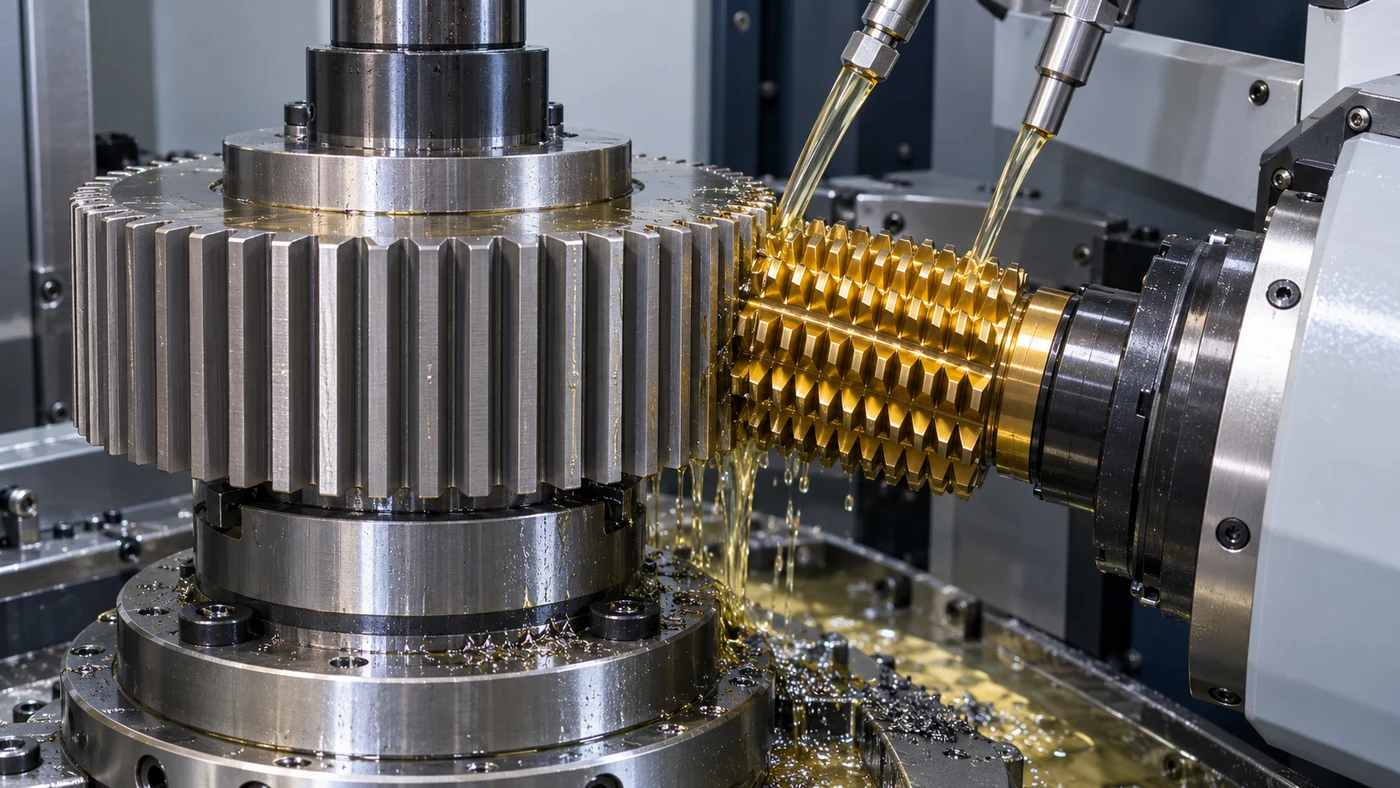
Watch: Gear Hobbing Cutting Oils, Coolants & Wet or Dry Process Selection
Understand the Generating Process and the Gear Requirement
Gear hobbing generates teeth through the coordinated motion of a rotating hob and the gear blank. The hob is a specialized multi-edge tool, with cutting teeth arranged around a threaded form and separated by gashes. The programmed relationship between the tool and workpiece produces the tooth geometry as the cut progresses across the face. This is different from indexing a blank and form milling each space separately, or using a reciprocating gear shaper. Start with the actual gear drawing: identify tooth count, module or diametral pitch, pressure angle, helix, face width and any profile requirements. Also establish whether hobbing is a roughing, pre-finishing or finishing stage. The fluid decision belongs inside that process plan. QA has coolant and cutting-oil options, but the correct selection begins with the machine, hob, material and required gear quality rather than an assumed universal hobbing oil.
Match the Hob Design, Substrate and Coating
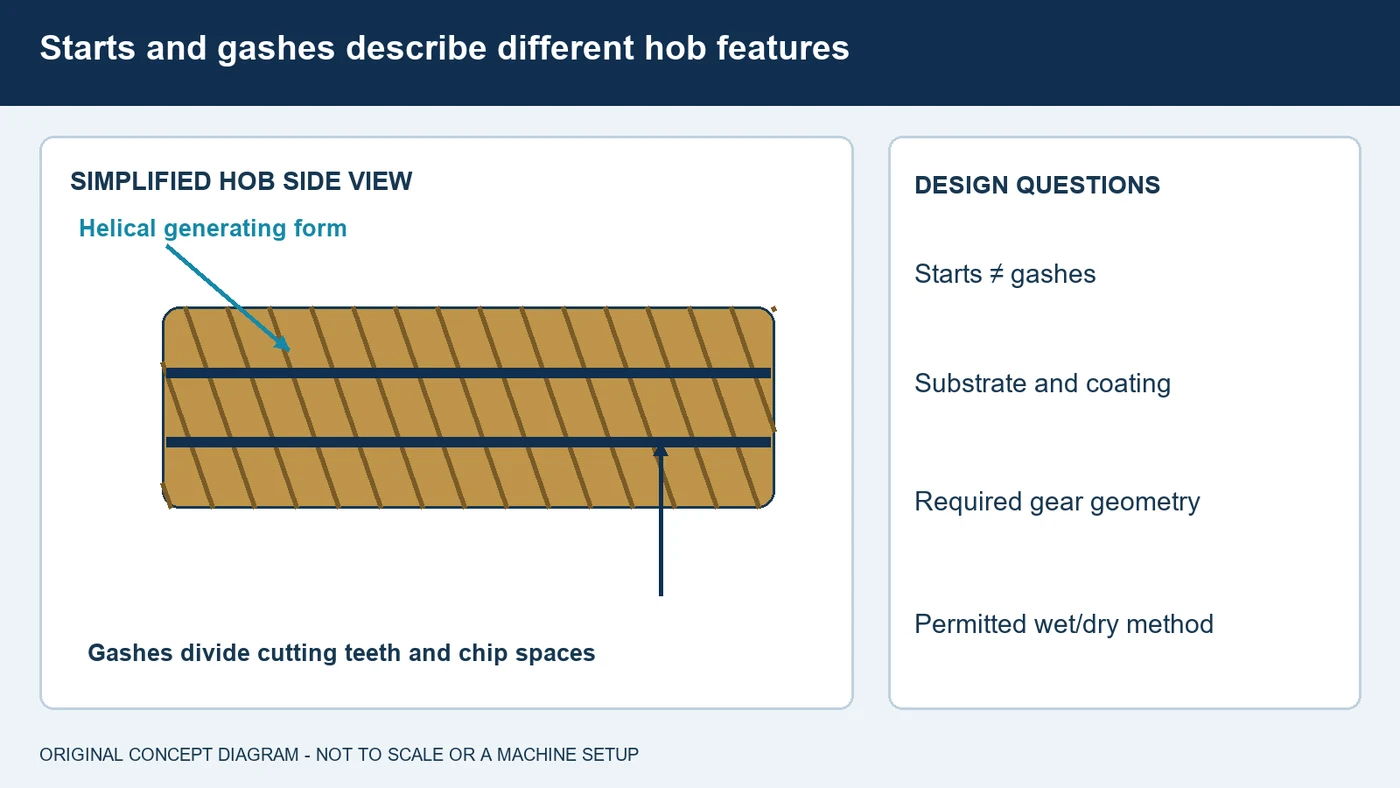
A hob is designed for a defined tooth system and application. Check its dimensional and profile data against the gear, then identify the cutting material, coating, starts and gashes. Starts describe the threaded generating form; gashes divide the cutter into cutting teeth and chip spaces. They are not interchangeable counts. Changing either can affect productivity, cutting load and the generated result, so a higher number is not automatically an improvement. High-speed steel, powder-metallurgy high-speed steel and carbide hobs are offered for different operating conditions. Tool makers also supply coatings intended for specified wet or dry applications. Confirm the actual tool's limits and cutting recommendation, including whether it is new or reconditioned. Avoid transferring a successful speed, feed or fluid choice from a different hob simply because both cut a gear of similar size. The complete cutter design and required tooth quality matter.
Choose a Supported Wet or Dry Process
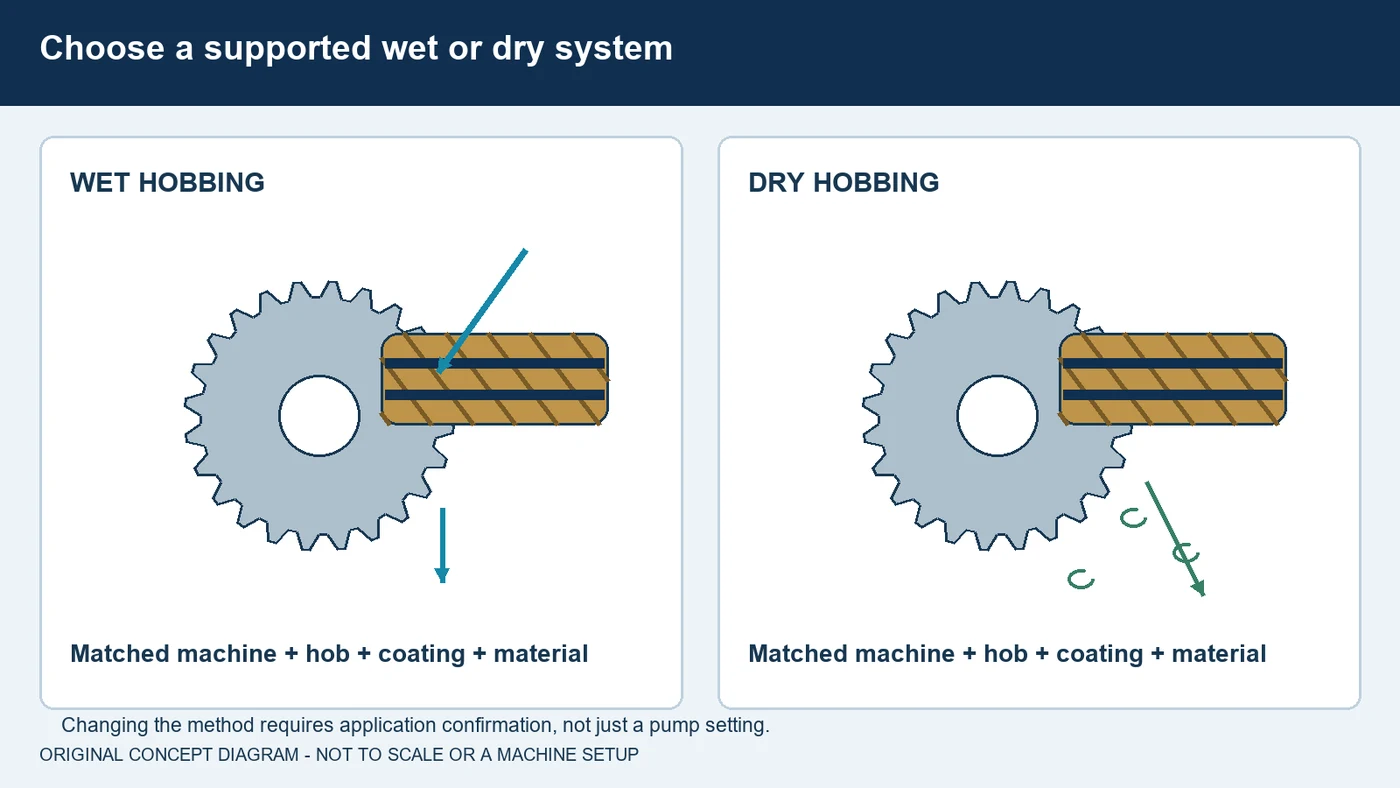
Gear hobbing can be performed wet or dry when the tool and machine support that method. Manufacturers offer cutters and machine configurations for each, so the correct answer is not that every hob needs oil or that every modern gear should be cut dry. Review the machine's process instructions, the cutter substrate and coating, material and required result. A dry-cutting system has its own arrangements for chips, heat and collection; it is not established by switching off a wet machine's pump. A wet process similarly depends on the specified fluid and delivery equipment. If you are considering a change, involve the equipment, tooling and fluid suppliers before the trial. Confirm compatibility, collection and the permitted operating conditions. Keep any comparison within an agreed process window and check the gear itself. Cycle time alone does not establish that a changed method is suitable.
Control Mounting, Reconditioning and Hob Shifting
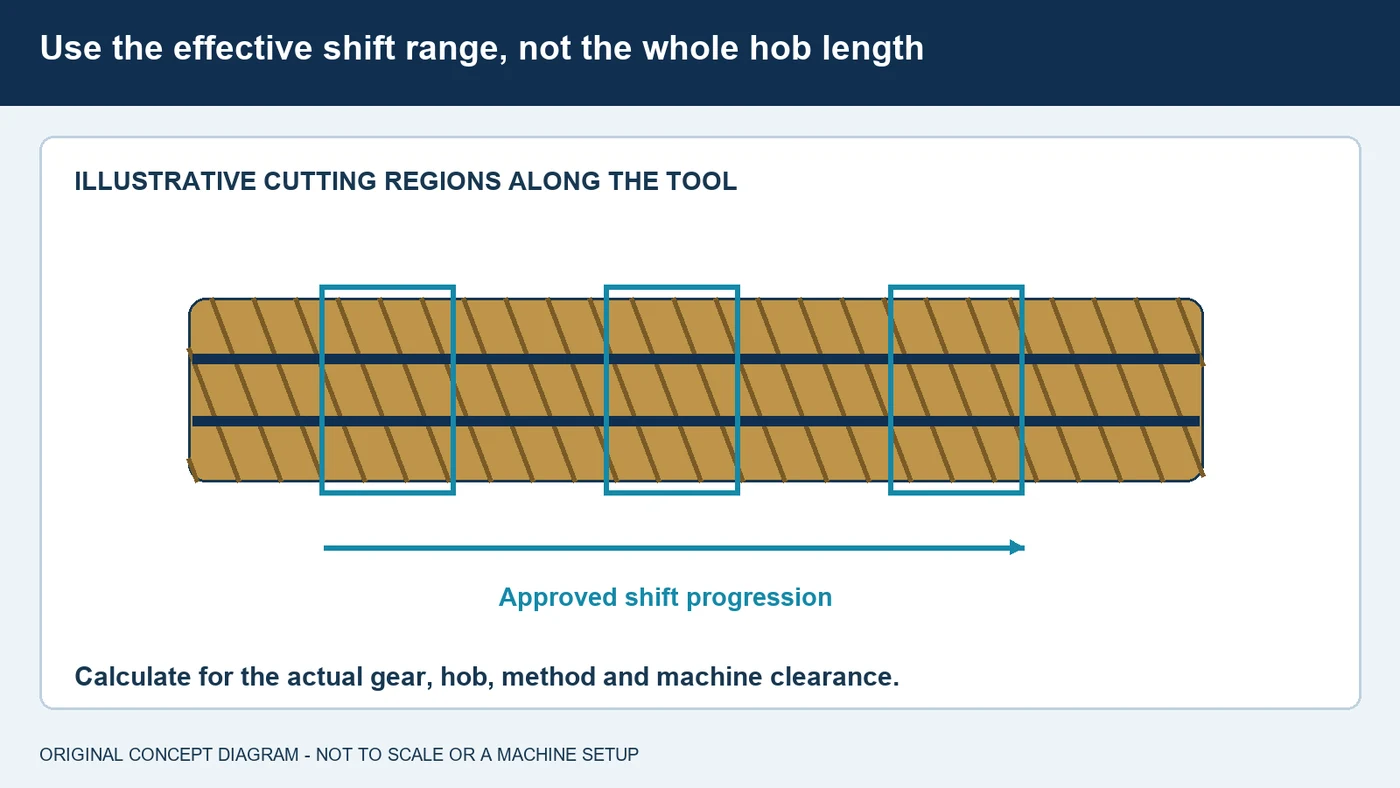
Mounting accuracy, workholding and cutter condition are part of a meaningful hobbing-fluid trial. Check the hob assembly and workpiece setup by the machine and tool procedures, and record the cutter's reconditioning history. Resharpening accuracy affects the cutting faces and the resulting tool geometry, so inspection after regrinding is an important part of returning a hob to service. Hob shifting changes the active region along the tool to distribute cutting use and wear. Its usable range depends on the effective cutting length, gear and hob dimensions, helix and cutting method, as well as available travel and clearance. It is not simply the entire length of the visible teeth. Use the applicable calculation or machine program and the tool supplier's limits. Keep the shifting schedule and cutter condition consistent during a fluid comparison. Otherwise, a change in active cutting region may be confused with a change in product performance.
Plan Fluid Access and Prevent Chip Re-Entry
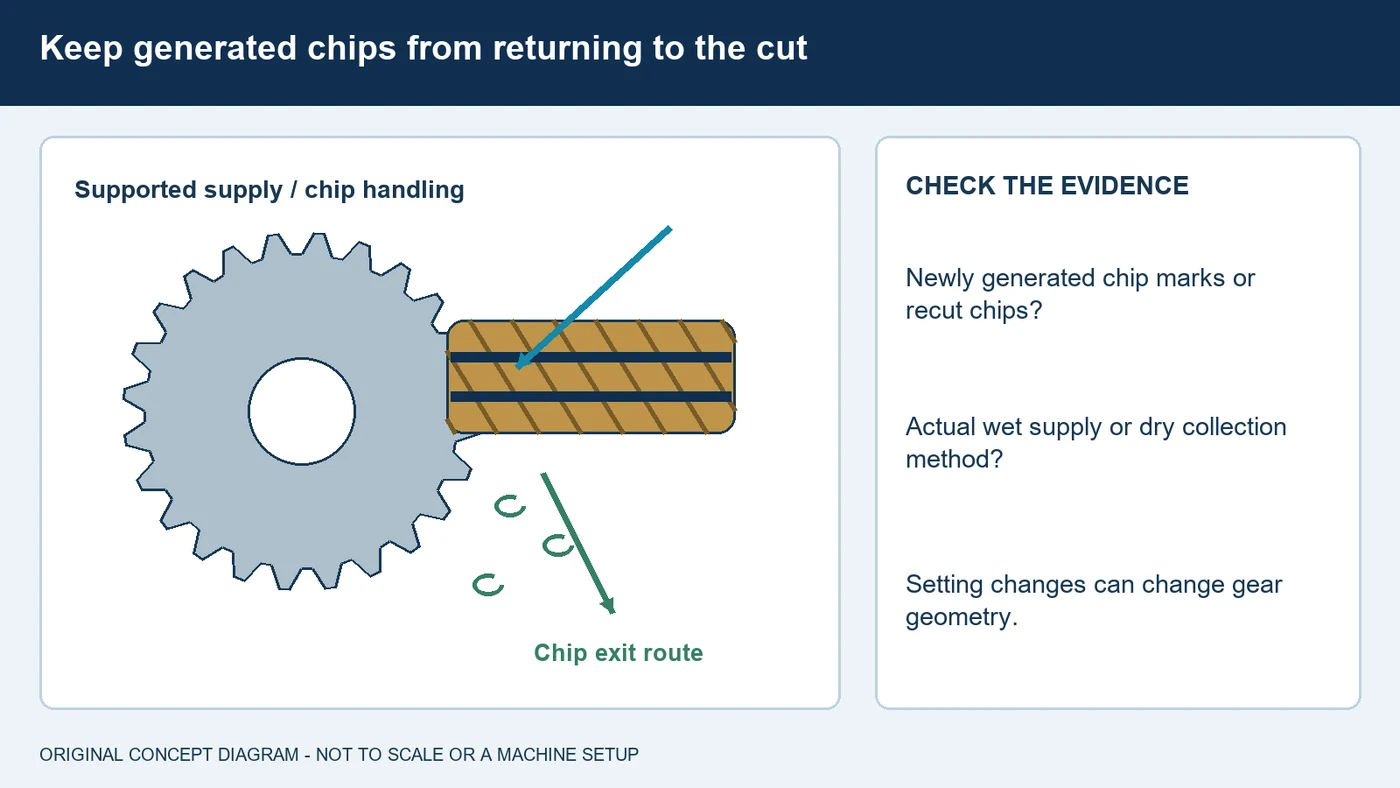
The chips leaving a hob can influence the surface they have just helped create. A chip trapped or brought back into engagement may damage a tooth flank. In a wet process, inspect actual fluid access, outlet position, supply condition and the return and filtration arrangement. In a dry process, follow the machine's specified chip-removal and collection method. One manufacturer's dry-hobbing guidance distinguishes marks made by newly generated chips from damage involving chips that have re-entered the cut. That distinction helps direct the investigation, but the exact remedy remains application-specific. Do not change the hob setting angle casually to move chips away: the same adjustment can alter tooth thickness and other generated features. Consult the cutter and machine suppliers and verify geometry after a supported change. Record chip behavior, tool condition and accepted flank quality alongside the fluid or delivery conditions.
Match the Formulation to the Material and the Next Process
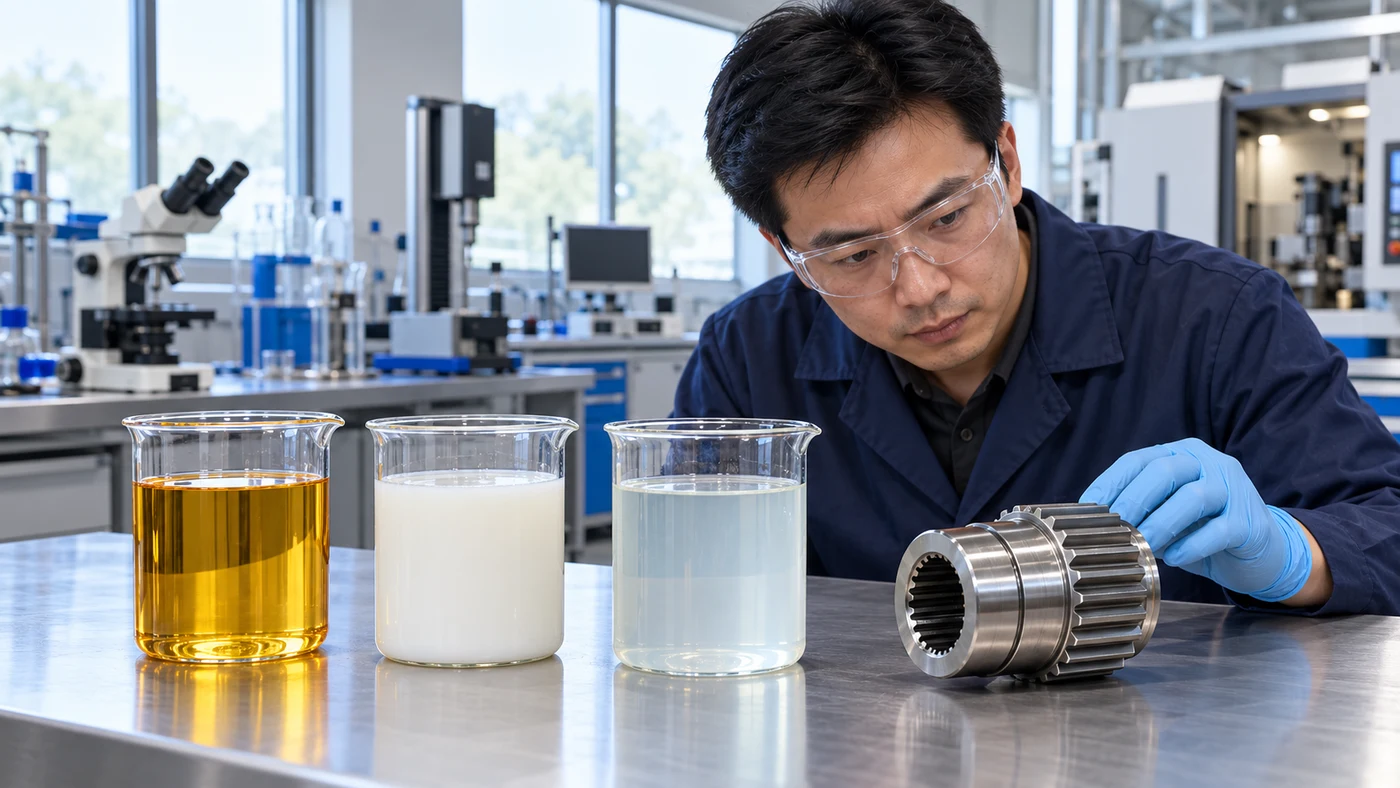
For a supported wet-hobbing process, evaluate the actual cutting formulation. Consider lubrication, access to the cutting zone, chip flushing, corrosion protection and compatibility with the machine. Straight oils and water-miscible fluids have different requirements; no single viscosity or mix ratio applies to every hob and material. Include the exact alloy and pre-hobbing heat treatment. Manufacturer studies show that material structure can influence hob wear even when the cutting conditions are unchanged. For aluminum and copper alloys, review staining and additive compatibility, including any active-sulfur restriction. Ask about residue and cleaning before heat treatment, coating or the next finishing step, and storage protection between operations. Maintain an oil by its own condition guidance. If a water-miscible product is qualified, use its application concentration and product-specific measurement method. Agree on a controlled trial that includes accepted gear quality and cutter use, rather than selecting from appearance or fluid cost alone.
Measure the Gear and Diagnose the Actual Defect
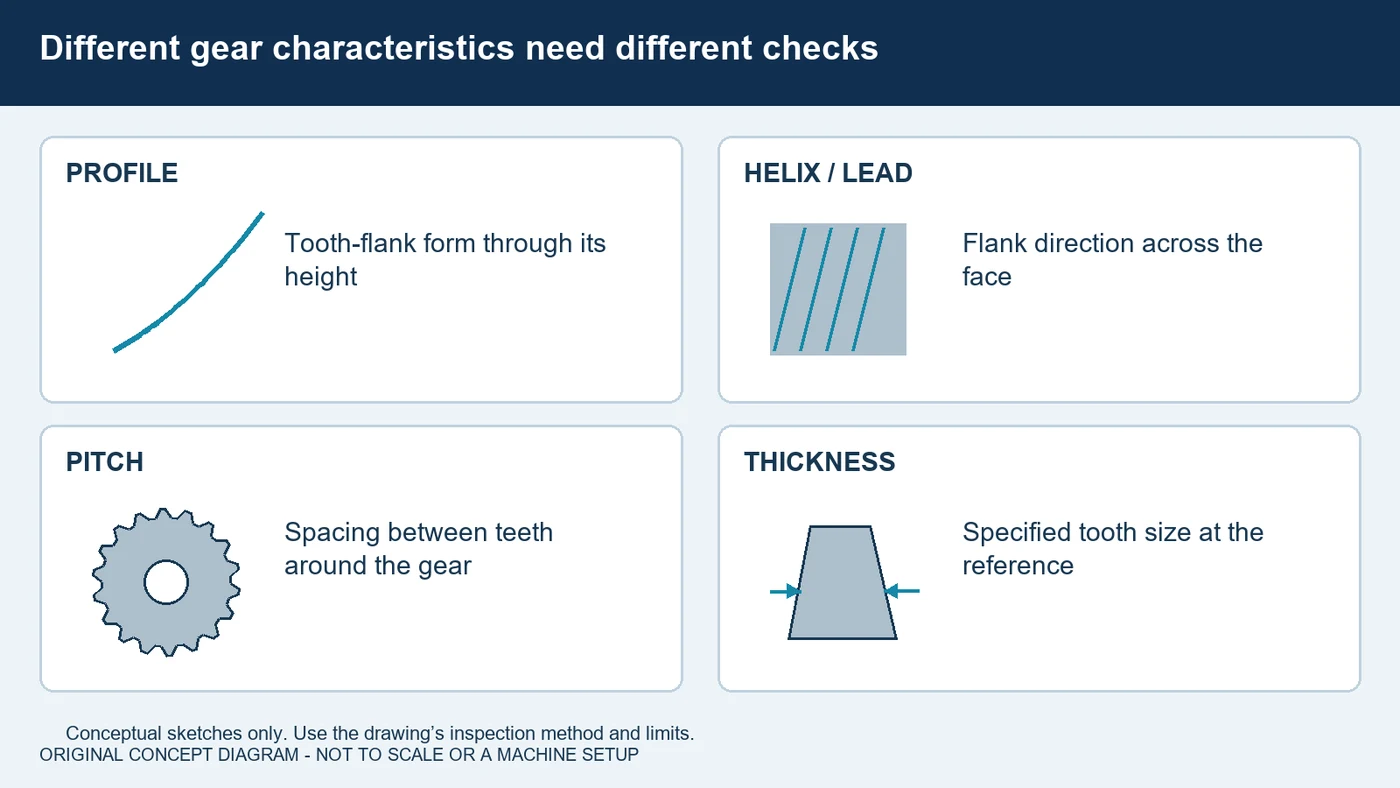
A gear can look clean and still miss its required geometry. Establish the inspection method and acceptance criteria for the current manufacturing stage, including profile, helix or lead, pitch and tooth thickness where required. These are different characteristics, and an outside-diameter measurement alone cannot describe them. Separate surface scratches and burrs from a repeatable geometry deviation, then review the hob, setup, workholding and material history with the appropriate supplier. Inspect tool wear, damage, regrind condition and the shifting record. For a surface problem, add the chip route and actual fluid or dry-chip-removal arrangement to the evidence. Do not credit a different coolant with correcting a profile error unless the controlled trial supports that conclusion. When hobbing precedes heat treatment or hard finishing, include the specified allowance and the requirements at that later stage. Record accepted parts, cutter use and relevant inspection results together.
Bring QA Your Complete Gear-Hobbing Application
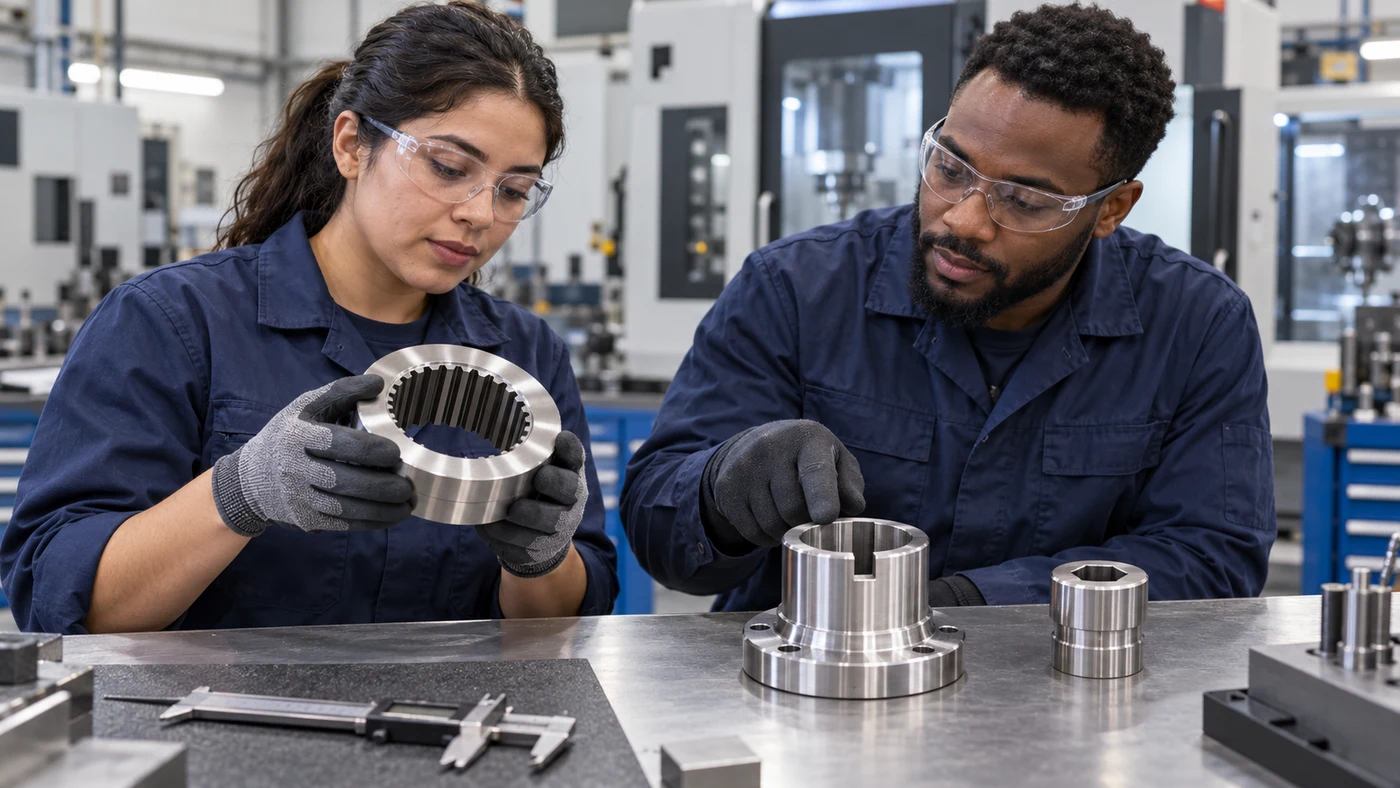
For a gear-hobbing fluid inquiry, give QA Lubricants the complete process. Share the gear data and drawing, material grade, hardness and heat treatment, along with the intended roughing or finishing stage. Identify the machine, its supported wet or dry configuration, and the hob's substrate, coating, dimensions and condition. Include the operating recommendation, shifting practice and reconditioning history. Describe the current fluid and delivery or dry-chip-handling arrangement, and tell us what result you want to improve. Add the inspection requirements, downstream cleaning or heat-treatment restrictions and the other materials sharing any fluid system. QA has coolant and cutting-oil options and can help evaluate candidates where the process calls for a fluid. Agree on the trial conditions and accepted production result before making a change. Explore more machining guides at QA Lube dot com, or call one, eight seven seven, eight seven seven, six two two one.
Fluid selection by material
Use these as evaluation questions, not blanket product approvals.
| Material | What to evaluate | What to confirm |
|---|---|---|
| Carbon and alloy gear steels | Review the actual pre-hobbing condition, lubrication and tooth/chip behavior. | Grade, hardness, heat treatment, stock condition and subsequent hardening or finishing allowance. |
| Stainless steels | Evaluate adhesion, tool wear and chip clearance with the selected hob. | Exact alloy, condition, cutter substrate/coating and machine-supported wet or dry process. |
| Aluminum alloys | Evaluate buildup and nonstaining compatibility where a fluid is used. | Alloy, cutter design, chip removal, surface requirements and later cleaning or coating. |
| Brass, bronze and other copper alloys | Confirm chemistry and staining requirements for the specific alloy. | Active-sulfur compatibility, shared-system metals and accepted appearance or residue. |
| Cast iron | Use the method supported by the hob and machine, including chip or dust collection. | Iron grade, hardness, cutter design and permitted wet/dry strategy. |
| Hardened or specialty alloys | Treat hard hobbing and unusual materials as engineered applications. | Exact grade/hardness, qualified tool system, machine capability and required finished gear quality. |
Questions about gear hobbing fluids
How does gear hobbing generate the tooth form?
The rotating hob and workpiece move in a synchronized generating relationship while the cutting motion progresses across the gear face. Hob design and machine setup must match the gear data; it is different from simply indexing and milling one tooth space at a time.
Does every gear-hobbing operation need cutting oil?
No. Manufacturers offer wet and dry hobbing tools and machines. Confirm the exact combination of machine, cutter material, coating and application before choosing a medium or changing the established method.
Can we replace hobbing oil with water-miscible coolant?
Only after the machine, tool and fluid suppliers confirm the application and system requirements. Lubrication, thermal behavior, compatibility, filtration and downstream processing must be assessed for the specific formulation.
What does hob shifting do?
It changes the active cutting region along the hob to manage wear across an effective usable length. That length depends on hob and gear geometry, cutting method and machine travel; it is not necessarily the whole visible cutter length.
Can coolant fix scratches or tooth-profile errors?
Fluid delivery and chips may contribute, but check the cutter, setup, workholding, chip-removal method and inspection results. Changes to hob setting can also change tooth geometry, so use the tooling and machine suppliers' guidance.
What does QA need to evaluate a hobbing fluid?
Send the gear drawing, material and heat treatment, hob substrate/coating and dimensions, machine and wet/dry configuration, current fluid and the result you want to improve. QA has coolant and cutting-oil options for application review.
Discuss your application with QA
QA Lubricants has coolant and oil options. Send us the operation, alloy, hardness, tooling, current fluid and the problem you want to solve.
Discuss My ApplicationShop Water Diluted CoolantsShop Straight Cutting OilsTechnical references
- Nidec Machine Tool America: cutting by hobbing and hob design handbook
- Gleason: HSS and carbide hobs for wet and dry cutting
- Nidec: design tradeoffs for hob starts and flutes
- Nidec: dry-cutting gear hobbing machine systems
- Star SU: dry and wet hobbing machine configurations
- Nidec: effective hob shift length
- Nidec: resharpening accuracy and cutting-face inspection
- Nidec: chip-related scratches in dry hobbing
- Nidec: influence of pre-hobbing heat treatment and material structure
- FUCHS: formulation selection, downstream processes and trials
- Nidec: gear inspection sheet parameters
- Blaser Swisslube: product-specific coolant concentration measurement
Original educational content and illustrations. Confirm current machine, tool and fluid instructions. Trademarks belong to their respective owners.