Honing Oils, Coolants and Precision Bore Finishing
Honing oil and coolant selection for precision bores: through and blind holes, steel, cast iron, aluminum, crosshatch, filtration and functional surface inspection.
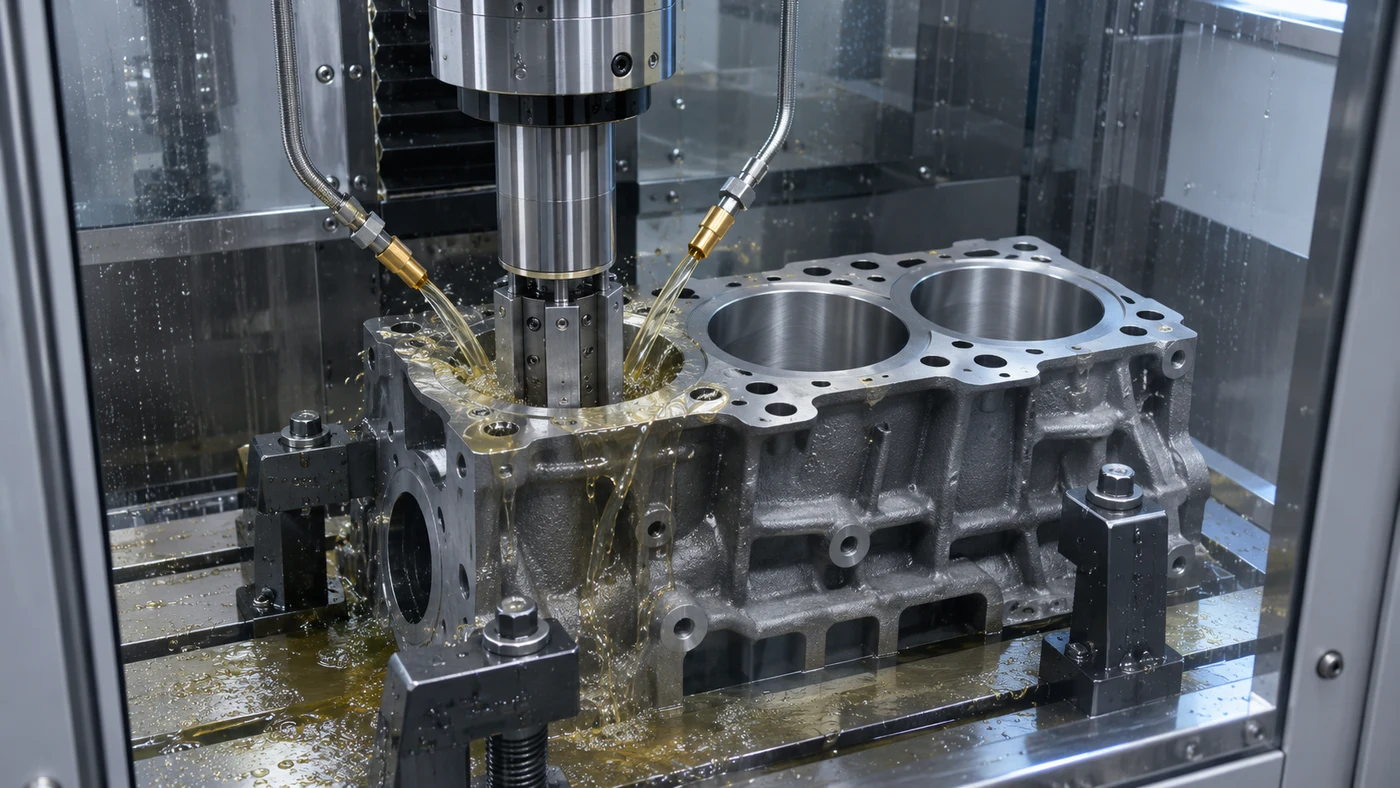
Watch: Honing Oils, Coolants and Precision Bore Finishing
Honing Oils and Coolants for Precision Bores
Honing finishes a bore using abrasive contact rather than a conventional cutting edge. In a typical multi-stroke process, stones on an expanding tool contact the bore while rotation and reciprocation create intersecting surface marks. Applications include hydraulic cylinders and valves, engine cylinders, connecting rods and fuel-system components. The required result may combine diameter, geometry and a functional surface texture. A shiny bore alone does not establish that those requirements have been met. Before selecting honing oil or coolant, identify the actual process, workpiece material, tooling and inspection plan. QA has coolant and oil options for evaluation. This guide explains the questions to review when choosing fluid for precision bore honing, including cast iron, steel and nonferrous applications.
Match the Honing Method to the Bore
Multi-stroke honing repeatedly traverses the bore with the selected abrasive tool. Some production systems instead use a sequence of single-pass tools, each performing a planned portion of the sizing or finishing work. These methods place different demands on incoming size, tooling and process control. Do not assume the same allowance or adjustment method applies to both. Surface-conditioning tools also have a different purpose from a precision sizing system; identify the intended correction before choosing equipment. Review the bore drawing, incoming variation and workholding with the tool supplier. A thin-walled sleeve can respond to clamping differently from a rigid block. Establish the permitted process and how the part will be inspected after release from its fixture before comparing fluid performance.

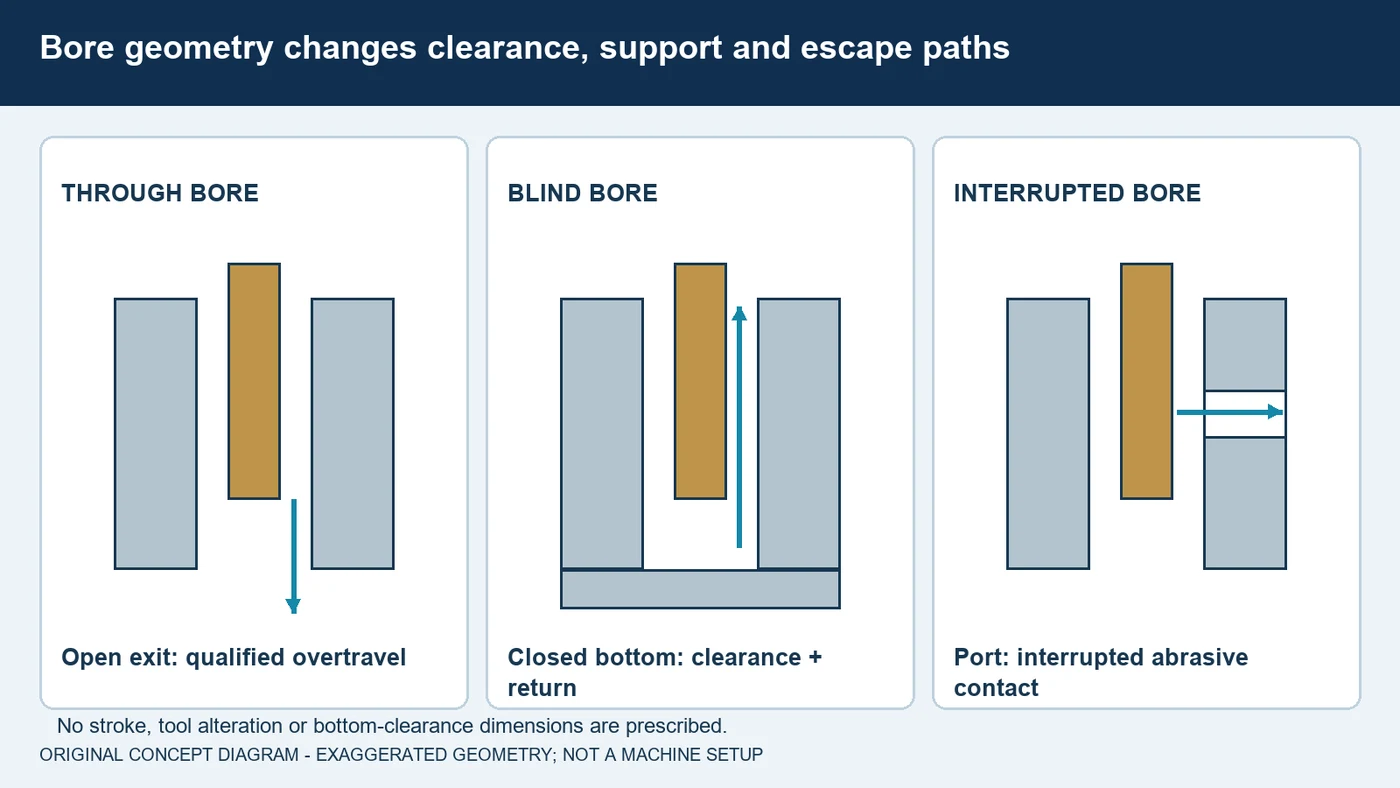
Through, Blind and Interrupted Bores Need Different Review
An open through bore provides a different tool path and fluid exit from a blind bore. At a closed end, tool length, stone arrangement, clearance and the specified stroke require particular attention. A setup suitable for an open hole cannot simply be transferred to a blind hole. Cross holes, ports and grooves also interrupt abrasive contact and can influence tool support or edge condition. Follow the tool manufacturer's application instructions rather than improvising mandrel alterations. Include the actual bore depth, reliefs, bottom shape and interruptions in the review. Confirm that fluid and removed material have an effective route out of the working area. Where a defect appears at one depth, examine the bore geometry, tool condition and motion as well as the fluid.
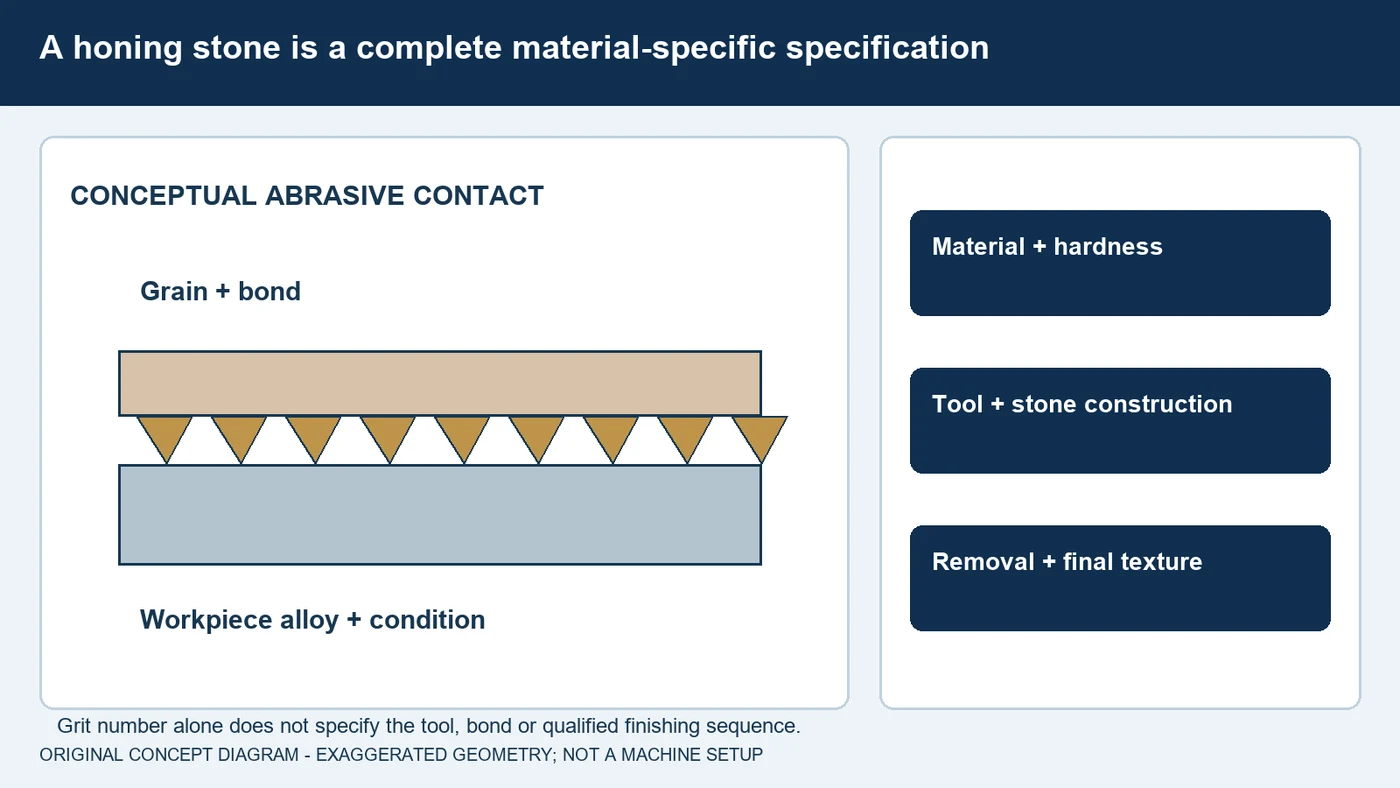
Select Stones for the Material and Required Texture
A grit number alone is not a complete honing-stone specification. Abrasive grain, bond, stone construction and the tool system must match the work material and operation. Cast iron, hardened steel, stainless steel, aluminum alloys and coated bores should not be treated as one material class. Loading, abrasive wear and the way the grain cuts can change the resulting surface. Confirm the current abrasive recommendation for the exact alloy and condition rather than applying an old general-purpose table as a universal rule. Document roughing and finishing steps, tool preparation and replacement criteria. A finer stone does not automatically repair geometry or remove every mark from the previous operation. Keep stone condition and the qualified process sequence consistent during any fluid comparison.
Choose Oil or Qualified Water-Mix Honing Coolant
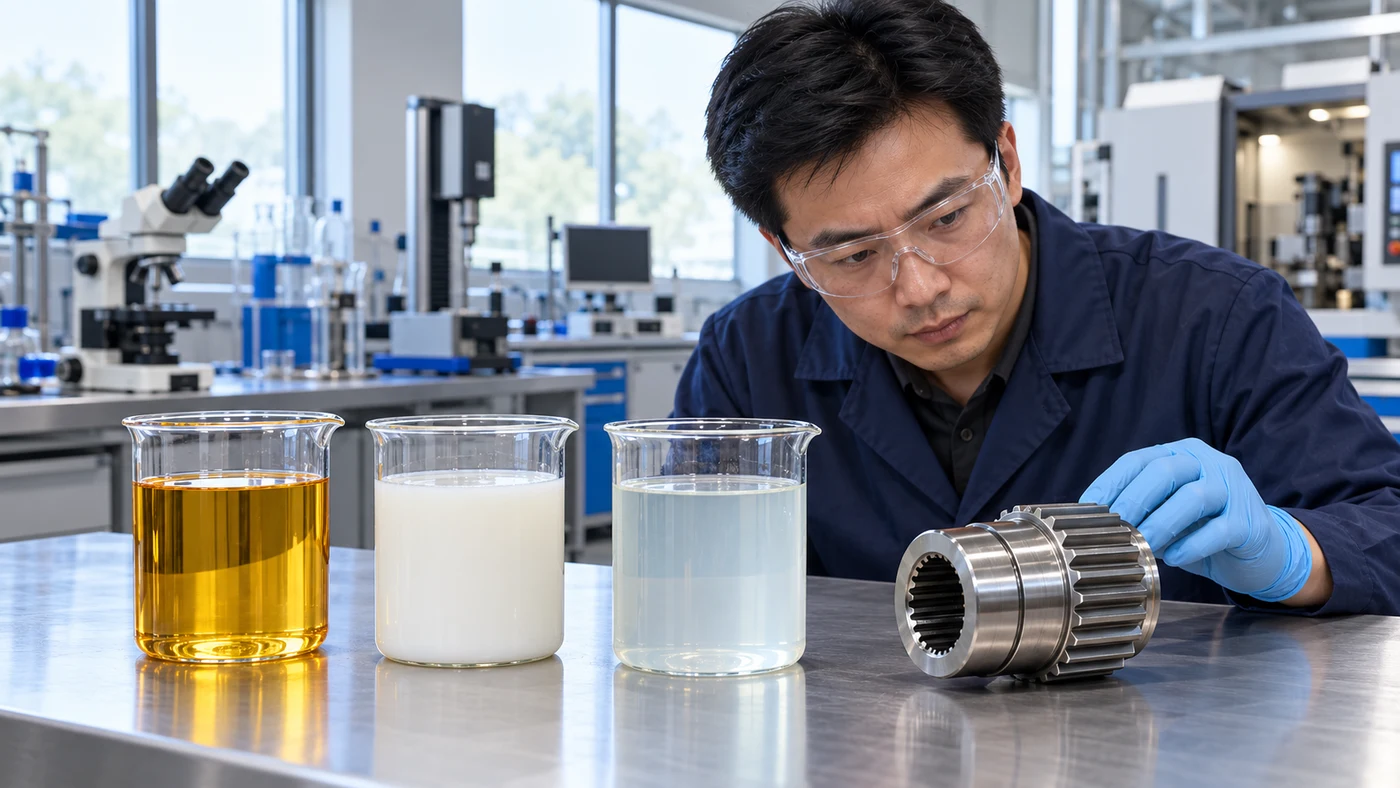
Honing oils and specifically formulated water-mix honing coolants both exist. Their suitability depends on the machine, abrasive system, material and required result. Do not replace a qualified honing oil with a general machining coolant solely because both products are used on metal. Review lubrication at abrasive contact, debris flushing, temperature management and the tendency to load or scratch. For a neat oil, consider the specified viscosity, additive restrictions and later cleaning. For a permitted diluted product, include water quality, corrosion or staining, foam and working concentration. Copper-containing alloys and sensitive downstream processes may impose additional compatibility requirements. QA has coolant and oil options. Confirm the complete application with the machine and tooling suppliers before changing fluid type or formulation.
Deliver Clean Fluid and Control the Return System
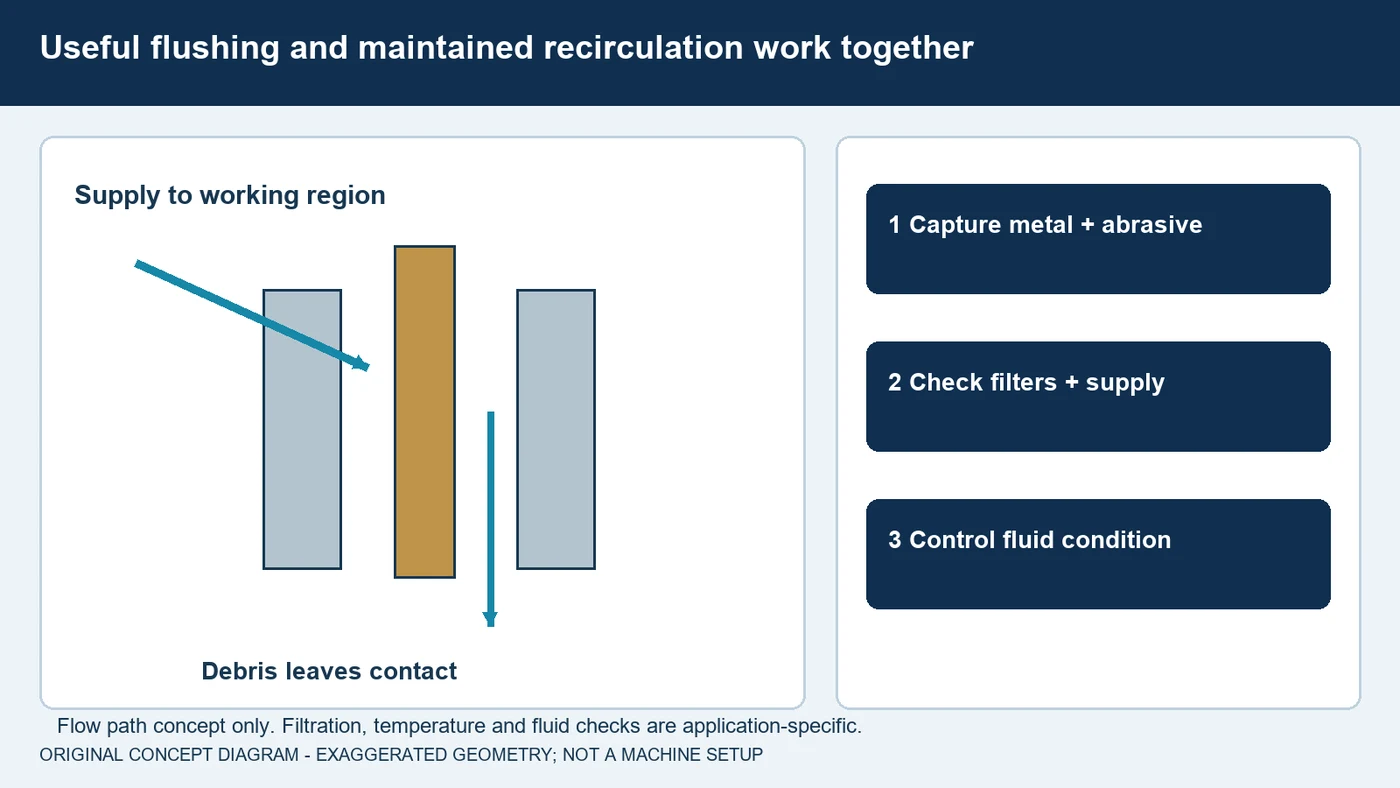
Supply fluid to the actual working region and provide a return path for removed metal and loose abrasive. A wet bore entrance does not by itself prove that fluid reaches the full contact length. Check access over the qualified stroke, including the bottom of a blind bore. Inspect the pump, nozzles, reservoir and filter as one system. Application-specific filtration and temperature control can be important for repeated precision work; a magnetic separator alone cannot collect every nonmagnetic or abrasive particle. Follow the specified filter and maintenance requirements instead of choosing a universal micron rating. For diluted coolant, use its recommended measurement method and refractometer correction factor. For neat oil, use the appropriate condition checks. Record temperature, contamination and additions so process drift can be separated from formulation effects.
Verify Bore Geometry, Crosshatch and Cleanliness
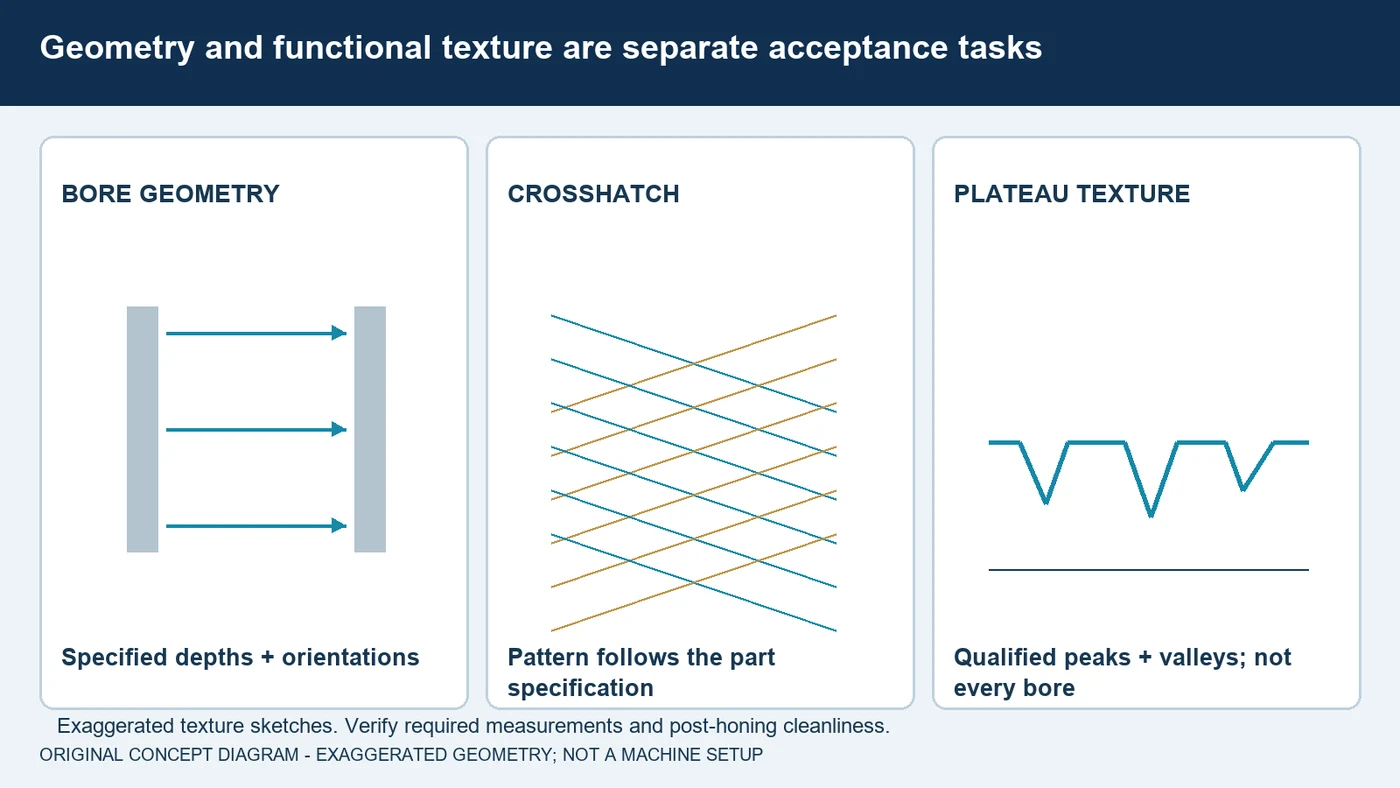
The inspection plan should distinguish bore size, geometry and surface texture. Check the required depths and orientations using calibrated equipment suited to the feature. A single diameter reading cannot describe every possible form error. For a functional cylinder surface, assess the specified texture and pattern rather than judging only brightness or an average roughness number. Rotation and stroking interact to form crosshatch, but the required angle and finish belong to the application specification. Plateau honing uses a qualified sequence to alter surface peaks while retaining the intended valley structure; it is not a universal extra pass for every bore. Review the specified surface measurements and cleaning requirements. Residual abrasive or metal debris must be addressed by the approved post-process cleaning and verification plan before assembly.
Plan a Controlled Honing-Fluid Evaluation
Send QA the bore drawing, material, hardness or coating, incoming size and stock allowance. Identify through or blind geometry, ports and grooves, wall thickness and workholding. Include the honing machine, multi-stroke or single-pass method, complete abrasive specification and qualified process sequence. Provide the current fluid, measured condition, supply arrangement, filtration and temperature records. Describe the problem with bore measurements, surface data and consistent photographs. QA has coolant and oil options for evaluation. Agree on a controlled comparison that follows geometry, texture, stone behavior, cleanliness and fluid condition together. Keep tooling and maintenance comparable during the trial. Confirm the selected formulation and operating instructions with the equipment and abrasive suppliers before moving the change into routine production.

Fluid selection by material
Use these as evaluation questions, not blanket product approvals.
| Material | What to evaluate | What to confirm |
|---|---|---|
| Cast iron cylinder bores | Evaluate the specified honing and plateau sequence, material condition and functional texture. | Approved stone system, debris removal, crosshatch and cleanliness requirements. |
| Carbon, alloy and hardened steels | Identify actual hardness, allowance, bore form and abrasive recommendation. | Lubrication and flushing, tool condition, temperature and measured geometry. |
| Stainless steel and difficult alloys | Review cutting behavior, loading and the full tool/fluid combination. | Material-compatible formulation, permitted additives, surface acceptance and cleaning. |
| Aluminum, copper-containing alloys and coated bores | Identify the precise alloy or coating and remaining layer allowance. | Qualified abrasive, staining and additive compatibility, coating integrity and downstream requirements. |
Questions about honing fluids
What does honing do to a bore?
A qualified honing system removes material with abrasives to produce specified bore size, geometry and surface texture. The exact correction and stock allowance depend on the process.
Is honing oil always required?
No single fluid type fits every system. Honing oils and specifically formulated water-mix honing coolants exist; confirm permission and compatibility for the machine, abrasive, material and finish.
Can a through-hole honing setup be used unchanged in a blind bore?
Do not assume so. Tool length, stone support, bottom clearance, stroke and the fluid/debris exit need a blind-bore application review.
Does every honed cylinder need the same crosshatch angle?
No. Use the surface requirements for the part and qualified process. A textbook example is not a universal setting.
Does a smooth-looking bore prove it is ready for assembly?
No. Required size, form, texture, material condition and cleanliness must be verified using the specified inspection plan.
Which QA fluid should I use for honing?
QA has coolant and oil options. Provide the bore drawing, material, machine, abrasive, process, fluid system and acceptance requirements for evaluation.
Discuss your application with QA
QA Lubricants has coolant and oil options. Send us the operation, alloy, hardness, tooling, current fluid and the problem you want to solve.
Discuss My ApplicationShop Water Diluted CoolantsShop Straight Cutting OilsTechnical references
- Sunnen: honing process and applications
- Sunnen: achieving specified finishes, DF104
- Sunnen: blind-hole honing, DF103
- Sunnen: abrasive selection principles, DF105
- Sunnen: single-pass honing system
- Sunnen: honing oils and coolants
- Sunnen: water-mix honing coolant example
- Sunnen: application-dependent filtration and cooling
- Gehring: functional surfaces and honing variants
- Sunnen: bore gauging and calibration
- Blaser Swisslube: measuring coolant concentration
Original educational content and illustrations. Confirm current machine, tool and fluid instructions. Trademarks belong to their respective owners.