
Metal Sawing Coolants & Cutting Oils for Band Saws and Cold Saws
Compare band-saw coolant, cold-saw lubrication and MQL selection questions for steel, stainless steel and aluminum, with guidance on blade pitch, chip clearance and cut quality.
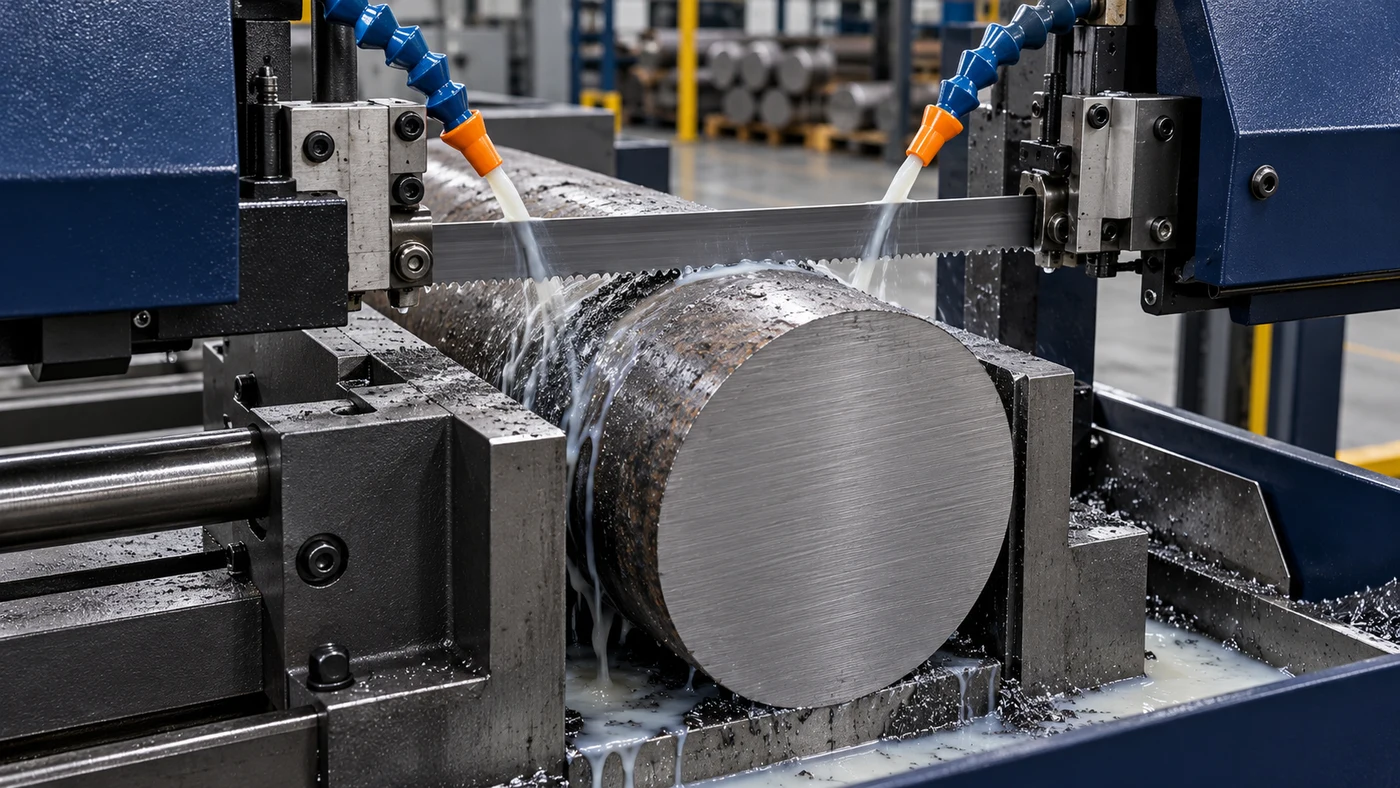
Watch: Metal Sawing Coolants & Cutting Oils for Band Saws and Cold Saws
Identify the Saw and the Stock Being Cut
Metal sawing begins with the machine and the stock, not just the name of a cutting fluid. A band saw carries a continuous toothed blade through the cut. A cold saw uses a toothed circular blade, with its own guidance for the material and cutting system. Neither should be treated as an abrasive cutoff machine. Describe whether you cut solid bar, tube, structural profiles or a clamped bundle. Record the dimensions, material grade and condition, and whether the operation is an occasional cutoff or repeated production. A straight blank for a machining operation may have different acceptance requirements from a finished fabrication part. Include cut length, squareness, burr and surface expectations. QA has coolant and cutting-oil options, but the candidate fluid must fit the saw, blade, delivery system and downstream process. The following checks help define that application before a trial.
Match Tooth Pitch and Chip Space to the Section
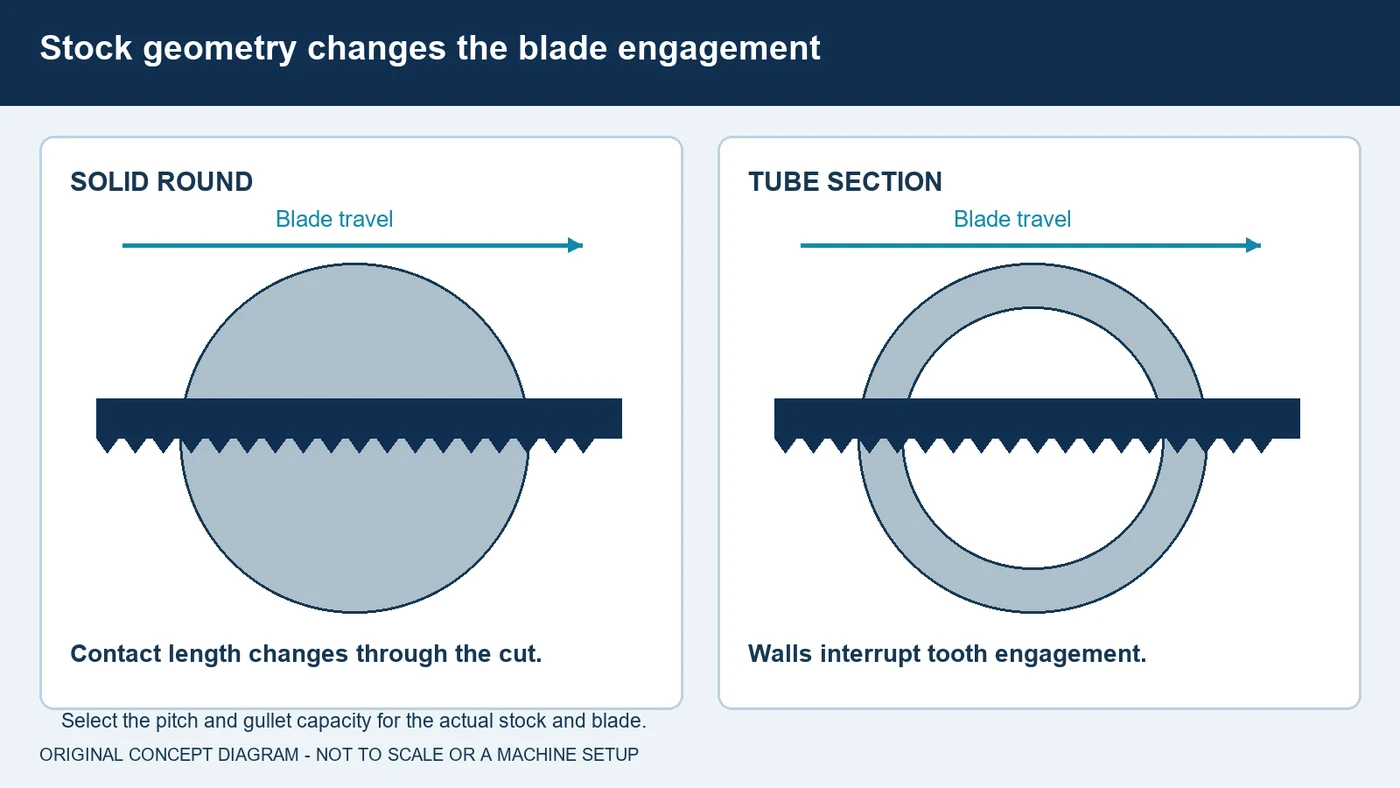
A blade needs cutting edges suited to the metal and space to carry away the chips it forms. Select tooth pitch from the blade maker's guidance for the actual contact length and stock shape. A solid round changes the length of engagement as the blade passes through it. A thin-walled tube or structural profile presents a different pattern, with walls and interruptions instead of a continuous solid section. Bundle cutting also requires a blade and clamping arrangement suited to the grouped stock. Too little useful chip space or an unsuitable tooth engagement can create loading and tooth damage that a different coolant will not resolve by itself. Confirm the permitted blade dimensions, cutting material, geometry and pitch for the saw. Avoid using one universal teeth-per-inch rule for every alloy, wall thickness and blade design. Document the selection alongside the fluid used in the test.
Check Support, Clamping and Blade Break-In
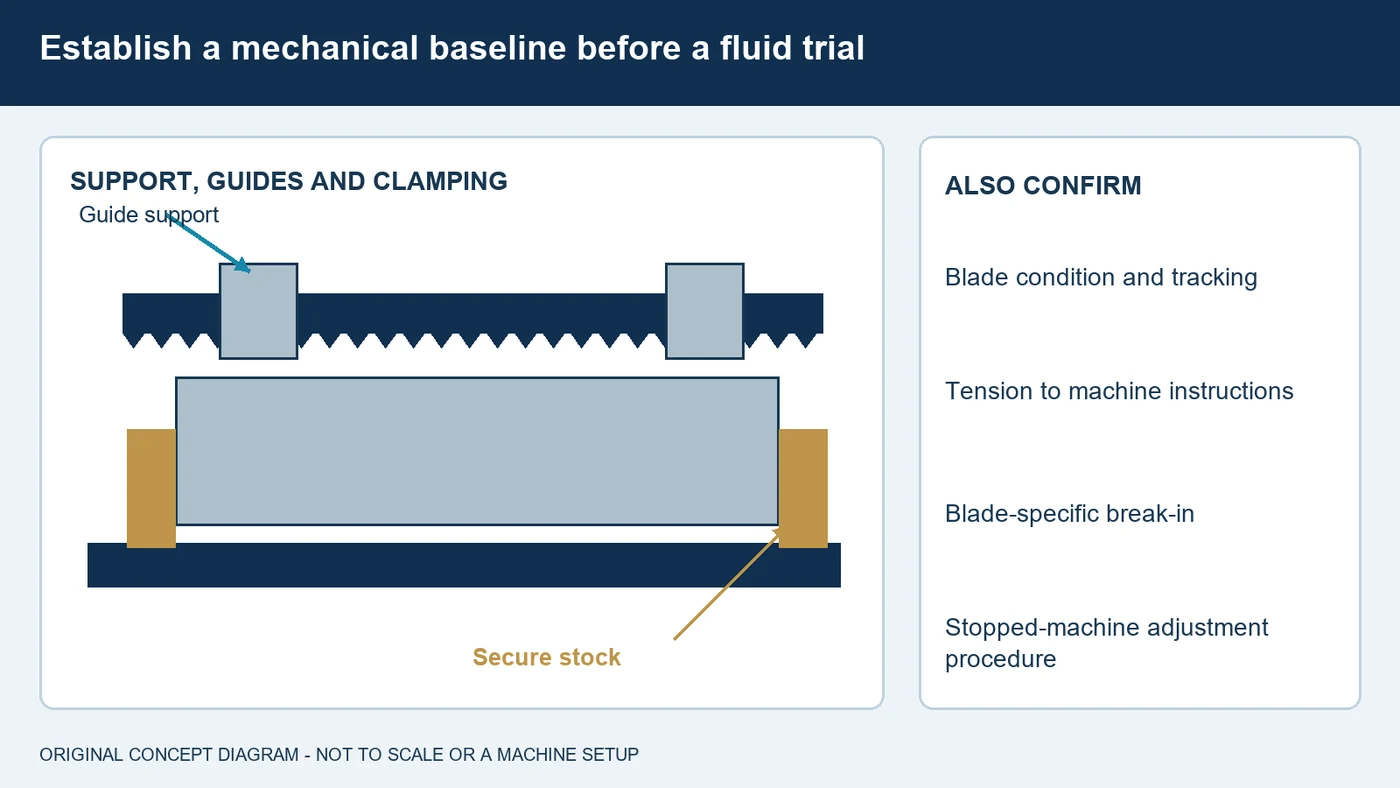
Before comparing sawing fluids, establish a repeatable mechanical baseline. Follow the machine's procedure for blade condition, tension, tracking, guide setting and workholding. Support long material and keep the clamped stock from shifting or rotating during the cut. Treat a bundle as a clamping application in its own right, rather than assuming one vise setting secures every piece. A new blade may also require a prescribed break-in sequence before full production. The blade type and manufacturer determine that procedure, including any changes to speed, feed or cutting time. Do not borrow one blade's numerical break-in recipe for all other blades. Record when the blade was installed, how it was broken in and what work it has cut. These details help separate a change in blade condition or support from the effect of the coolant. Make adjustments only through the approved stopped-machine procedure.
Supply the Teeth and Clear the Chips
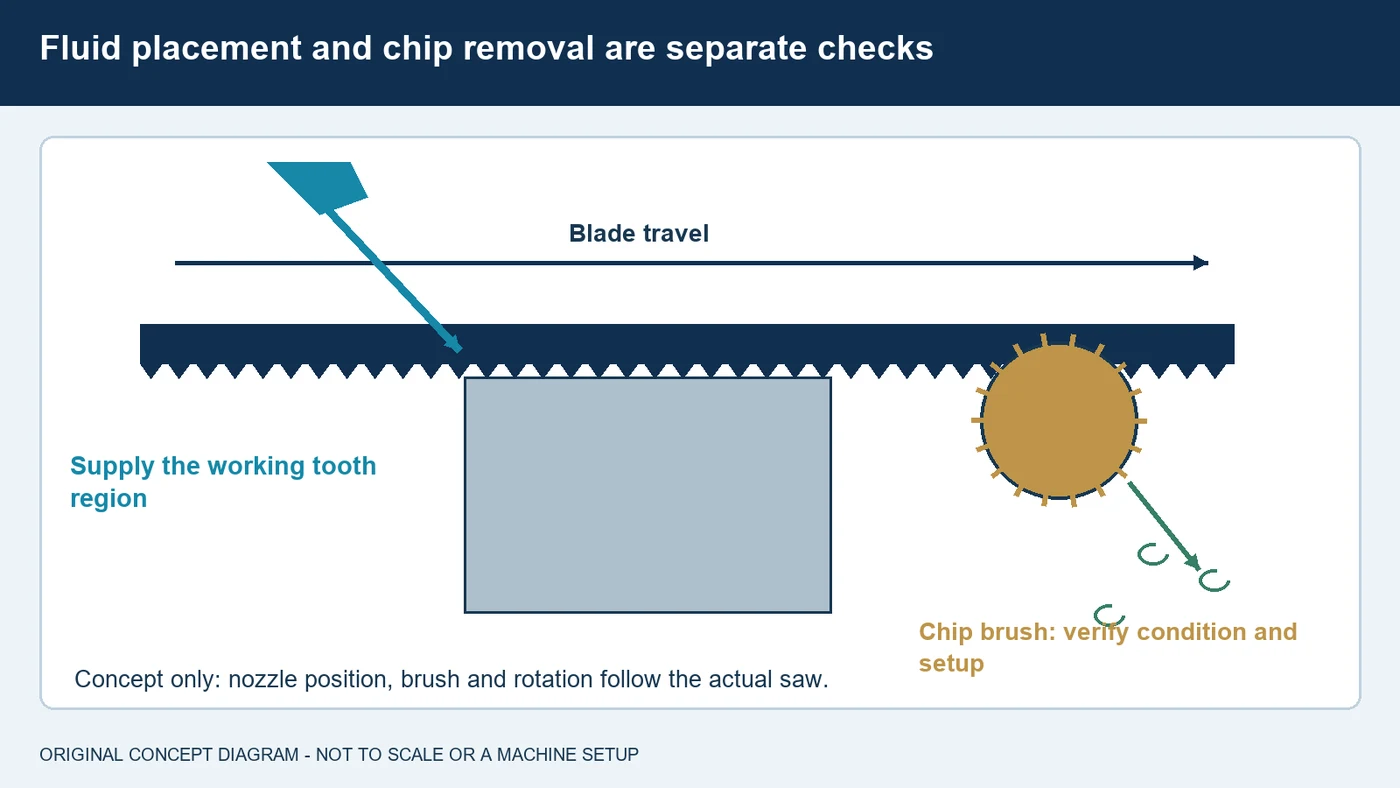
The cutting fluid must reach the working tooth region rather than merely wet the outside of the workpiece. Inspect nozzle placement, flow and the blade's route into the cut using the machine's instructions. On a supported band-saw application, delivery toward the tooth and gullet region helps place the fluid where it is needed. The machine's chip brush and chip collection system are separate parts of that process. Inspect them for the correct setup and condition so packed chips are not repeatedly carried around the blade. Check the sump screens, supply passages and return path through the permitted maintenance procedure. If the system recirculates dirty fluid or a nozzle is blocked, simply changing the product leaves an important variable unresolved. Keep the delivery arrangement documented during a comparison, and evaluate the cut and blade condition together. Stop and isolate the equipment as required before clearing or adjusting it.
Distinguish Flood Coolant, Cutting Oil and MQL
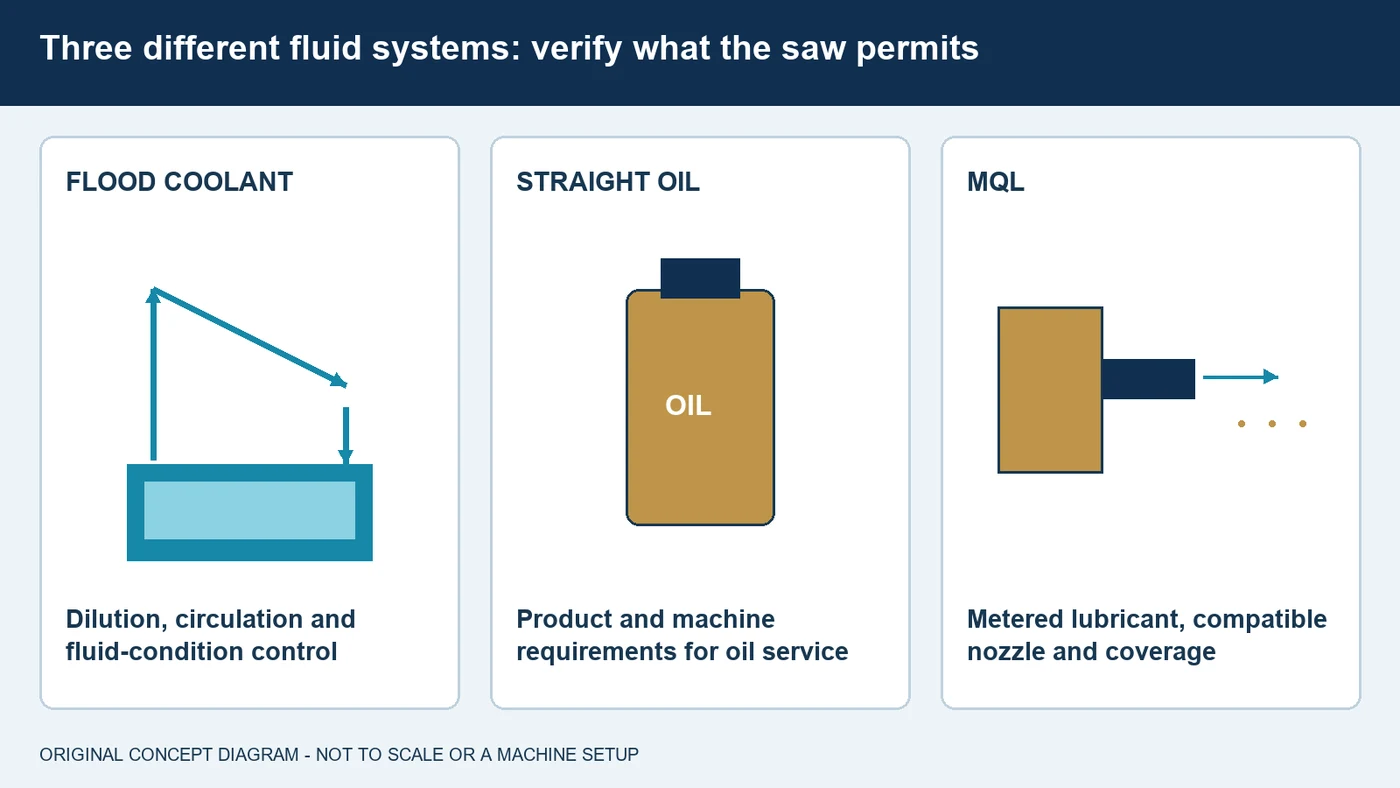
Flood coolant, straight cutting oil and minimum quantity lubrication are different application choices. A water-miscible flood product is mixed and maintained for a recirculating system. A straight oil is used according to its own product and machine requirements. An MQL system meters a small quantity of suitable lubricant through a designed applicator. It is not created by thinning an ordinary flood coolant or turning up an air nozzle. Saw-specific MQL nozzles are designed to cover the blade's teeth and gullets, and some installations also need separate guide-side lubrication. Review the complete arrangement with the saw and applicator suppliers, including chip handling, enclosure requirements and downstream residue. A result from one blade, material and machine is not proof that every saw can be converted. Compare a supported system on your own work using agreed acceptance criteria, with the correct lubricant and delivery settings.
Select and Maintain the Actual Formulation
Choose the actual formulation around the alloy, blade and production requirements. For aluminum and copper-containing alloys, check staining behavior and additive compatibility, including any restriction on active sulfur. For steel and stainless work, discuss the material condition, chip behavior and lubrication needs rather than assuming that every product in a fluid family performs the same way. Include corrosion protection during storage and cleaning requirements before welding, painting or further machining. Maintain a water-miscible product within its specified sawing concentration and use the supplier's measurement method. A refractometer may require a product-specific conversion factor; a raw reading is not automatically the actual concentration. Keep records of water quality, contamination and fluid condition. For an oil or metered system, follow its own maintenance instructions. Judge a trial by accepted cuts, blade use, process reliability and downstream results, not by fluid appearance alone.

Separate Crooked Cuts, Tooth Damage and Chip Loading
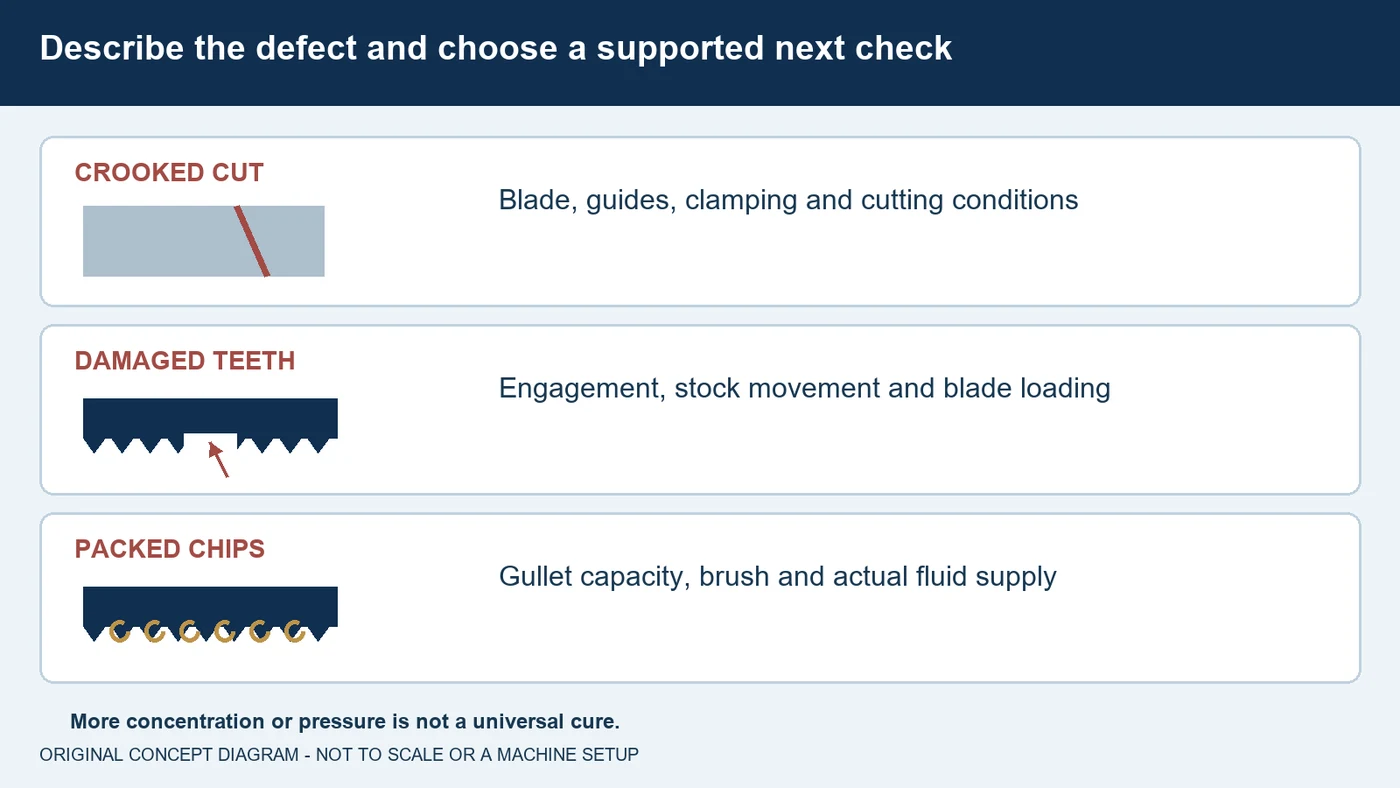
When a saw cut is unsatisfactory, first describe the defect. A crooked or wavy cut calls for a review of blade condition, support, clamping and the cutting recommendation. Broken or stripped teeth require a different check of engagement, material movement and loading. Chips welded to an edge or packed into a gullet bring fluid access, chip removal and the blade selection into the investigation. A toothed circular saw also has its own checks for runout, tooth condition, feed and workholding. Do not respond to every burr or surface mark by increasing coolant pressure or concentration. Use the machine and blade suppliers' troubleshooting guidance to choose a supported next change. Record the material, section, blade, conditions and fluid before and after it. When comparing products, keep those other factors consistent and measure the acceptance requirements. This makes the result useful for the next production decision.
Bring QA Your Complete Sawing Application
For a band-saw coolant or cold-saw lubricant inquiry, give QA Lubricants the complete application. Identify the saw and its permitted fluid system, along with the blade type, dimensions and tooth pitch. Tell us the exact alloy, hardness if known, and whether you cut a solid, tube, profile or bundle. Include the stock dimensions, clamping arrangement and the cutting guidance you currently follow. Share the fluid name, application concentration or metered delivery method, and any maintenance concerns. Describe the result you want to improve, such as blade use, squareness, chip loading, corrosion or cleaning before the next operation. QA has coolant and cutting-oil options and can help evaluate candidates against those requirements. Agree on trial conditions and acceptance checks before making a change. Explore our machining guides at QA Lube dot com, or call one, eight seven seven, eight seven seven, six two two one.

Fluid selection by material
Use these as evaluation questions, not blanket product approvals.
| Material | What to evaluate | What to confirm |
|---|---|---|
| Carbon and alloy steels | Evaluate lubrication at the tooth, chip removal and corrosion protection. | Hardness, scale, stock section, blade type, flood or metered delivery and storage after cutting. |
| Stainless steels | Evaluate adhesion, blade loading and repeatable fluid coverage. | Alloy condition, selected blade, section size, cutting guidance and downstream residue limits. |
| Aluminum alloys | Review nonstaining lubrication and buildup on teeth. | Actual alloy, blade geometry, chip clearance, additive compatibility and cleaning before the next operation. |
| Copper, brass and bronze | Check staining and chemistry compatibility rather than assuming every cutting oil is suitable. | Alloy, active-sulfur restrictions, required appearance and other metals sharing the system. |
| Titanium and nickel alloys | Agree on blade, cutting strategy and fluid delivery with the equipment and blade suppliers. | Material condition, process restrictions, machine capability and accepted cut quality. |
| Cast iron and hardened materials | Use the permitted wet, metered or dry process for the actual saw and blade. | Hardness, section, chip/dust handling and the cutting system's application limits. |
Questions about metal sawing fluids
What is the best coolant for a metal-cutting band saw?
Match the actual product to the material, blade and saw's delivery system. Check cut quality, lubrication, chip handling, corrosion protection and cleaning requirements. QA has coolant and cutting-oil options for application evaluation.
Can a cold saw use the same fluid as a band saw?
Sometimes a formulation may suit both, but confirm each saw and blade supplier's requirements. A toothed circular saw, a band saw and an abrasive cutoff machine are different systems; do not transfer fluid or operating instructions automatically.
Why does the band saw pack chips between the teeth?
Check gullet capacity, tooth pitch, feed, material, the chip brush and actual fluid access. Fluid alone cannot correct a blade or mechanical setup that is unsuitable for the cut.
Can MQL replace flood coolant on our saw?
It can be considered when the saw, blade, lubricant and applicator support it. Review nozzle coverage, guide lubrication, chip handling and part requirements, then verify the complete application. It is not simply a heavily diluted flood coolant.
What concentration should a sawing coolant run at?
Use the specific product's sawing recommendation with the machine and blade requirements. Measure using its prescribed method and conversion factor; one refractometer reading is not a universal concentration for every fluid.
What information should I send QA for a sawing-fluid inquiry?
Send the saw type, blade details, alloy and hardness, solid or hollow stock dimensions, bundle arrangement, current fluid, delivery method and the problem. Include squareness, burr, finish and downstream cleaning requirements.
Discuss your application with QA
QA Lubricants has coolant and oil options. Send us the operation, alloy, hardness, tooling, current fluid and the problem you want to solve.
Discuss My ApplicationShop Water Diluted CoolantsShop Straight Cutting OilsTechnical references
- WIKUS: band-saw blade selection, stock geometry and tooth pitch
- WIKUS: blade construction, tooth set and fluid delivery FAQs
- WIKUS: blade-specific breaking-in guidance
- Starrett: band-saw cutting and troubleshooting reference
- Hoffmann Group: circular sawing and cutting-quality troubleshooting
- Unist: metered MQL saw nozzles and tooth/gullet coverage
- KASTO: production sawing of solids, tubes and profiles
- Blaser Swisslube: product-specific coolant concentration measurement
Original educational content and illustrations. Confirm current machine, tool and fluid instructions. Trademarks belong to their respective owners.