
Micro-Machining Coolants & Cutting Oils for Small Metal Features
Explore micro-milling and micro-drilling fluid selection: small-tool runout, chip formation, pilot holes, coolant delivery, filtration and precision feature inspection.
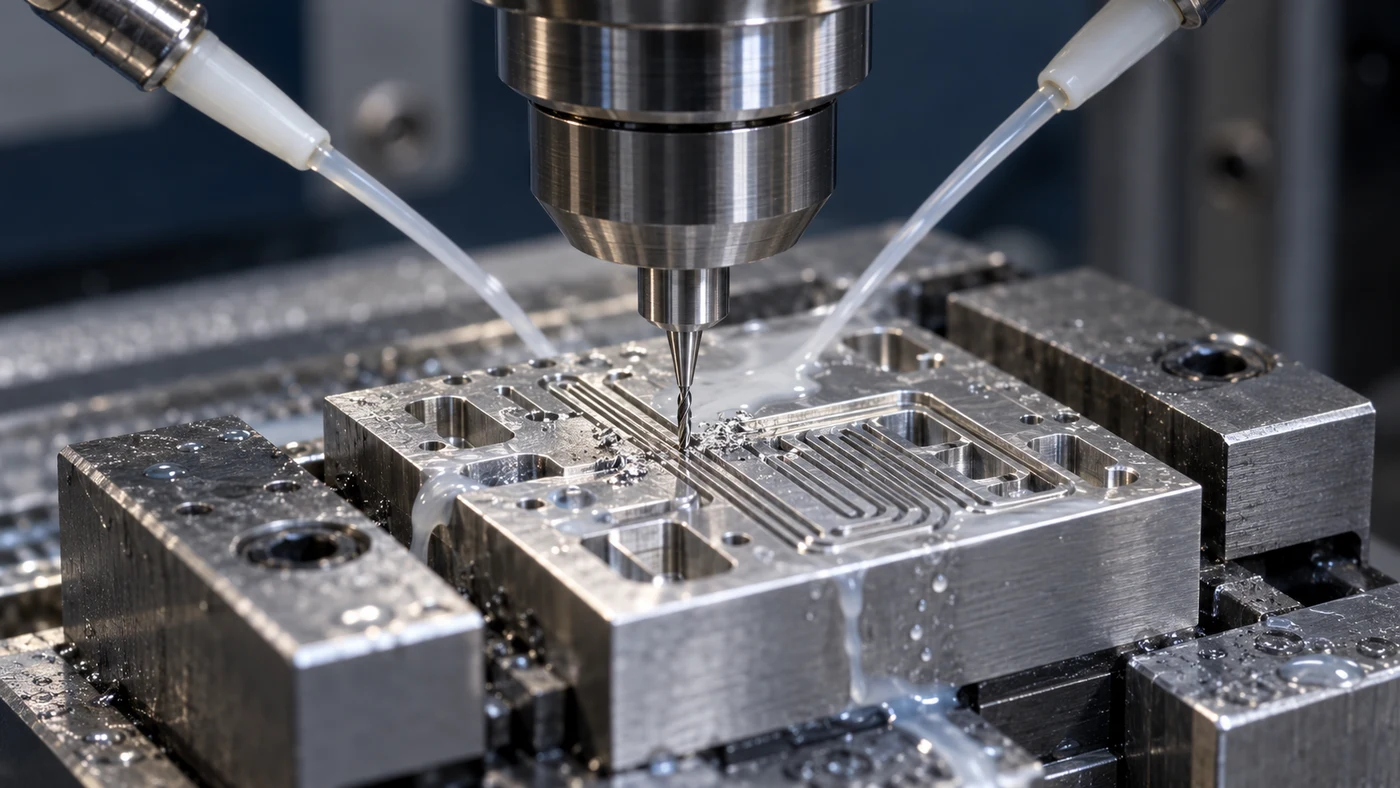
Watch: Micro-Machining Coolants & Cutting Oils for Small Metal Features
Define the Small Feature and the Cutting Process
Micro-machining brings small features and demanding process control together. A part may need fine channels, miniature pockets or very small holes even when the surrounding component is much larger. There is no single tool-diameter definition that makes every shop's application identical. Begin with the feature drawing, the cutting method and the required result. This guide focuses on mechanical micro milling and micro drilling in metals, rather than treating laser processing or electrical discharge machining as the same fluid application. Record the tool's cutting diameter, usable reach, feature depth, alloy, hardness and acceptance requirements. The machine, holder, tool, workholding and fluid must operate as a coordinated system. QA has coolant and cutting-oil options for review. The selection should support the specific small-tool process, including delivery access and chip removal, rather than copy the fluid choice or cutting settings from a larger cutter.
Control Runout, Projection and the Holder
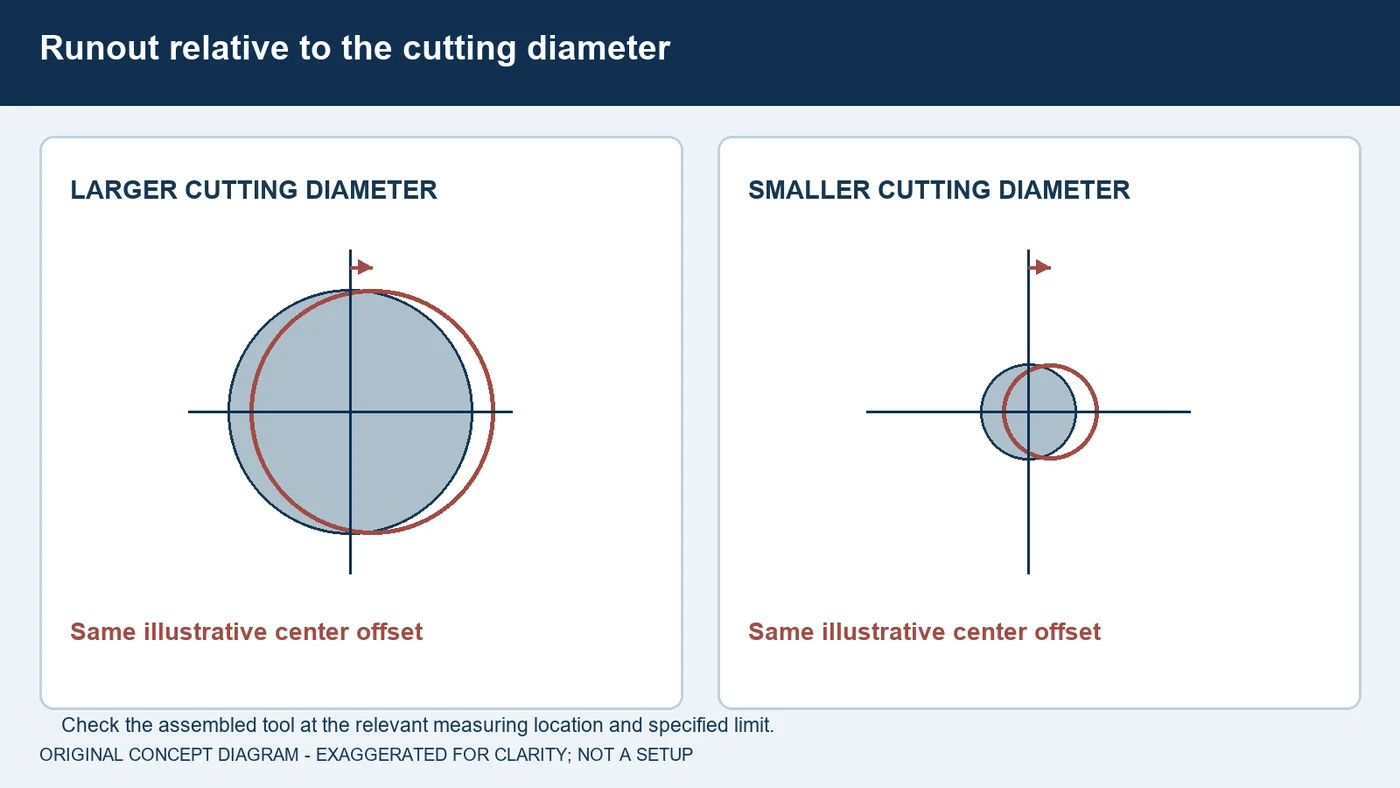
Small cutting tools leave little margin for an inaccurate assembly. Confirm the spindle, holder and tool requirements together, including concentricity and balance where specified. Clean and inspect the mating surfaces and clamp the correct shank region using the holder's procedure. Keep the projection within the supported arrangement for the required reach. Do not assume a measurement at the holder nose proves the cutting tip meets the application requirement. Evaluate the assembled tool using an appropriate method and the tool supplier's limits. Runout can distribute the cut unevenly between milling flutes; the same absolute error represents a larger proportion of a small cutting diameter. Workholding and vibration also belong in the check. A fluid change will not correct an unstable fixture or an off-center cutter. Establish a known mechanical baseline before comparing formulations, then retain the assembly and inspection information with the trial results.
Make Chips Instead of Simply Reducing Feed
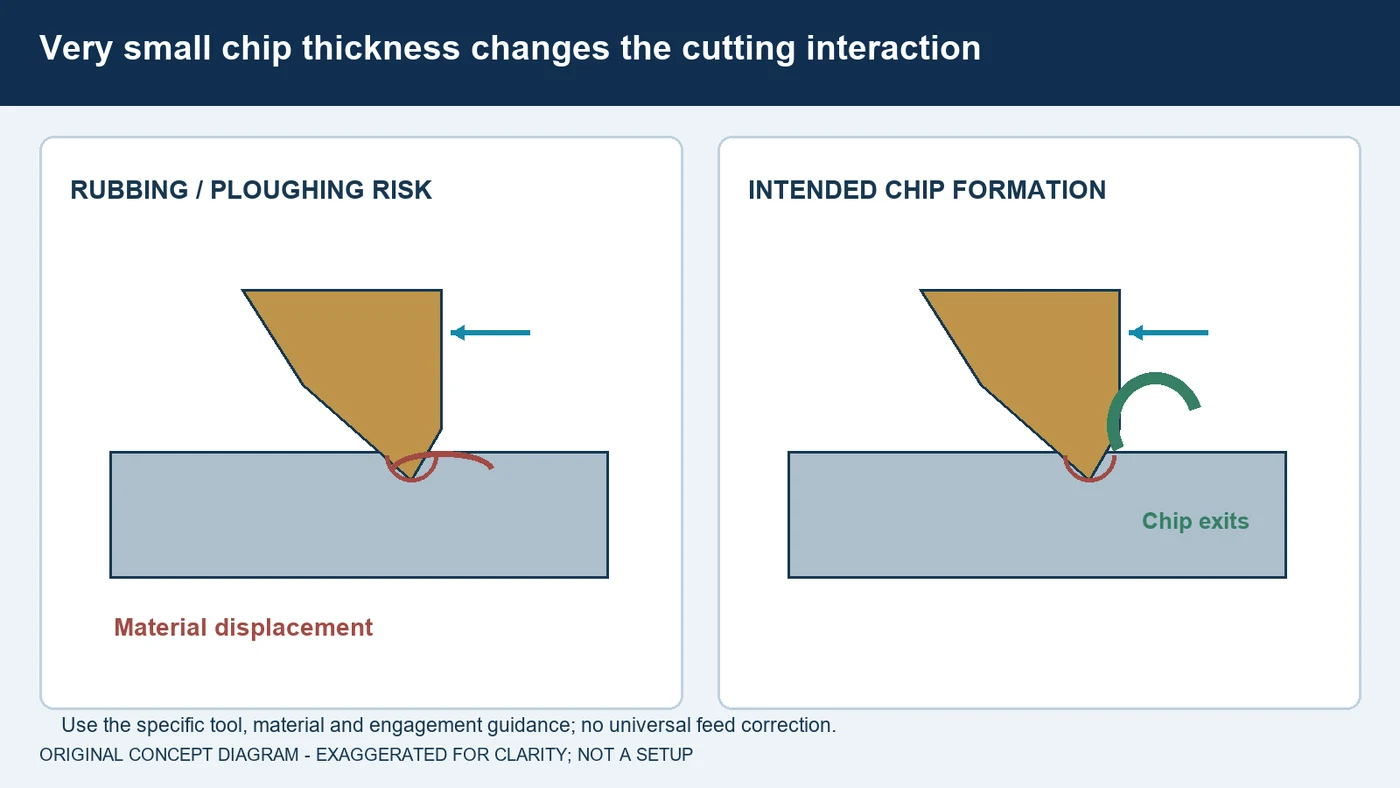
A miniature end mill is not just a large cutter scaled down without consequences. At small chip thickness, the cutting-edge radius becomes significant relative to the material being removed. The tool can plough or rub rather than form the intended chip, so reducing feed indiscriminately is not a reliable cure for tool breakage. Work with the tooling supplier's recommendations for the actual diameter, edge geometry, material and engagement. The programmed feed per tooth and the chip thickness produced by a particular toolpath are related, but they are not always identical. Radial engagement and transitions into corners can change the load, which is why the machining strategy belongs in the application review. Do not apply a generic chip-thinning correction or increase feed without verifying the process. Keep the cutting edge, supported reach and chip-evacuation arrangement in view when deciding whether the problem is rubbing, overload, deflection or chip recutting.
Match the Micro Drill and Hole-Entry Sequence
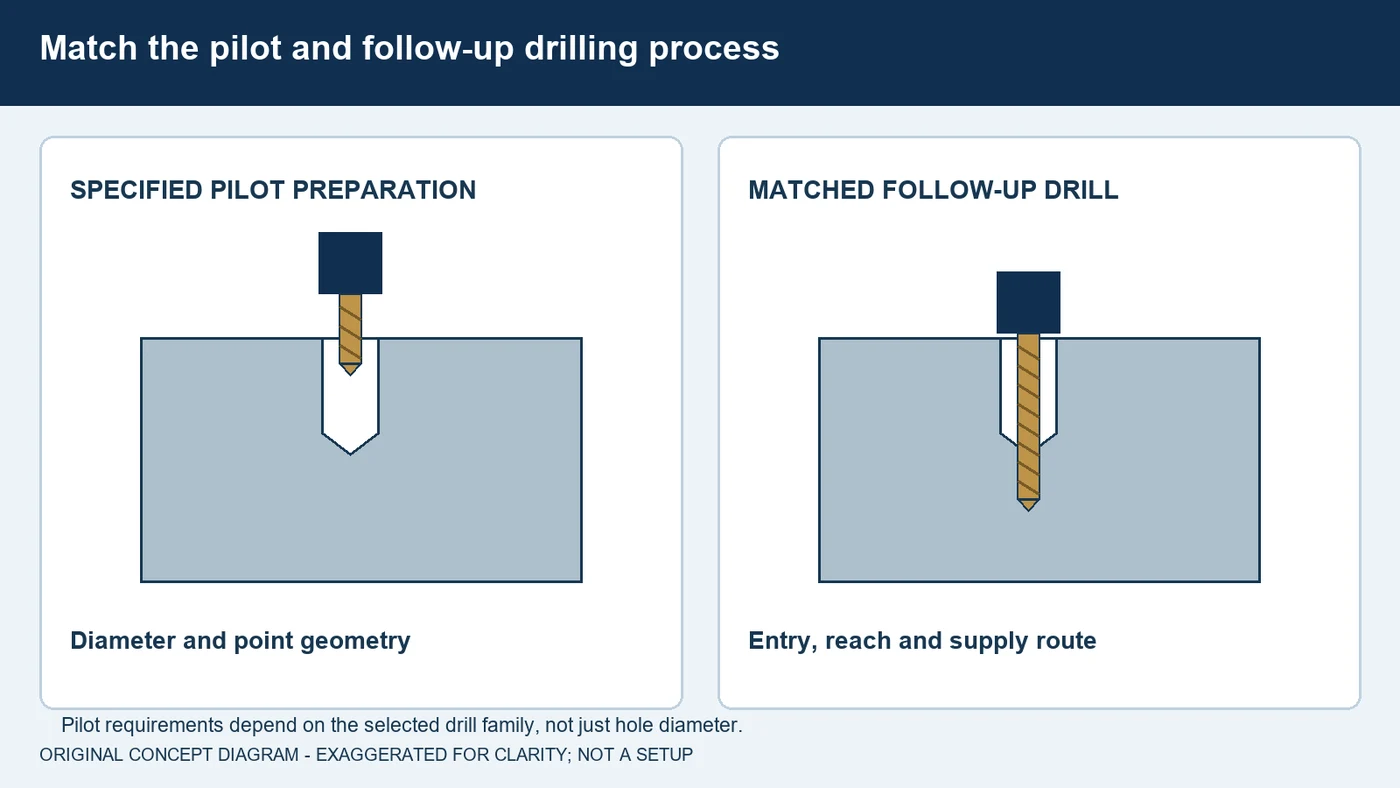
Micro drilling needs its own process plan. Some deep-hole drill families require a matched pilot hole, with the specified diameter tolerance and point geometry. A generic center mark is not automatically an equivalent preparation. Confirm the entry sequence, depth, hole condition and follow-up drill requirements with the tooling instructions. Review whether the selected design uses external supply or coolant channels exiting near the tip. The required reach is also different from cutting-flute length; choose the supported tool arrangement rather than extending the holder grip onto a flute. A thin workpiece needs adequate support, and the hole's breakout or blind end belongs in the setup review. Use pecking, retraction and entry motions only as specified for that drill and material. A cycle that works for another small drill may be unsuitable here. Record hole quality and chip behavior alongside tool condition and the fluid actually reaching the cutting region.
Verify Delivery, Filtration and Chip Escape
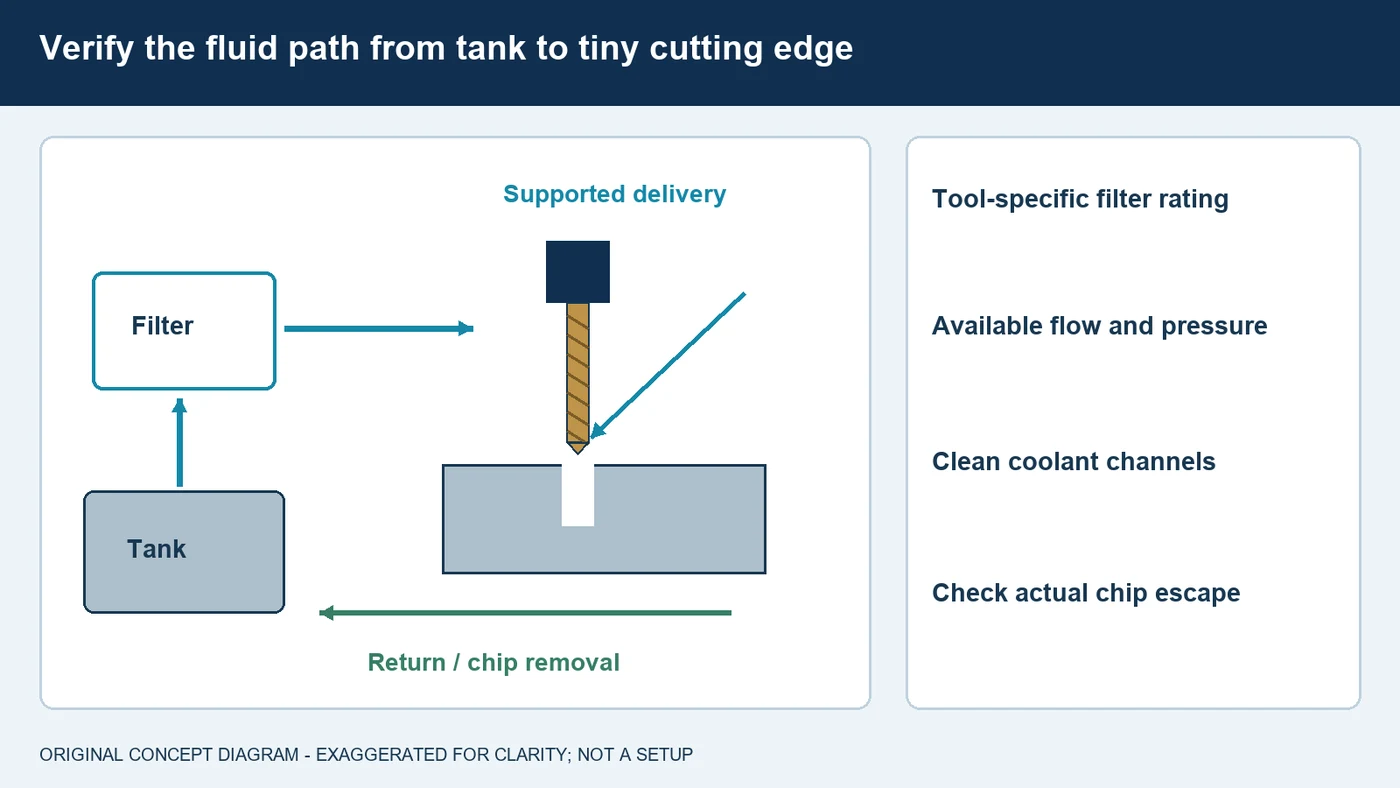
Coolant access can become difficult as tools and features get smaller. External delivery must reach the cutting tip during the actual operation; a stream aimed at the shank may miss the engagement. Through-tool supply offers another route where the tool and machine support it, but the channels require the specified clean fluid. Manufacturer instructions show that filtration and pressure requirements differ between tool designs. Do not assign one filter rating or pump setting to every micro drill and end mill. Check the complete circuit, including filters, screens, available flow and any restricted passages. Keep chips from accumulating in a narrow pocket or hole and returning to the cut. More visible splash does not demonstrate better evacuation. Inspect the tool, chip condition and feature after a supported delivery adjustment. Keep the nozzles and supply arrangement within equipment limits, and confirm that an apparently adequate tank level is accompanied by dependable delivery at the edge.
Select the Formulation for Material and Machine
Tool makers may recommend cutting oil for particular small-tool families and allow specified water-miscible alternatives. Those recommendations are tied to the tool and application, not a rule that every micro-machining job needs the same product. Confirm the formulation with the equipment and tooling requirements. Review lubrication, heat removal, corrosion protection, delivery behavior and compatibility with the materials contacted. Aluminum and copper alloys need specific staining and compatibility checks, while steels, stainless steels and specialty alloys need evaluation in their actual hardness and condition. Include cleaning, storage and subsequent processes in the selection, especially where small passages or fine features can retain residue. If a water-miscible formulation is chosen, use the product's mixing, water-quality and concentration instructions. A refractometer reading may need a product-specific factor. QA has coolant and cutting-oil options and can review these requirements with you; a generic label such as synthetic or straight oil does not establish suitability by itself.

Control Temperature and Measure the Feature
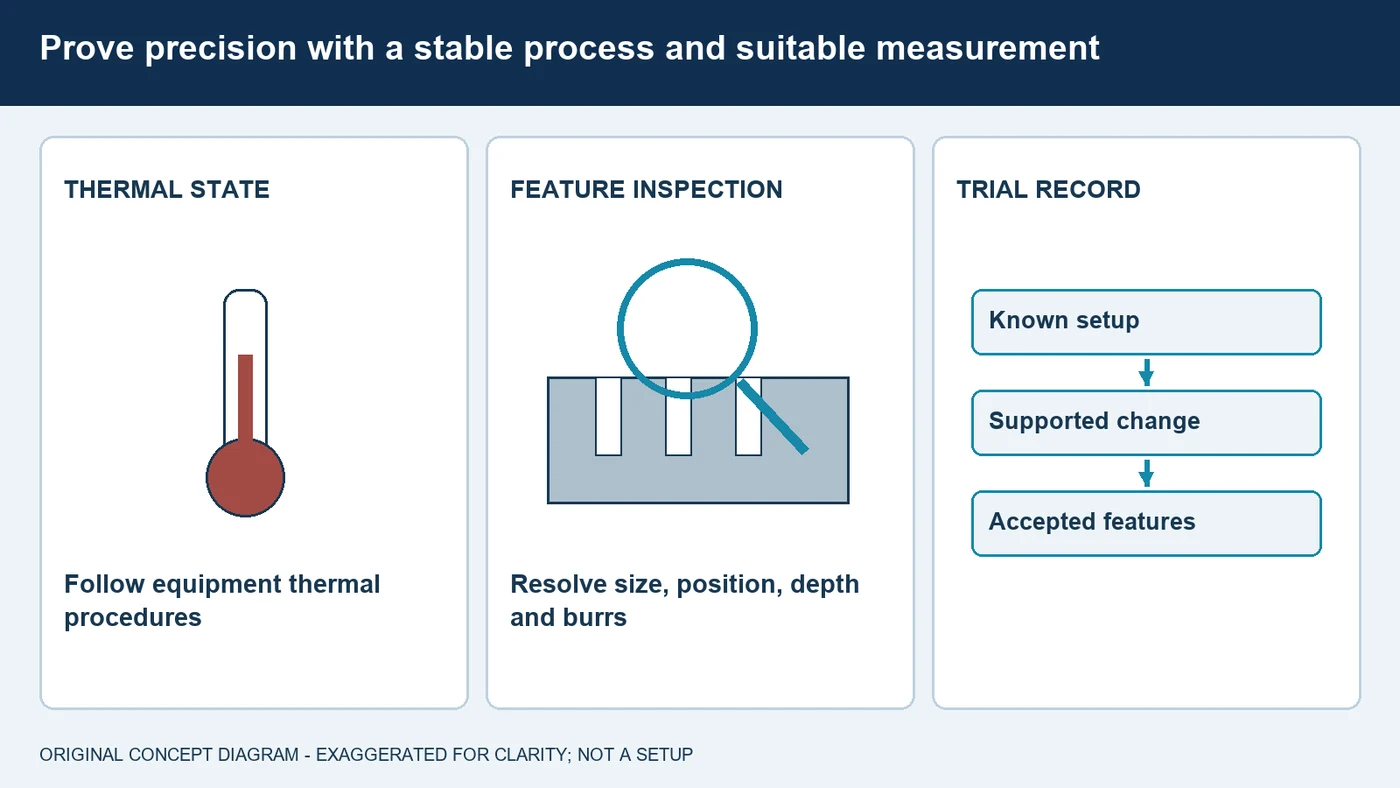
Very small features make process variation difficult to ignore. Machine temperature, vibration, tool and workholding condition can influence the result, so follow the equipment's thermal-management and preparation procedures. Avoid assuming that colder fluid automatically means better accuracy. Tool measurement and part measurement also need methods suited to the size and access involved. Establish how you will check feature width or hole diameter, position, depth, burr condition and surface requirements before beginning a trial. Use the drawing's acceptance criteria, with an agreed method that can resolve the required features. Keep the workpiece and measurement surfaces appropriately clean without damaging delicate details. Record the machine state, tool assembly, material, fluid condition and actual inspection results. If a defect appears, investigate the corresponding mechanical, cutting and delivery evidence. A successful fluid trial should produce repeatable accepted features, not just a longer interval before an unexplained tool failure.
Bring QA the Complete Micro-Machining Job
For a micro-machining fluid review, provide QA with the feature drawing, material grade and hardness, and whether the operation is milling, drilling or another mechanical cutting process. Include the tool's cutting diameter, reach, substrate and coating, plus the machine and holder information. Describe the current product, external or through-tool delivery, filtration and the tooling supplier's requirements. Explain the result you want to improve: chip evacuation, finish, burrs, corrosion, cleaning or repeatability of accepted features. Tool photographs, measurements and observations of how failures develop are more useful than a general statement that small tools keep breaking. QA has coolant and cutting-oil options and can help evaluate a formulation for the entire manufacturing route. Agree on the supported conditions, parts to inspect and measures of success with the relevant suppliers before the trial. Preserve the results so the choice can be evaluated against the same requirements in production.
Fluid selection by material
Use these as evaluation questions, not blanket product approvals.
| Material | What to evaluate | What to confirm |
|---|---|---|
| Carbon and alloy steels | Match the actual hardness, small-tool geometry and lubrication needs. | Tool coating, engagement or drilling sequence and later processing. |
| Stainless steels | Review the alloy-specific tool and chip-removal requirements. | Rigid support, edge condition, qualified cutting data and delivery. |
| Aluminum alloys | Evaluate lubrication, non-staining compatibility and residue removal. | Exact alloy, miniature-feature finish and downstream cleaning. |
| Copper and brass alloys | Require formulation-specific compatibility and staining checks. | Alloy, finish, chemistry and retained residue in small features. |
| Titanium and nickel alloys | Use a specifically qualified tool and fluid application. | Alloy and hardness, thermal/load control, supported reach and chip evacuation. |
| Hardened tool steels | Confirm the intended micro-tool and supported cutting method. | Actual hardness, machine stability, wet/dry requirements and feature inspection. |
Questions about micro-machining fluids
What counts as micro-machining?
Definitions vary with the application. Here the guide covers mechanical cutting of small metal features with miniature milling and drilling tools. Specify the actual tool diameter, feature size and tolerance instead of relying on the label.
Should I always slow the feed when a miniature end mill breaks?
No. Too little effective chip thickness can cause rubbing or ploughing. Review the tool-specific guidance, engagement, runout and chip removal before changing feed. Neither an arbitrary reduction nor increase is a universal fix.
Does every micro drill need a pilot hole?
Follow the selected drill family's instructions. Some deep-hole systems require matched pilot geometry and tolerances. The correct entry sequence depends on the drill, workpiece and application.
What coolant filter rating is needed for micro-machining?
Use the requirement for the actual tool, holder and machine. Tiny coolant channels can be sensitive to contamination, but published specifications differ. A single rating should not be applied to every design.
Is cutting oil always better than a water-miscible coolant?
No universal comparison applies. Review the exact formulation, tooling recommendation, machine compatibility, material and downstream requirements. QA has coolant and cutting-oil options for application evaluation.
What information does QA need for a micro-machining fluid review?
Send the drawing and material condition, tool and holder specifications, machine, current fluid, delivery and filtration details, and the measured problem you want to solve. Include the inspection criteria for accepted features.
Discuss your application with QA
QA Lubricants has coolant and oil options. Send us the operation, alloy, hardness, tooling, current fluid and the problem you want to solve.
Discuss My ApplicationShop Water Diluted CoolantsShop Straight Cutting OilsTechnical references
- Makino: micromachining scope and machine stability
- Mikron Tool: spindle, holder, tool and external coolant requirements
- Harvey Performance: miniature end-mill size effects and chip formation
- Harvey Performance: toolpath engagement and chip-thinning considerations
- Mikron Tool: matched pilot and follow-up drilling tools
- MITGI: micro-drill reach, flute lengths and through-coolant designs
- Mitsubishi Materials: MICRO-MWS installation and coolant-filtration instructions
- BIG DAISHOWA: coolant delivery at micro-cutting tools
- Mikron Tool: model-specific milling coolant, pressure and filtration guidance
- Makino: micromachining thermal, workholding and measurement challenges
- FUCHS: material and downstream cutting-fluid selection
- Blaser: product-specific coolant concentration measurement
Original educational content and illustrations. Confirm current machine, tool and fluid instructions. Trademarks belong to their respective owners.