CNC Milling Coolants & Cutting Oils
Select CNC milling coolant by operation, material and tool. Explore aluminum, steel, stainless and titanium milling, chip removal, wet-versus-dry decisions and troubleshooting.

Watch: CNC Milling Coolants & Cutting Oils
CNC Milling: Start With the Application
What is the best coolant for CNC milling? Start with the work being done. A wide face mill removing steel, a small end mill finishing an aluminum pocket, and a cutter shaping a titanium component do not create the same fluid requirements. In this QA Lubricants guide, we look at milling methods, material compatibility, wet versus dry operation, and the condition of the fluid system. Our purpose is to help you ask better application questions before choosing a coolant or cutting oil. QA has coolant and oil options for metalworking applications. The right candidate needs to be matched to your machine, tool, material and performance target. These original photographs and diagrams illustrate the discussion. They are not instructions for setting machine speed, feed or coolant pressure.
Face, Shoulder, Slot & Profile Milling
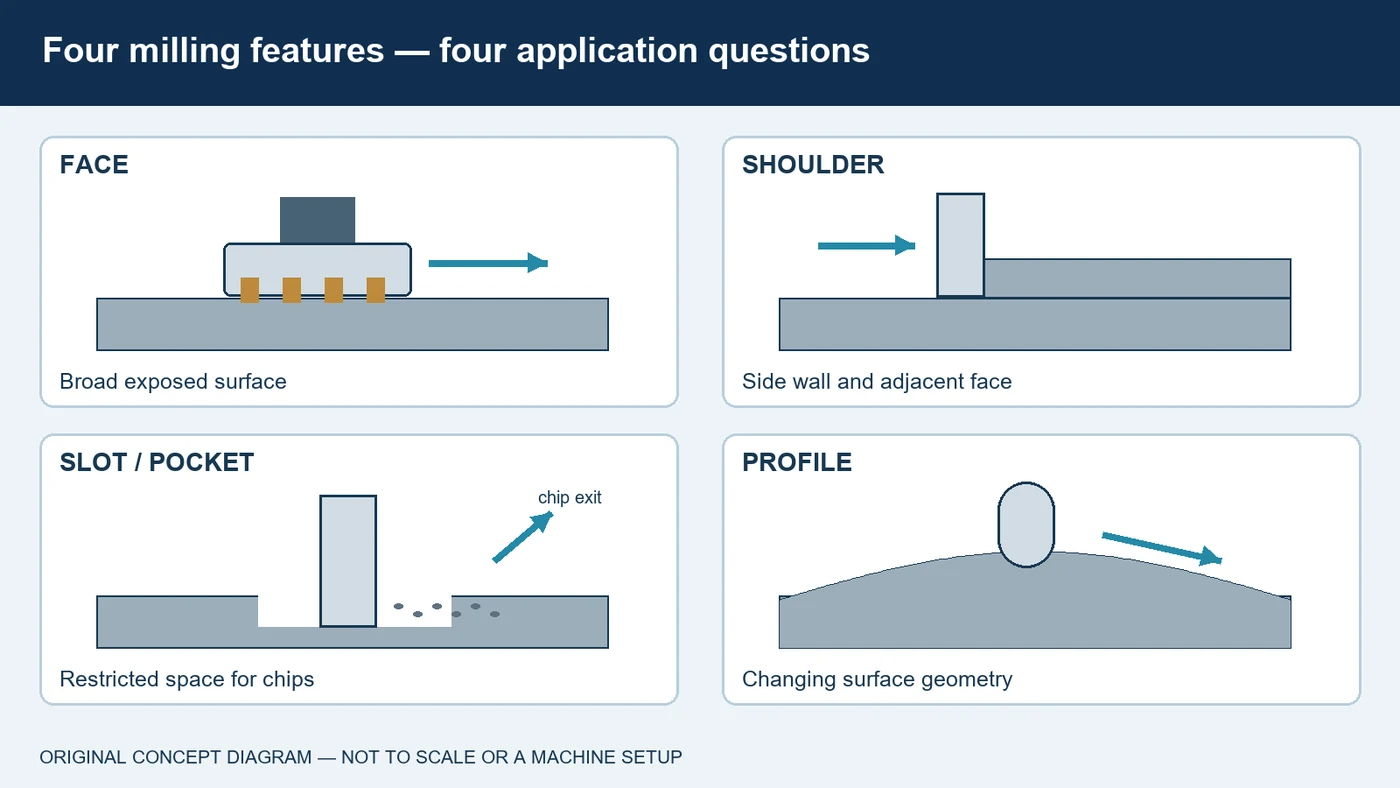
Face milling produces a surface using a rotating cutter with several cutting edges. Shoulder milling develops a side wall and an adjacent surface. Slot milling removes material between two sides, while pocket milling works inside a cavity. Profile milling follows a shaped surface and may use tools such as ball nose end mills. Roughing removes stock; finishing establishes the required surface and dimensions. Each description changes the questions we should ask about fluid access and chip removal. A deep pocket can collect chips that would leave an open edge cut more easily. A long tool needed for reach can also make the process less rigid. Before blaming the fluid for marks on a part, document the cutter, feature, engagement and path through the material. Those details make the discussion useful.
Wet or Dry? Follow the Tooling Strategy
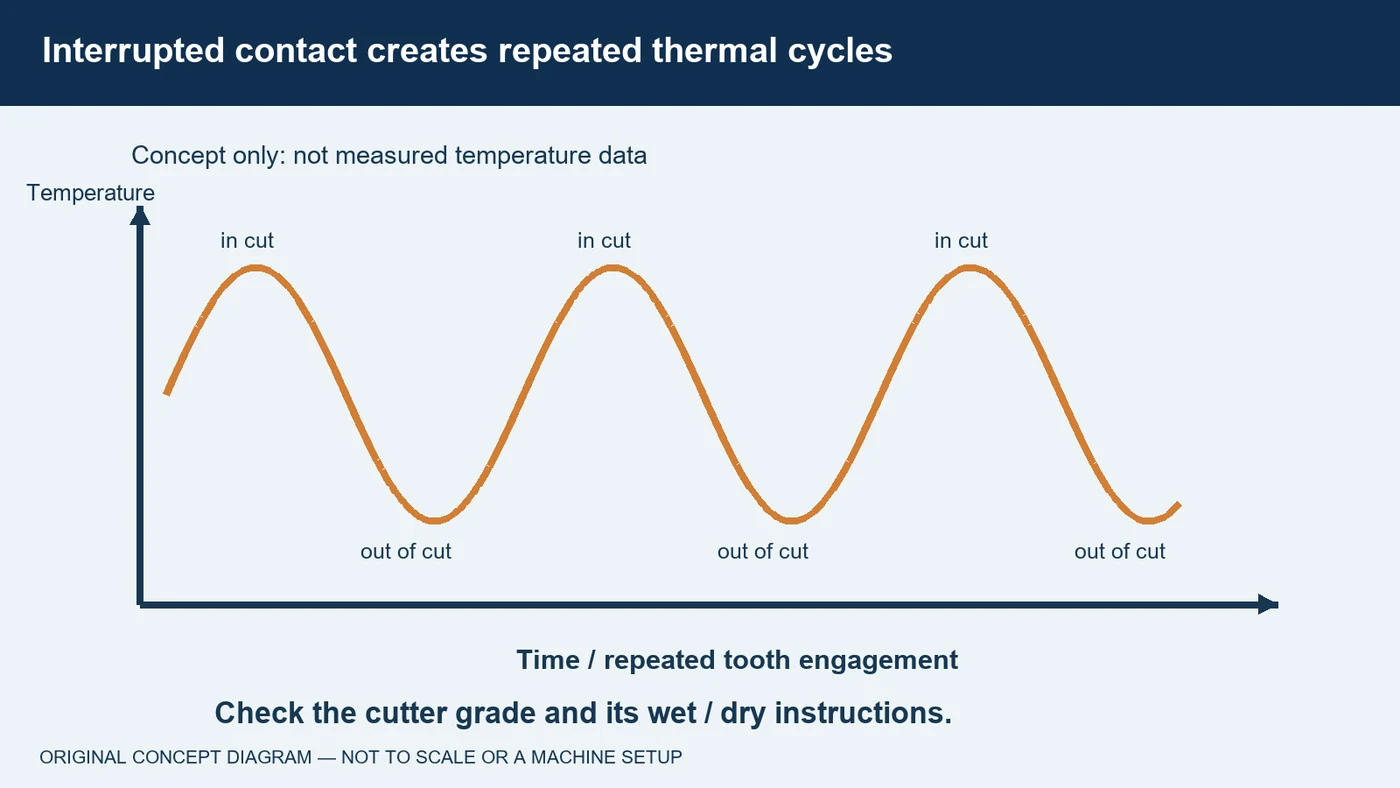
In milling, an edge repeatedly enters and leaves the material. That interrupted contact makes temperature cycling an important consideration. Cutting fluid can increase the heating and cooling cycle and contribute to thermal cracks in some carbide milling applications. Sandvik Coromant highlights dry operation for rough milling and describes exceptions for using fluid. Mitsubishi Materials also distinguishes steel end milling from difficult material applications that benefit from coolant. These are tooling recommendations, not a universal instruction to shut off coolant on every machine. Check the exact tool grade, coating, operation and work material. If the established process is wet, provide the specified reliable delivery rather than allowing the cutting zone to receive an erratic trickle. Do not convert a validated process from wet to dry without reviewing tooling instructions, machine requirements and the consequences for the part.
Aluminum, Steel, Stainless & Difficult Alloys
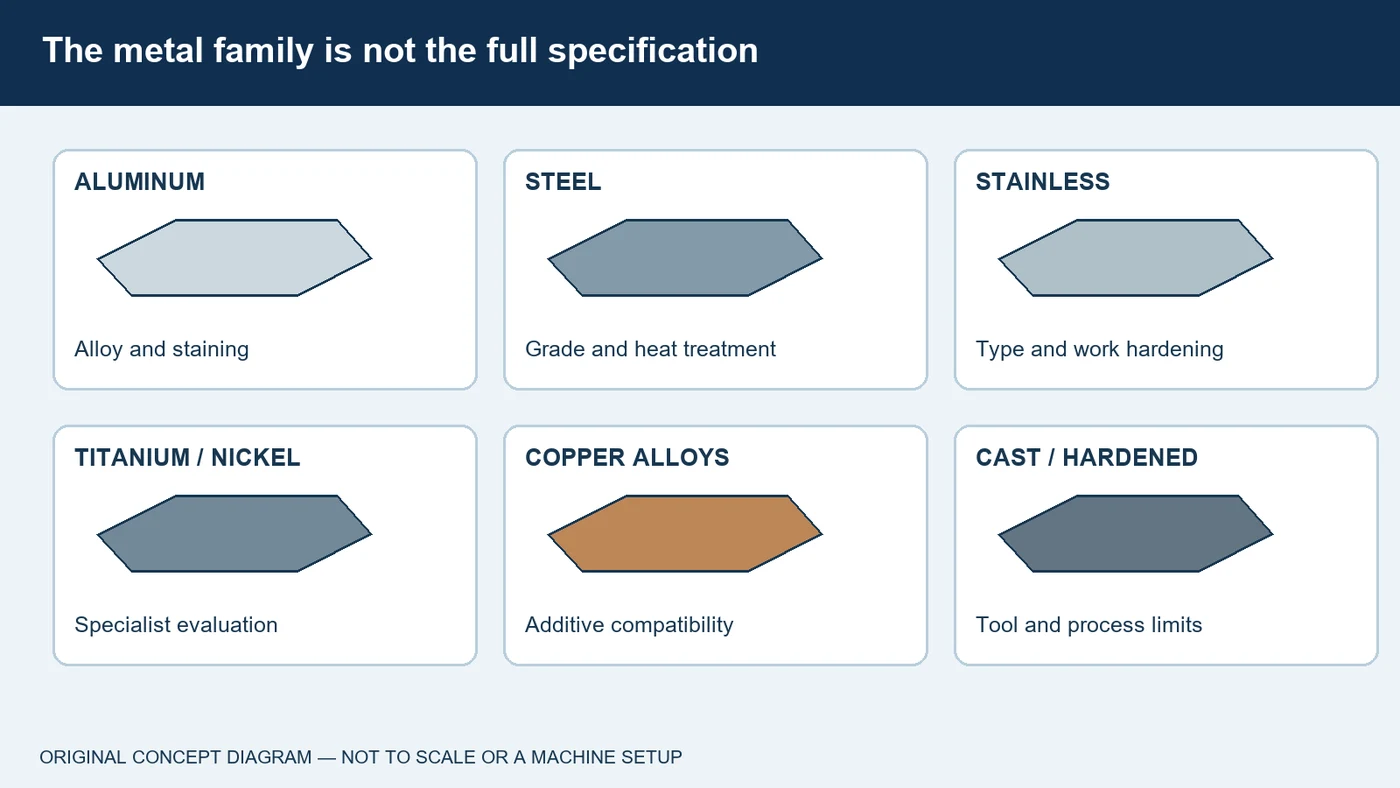
Aluminum can adhere to the edge and smear onto the finished surface. Evaluate suitable lubrication and chip evacuation, and verify that the fluid will not stain the alloy. Steel performance varies with chemistry and heat treatment, so identify the grade and hardness. Stainless steels are also a varied group, with different tendencies toward work hardening and adhesion. A recommendation for one stainless tool system should not be carried over automatically to another. Titanium and nickel alloys deserve a specialist fluid evaluation. FUCHS describes titanium milling tests in which different formulations produced different tool wear, illustrating why a broad claim of multi metal capability is not enough. Copper and brass add another compatibility question: verify staining and additive restrictions, including active sulfur. Cast iron and hardened materials may require a different tool and fluid strategy again. Keep the actual alloy and process requirements in the application record.
Choosing a Milling Fluid Family
Water diluted milling fluids include soluble oil emulsions, semi synthetic coolants and full synthetic formulations. Their performance depends on the particular formulation and how it is maintained. Do not use milky appearance, clarity or color as a substitute for application data. Neat cutting oils are used without water dilution in suitable machine and tooling applications. Minimum quantity lubrication is another distinct process that requires compatible equipment and a fluid intended for that system. A shared machining center may perform drilling, tapping and reaming as well as milling. Make sure the selected fluid supports the demanding operations in that complete sequence. Ask about filtration, machine seals, residues, part washing and any customer process restrictions. QA can help evaluate coolant and oil candidates against those requirements. A controlled shop trial remains the way to confirm that a promising candidate works in the real process.

Remove Chips and Maintain the Fluid
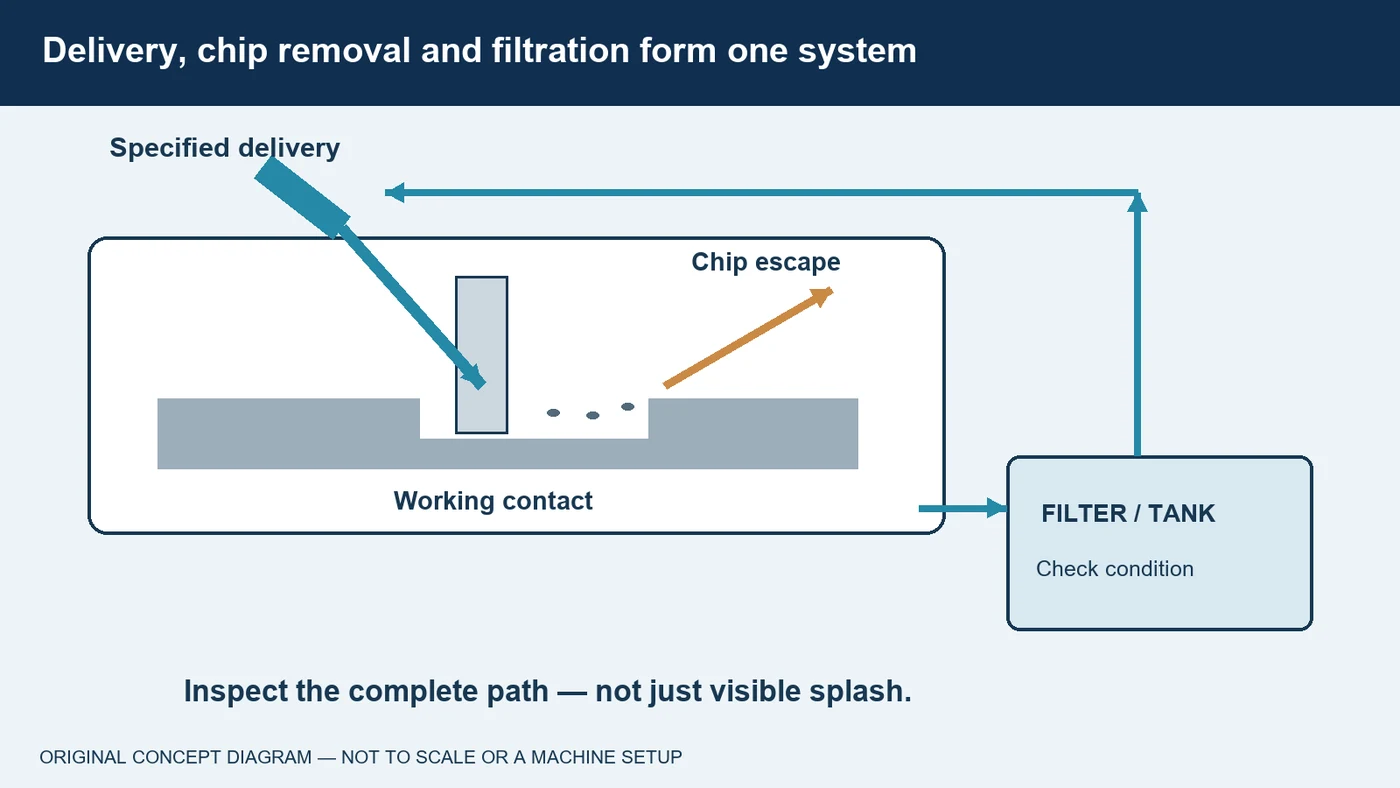
Chips left in a pocket can be cut again and damage the surface or tool. Check where the chips travel and whether the delivery arrangement reaches the working area throughout the tool path. More visible splash does not prove that the loaded edge is receiving the intended fluid. Confirm nozzle alignment, flow and any through tool delivery against the machine and tooling instructions. Maintain filtration and remove accumulated contamination using the site's approved procedures. With water diluted coolant, check concentration using a calibrated instrument and the product's refractometer factor. Review make up water, tramp oil, foam and corrosion protection as part of routine sump management. Use the supplier's instructions for the chosen product and application rather than one percentage for every milling job. For a neat oil system, monitor the specified oil condition and contamination. Never reach into a running machine to reposition a nozzle or remove chips.
Troubleshoot the Cut Before Changing the Fluid
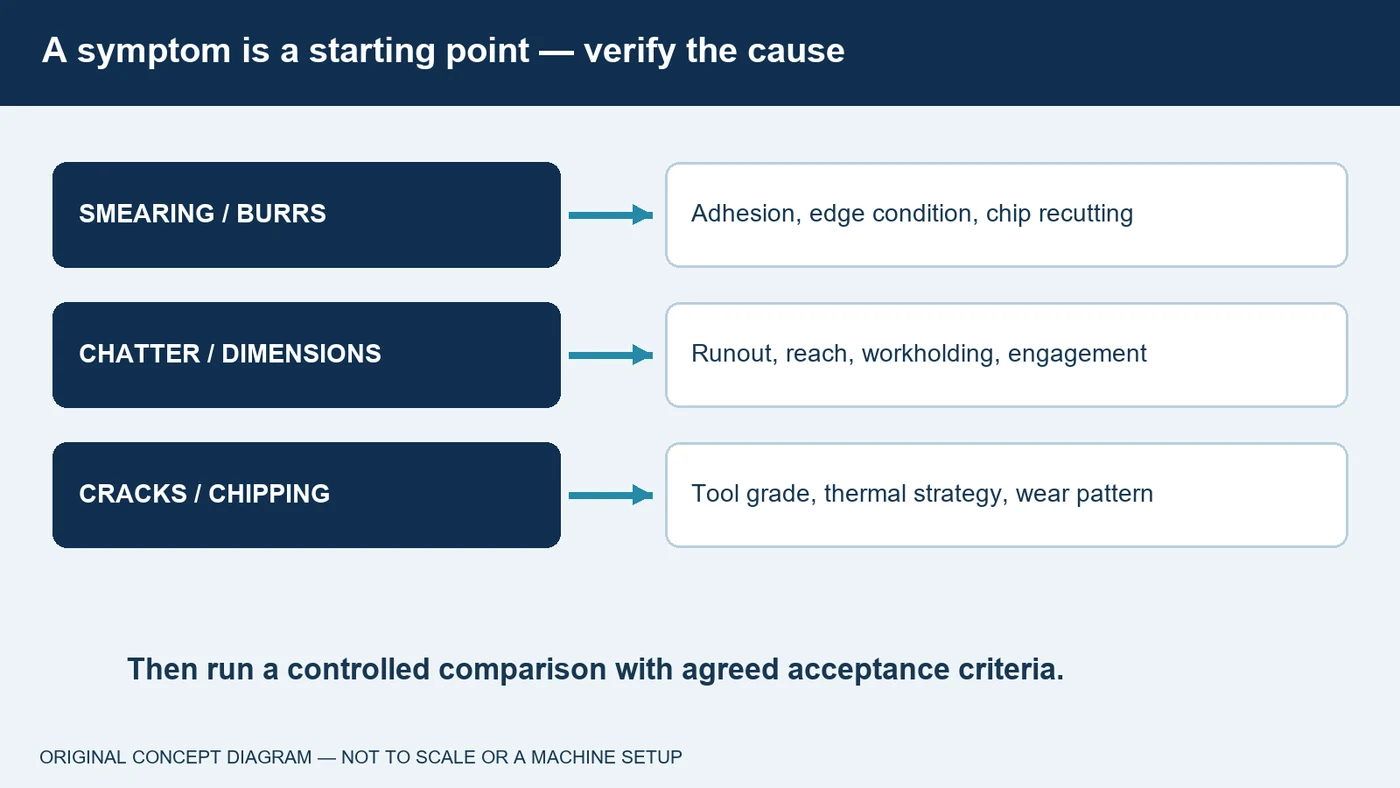
Start a troubleshooting record with the symptom and when it began. Smearing, burrs and a deteriorating finish can involve adhesion, a worn edge, chip recutting or an unsuitable process condition. Chatter and dimensional variation also call for checks of overhang, runout, workholding and engagement. Fine cracks or chipping on an insert need evaluation by the tooling supplier, including the wet or dry strategy. A fluid change cannot correct every cause. Record the material lot, tool, settings, fluid condition and number of acceptable parts. When testing an alternative, define success before starting: surface quality, tool life, dimensions, cleaning requirements and cost per acceptable part. Keep other variables comparable. A glossy photograph or a single good component is not evidence of a repeatable improvement.
Build Your Milling Fluid Recommendation
To discuss a milling fluid with QA Lubricants, tell us what you are making, the material and hardness, and whether the cut is roughing, finishing, slotting, pocketing or profiling. Include the cutter type and coating, the machine, current delivery arrangement and any other operations sharing the sump. Explain the problem you want to solve, such as adhesion, poor finish, short tool life, foam or difficult cleaning. QA has coolant and cutting oil options and can help narrow the candidates for your application. We will confirm product instructions and compatibility before recommending a shop trial. Find more machining guides and fluid information at QA Lube dot com, or call one, eight seven seven, eight seven seven, six two two one. Thank you for watching this QA Lubricants milling guide.
Fluid selection by material
Use these as evaluation questions, not blanket product approvals.
| Material | What to evaluate | What to confirm |
|---|---|---|
| Aluminum | Evaluate nonstaining lubricity, adhesion control and chip evacuation. | Confirm the exact alloy, finish requirement and approved delivery method. |
| Carbon and alloy steel | Wet or dry strategy depends on tool grade, cutting conditions and operation. | Check roughing versus finishing guidance before adding flood coolant. |
| Stainless steel | Account for adhesion, work hardening and the tool's thermal-cracking risk. | Different tool systems can have different wet/dry recommendations. |
| Titanium and nickel alloys | Evaluate specialist cooling and lubricity performance together. | Verify tooling instructions, downstream restrictions and results in a controlled trial. |
| Copper alloys | Use a compatible, nonstaining formulation. | Confirm additive compatibility, especially with active sulfur chemistry. |
| Cast iron and hardened steel | Use the specified tool/process strategy and suitable chip or dust management. | Avoid assuming that a successful wet aluminum setup transfers to these materials. |
Questions about milling fluids
Should every milling operation use flood coolant?
No. Some carbide rough-milling processes run dry or with a specified air strategy to avoid thermal cycling. Other operations benefit from cutting fluid. Follow the actual cutter and machine guidance.
What coolant is best for milling aluminum?
Start with the alloy, tool, finish requirement and delivery system. Evaluate a compatible nonstaining fluid with suitable lubricity and chip removal; no single family name proves suitability.
Will a stronger coolant eliminate milling chatter?
Not necessarily. Check tool overhang, runout, fixture stability, engagement and tool condition as well as the fluid system.
What concentration should a CNC milling coolant run at?
Use the selected product's instructions for the actual operation, water and materials. Apply the correct refractometer factor rather than adopting a universal percentage.
Discuss your application with QA
Read this guide in the QA online store
QA Lubricants has coolant and oil options. Send us the operation, alloy, hardness, tooling, current fluid and the problem you want to solve.
Discuss My ApplicationShop Water Diluted CoolantsTechnical references
- Sandvik Coromant: dry milling or with cutting fluid
- Mitsubishi Materials: end milling coolant
- Sandvik Coromant: milling different materials
- Sandvik Coromant: groove and slot milling
- Sandvik Coromant: face milling
- Sandvik Coromant: profile milling
- FUCHS: titanium milling fluid evaluation
Original educational content and illustrations. Confirm current machine, tool and fluid instructions. Trademarks belong to their respective owners.