Ardrox 907PB
Visible penetrant
View Ardrox 907PB product options
QA Lubricants · NDT learning center
QA Lubricants supplies Chemetall NDT products for liquid penetrant and magnetic particle inspection. Explore Ardrox inspection materials and learn how to select the method for your application.
Watch the QA training video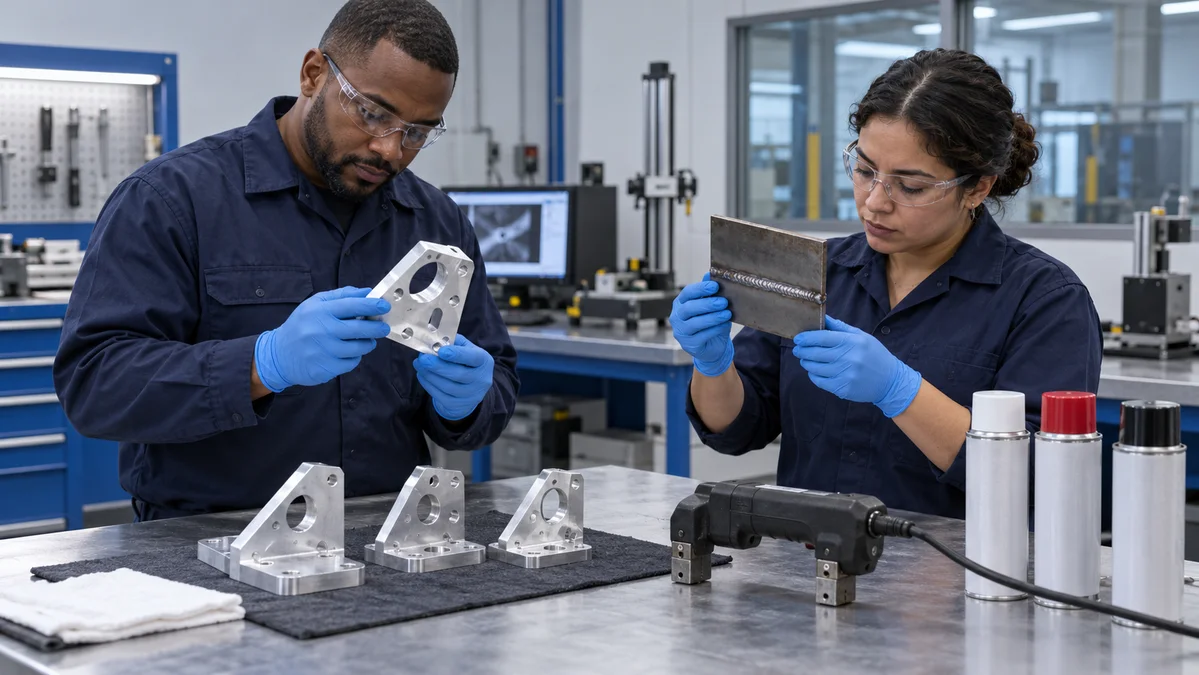
An original QA training overview with professional narration, illustrative images and English captions.
NDT uses inspection techniques to reveal discontinuities without cutting a component apart. Liquid penetrant testing and magnetic particle inspection help inspect machined parts, welds, castings, forgings and maintenance components. Select the method for the material and the required inspection—not simply the most convenient product.
| Question | Liquid penetrant (PT / DPI / FPI) | Magnetic particle (MT / MPI) |
|---|---|---|
| Which materials? | Compatible, clean, nonporous materials, including aluminum and suitable steels. | Ferromagnetic materials, including many iron and steel alloys. Not aluminum or copper. |
| What can it reveal? | Discontinuities open to the surface. | Surface and some near-surface discontinuities, depending on the technique. |
| What creates the indication? | Penetrant enters an opening; developer helps make it visible. | Inspection particles gather where a discontinuity disturbs the magnetic field. |
| Viewing options | Visible red dye under white light or fluorescent penetrant under controlled UV-A. | Visible contrasting particles or fluorescent particles under controlled UV-A. |
For solvent-removable PT, the specified wiping technique matters: flushing remover over the test area can remove penetrant from openings. A heavy developer coat can obscure detail.
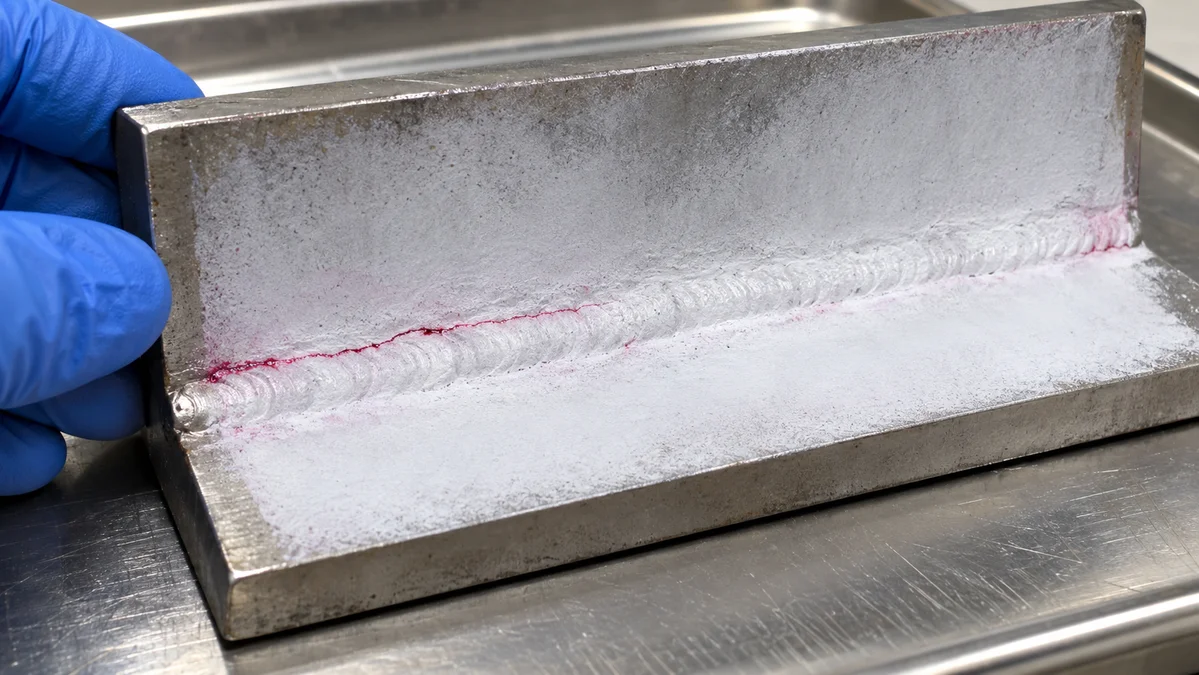
Fluorescent penetrant produces a bright indication under suitable UV-A illumination. Control UV-A intensity, ambient visible light, system performance and any required eye adaptation. Sensitivity, removal method and developer must match the written procedure.
Visible red dye and fluorescent PT are distinct inspection systems. Product choice and process control determine suitability; the appearance of a training photograph cannot establish inspection sensitivity.
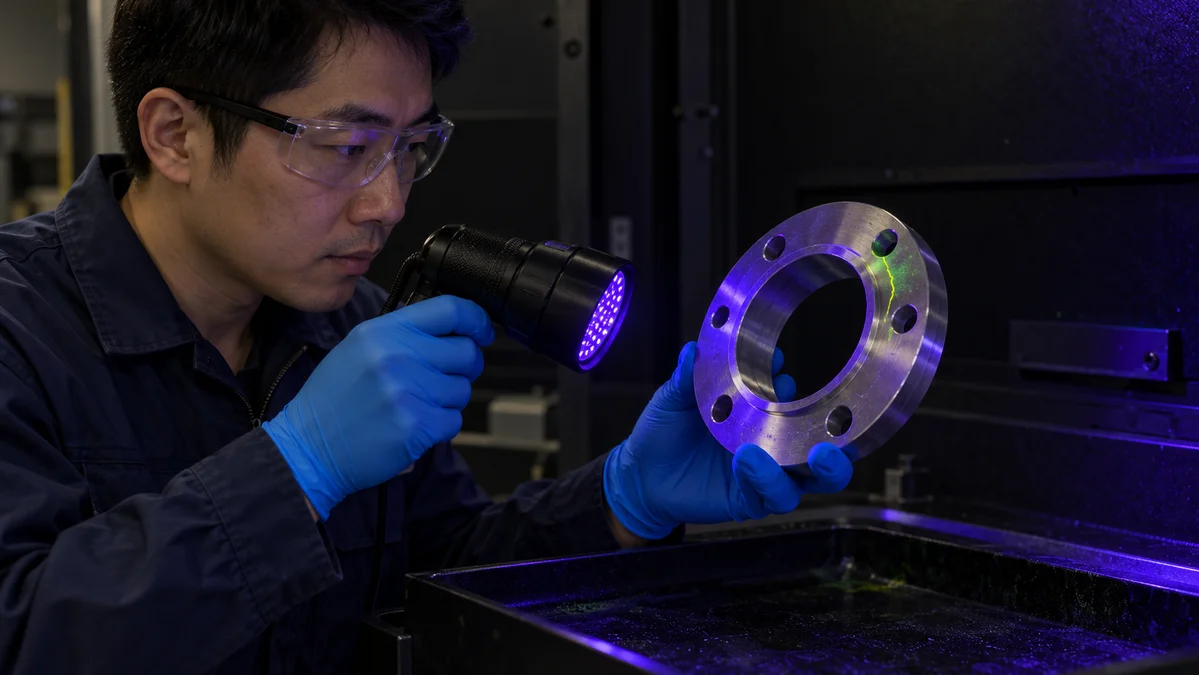
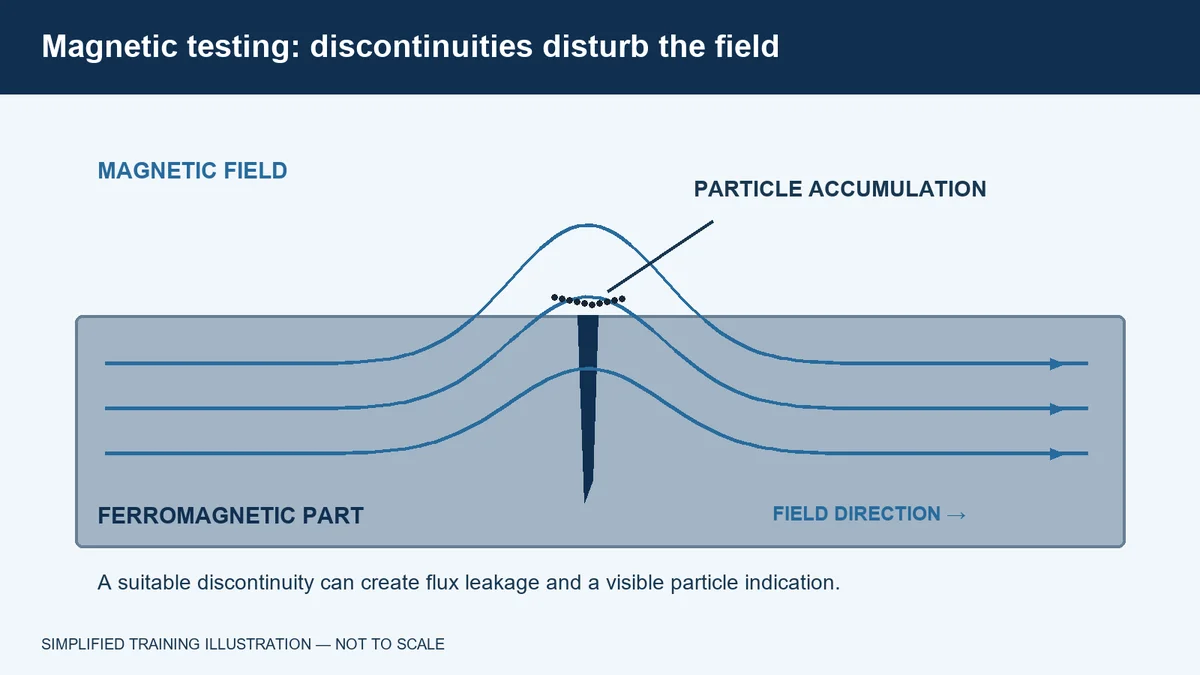
Magnetize a suitable ferromagnetic part and apply the specified inspection particles. Flux leakage around a discontinuity can attract particles and form an indication. Portable yokes and bench systems serve different inspection needs.
Field direction affects detection. Follow the required magnetization directions, coverage and application timing. Check field adequacy, equipment condition and, for wet baths, particle concentration and contamination.
Inspect visible or fluorescent indications under the required lighting. A qualified inspector evaluates the results; geometry and background accumulations can also produce indications. Complete any required demagnetization, post-cleaning and protection.
Looking for an Ardrox penetrant supplier? QA Lubricants offers dye penetrant inspection supplies, including visible and fluorescent penetrants, cleaners, removers and developers. We also supply magnetic particle inspection materials, including inspection inks, fluorescent powders, contrast paints and carrier fluids.
Use the links below to find product options and request pricing. These materials have different jobs; they are not an interchangeable kit. Confirm the current product data, compatibility, applicable specification and exact approvals.
Visible penetrant
View Ardrox 907PB product optionsWater-washable fluorescent penetrants
View Ardrox 9702 & 9703 product optionsSolvent cleaner and penetrant remover
View Ardrox 9PR5 product optionsNon-aqueous penetrant developer
View Ardrox 9D1B product optionsBlack magnetic inspection ink and white contrast paint
View Ardrox 800/3 & 8901W product optionsFluorescent magnetic inspection powder
View Ardrox 8505 product optionsOther Chemetall families include Britemor®, Checkmor®, Lumor® and Supramor®. Availability and approvals vary by exact product. Ardrox and these product names are trademarks of Chemetall or its affiliates.
Have your material, inspection method, sensitivity, removal process, package quantity and customer specification ready. An indication is not automatically a rejectable defect. This overview does not qualify an inspector or replace an approved written procedure. Follow the current safety data sheets, ventilation, PPE and equipment requirements.
Contact QA Lubricants for Ardrox 907PB penetrant, Ardrox 9PR5 cleaner/remover, Ardrox 9D1B developer and other Chemetall inspection materials. Share your required product, package quantity and inspection specification so we can confirm pricing and availability.
1.877.877.6221 · info@qalube.com
Shop Chemetall NDT productsHow do you find a crack that is difficult to see, without cutting a part apart? Non-destructive testing, also called NDT, helps inspectors evaluate components while preserving them for their intended use. In this QA Lubricants overview, we explain liquid penetrant testing, often called dye penetrant inspection, and magnetic particle testing, also called MPI. These methods are used on machined parts, castings, forgings, welds, and maintenance components. We will look at how each method reveals indications, what materials it can inspect, and why preparation and process control matter.
Start with the material, the discontinuity you need to detect, and the inspection specification. Liquid penetrant testing works on clean, nonporous surfaces when the discontinuity is open to the surface. That can include aluminum, many steels, and other compatible materials. It does not reveal a closed internal flaw. Magnetic particle inspection requires a ferromagnetic material, such as many iron and steel alloys. It is not a method for aluminum or copper. Some stainless steels are not suitable either. Magnetic testing can reveal surface and some near-surface discontinuities, depending on the technique. Neither method detects every possible flaw.
For penetrant inspection, a crack must be accessible to the liquid. Oil, grease, coatings, moisture, and process residues can block the opening or create excessive background. Prepare the part using the specified cleaning method, check material compatibility, and allow the surface to dry. Mechanical preparation can smear metal across a small opening, so follow the approved instructions rather than improvising. A penetrant that spreads poorly may be warning you that the surface is not ready. Cleanliness is part of the inspection process, not simply a cosmetic step.
A liquid penetrant wets the inspection surface and enters surface-breaking openings by capillary action. Apply the specified visible or fluorescent penetrant, then allow the required penetration dwell time. Keep the area wetted as the procedure requires. There is no single dwell time that is correct for every part or product. The material, surface condition, temperature, and governing procedure all matter. The penetrant does not repair the crack or measure its depth. Its job is to make a very small surface opening easier to locate during the later inspection steps.
After the dwell period, remove excess surface penetrant by the method specified for the system. Water-washable, solvent-removable, and post-emulsifiable processes have different requirements. For a solvent-removable process, use the prescribed wiping technique; flushing the inspection area with remover can wash penetrant out of discontinuities. Apply the appropriate developer in the required sequence. With a visible red-dye system, a thin white developer background helps the indication stand out. Too much developer can obscure detail. Allow the specified development time, then inspect under suitable white light. Record indications and evaluate them against the actual acceptance criteria.
Fluorescent penetrant inspection, or FPI, uses a penetrant that produces a bright indication under appropriate ultraviolet A illumination. This is a different viewing system from red dye under white light. The procedure controls UV-A intensity, ambient visible light, inspection conditions, and any required eye adaptation. Inspectors also verify system performance using the required checks and reference panels. Select the penetrant sensitivity, remover or emulsifier, and developer as a compatible, approved system. A brighter looking photograph is not proof of a more sensitive process. Follow the governing procedure and the current product data.
Magnetic particle testing uses a magnetic field and fine ferromagnetic particles. A suitable discontinuity can disturb that field and create magnetic flux leakage at the surface. Applied particles collect in the leakage region and form an indication. Equipment may include a portable yoke or a magnetic inspection bench. The field direction is important: discontinuities are generally best revealed when they run across the field, rather than parallel to it. The inspection procedure may require more than one magnetization direction to cover different orientations. Particle application and magnetization timing must follow the selected technique.
Visible magnetic inspection can use contrasting particles and, when specified, a suitable thin white contrast coating. Fluorescent magnetic particles are examined under controlled UV-A conditions. Wet and dry methods have different applications. Verify the equipment and magnetic field using the required checks. For a wet bath, control particle concentration and contamination as the procedure directs. Geometry, surface condition, and excessive background can create misleading indications. A qualified inspector distinguishes relevant indications from other particle accumulations. Document the findings and follow requirements for demagnetization, post-cleaning, and corrosion protection before returning a component to service.
QA Lubricants supplies Chemetall inspection materials. Examples include Ardrox 907PB visible penetrant, and Ardrox 9702 and 9703 water-washable fluorescent penetrants. Ardrox 9PR5 is a solvent cleaner and remover, while Ardrox 9D1B is a non-aqueous penetrant developer. For magnetic testing, examples include Ardrox 800/3 black magnetic ink, Ardrox 8901W white contrast paint, and Ardrox 8505 fluorescent magnetic powder. Chemetall also offers the Britemor, Checkmor, Lumor, and Supramor families. These are product examples, not an interchangeable kit. Match the exact products, sensitivity, removal method, and approvals to your written inspection procedure. Contact QA for current data, available packages, and pricing.
The key to useful NDT results is the complete process: the right method, a properly prepared part, compatible materials, controlled equipment and lighting, and qualified interpretation. An indication is not automatically a rejectable defect, and an absence of indications is not a guarantee that every flaw has been found. This video is an introduction, not an inspection qualification or a replacement for a written procedure. Follow the applicable specification, current safety data sheets, ventilation, and protective equipment requirements. Visit qalube.com for our companion guide and non-destructive testing product options, or contact QA Lubricants for help selecting supplies. Thank you for watching.
Concept references supplied by the customer: Chemetall penetrant testing video and Chemetall magnetic testing video. This QA video uses original narration, original illustrative photographs and original diagrams.
Technical checks: Chemetall NDT; Chemetall NDT catalogue; ASNT liquid penetrant testing; ASNT magnetic particle testing; Visible penetrant process guidance. Use current product documentation and your governing procedure.
Compare Chemetall NDT supplies and individual Ardrox product profiles, or browse NDT products in our online store.