OD Grinding Coolants & Oils for Shafts, Journals and Precision Diameters
Review external cylindrical grinding fluids for shafts and journals: steady rests, shoulder access, dressing, coolant delivery, taper, chatter, grinding burn and surface finish.
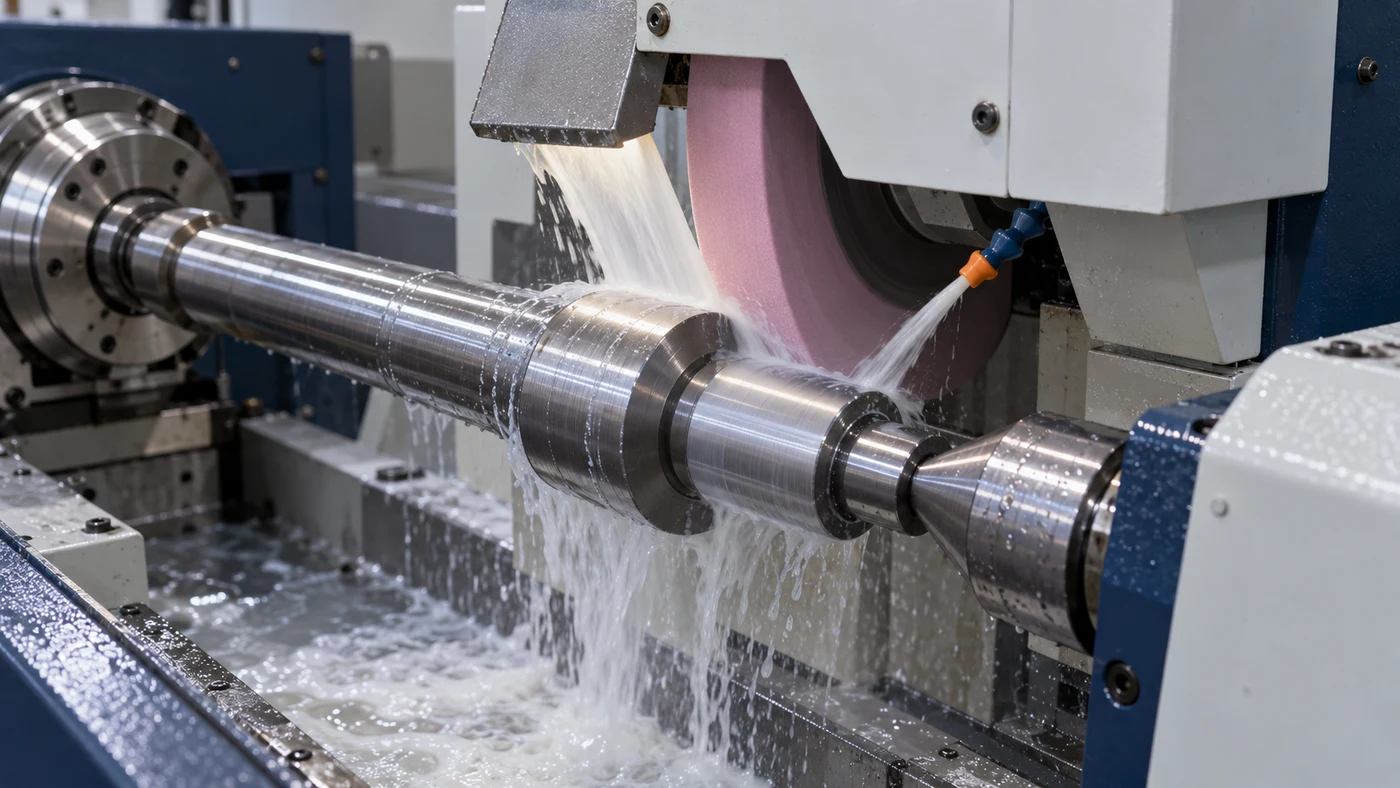
Watch: OD Grinding Coolants & Oils for Shafts, Journals and Precision Diameters
Define the External Journal and Its Requirements
External cylindrical grinding, or OD grinding, finishes the outside of a rotating metal part with an abrasive wheel. Shafts, journals, pins and other round components can need tightly controlled diameters together with specific form and surface requirements. This guide focuses on work held between centers or in a chuck or collet; centerless grinding has a different support system. Begin with the actual ground surfaces. Record each journal's diameter and length, nearby shoulders, reliefs, stock allowance and the material's condition after earlier processing. Identify which surfaces must relate to the drawing's datums. A single diameter value does not describe every requirement for roundness, cylindricity or finish. The fluid choice belongs in this complete application review. QA has coolant and grinding-oil options, and can evaluate them with the wheel, holding arrangement, machine and part acceptance requirements before an application trial.
Support Slender Parts Without Changing the Result
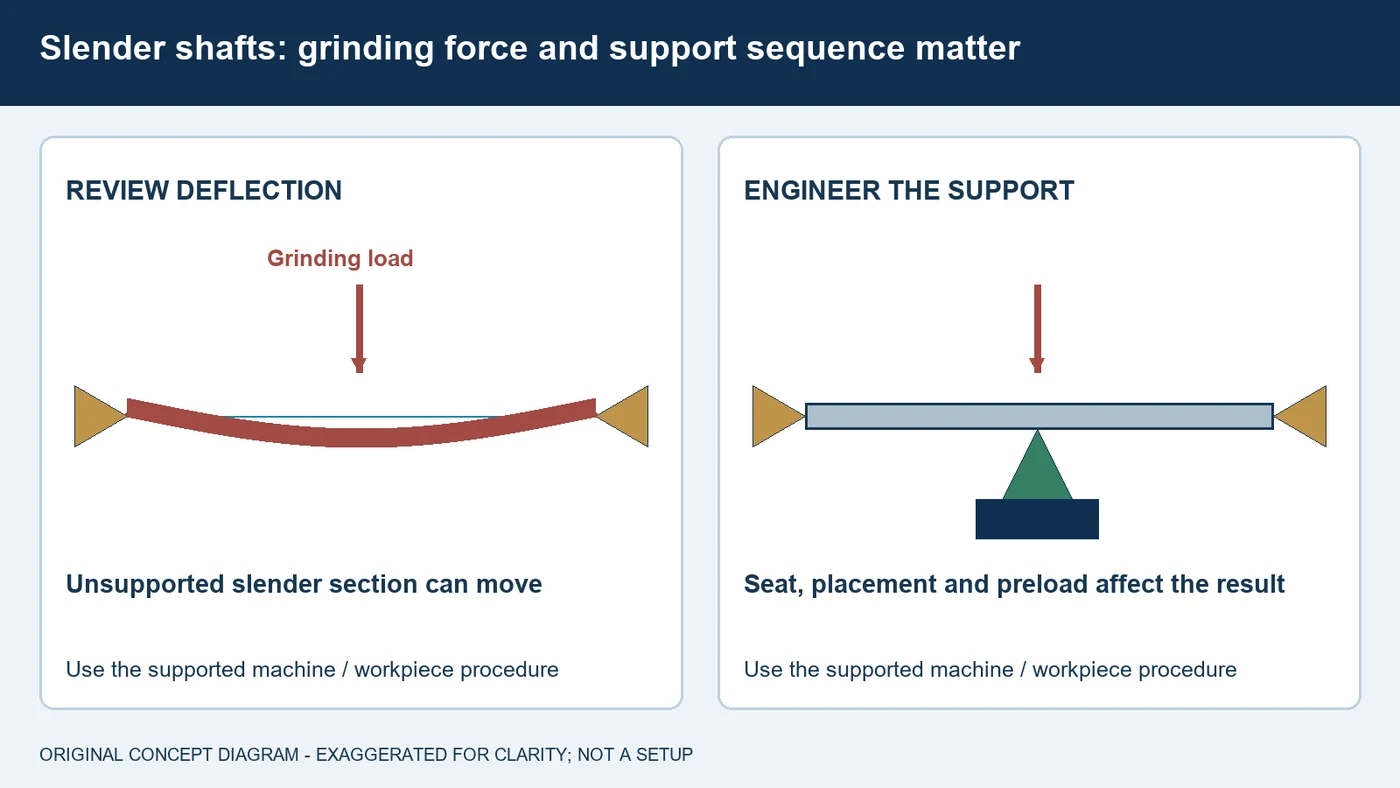
A slender shaft can move away from the intended line under grinding forces. A suitable steady rest can provide support, but its placement, contact condition and preload must be part of the process plan. Manufacturer guidance distinguishes fixed and spring-loaded steady arrangements and describes pre-grinding before a later supported finishing stage. The correct sequence depends on the workpiece and its condition. Do not copy a length-to-diameter rule, rotational speed or steady setting from a different job. Inspect centers, center holes where used, the work drive and any chuck or collet arrangement. Include the support-contact diameter and its condition when reviewing the setup. Excessive or unsuitable holding pressure can change the result being measured. Establish the intended mechanical support with the machine supplier, then keep it documented during the fluid trial. A different coolant will not correct an unsupported or improperly held shaft.
Plan Traverse, Plunge and Shoulder Access
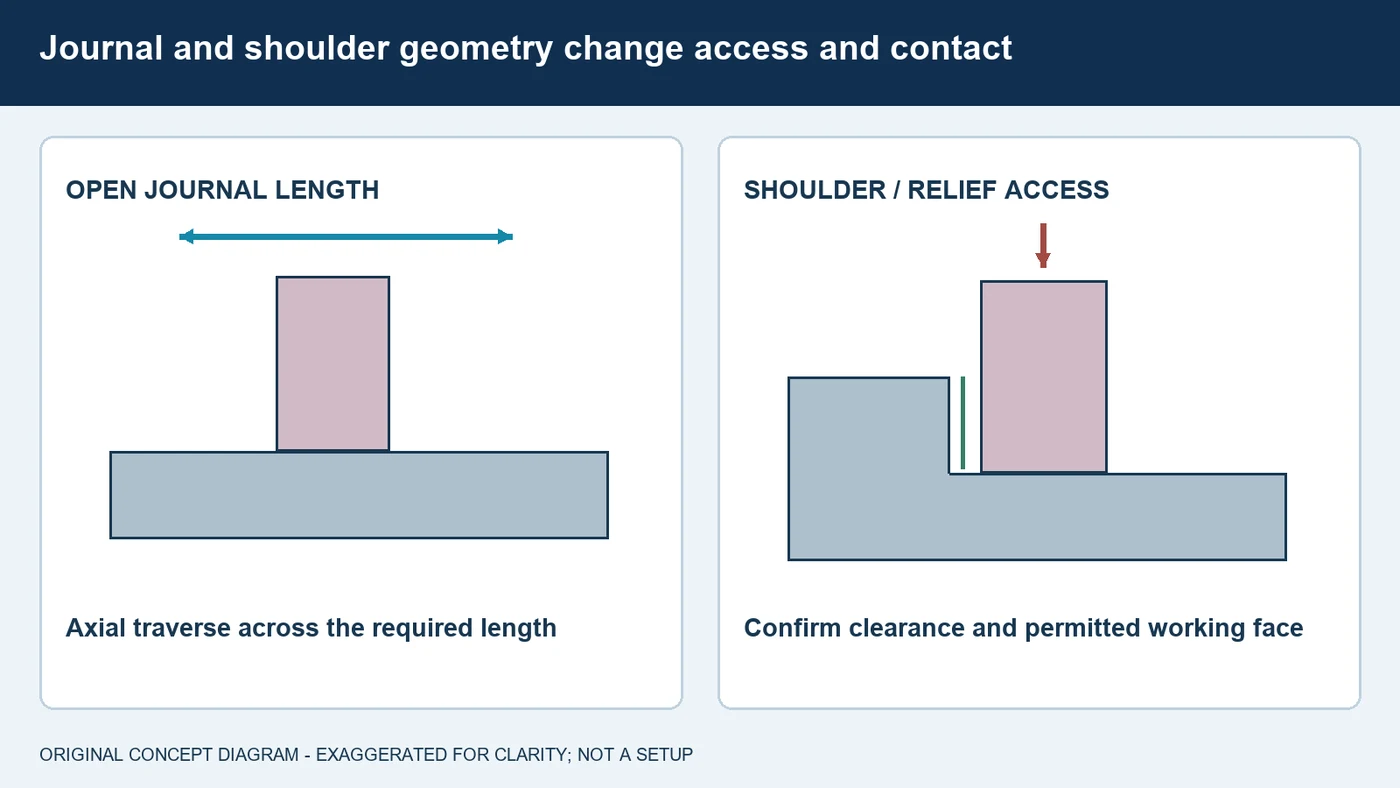
The external grinding cycle determines where the wheel engages and how fluid reaches that area. Traverse grinding uses relative axial movement to work across a length. Plunge grinding feeds into a selected axial region, where wheel width or profile helps establish the contact. Some machine systems also use an inclined wheelhead to work a diameter and adjacent face in a coordinated cycle. That capability depends on the equipment and wheel design; it is not permission to use the side of any wheel. Review the journal, shoulder and relief geometry with the abrasive and machine suppliers. Confirm the permitted working surfaces, approach, clearance and supported cycle. A narrow journal next to a shoulder presents a different access problem from an open straight shaft. Keep the coolant nozzle and return route effective across every stage, including transitions between roughing and finishing where the approved process uses them.
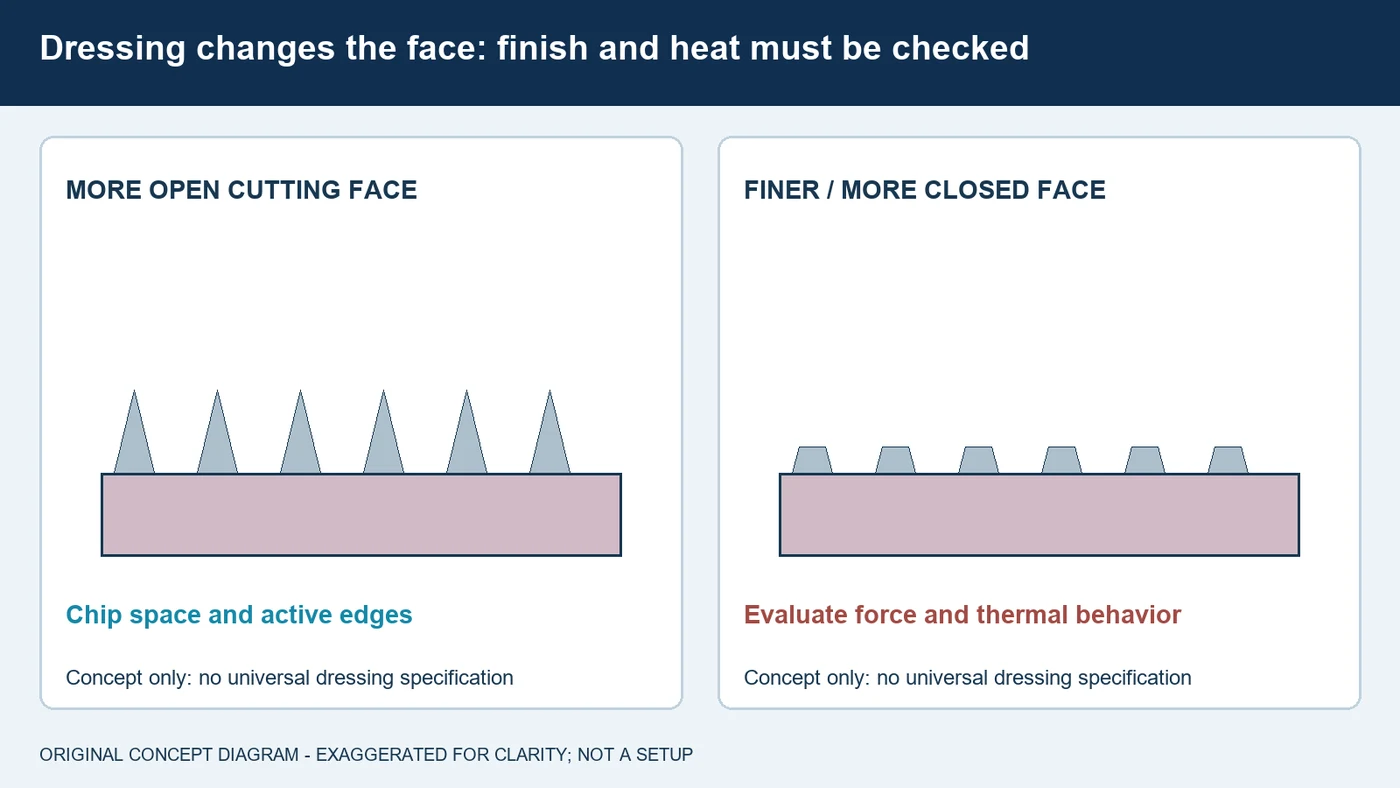
Balance Finish, Dressing and Heat Generation
Improving finish involves more than choosing a smaller abrasive grain. Match the wheel's abrasive, grit, grade, bond and structure to the material, contact and stock removal. Dressing then changes the working face. A finer dressing condition can improve the apparent finish while making the face less open; if taken too far, it can increase grinding forces and heat. Adjustments to wheel speed, work speed, infeed or finishing time can also interact, so changing one variable without the full application context can introduce another problem. Use the abrasive supplier's guidance and the wheel's operating limits. Distinguish truing, which restores geometry, from dressing, which renews the active face. Inspect the dresser and record its condition, preparation and interval. During a fluid comparison, preserve the wheel-preparation baseline and measure the accepted surface result rather than attributing every change to the liquid alone.
Keep Coolant on the Working Contact
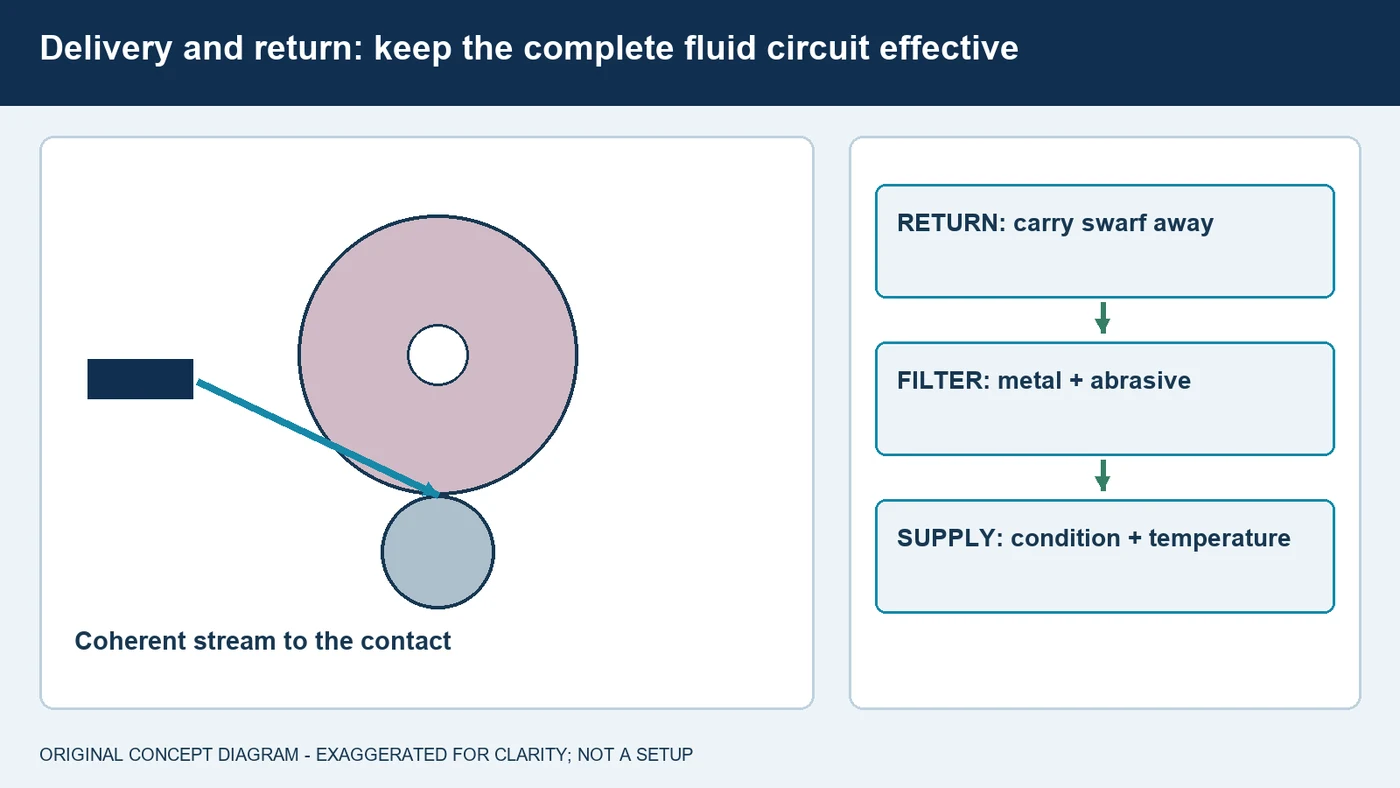
A wheel carries a moving air layer that can interfere with a weak or poorly aimed coolant stream. Review nozzle shape and position, coherent delivery and the available supply with the actual machine arrangement. Process-controlled systems illustrate that roughing and finishing may need different flow settings, but their published numbers are not universal specifications for every grinder. Check coverage over the working width and confirm that a shoulder or changed wheel position does not block the intended path. Follow the equipment's guarding and adjustment procedures. Then inspect the full fluid circuit: supply, return, particle removal and temperature regulation. Fine metal and abrasive debris should not be pumped back into the journal contact. A magnetic separator alone cannot capture every contaminant. Agree on the filtration and thermal-control requirements for the installation, and verify that dependable flow reaches the wheel throughout the approved cycle.
Select Fluid for the Material and Manufacturing Route
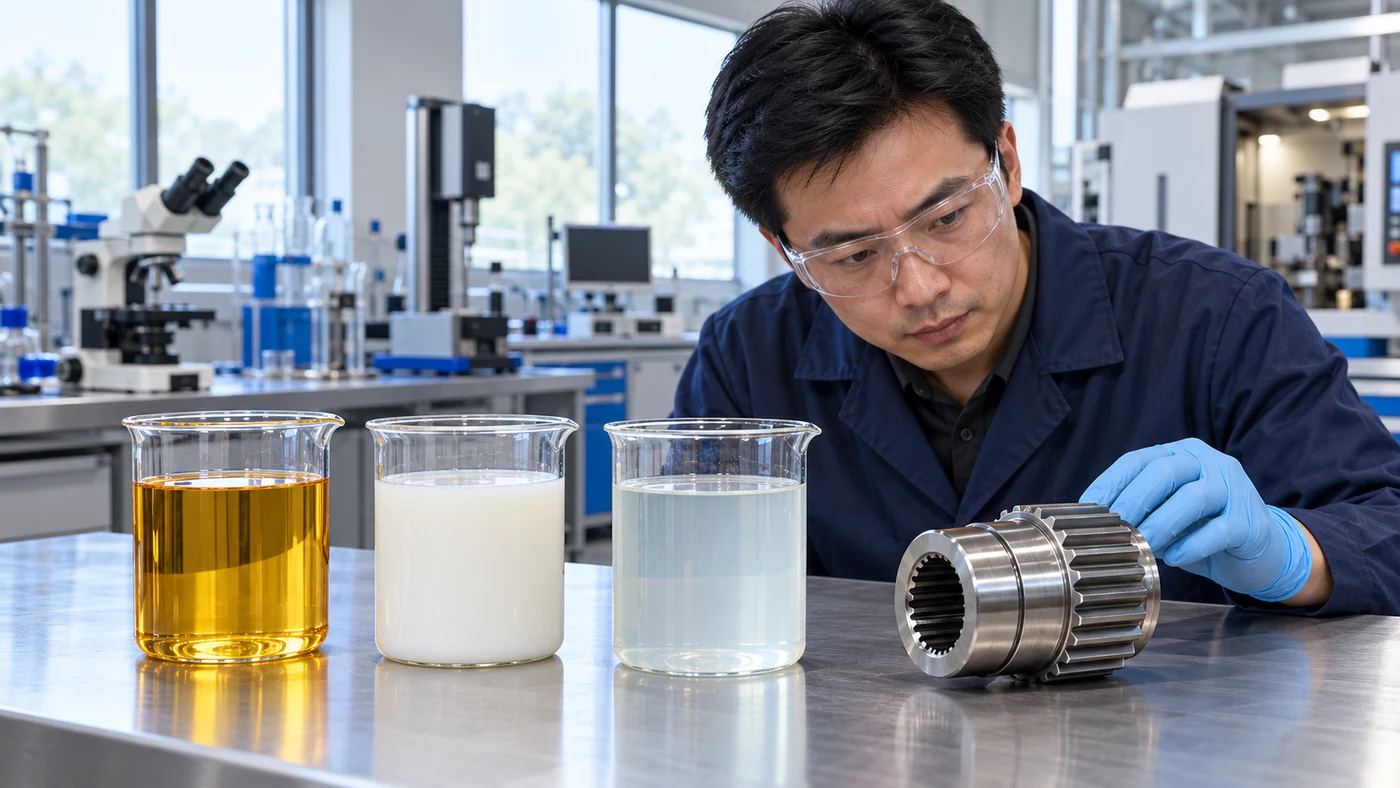
Water-miscible coolants and straight grinding oils offer different formulation choices for external cylindrical grinding. Review heat removal, lubrication, corrosion protection and compatibility with the machine, wheel bond and actual alloy. Include the part's later washing, storage and manufacturing steps. Aluminum and copper alloys require formulation-specific staining checks. For cobalt-bonded carbide, verify binder compatibility and the qualified wheel-fluid arrangement rather than assuming every grinding product is suitable. A material name alone does not determine the choice; hardness, contact, stock allowance and accepted surface condition also matter. When using a water-miscible product, follow its mixing, water-quality and concentration guidance. A refractometer reading may need the product's own factor. Maintain the selected oil or coolant using the supplier's requirements and the machine's filtration and thermal plan. QA has coolant and grinding-oil options for review and can help define a controlled application comparison.
Investigate Taper, Chatter, Scratches and Burn
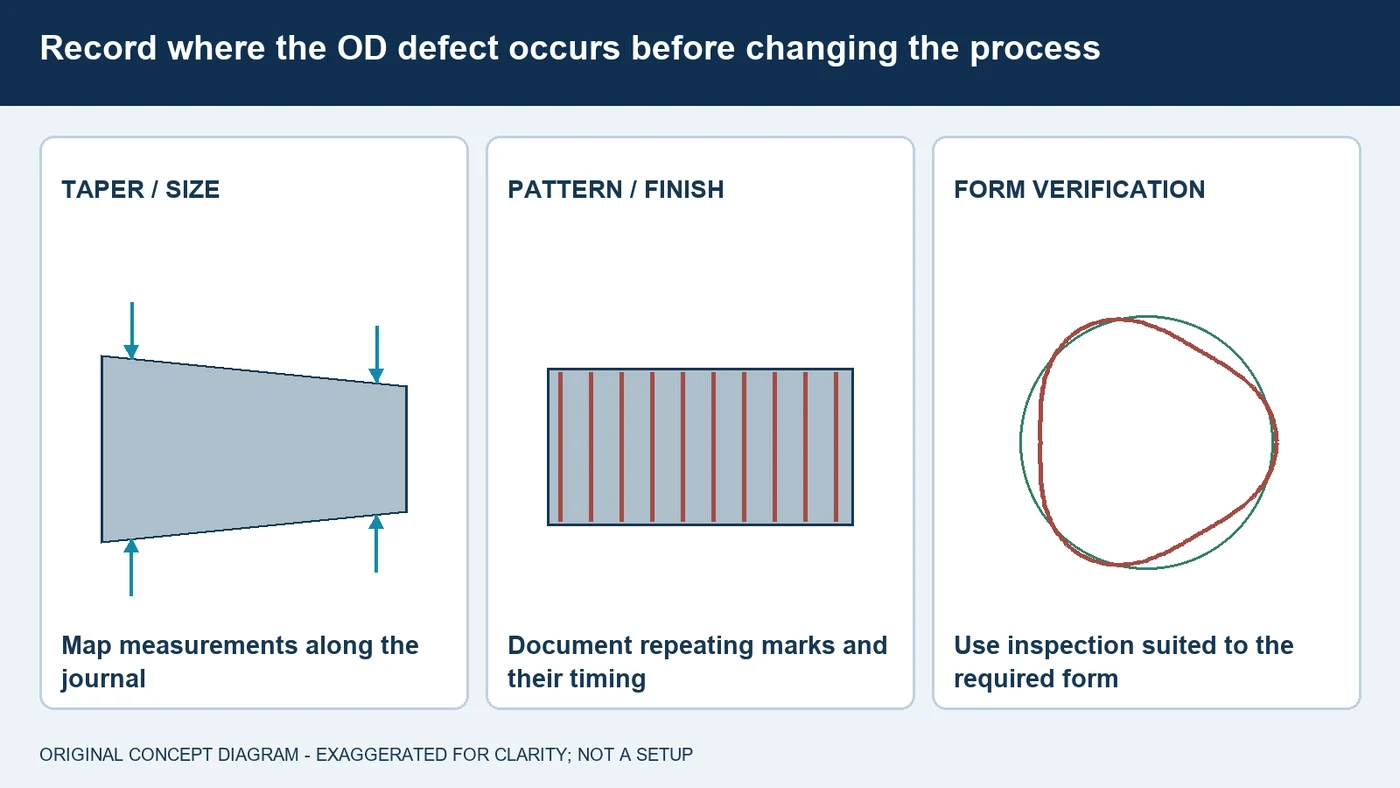
Different external-grinding defects can have overlapping causes. Chatter can involve a slender unsupported part, the machine, the wheel or the grinding load. Spiral markings can involve the work location or dressing system. Scratches call for a review of contamination and the working face, while burn-related concerns require investigation of heat generation and actual coolant delivery. None of these observations alone proves that the fluid formulation is the cause. Check the centers and holding arrangement, wheel and dresser, supply and cycle with the relevant suppliers. Measure the journal against the drawing's acceptance requirements. Diameter checks do not prove every roundness or cylindricity requirement; use a suitable inspection method for the specified form and ground length. Document where taper, waviness or surface changes occur and how they develop through the run. A supported adjustment should then be confirmed by repeatable accepted parts.
Build an OD-Grinding Fluid Trial with QA
For an external-grinding review, send QA the material grade, hardness and previous processing, together with the journal diameters, ground lengths, shoulders and drawing requirements. Describe whether the part is held between centers or by a chuck or collet, and include any steady-rest arrangement. Provide the wheel specification, dressing method, machine, traverse or plunge cycle and the abrasive supplier's requirements. Include the current fluid, concentration where applicable, nozzle arrangement, filtration and temperature-control information. Explain the result you want to improve with measurements and photographs: taper, chatter, scratches, burn, finish, corrosion or cleaning. QA has coolant and grinding-oil options and can evaluate the formulation within that complete manufacturing route. Agree on supported conditions, the parts to inspect and measures of success before a trial. Keep the setup and fluid-condition record with the results so an improvement can be judged against the same acceptance criteria in production.
Fluid selection by material
Use these as evaluation questions, not blanket product approvals.
| Material | What to evaluate | What to confirm |
|---|---|---|
| Carbon and alloy steels | Match lubrication, heat removal and corrosion protection to the actual hardness. | Journal contact, wheel choice, support and required form/finish. |
| Hardened bearing and tool steels | Evaluate the wheel-fluid combination for the required surface integrity. | Prior processing, stock allowance, drawing inspection and accepted finish. |
| Stainless steels | Review the exact alloy, wheel loading and formulation compatibility. | Delivery, dresser condition and downstream cleaning. |
| Aluminum and copper alloys | Require specific non-staining compatibility and abrasive-selection review. | Alloy, holding arrangement, loading and residue removal. |
| Cast iron | Review fine-swarf handling, corrosion protection and filtration behavior. | Material condition, wheel, circuit cleanliness and accepted surface result. |
| Cobalt-bonded carbide | Verify binder and wheel-bond compatibility for the formulation. | Qualified grinding arrangement, particle removal and supplier instructions. |
Questions about OD grinding fluids
When does a shaft need a steady rest for OD grinding?
Review the part stiffness, grinding forces, material condition and support sequence with the machine supplier. A long thin part can deflect, but no single ratio, preload or placement should be copied to every job.
Can the same wheel grind the journal and its shoulder?
Only where the wheel and machine are designed for that contact and cycle. Inclined or coordinated diameter/face grinding is an equipment-specific capability; follow the permitted wheel use and clearances.
Is a finer dressing condition always better?
No. It can improve finish while closing the wheel face and increasing heat or force. Confirm the supported dressing condition and inspect the resulting part.
What causes chatter or taper during OD grinding?
Possible contributors include holding, support, wheel/dresser condition, machine behavior and the cycle. Check actual coolant delivery too. Diagnose with setup evidence and measurements rather than assuming one cause.
Should OD grinding use oil or water-miscible coolant?
Choose the specific formulation with the machine, abrasive, alloy and downstream requirements. QA has both coolant and grinding-oil options for application review.
Can diameter measurements confirm every form requirement?
No. Diameter, roundness and cylindricity are distinct. Use suitable methods and the drawing acceptance conditions for the whole ground surface.
Discuss your application with QA
QA Lubricants has coolant and oil options. Send us the operation, alloy, hardness, tooling, current fluid and the problem you want to solve.
Discuss My ApplicationShop Water Diluted CoolantsShop Straight Cutting OilsTechnical references
- UNITED GRINDING: external cylindrical methods and workholding
- STUDER: long thin parts and two-jaw steady-rest application
- JUNKER: straight and inclined external plunge grinding
- STUDER: S20 traverse and plunge cycles
- Norton: wheel specification factors
- Norton: dressing, finish and thermal-damage tradeoffs
- Noritake: dressing versus truing
- STUDER: process-matched nozzle positioning and flow
- Cool-Grind: wheel air barrier and coherent coolant streams
- UNITED GRINDING: clean coolant and temperature regulation
- FUCHS: fluid selection for materials and later processing
- Blaser: concentration measurement and product factors
- Norton: cylindrical grinding troubleshooting, automotive guide page 83
- Mitutoyo: roundness evaluation and diameter-method limitations
- Master Fluid Solutions: carbide binder compatibility example
Original educational content and illustrations. Confirm current machine, tool and fluid instructions. Trademarks belong to their respective owners.