Peel Grinding Coolants and Grinding Oils
Explore peel grinding fluid selection, narrow-wheel contact, single-wheel and pinch-and-peel systems, blank support, coolant access and inspection.
Watch: Peel Grinding Coolants and Grinding Oils
Peel Grinding: A Narrow Wheel Follows the Feature
Peel grinding uses a narrow abrasive wheel and controlled motion to machine rotating parts. Depending on the supported system, it can generate cylindrical sections, tapers and transitions rather than requiring a wide wheel carrying the whole final profile. Applications include suitable shafts, precision components and tool blanks. The process can be considered alongside hard turning or other grinding methods, but a published success on one part does not establish the best route for another. Start with the actual material, condition, incoming stock and acceptance requirements. Identify the machine, wheel construction and supported path before selecting a fluid. QA has coolant and grinding-oil options for evaluation with that complete application. This guide focuses on contact, support, fluid delivery and measured results, without prescribing universal high-speed grinding settings.
Confirm the Actual Contact Geometry
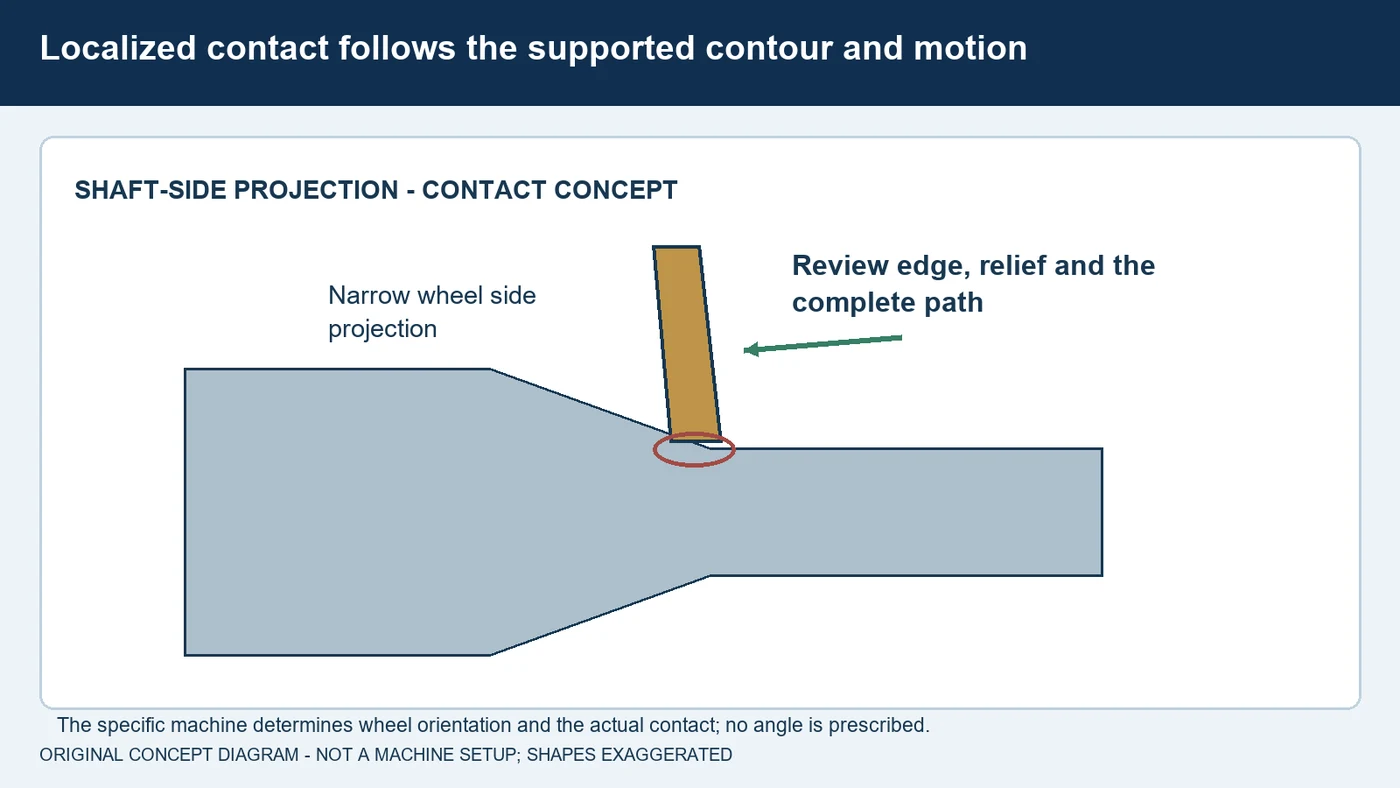
A narrow wheel alone does not define the full peel-grinding process. Wheel orientation, relief and the working edge determine the actual contact with the rotating part. JUNKER's QUICKPOINT system is one manufacturer example that uses relief geometry to create localized finishing contact. That specific arrangement should not be treated as a universal setup for every peel grinder. Review the complete contour, including shoulders, radii, tapers and entry or exit conditions. Confirm that the supported wheel and machine motion can reach those features without an unintended contact or clearance problem. Keep the actual edge geometry and reference data in the process record. A small contact zone still needs qualified fluid delivery, abrasive condition and material-appropriate inspection.
Match the Architecture and Support to the Blank
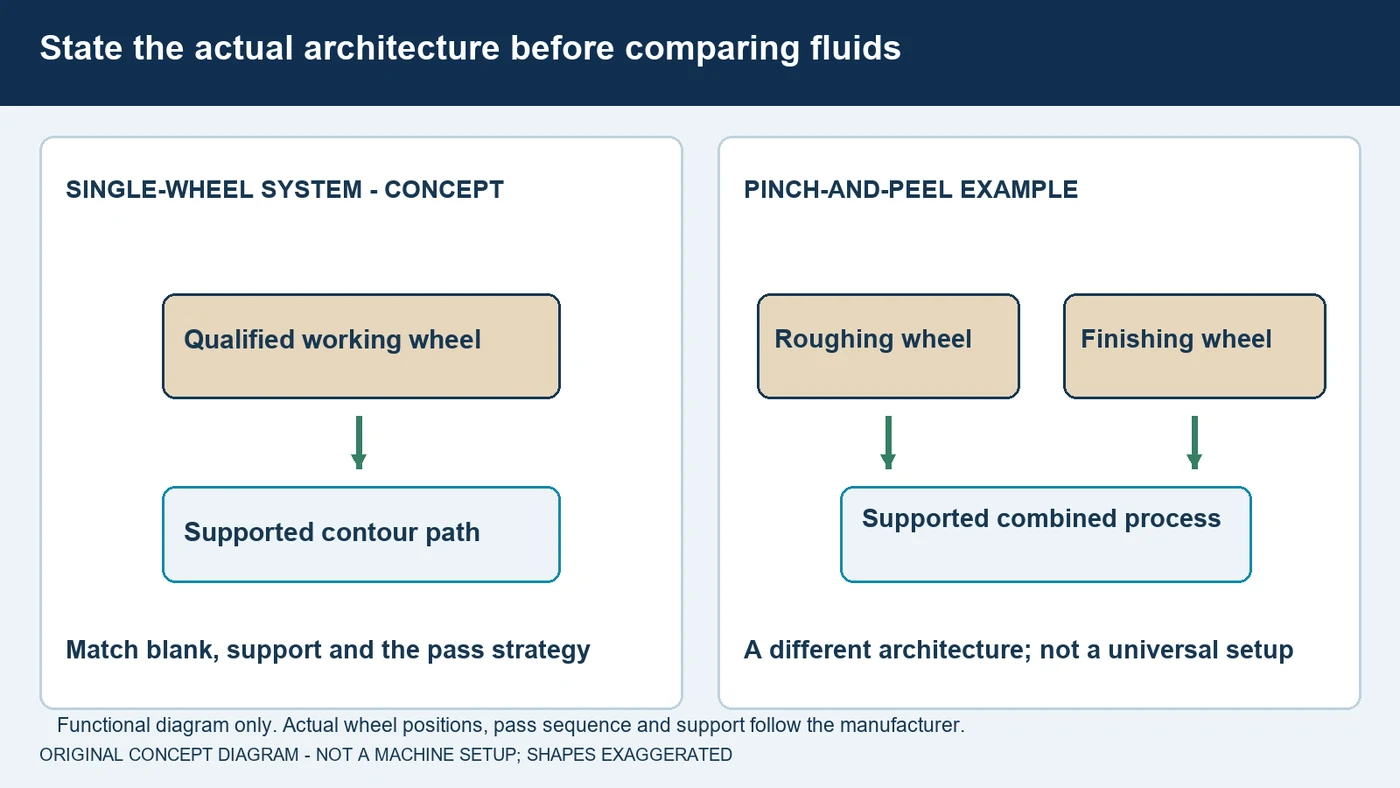
Peel-grinding systems use different architectures. Rollomatic's ShapeSmart pinch-and-peel machines, for example, can engage roughing and finishing wheels together. Their supported process can also use roughing passes before a final combined pass. This is different from assuming that every peel-grinding machine has one wheel or always finishes a part in one pass. Describe the actual arrangement when asking for fluid assistance. Include the blank diameter, length, stock condition, workholding and supported guide or support system. As smaller features are generated, the support and access problem can change. Use the equipment supplier's qualified arrangement rather than improvising clamping forces or guide positions. A fluid trial needs consistent incoming stock and support conditions so that mechanical changes are not mistaken for formulation effects.
Preserve the Working Edge and Conditioning Method
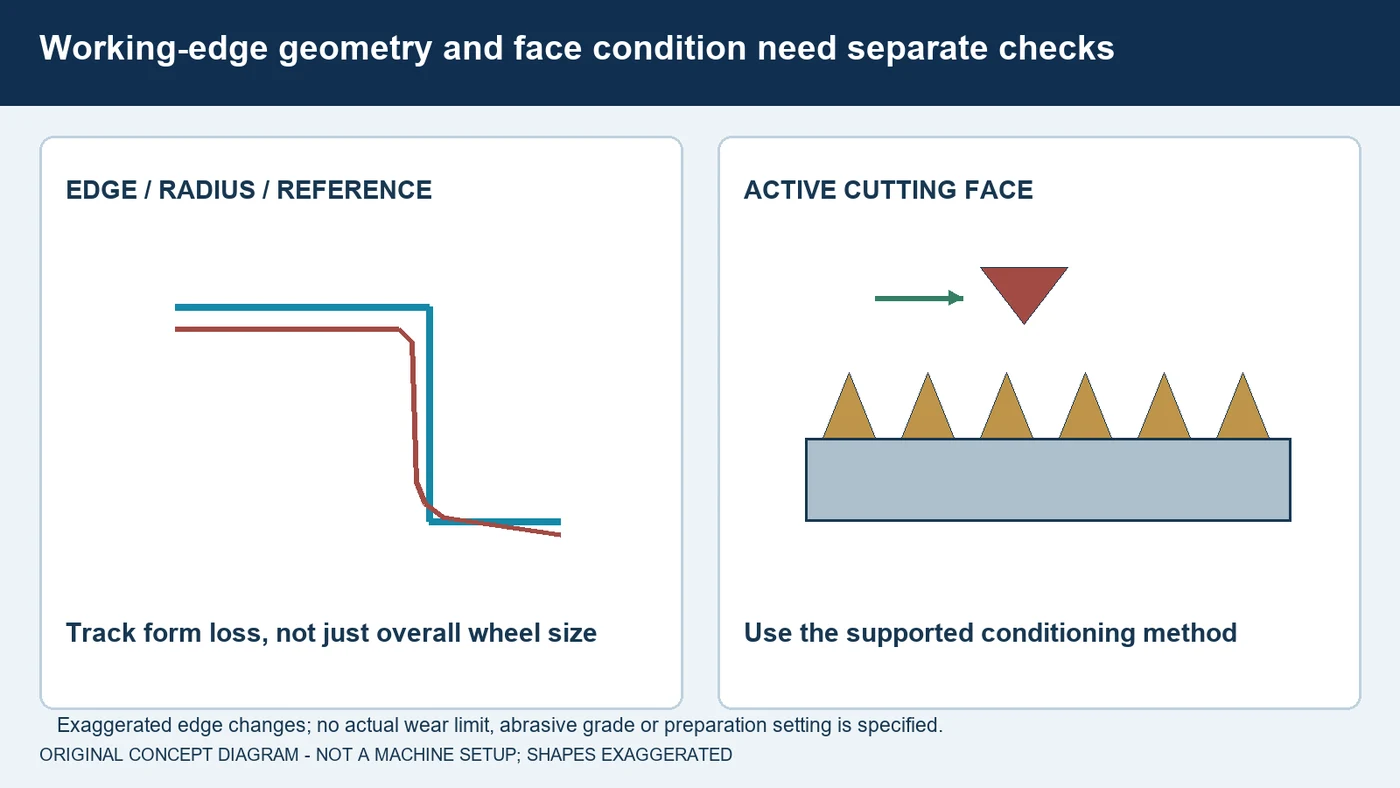
The working edge is central to a peel-grinding process. Track its form and condition along with part measurements. Wear at an edge or radius can change the contour, while loading or dulling can affect the cutting interaction even when the overall geometry looks similar. Select the abrasive and bond for the material and supported machine. CBN, diamond and different bond constructions are not interchangeable simply because wheels have similar dimensions. Truing concerns geometry and alignment; dressing concerns the working face condition. The permitted preparation method depends on the actual construction. Record conditioning, reference data and compensation using the equipment instructions. Compare fluid-trial parts at similar points in the preparation interval, and investigate wheel or dresser changes before attributing a result to the coolant.
Keep Useful Fluid at the Moving Contact
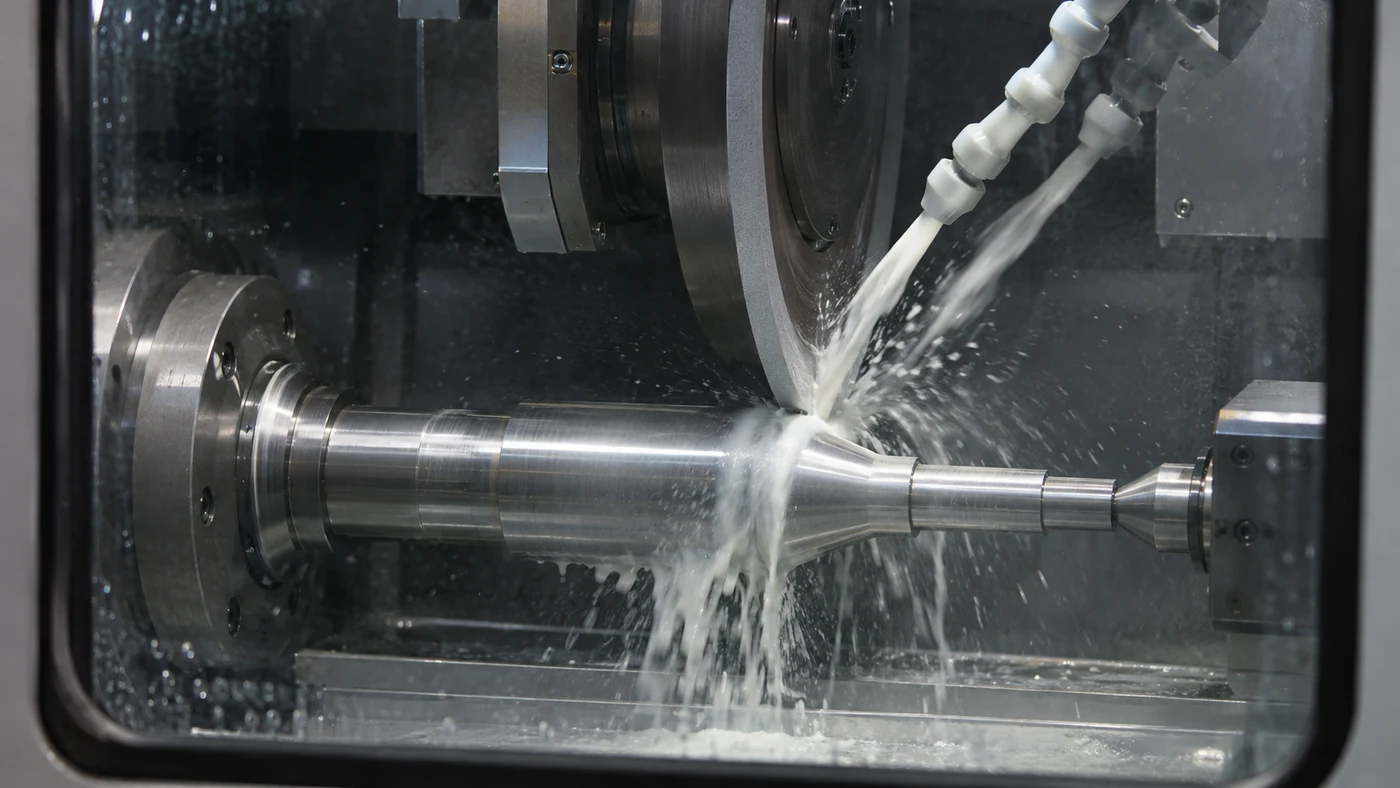
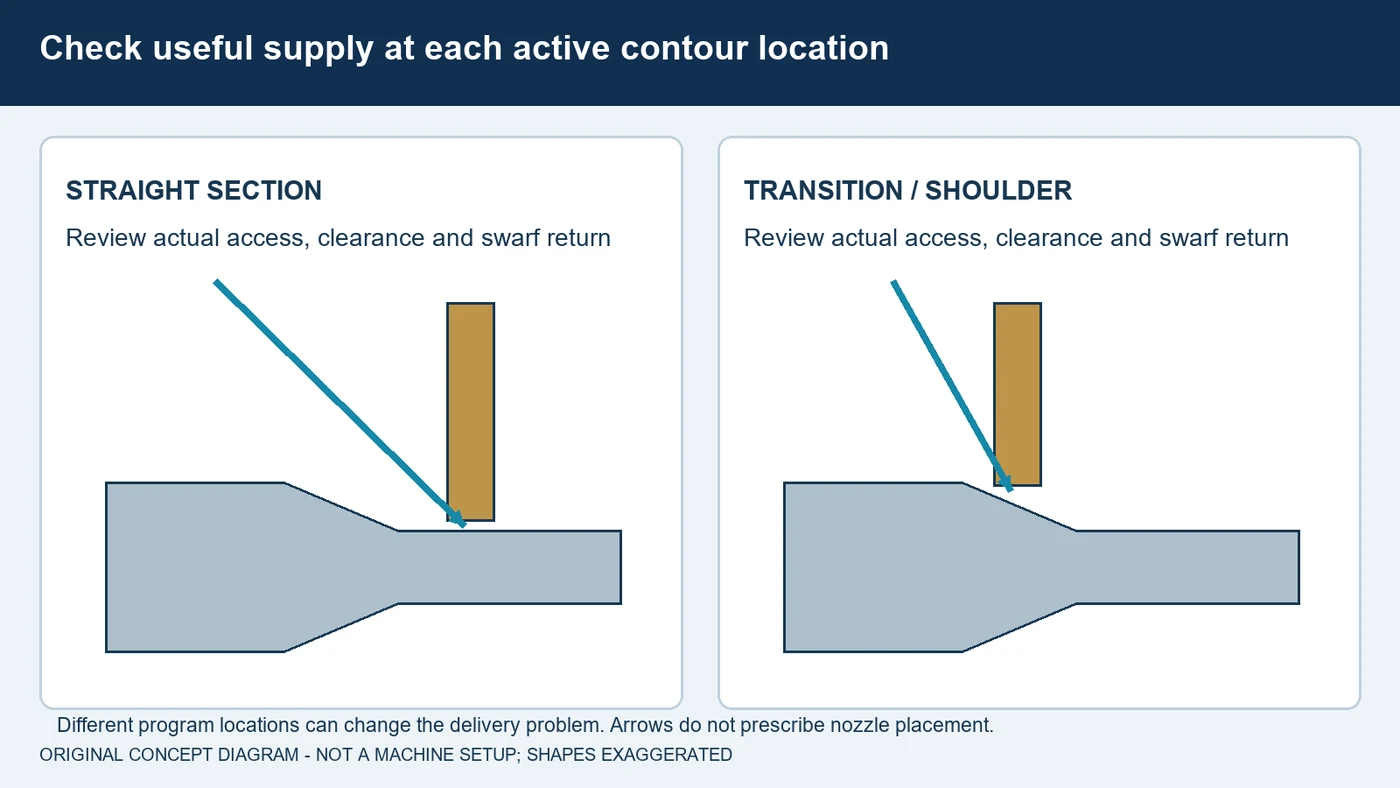
Peel grinding requires useful fluid at the active grinding contact, not simply a wet workpiece. Check the actual delivery arrangement through the complete programmed path. A supply that reaches a straight section may be obstructed or differently aligned at a shoulder, taper or transition. Include the supported wheel orientation and its changing size or condition in the review. Distinguish process supply from any separate cleaning and flushing duties. Keep swarf from collecting on the part or returning through contaminated fluid. The nozzle, pump, return and filtration system must be considered together. More visible splash does not establish better contact supply, and a published pressure figure is not a universal requirement. Qualify the arrangement with the equipment and nozzle suppliers before comparing fluids under documented operating conditions.
Choose the Formulation for the Complete System
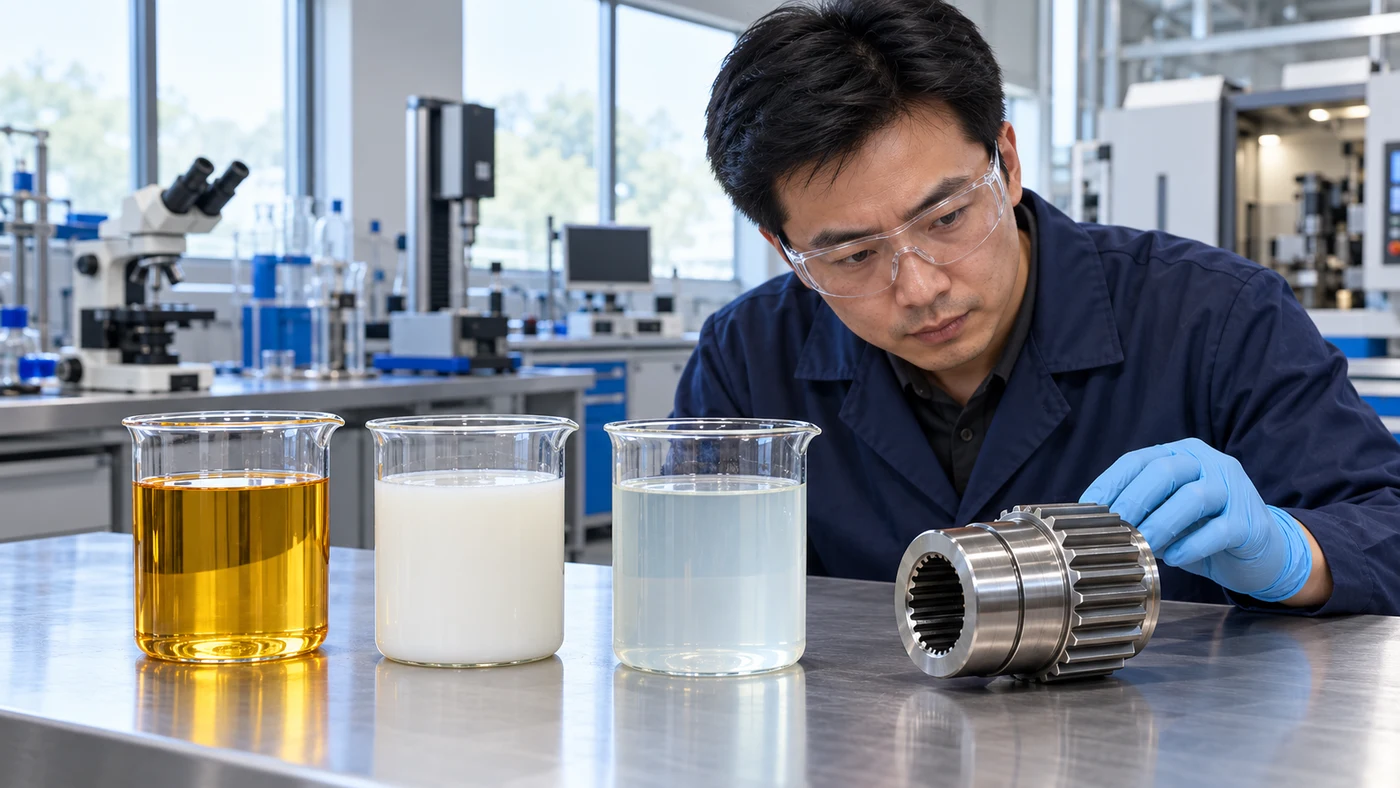
Start with the fluid types permitted by the machine manufacturer, then review the actual alloy, hardness, abrasive and bond. Evaluate lubrication, cooling, foam behavior, corrosion protection, residues and cleaning after grinding. Do not assume that every peel application requires the same oil or that every water-miscible coolant is suitable. For cobalt-bonded carbide, explicitly confirm binder compatibility. Aluminum and copper alloys also require formulation-specific staining checks. If diluted coolant is permitted, follow the product's mixing and water-quality instructions and use the required refractometer factor to determine actual concentration. Maintain the specified fluid-temperature conditions and remove metal and abrasive debris before recirculation. QA has coolant and grinding-oil options for evaluation. Keep fluid-condition records beside the mechanical setup and part results so the trial can be assessed meaningfully.
Verify the Contour and Surface Integrity
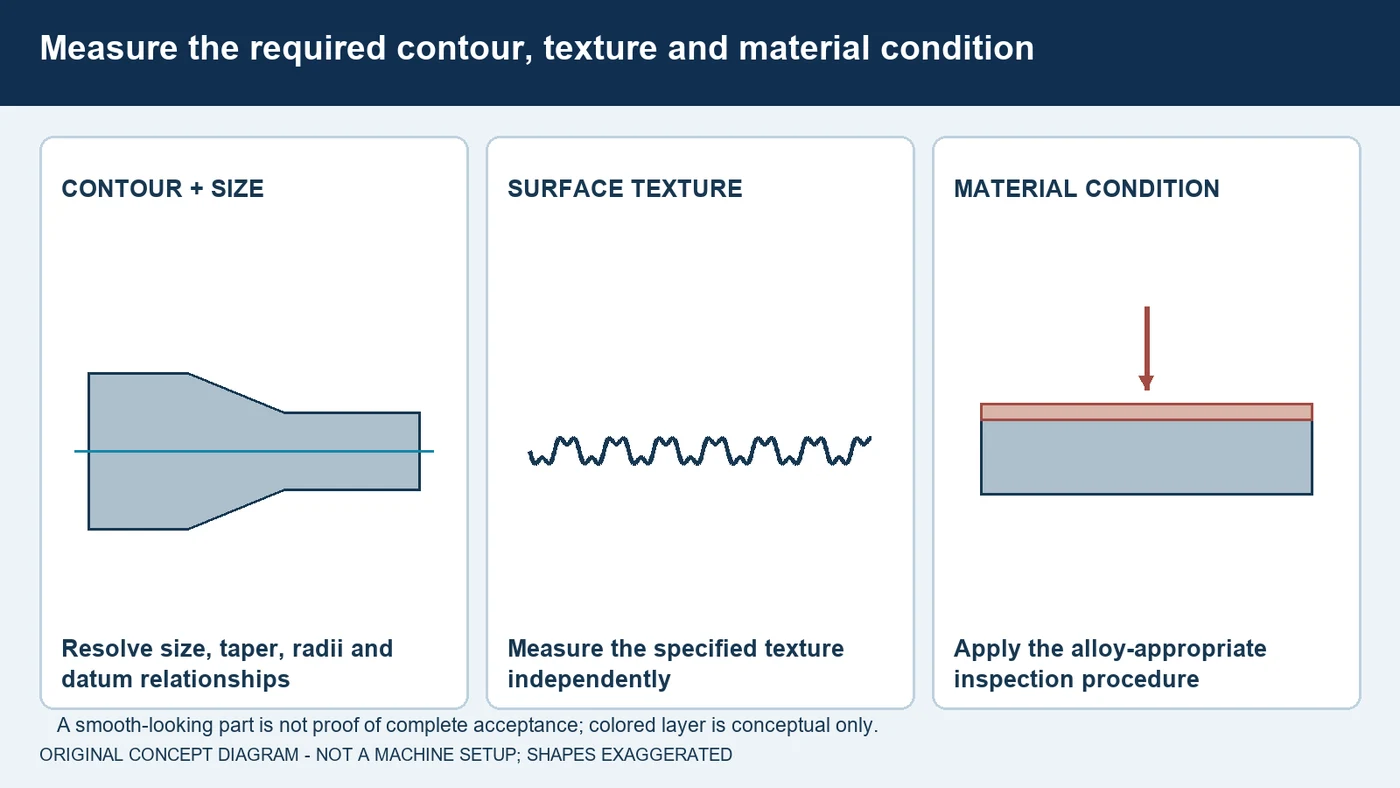
Inspect the finished feature against the actual drawing and reference system. Diameter, taper, transition radii, axial location and runout can require different measurements. A few size readings do not establish complete roundness or the correctness of a complex contour. Keep measurement support and temperature conditions consistent, and use a method capable of resolving the specified surfaces. Finish appearance is also separate from material condition. A bright or smooth part is not proof that thermal damage is absent. Use the qualified surface-integrity procedure required for the alloy and component. If there is contour drift, chatter, scratching or size change, review support, incoming stock, wheel edge, conditioning, machine condition and delivered fluid. Make a documented change and repeat the relevant acceptance checks before approving the revised process.
Build a Measured Peel-Grinding Fluid Trial
For a peel-grinding inquiry, send QA the part drawing, alloy and condition, incoming blank and stock allowance, and the required dimensions, form, finish and material condition. Identify the machine architecture and whether roughing and finishing use one wheel, multiple wheels or separate passes. Include the wheel specification, working-edge geometry, preparation method, support arrangement and supported path. Provide the current fluid, delivered supply, filtration and temperature records. For diluted coolant, add water quality and concentration. Describe the issue with measurements and its relationship to startup or conditioning. QA has coolant and oil options for evaluation. Agree on controlled trial conditions and compare accepted parts, wheel condition, preparation requirements and fluid maintenance together. Confirm the final formulation and operating instructions with the relevant equipment, abrasive and fluid suppliers.
Fluid selection by material
Use these as evaluation questions, not blanket product approvals.
| Material | What to evaluate | What to confirm |
|---|---|---|
| Hardened and tool steels | Evaluate the actual hardness, working contact, lubrication and thermal demand. | Abrasive and bond, edge preparation, support and required surface-integrity inspection. |
| Cobalt-bonded carbide | Explicitly confirm binder and abrasive-bond compatibility. | Actual formulation, supported conditioning, blank support and debris control. |
| Stainless steels and nickel alloys | Review alloy-specific compatibility, loading and grinding-contact requirements. | Wheel system, contour access, part condition and subsequent cleaning. |
| Aluminum and copper alloys | Confirm process suitability and staining compatibility; review material loading. | Qualified abrasive, support, residues and the required contour. |
| Mixed-material production | Review every material and wheel bond using the shared fluid circuit. | Filtration, cross-contamination, maintenance and downstream processing requirements. |
Questions about peel grinding fluids
Is peel grinding the same as wide-wheel plunge grinding?
No. Peel processes use a narrow working wheel and supported motion to generate features. A basic wide-wheel plunge remains at a defined axial location. Identify the actual machine cycle.
Do all peel grinders use the QUICKPOINT contact arrangement?
No. QUICKPOINT is a JUNKER system with its own contact geometry. Other supported peel and pinch-and-peel architectures use different wheel, support and motion arrangements.
Does peel grinding always finish the part in one pass?
No. The supported strategy depends on machine architecture, stock and acceptance requirements. Some systems use roughing passes before final roughing and finishing.
Does a narrow grinding contact eliminate cooling requirements?
No. Useful fluid still has to reach the actual contact throughout the path. Wheel orientation, contour access, debris return and fluid condition remain part of the application review.
Can I use the same fluid for steel and cobalt-bonded carbide?
Do not assume compatibility. Check every material, binder, abrasive bond, machine permission and the actual formulation with the suppliers.
Which QA product is recommended for peel grinding?
QA has coolant and grinding-oil options. Provide the material, machine architecture, wheel, support, path, delivery and acceptance requirements so the actual formulation can be evaluated.
Discuss your application with QA
QA Lubricants has coolant and oil options. Send us the operation, alloy, hardness, tooling, current fluid and the problem you want to solve.
Discuss My ApplicationShop Water Diluted CoolantsShop Straight Cutting OilsTechnical references
- Norton: narrow-wheel peel grinding in manufacturing applications
- JUNKER: QUICKPOINT contact geometry and supported contours
- Rollomatic: ShapeSmart pinch-and-peel architectures and support options
- SCHNEEBERGER: peel and other cylindrical-grinding methods
- Norton: truing, dressing and form loss
- Tyrolit: abrasive-system selection for external cylindrical grinding
- STUDER: controlled coolant delivery and nozzle systems
- Norton: finish, dressing, delivery and machine condition
- FUCHS: material and downstream requirements in fluid selection
- Blaser Swisslube: concentration measurement and product factors
- UNITED GRINDING: fluid cleanliness and thermal regulation
- UNITED GRINDING: thermal damage and material-appropriate inspection
- Master Fluid Solutions: carbide-binder and wheel-bond compatibility example
Original educational content and illustrations. Confirm current machine, tool and fluid instructions. Trademarks belong to their respective owners.