Power Skiving Cutting Oils & Coolants for Gear Machining
Explore power-skiving coolant and cutting-oil selection for internal and external gears: cutter geometry, chip evacuation, wet or dry machining, materials and gear inspection.
Watch: Power Skiving Cutting Oils & Coolants for Gear Machining
Understand Continuous Crossed-Axis Cutting
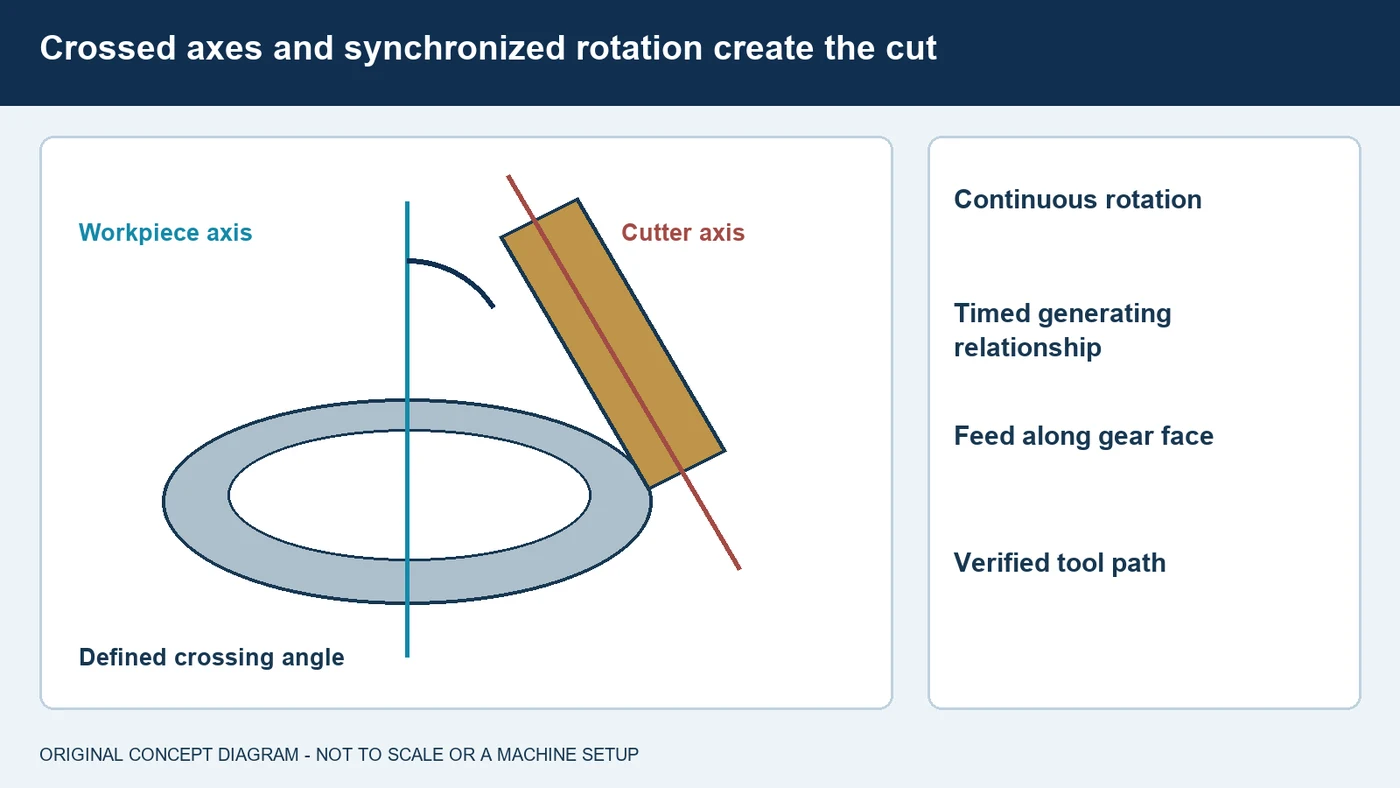
Power skiving produces gear teeth through continuous, coordinated rotation of a toothed cutter and the workpiece. Their axes are set at a defined crossing angle. The relative motion creates the cutting action while the programmed feed progresses along the gear face. This differs from the reciprocating stroke of a gear shaper and from a threaded hob. Power skiving can serve suitable internal and external gears and splines, including cylindrical spur and helical designs. Start with the drawing and manufacturing stage, not the appearance of the cutter. Record the tooth system, tooth count, pressure angle, helix, face width and required modifications. Determine whether the operation is roughing, finishing or part of a sequence that includes heat treatment. QA has coolant and cutting-oil options for application review. Selecting a fluid comes after defining a workable machine, tool and part combination; it cannot establish the generating geometry by itself.
Coordinate Rotation, Feed and Clearance
The crossing angle, rotational relationship and feed are related parts of the skiving process. They must be established by the machine and tooling application, not selected independently from a generic speed chart. The machine must support the required coordinated motion and positioning. Review the tool body, holder and approach as well as the cutting teeth. A tool that reaches the gear face may still interfere with an adjacent feature during entry, cutting or withdrawal. Internal gears and features close to shoulders need particular attention to available space. The end of the gear or spline must provide the clearance needed by the actual cutter and tool path. Simulation and the equipment maker's setup procedures are useful parts of proving the arrangement. Do not copy a crossing angle, spindle ratio or feed from another component simply because its diameter is similar. Fluid delivery must fit inside the verified travel and clearance envelope.
Choose the Cutter and Reconditioning Plan
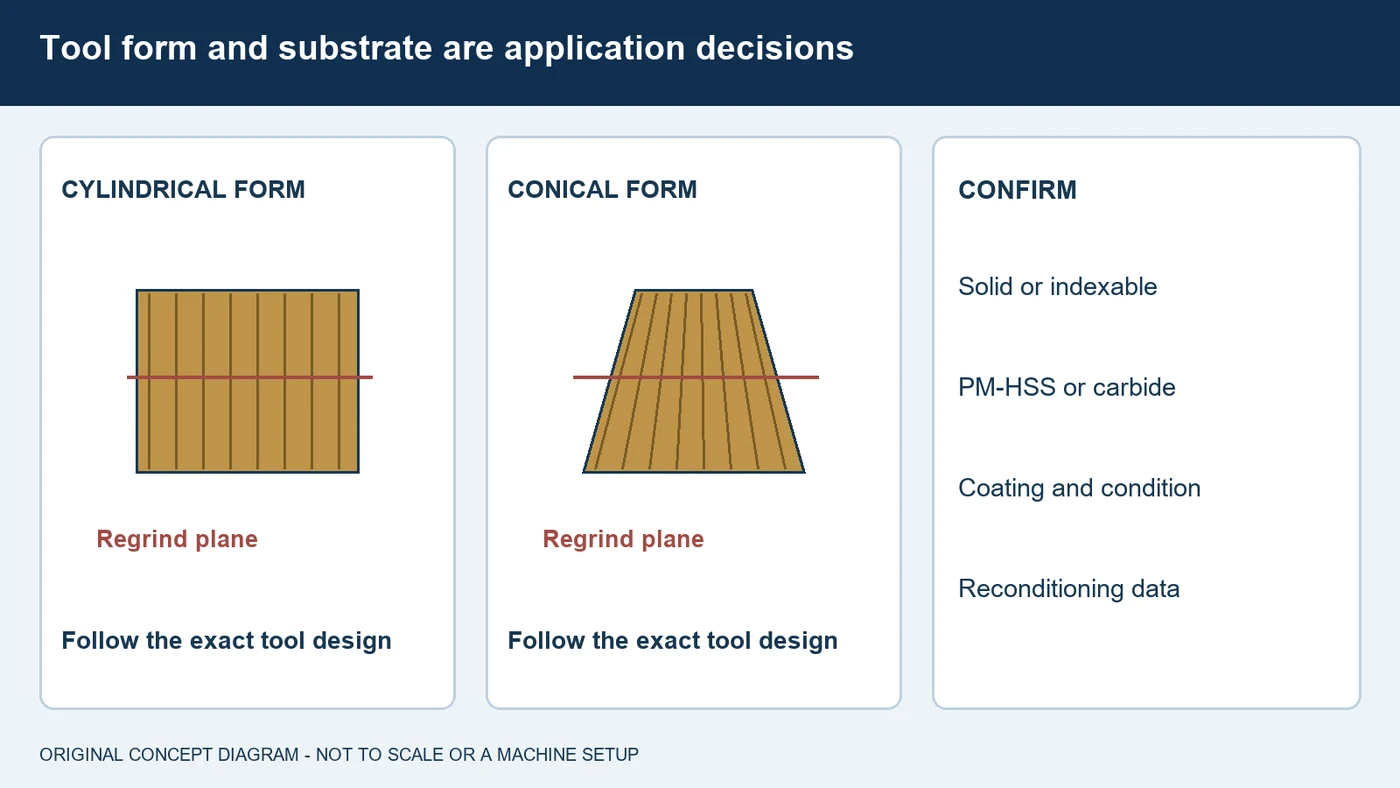
Skiving tools may be cylindrical or conical, with solid or indexable cutting arrangements. Powder-metallurgy high-speed steel and carbide are among the available substrates. These choices change the application and reconditioning considerations; a tool should not be selected only by diameter or price. Some process arrangements create the needed clearance through tool form, while others use the machine's positioning and a matched cylindrical cutter. Regrinding must follow the tool design. In particular, a conical cutter's changing cutting-edge profile needs to be accounted for as it is reground. Confirm the usable dimensions, coating condition and inspection information when a cutter returns from service. Re-establish the tool data and supported cutting plan before production. If roughing and finishing use different tools, identify both in the application record. A fluid trial should compare known cutter conditions rather than mixing new and worn tools without documenting the difference.
Reach the Engagement and Clear the Internal Gear
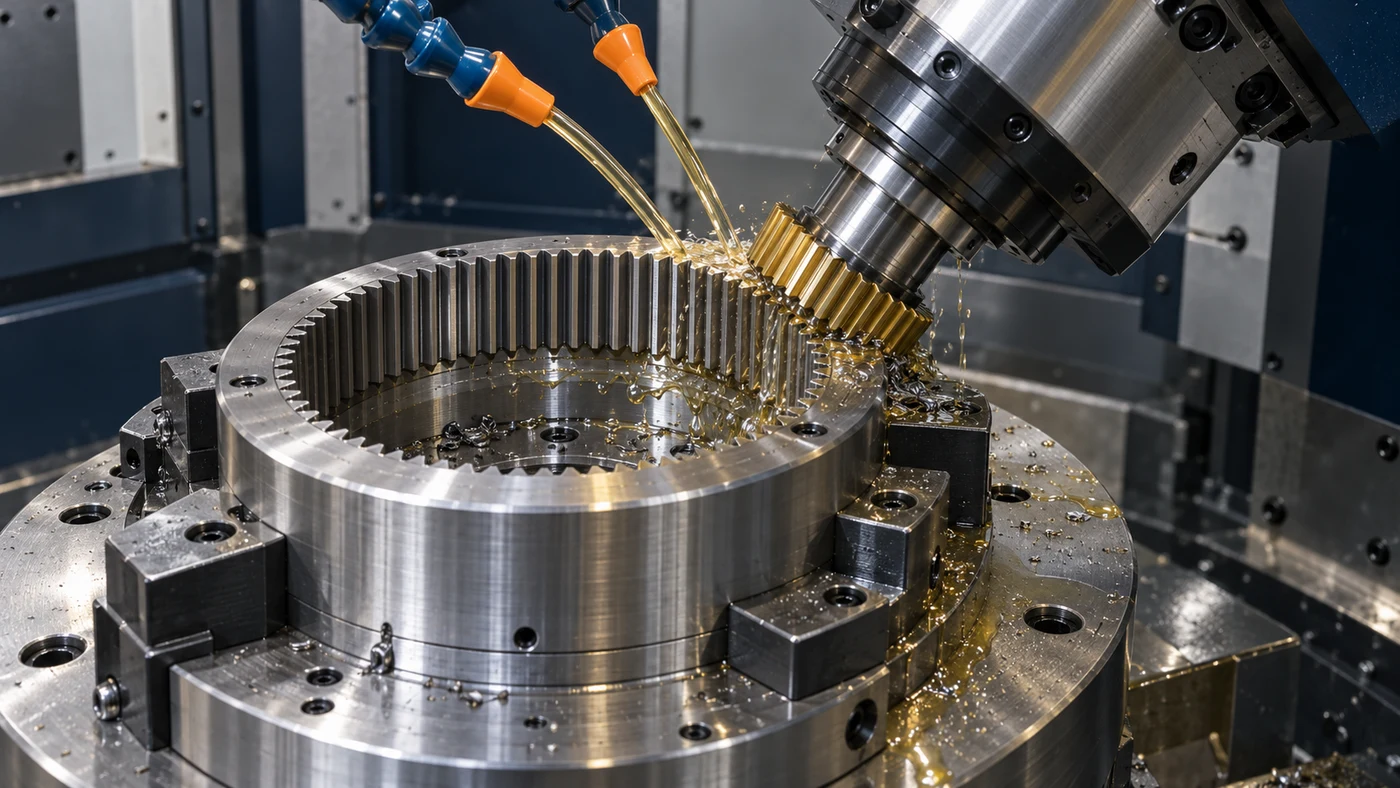
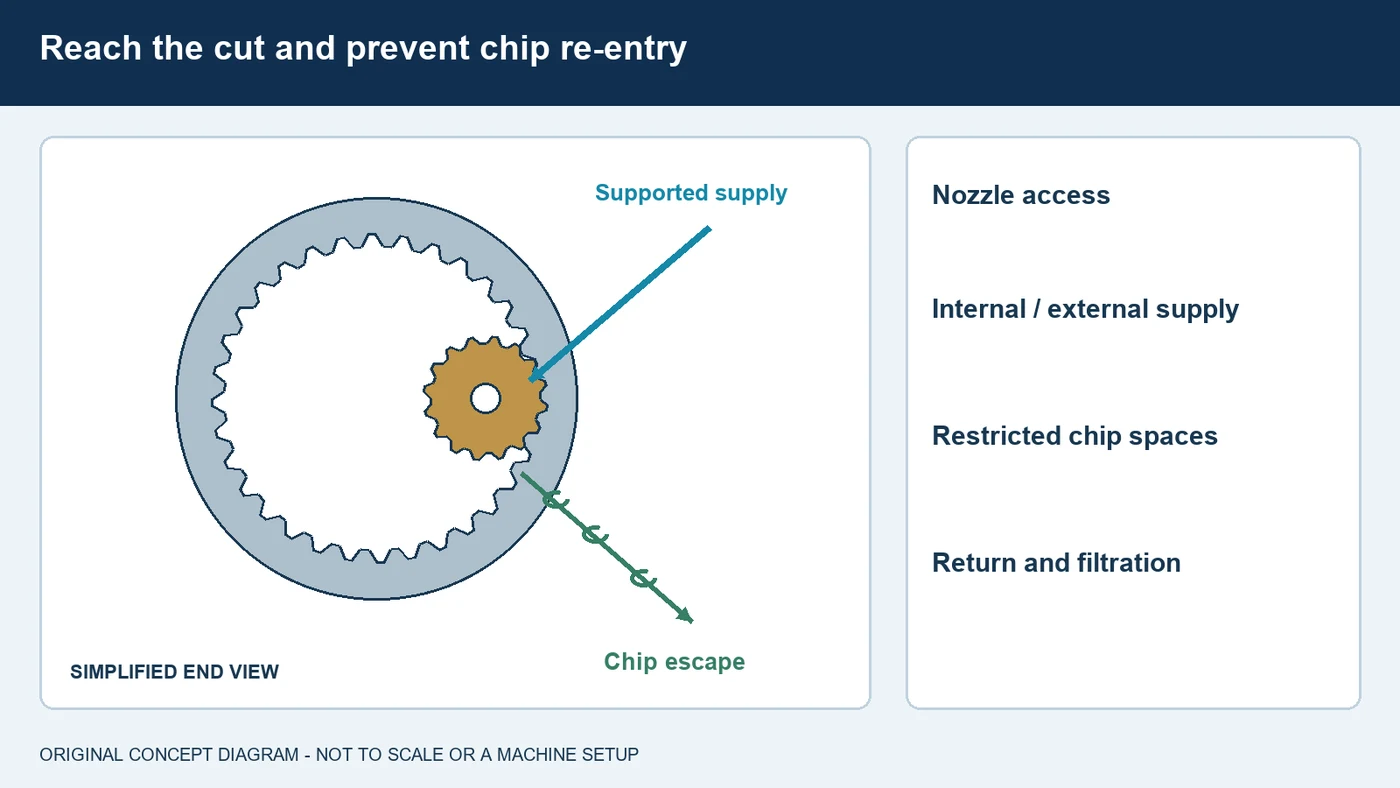
Internal gear skiving puts chip removal at the center of the fluid discussion. A visible stream in the enclosure does not prove that the active cutting region receives an adequate supply. Inspect how the supported delivery arrangement reaches the engagement throughout the cycle, and where the chips go afterward. Machine builders offer workpiece-specific nozzles, while some tooling systems provide internal as well as external supply. Choose the arrangement for the actual component and machine. Check return flow, screens and filtration as part of the same circuit. A restricted cavity can allow chips to collect and return to the moving teeth, so examine the part and tool for evidence of chip damage. More pressure is not a substitute for access or clearance. Establish delivery conditions within the equipment's limits and verify them after nozzle changes or setup changes. Record accepted tooth quality, chip behavior and cutter wear together.
Select a Supported Wet or Dry Method
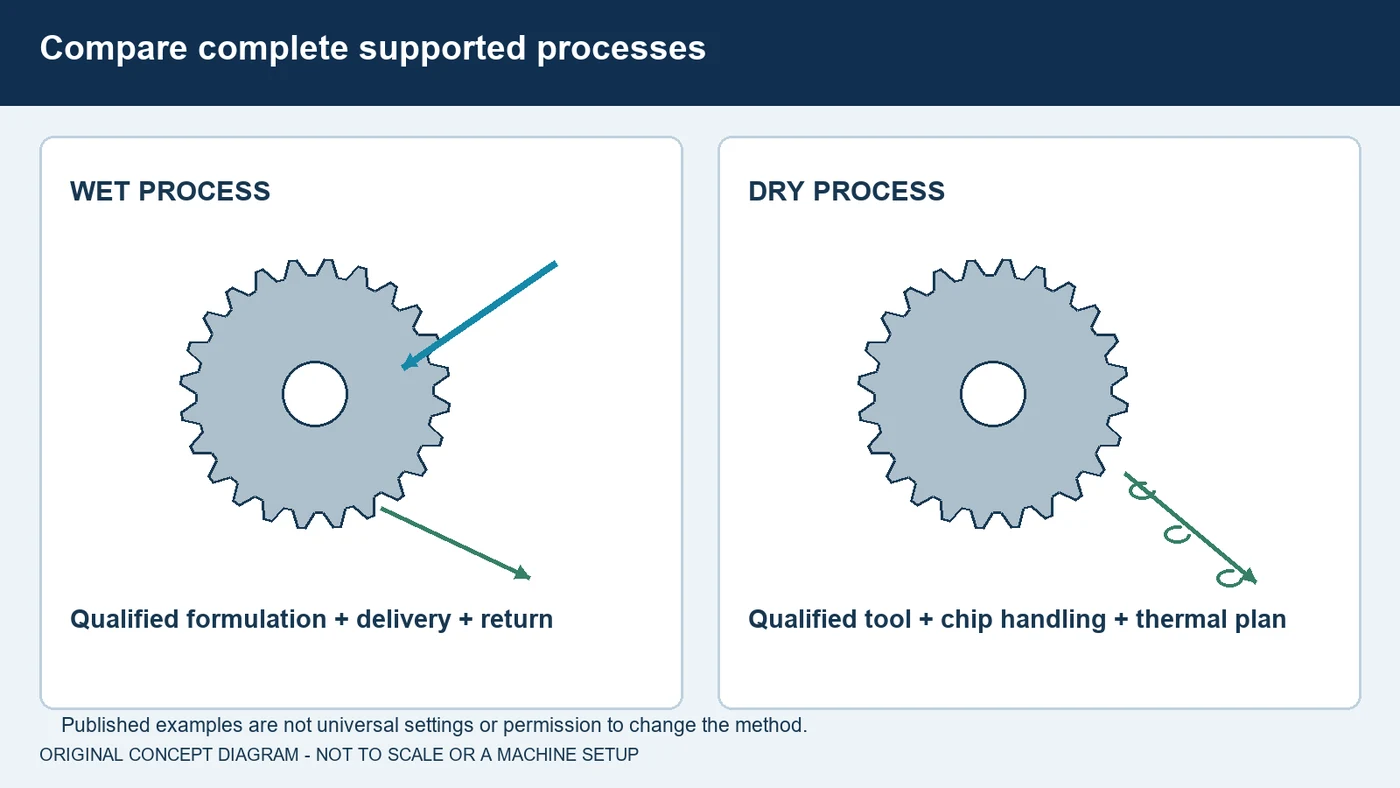
Power skiving does not have one universal fluid rule. Manufacturer literature describes dry applications, while a published tooling example uses an emulsion to machine a particular low-alloy-steel gear. Those examples demonstrate the need to qualify the complete application rather than prescribe one method for every gear. Wet machining can help cool and lubricate the engagement and carry chips away in supported internal-gear processes. The choice between an undiluted cutting oil and a water-miscible product still requires confirmation for the tool, machine and part. A dry process needs its intended chip handling, collection and thermal arrangements; simply switching off a wet machine's pump is not an established conversion. For any change, involve the equipment, tooling and fluid suppliers. Keep the trial inside their approved operating conditions. Compare accepted gear geometry, surface condition and repeatability, not cycle time alone, before accepting the new method.
Match the Fluid to the Alloy and Later Work
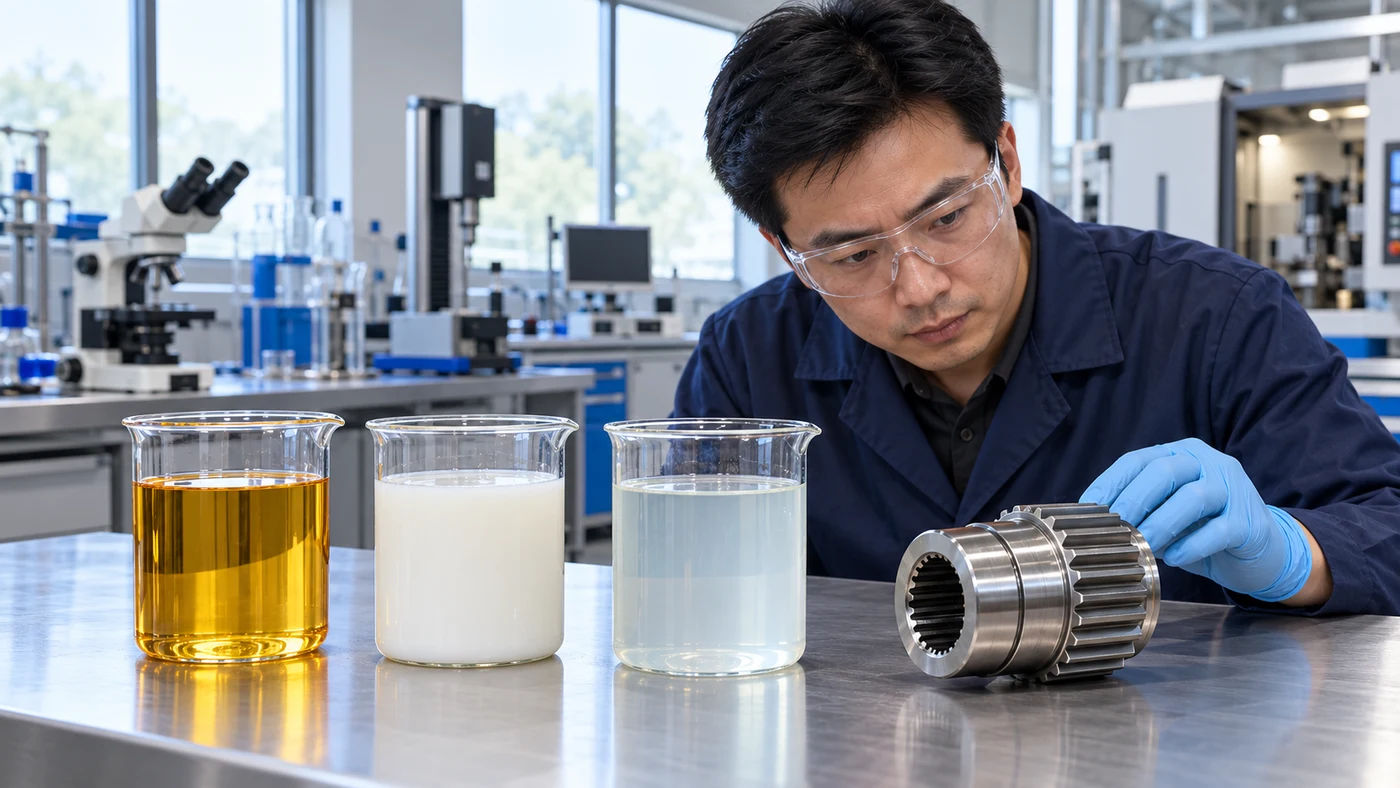
Material condition matters as much as the material family. A gear before heat treatment is a different application from hard finishing after heat treatment. Record the actual alloy and hardness, and identify the cutter and machine arrangement qualified for that condition. With a wet process, review lubrication, viscosity, corrosion protection and compatibility with contacted materials. Aluminum, copper alloys and other nonferrous parts need specific compatibility and staining checks. Include washing, storage, heat treatment and later finishing in the discussion, because a fluid that works at the cut must also fit the rest of the manufacturing route. If a water-miscible formulation is selected, follow its water-quality, mixing and concentration instructions. A refractometer reading may require a product-specific factor; it is not automatically the actual concentration. Record the measurement method and tank condition during a trial. QA can review coolant and cutting-oil options without assuming every product in a category behaves the same way.
Verify Gear Quality and Diagnose the Evidence
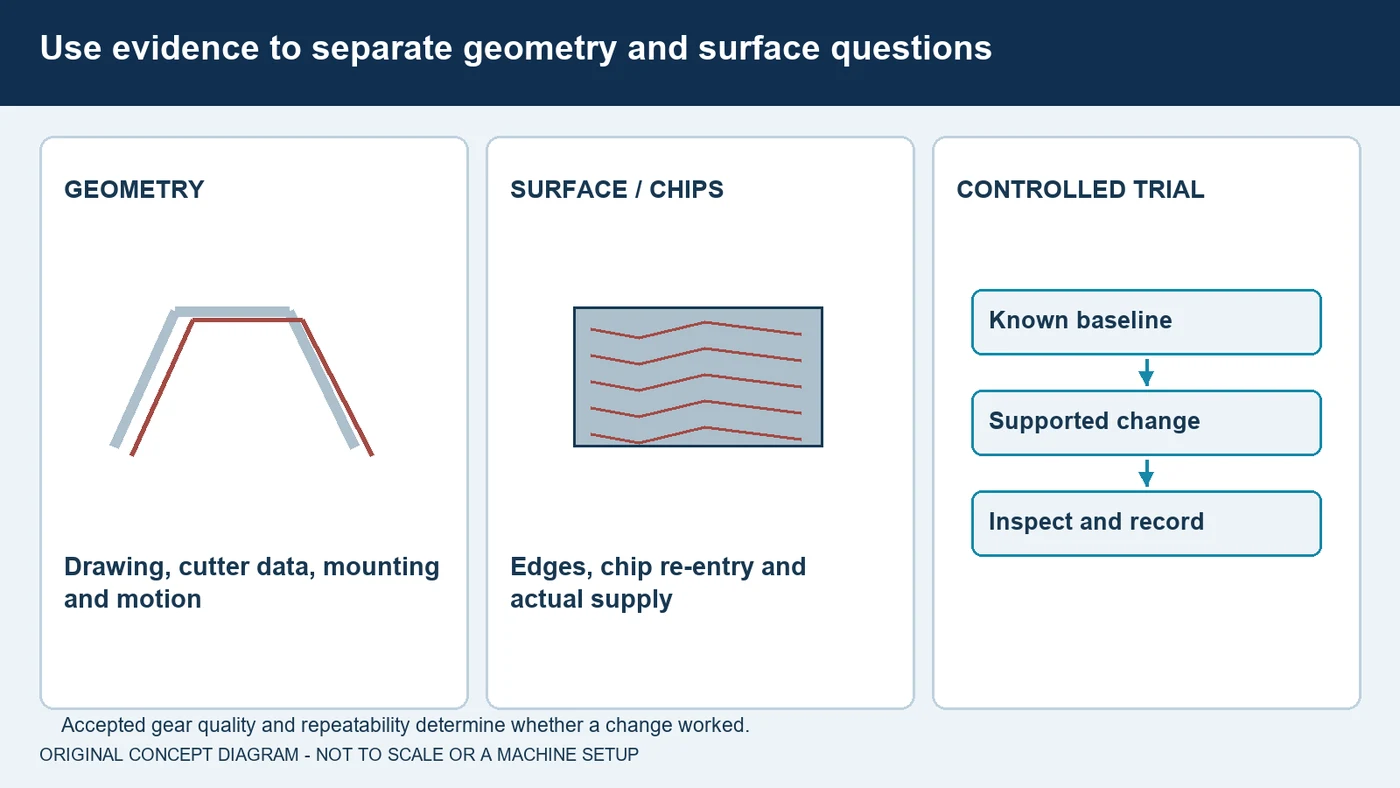
Gear inspection should match the drawing and the manufacturing stage. Relevant characteristics can include tooth profile, pitch, helix or lead, thickness and runout. Confirm the measurement method and acceptance criteria before treating a process change as an improvement. If a gear fails a geometry requirement, review cutter data, mounting, synchronization and the programmed process with the machine and tool specialists. If the concern is a damaged flank or inconsistent finish, examine the cutting edges, chips and delivery conditions as well. Avoid assigning every defect to the fluid just because the operation uses coolant. Establish a baseline with a known cutter, fixture, material lot and accepted setup. Then make a supported change and retain the inspection results, chip observations and tool-condition record. Include any reconditioning or nozzle changes in that record. The useful outcome is a repeatable process that produces an acceptable gear, not simply a brighter-looking surface.
Bring QA Your Power-Skiving Application
To review power-skiving fluid options with QA, provide the gear drawing or relevant tooth data, whether the gearing is internal or external, the alloy and hardness, and the stage relative to heat treatment. Include the machine model, cutter type, substrate, coating and reconditioning status. Describe the supported wet or dry process, current fluid and delivery arrangement, plus the specific result you want to improve. Photographs of the engagement, chip condition and inspection records are more useful than a general description of poor performance. QA has coolant and cutting-oil options and can help evaluate a formulation for the complete manufacturing route. Where needed, coordinate with the machine and tool suppliers to confirm compatibility and the permitted process window. Agree on the parts to inspect and the measures of success before changing the fluid. Keep the findings tied to your actual part so the selected approach can be evaluated consistently in production.
Fluid selection by material
Use these as evaluation questions, not blanket product approvals.
| Material | What to evaluate | What to confirm |
|---|---|---|
| Carbon and alloy gear steels | Review the actual hardness and pre- or post-heat-treatment stage. | Qualified tool, cutting method, lubrication needs and later heat treatment. |
| Stainless steels | Treat the alloy and cutting load as a specific tooling application. | Rigidity, edge condition, chip handling and formulation compatibility. |
| Aluminum alloys | Evaluate lubrication, chip removal and non-staining compatibility. | Actual alloy, finish requirements, washing and supported cutter system. |
| Copper and brass alloys | Require product-specific staining and material compatibility checks. | Exact alloy and chemistry; do not infer compatibility from the fluid category. |
| Cast iron | Review particulate handling in the machine-supported method. | Iron grade, collection or filtration, cleanliness and corrosion protection. |
| Hardened and specialty alloys | Use an engineered hard-skiving or specialty-material process. | Actual hardness, qualified tool and machine, stock allowance and inspection. |
Questions about power skiving fluids
How does power skiving differ from gear shaping?
Power skiving uses coordinated continuous rotation with crossed tool and workpiece axes. Gear shaping uses a reciprocating cutting stroke. Their tooling and machine requirements are different.
Can power skiving produce internal gears and splines?
Yes, suitable machines and tools can produce internal and external gears and splines. The specific geometry, access, end clearance and inspection requirements still need application review.
Does power skiving require oil or water-miscible coolant?
There is no universal answer. Supported wet applications may use an application-qualified formulation; manufacturer literature also describes dry processes. Confirm the exact machine, tool, material and chip-handling arrangement.
Why is coolant delivery important for internal gear skiving?
The delivery must reach the engagement and provide a supported route for chips to leave. Chips trapped in a restricted cavity can re-enter the cut. Check nozzle position, supply and return rather than pressure alone.
Can every skiving cutter be reground the same way?
No. Tool form, substrate and design determine reconditioning requirements. Conical and cylindrical cutters have different geometry considerations. Use the tooling supplier's reconditioning and setup instructions.
What does QA need to evaluate a power-skiving fluid?
Send the gear data, alloy and hardness, manufacturing stage, machine and cutter specifications, current fluid and delivery details, and a measurable objective. QA has coolant and cutting-oil options for application review.
Discuss your application with QA
QA Lubricants has coolant and oil options. Send us the operation, alloy, hardness, tooling, current fluid and the problem you want to solve.
Discuss My ApplicationShop Water Diluted CoolantsShop Straight Cutting OilsTechnical references
- Pittler: power-skiving kinematics and clearance
- WTO: synchronization, end clearance and internal/external coolant supply
- Pittler: cylindrical, conical and indexable skiving tools
- Liebherr: integrated machine, tool and skiving process
- Liebherr: internal-gear wet machining and workpiece-specific coolant nozzles
- Sandvik Coromant: power-skiving scope and supported dry cutting
- Sandvik Coromant: specific low-alloy-steel power-skiving example using emulsion
- Gleason: power-skiving machines and integrated cutter sharpening
- FUCHS: material, process and downstream fluid selection
- Blaser: product-specific coolant concentration measurement
- Nidec: gear inspection terminology
Original educational content and illustrations. Confirm current machine, tool and fluid instructions. Trademarks belong to their respective owners.