
Profile & Form Grinding Coolants and Oils
Explore profile and form grinding fluid selection, wheel contours, dressing, corner retention, coolant access and inspection for precision metal parts.
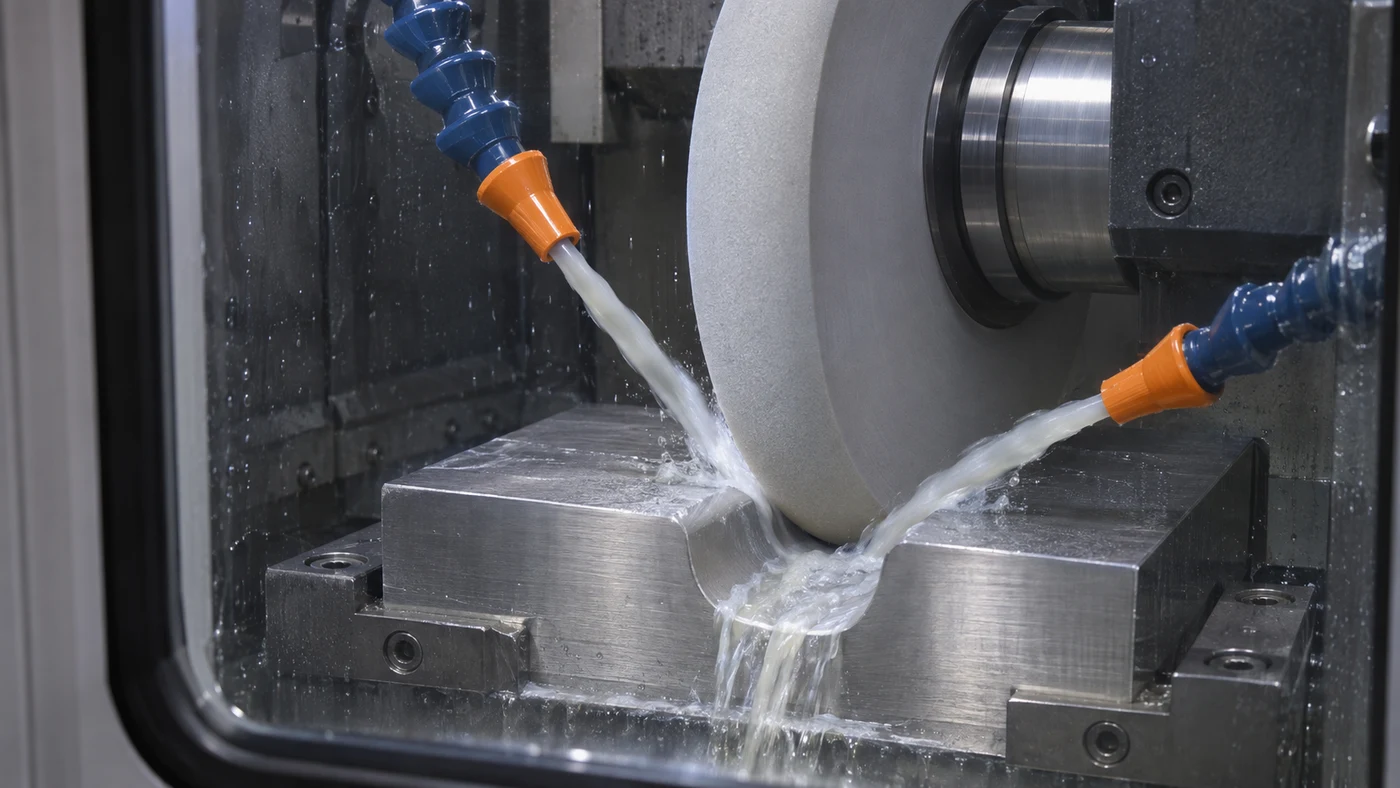
Watch: Profile & Form Grinding Coolants and Oils
Profile & Form Grinding: Start with the Required Shape
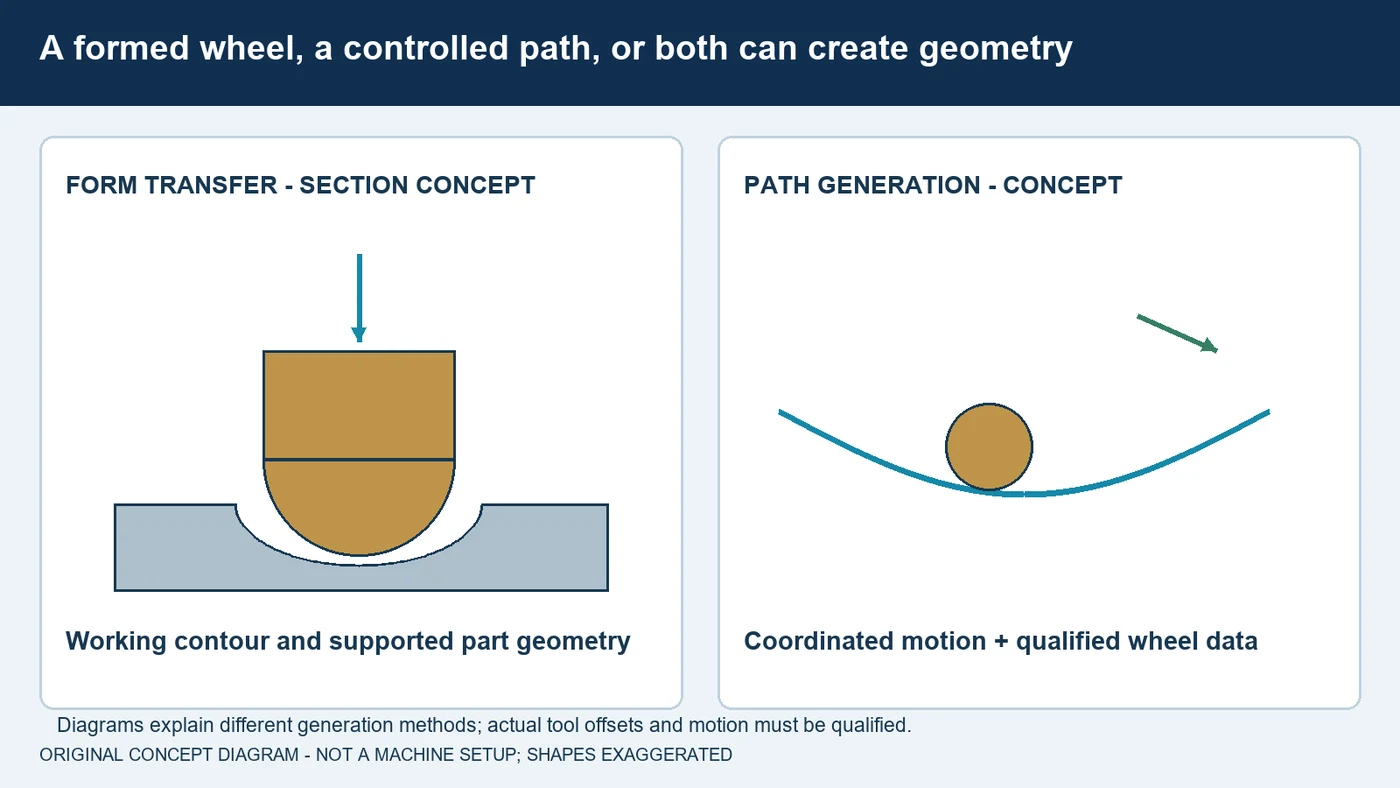
Profile and form grinding produce defined contours such as radii, grooves, steps and combinations of surfaces. The required shape may be created using a profiled wheel, a controlled machine path, or a combination of both. State how the actual machine makes the feature rather than treating every profile as a single plunge operation. Typical applications include tools, dies, precision components and shaped industrial parts. Start with the drawing, material condition and datum scheme. Identify profile tolerance, dimensions, corner requirements and surface finish separately. A smooth surface alone does not show whether the contour is correct. QA has coolant and grinding-oil options for evaluation with the supported machine, abrasive and material. This guide focuses on maintaining the required shape while managing the working contact and fluid system.
Connect the Wheel, Path and Part Geometry
A formed wheel carries geometry on its working surface. In path grinding, coordinated axes move the supported wheel to generate the part contour. Some jobs combine these methods. Each approach needs the correct wheel data, tool path and reference position in the machine control. Review the complete feature, including sidewalls, transitions and corners where engagement or clearance can change. Check the permitted wheel shape and the actual dressing tool before accepting a requested radius as achievable. Drawing radii are not instructions to modify a wheel or use an unsupported face. Confirm stock allowance and fixture access with the machine and abrasive suppliers. When wheel size or profile changes, use the supported compensation method. Inspect the resulting part rather than assuming that correct-looking program geometry guarantees the finished contour.
Keep Shape Restoration Distinct from Face Renewal
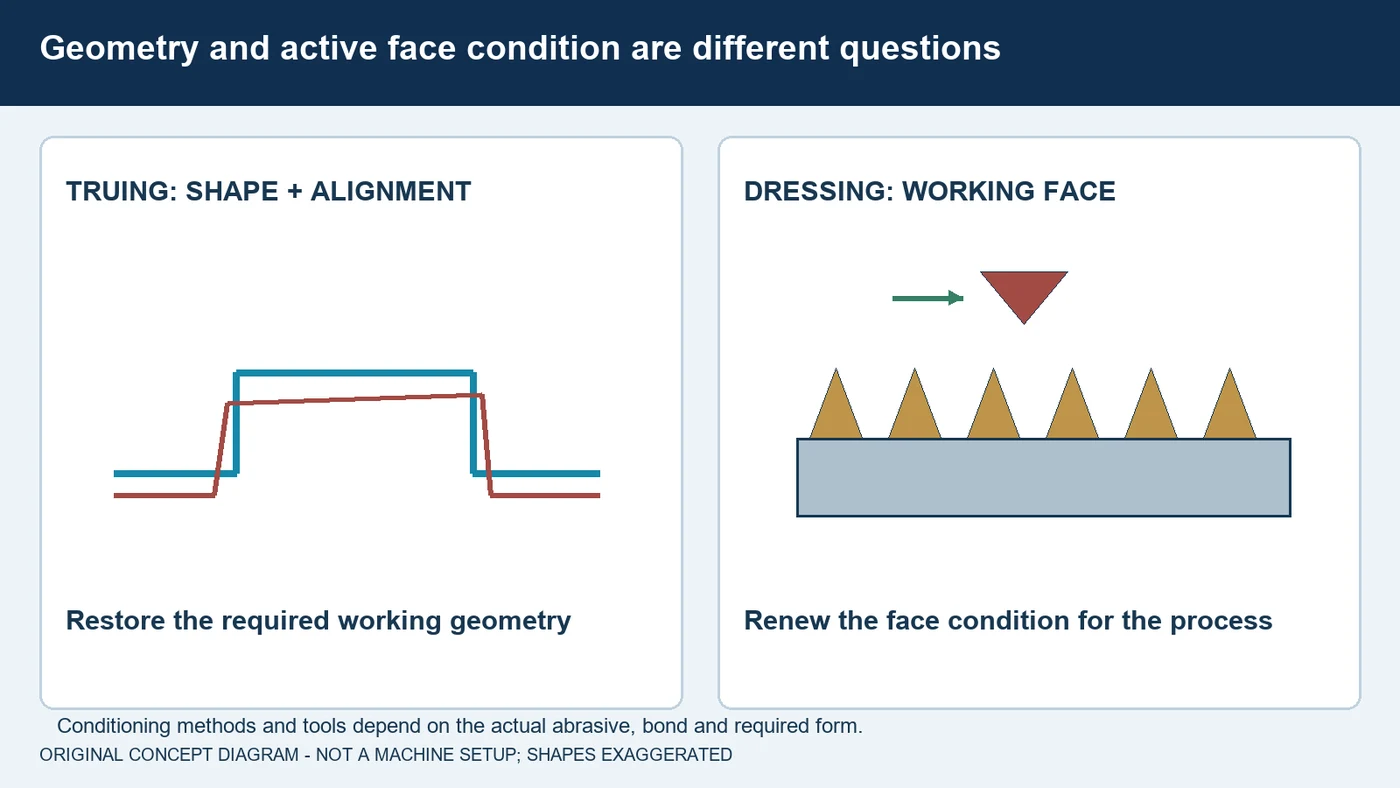
Truing addresses wheel geometry and alignment. Dressing addresses the condition of the working face. They can occur in one operation, but they answer different process questions. A wheel may retain its overall contour while its face loads or dulls. It may also cut freely while its corner or profile no longer meets the requirement. Choose the conditioning tool for the abrasive, bond, wheel size and required form. Supported options include stationary diamond tools, rotary dressers and form rolls; their capabilities are not interchangeable. Examine dresser condition and the supported mounting arrangement when investigating form loss. Coordinate dressing fluid supply with the equipment instructions as well. Record wheel preparation during a fluid comparison, since a different face condition can change the result even when the coolant itself has not changed.
Track Form Loss and Define the Dressing Interval
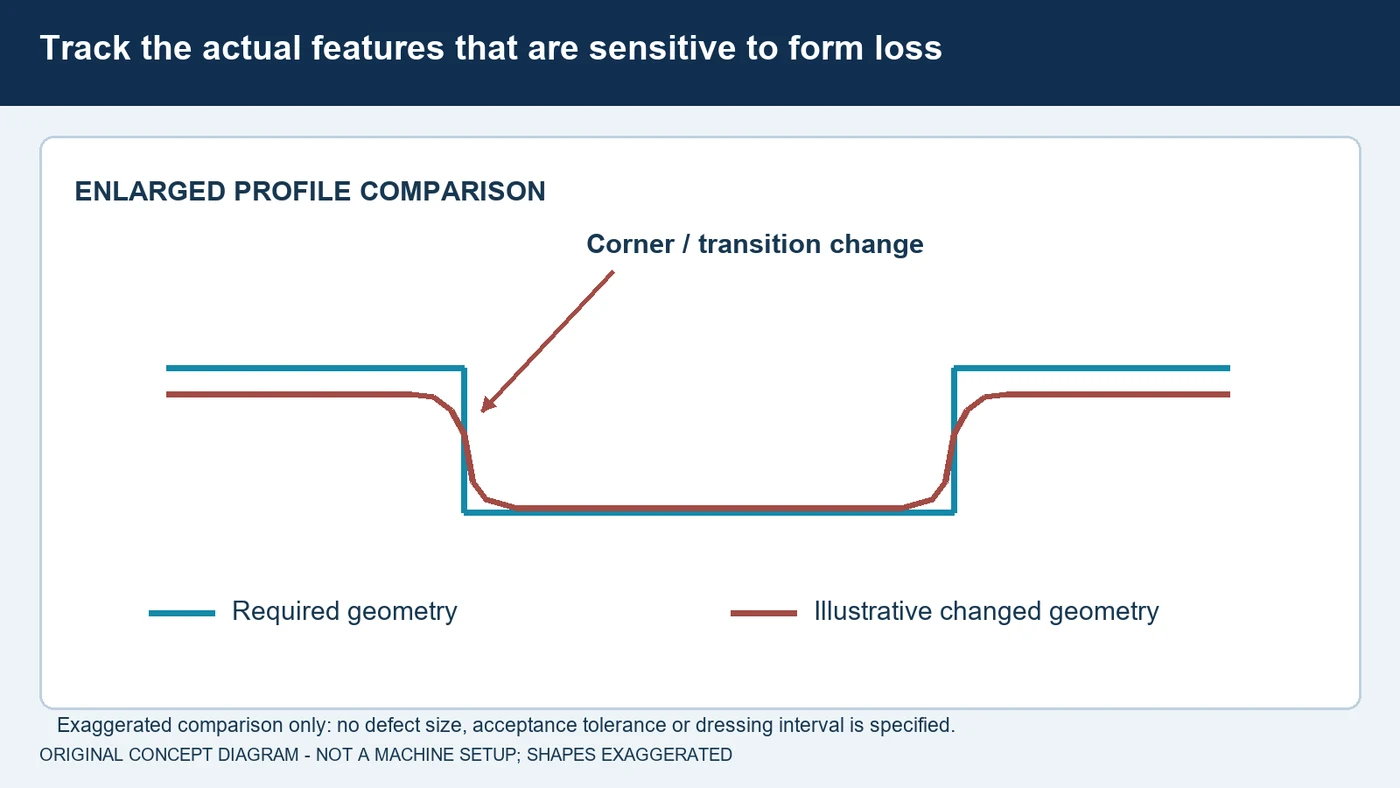
Profile retention needs a measurement plan. A rounded corner, changing groove width or altered flank can matter even while a broad surface still appears satisfactory. Identify the features most sensitive to wheel and dresser wear. Record part measurements, finish and relevant process observations over the supported dressing interval. A fixed number of parts is not a universal rule: material, wheel specification, engagement and required form can change the interval. Keep grinding wear separate from the intended material removed while conditioning the wheel. Use the machine's supported wheel management and compensation procedure after preparation or remounting. If the contour changes, review the abrasive, dresser, control references and machine condition before attributing the problem to fluid. Qualify the interval against the actual drawing and accepted parts.
Follow the Fluid Across the Complete Profile
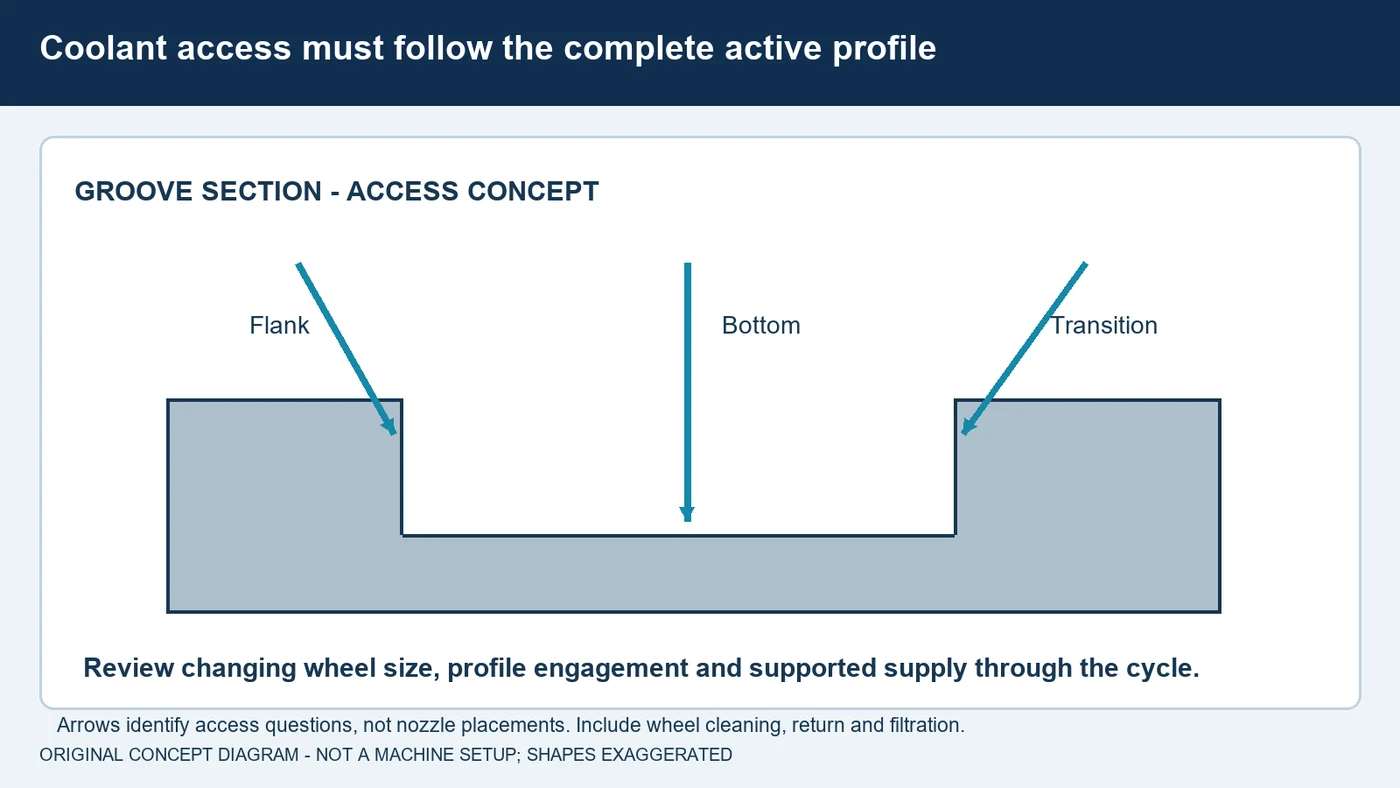
A visible coolant stream at the center of a wheel does not prove that every active part of a profile receives useful fluid. A groove bottom, flank and corner can present different contact and access conditions. Review the complete cycle with the machine and nozzle suppliers, including supported motion and clearances. Wheel diameter changes after dressing can also alter the relationship between the wheel and a fixed nozzle. Use the supported tracking or adjustment procedure where required. Distinguish fluid supplied to the grinding contact from any separate wheel-cleaning and flushing duties. Prevent swarf from accumulating in the feature or returning to the contact through inadequate filtration. Record the delivered conditions during a trial. More splash or a pressure increase alone does not establish that the actual working region is being supplied effectively.
Match the Fluid to the Material and Abrasive System
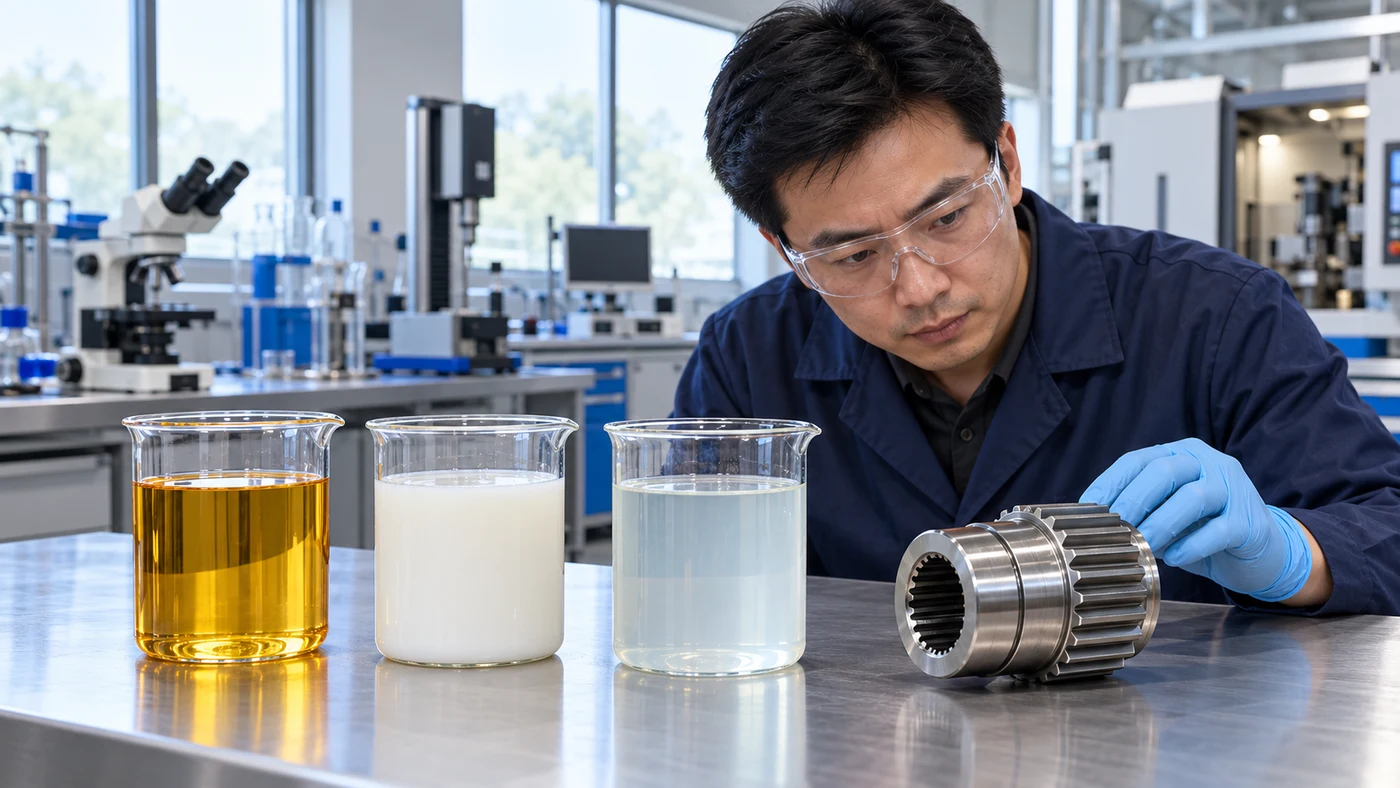
Begin with the fluid types permitted by the machine manufacturer. Then review the actual material and abrasive-bond system with the suppliers. Water-miscible products and grinding oils can have appropriate applications, but a category name does not establish suitability for every form-grinding job. Include lubrication, cooling, foam, corrosion protection, residue and downstream cleaning in the evaluation. For aluminum or copper alloys, confirm staining compatibility. For cobalt-bonded carbide, explicitly review binder compatibility rather than assuming any grinding coolant will do. Follow the specified mixing and water-quality requirements for diluted coolant. Use the product's refractometer factor when required and record the actual concentration. Keep metal and abrasive debris out of the working supply and maintain the specified thermal conditions. QA has coolant and grinding-oil options for evaluation with these application details.
Inspect Profile, Finish and Surface Integrity
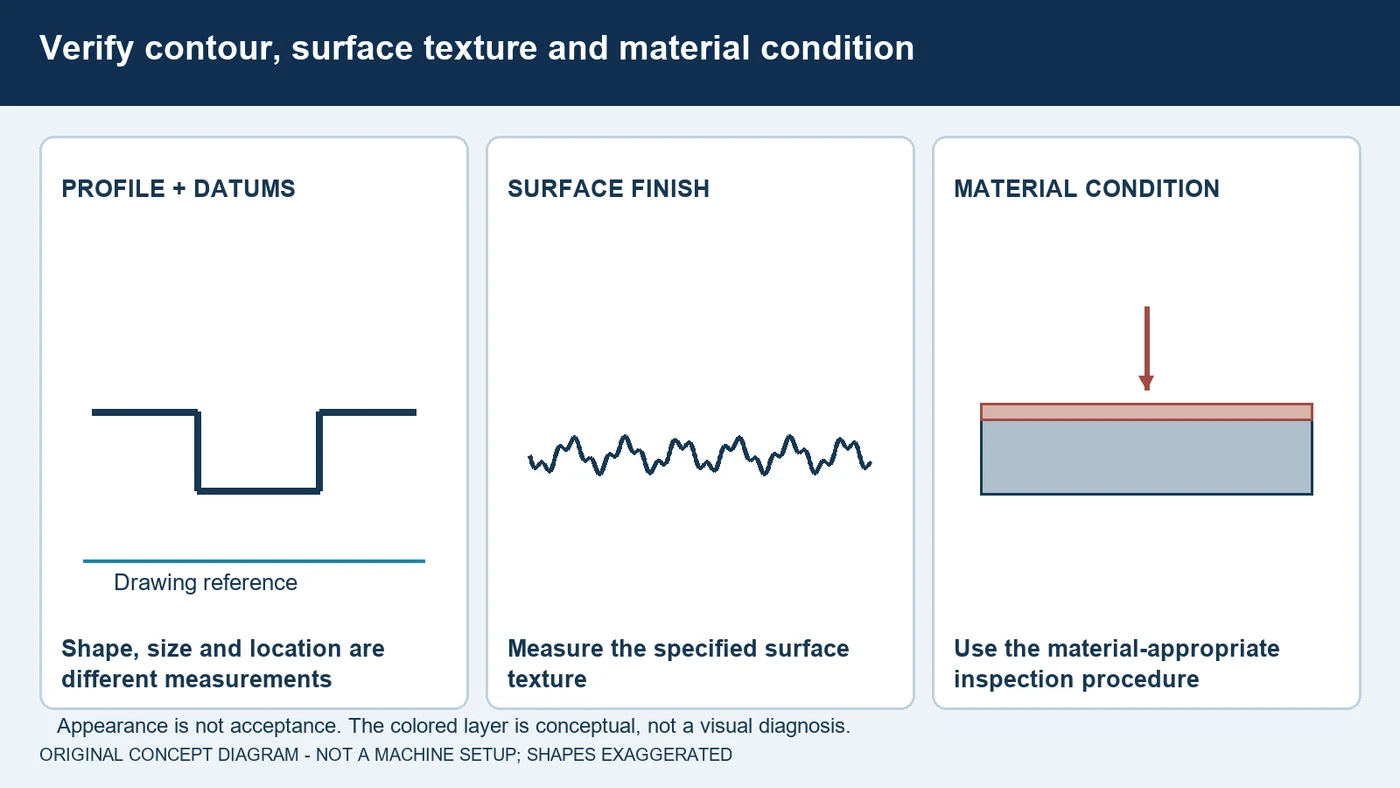
A profile inspection should resolve the drawing's actual requirements. Contour shape, feature size and position relative to datums are not the same measurement. Select an inspection method that can resolve the specified radii and surfaces, and use the required support and temperature conditions. Surface texture is a separate acceptance question. So is material condition: a visually clean or smooth surface does not prove the absence of thermal damage. Use the material-appropriate procedure required for the component when surface integrity is part of acceptance. If there is scratching, form drift, chatter or a suspected thermal problem, review the complete system. Abrasive and dresser condition, stock, support, machine condition, fluid delivery and cleanliness may contribute. Make a documented change, then repeat the relevant inspection before accepting the revised process.
Give QA the Complete Profile-Grinding Application
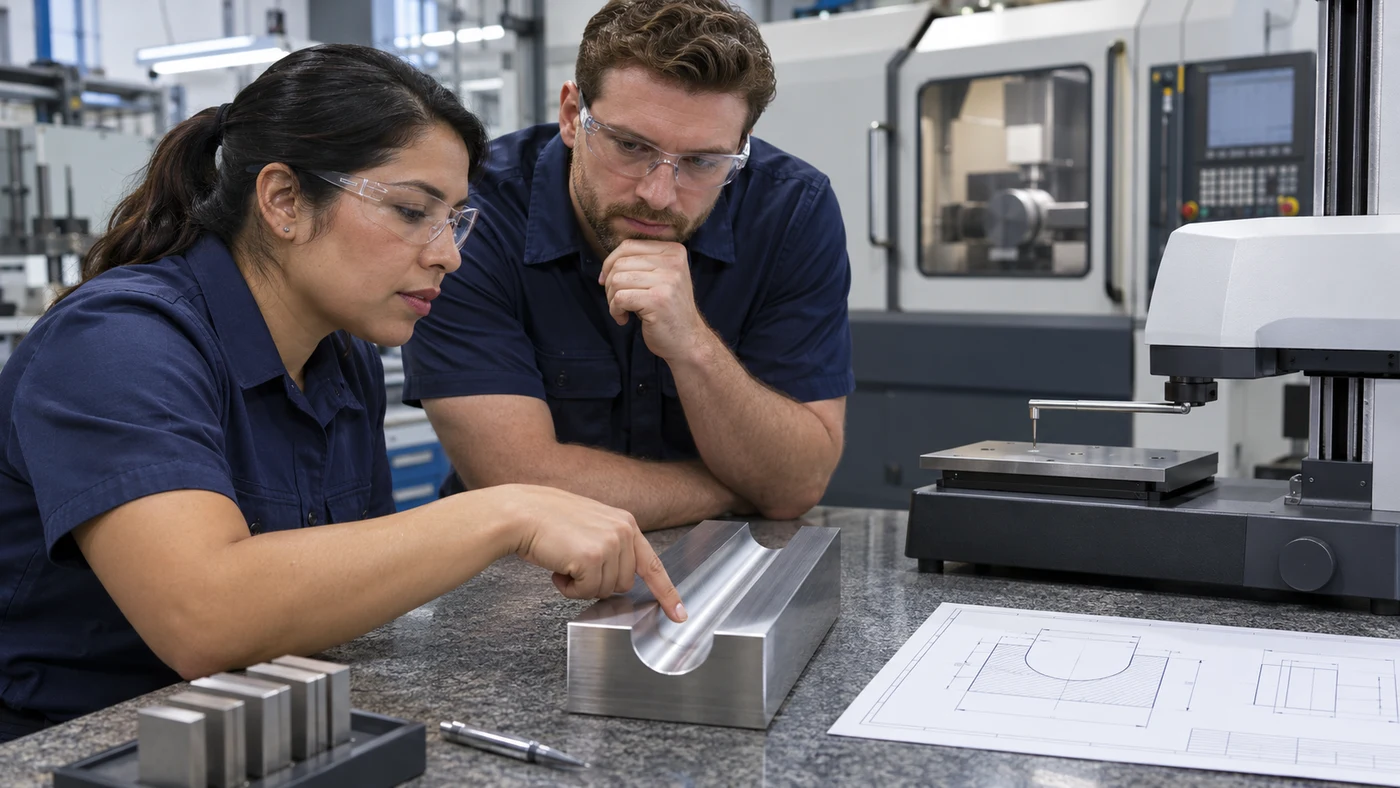
For a profile or form grinding inquiry, send QA the drawing, alloy and hardness, incoming stock and the dimensions, radii, finish and surface-integrity requirements. Explain whether a formed wheel, a controlled path or both generate the contour. Include the machine, fixture, wheel specification, dresser and supported preparation cycle. Describe the issue using measurements where possible, including how it changes through the dressing interval. Provide the current fluid, actual delivery arrangement, filtration and temperature conditions. For diluted coolant, add water-quality and concentration records. QA has coolant and oil options for evaluation. Agree on controlled trial conditions and compare accepted parts, dressing requirements and wheel condition together. Confirm the final formulation and operating instructions with the equipment, abrasive and fluid suppliers before adopting the revised process.
Fluid selection by material
Use these as evaluation questions, not blanket product approvals.
| Material | What to evaluate | What to confirm |
|---|---|---|
| Hardened and tool steels | Review cooling, lubrication and corrosion protection for the actual hardness and profile. | Wheel and dresser, corner requirements, permitted process and qualified surface-integrity inspection. |
| Nickel alloys and stainless steels | Evaluate the specific alloy, loading behavior and working-contact demand. | Profile access, wheel preparation, material-condition acceptance and downstream cleaning. |
| Cobalt-bonded carbide | Explicitly confirm binder and abrasive-bond compatibility. | Supported conditioning method, filtration, actual formulation and supplier instructions. |
| Aluminum and copper alloys | Verify staining compatibility and review adhesion or loading in the chosen process. | Qualified wheel, fixture stiffness, residue removal and the required contour. |
| Mixed-material systems | Check every alloy sharing the circuit rather than only the current workpiece. | Material and bond compatibility, cleanliness, water quality and downstream requirements. |
Questions about profile & form grinding fluids
Does profile grinding always require a wheel with the complete part shape?
No. A profiled wheel, a coordinated machine path or a combination can generate the contour. Confirm the actual machine, software, abrasive and supported process.
Are truing and dressing the same thing?
They can happen together, but truing concerns geometry and alignment while dressing concerns the active face condition. Both need to suit the wheel and application.
How often should a form wheel be dressed?
Determine the supported interval from the actual material, wheel, engagement and measurements of accepted parts. A fixed part count is not transferable to every job.
Can coolant correct a worn profile or incorrect compensation?
A fluid change does not restore the specified geometry. Check the wheel, dresser, references and supported compensation along with delivery and fluid condition.
Is one coolant suitable for every carbide or steel profile?
No. Confirm machine permission, material and binder compatibility, abrasive bond, formulation and delivery for the actual application. QA has fluid options for evaluation.
Does a smooth-looking profile prove that the part is acceptable?
No. Profile, size, datum location, finish and material condition are different acceptance questions. Use the inspection methods required by the drawing and component specification.
Discuss your application with QA
QA Lubricants has coolant and oil options. Send us the operation, alloy, hardness, tooling, current fluid and the problem you want to solve.
Discuss My ApplicationShop Water Diluted CoolantsShop Straight Cutting OilsTechnical references
- BLOHM: profile creation, path grinding and contour dressing
- Norton: understanding wheel truing and dressing
- Norton: selecting form and profile dressing tools
- Tyrolit: conditioning methods and dressing coolant supply
- UNITED GRINDING: profile cycles, wheel management and nozzle tracking
- Norton: finish, wheel preparation, delivery and machine condition
- UNITED GRINDING: thermal damage and material-appropriate inspection
- FUCHS: material and downstream requirements in fluid selection
- Blaser Swisslube: concentration measurement and product factors
- UNITED GRINDING: fluid cleanliness and thermal control
- Master Fluid Solutions: carbide-binder and wheel-bond compatibility example
Original educational content and illustrations. Confirm current machine, tool and fluid instructions. Trademarks belong to their respective owners.