Quenching Oils
Oil-based options selected around the required cooling profile and operating conditions.

Heat Treatment & Process Fluids
Explore quenching oils and water-based fluid options for heat-treated metal components. QA can help review your application, current fluid and process requirements to identify suitable product options.
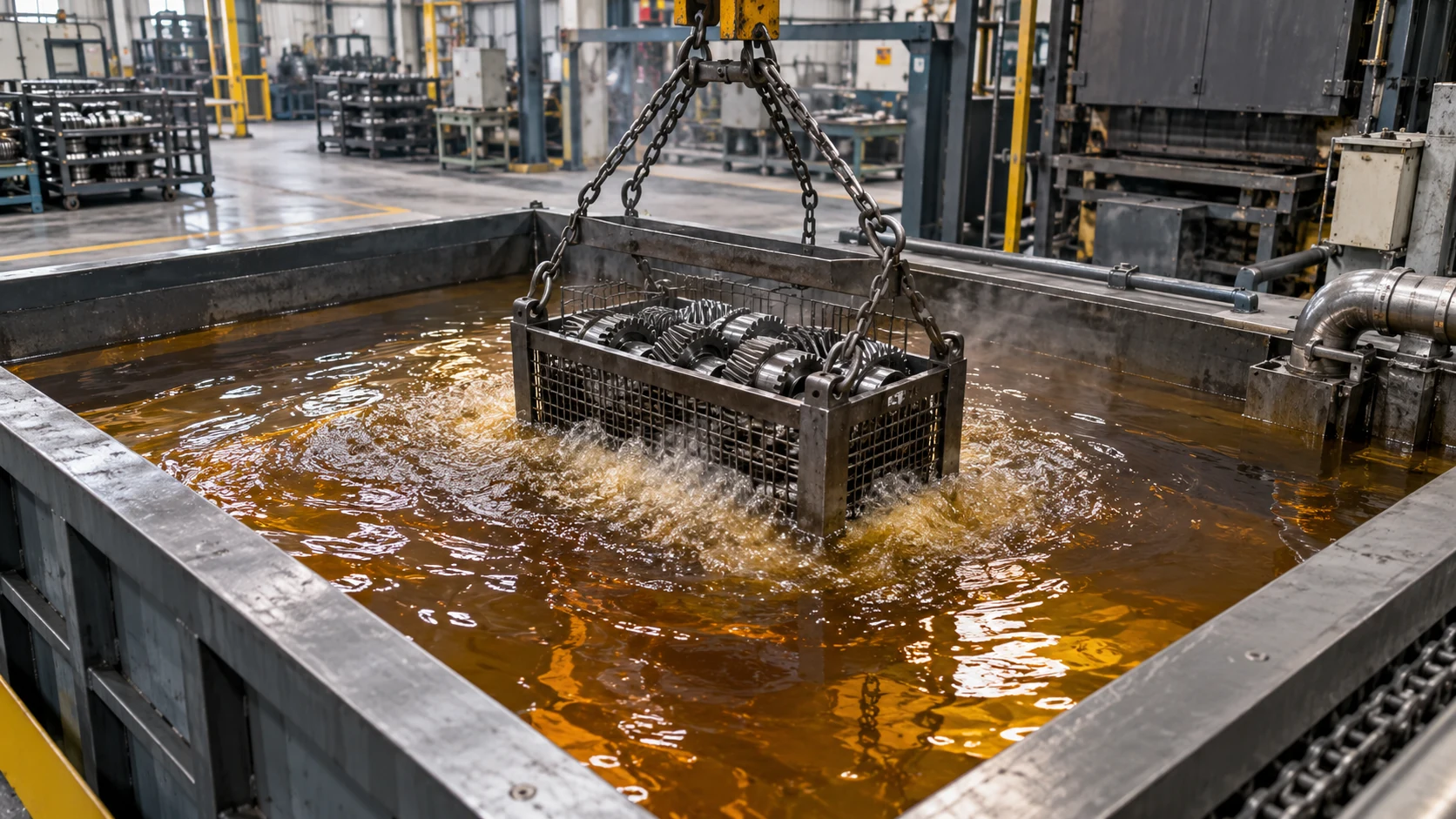
Control the cooling process
Quenching is a critical step in heat treatment. Fluid selection and bath conditions influence how a heated component cools, helping shape the balance between required properties and dimensional control.
Share the metal being treated, component geometry, heat-treatment specification and current operating conditions with QA to begin a product review.
Oil-based options selected around the required cooling profile and operating conditions.
Glycol-type and polymer fluid options for processes that specify an aqueous quenchant.
Review cooling behavior alongside the material, part geometry and desired results.
Discuss fluid condition, testing needs, bath temperature and agitation.
Quenching fluid options
Choose a fluid around the approved process and the properties your components require.
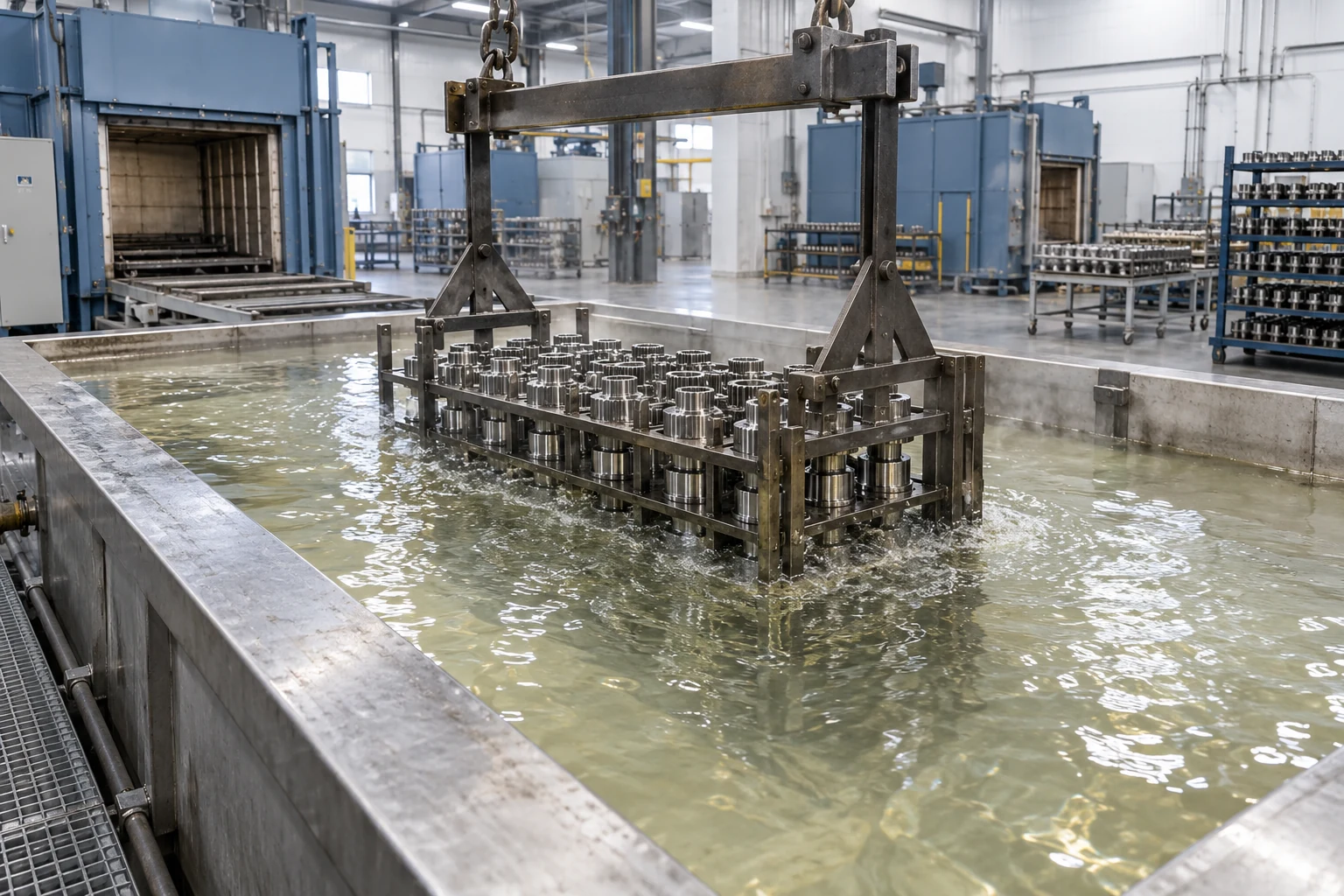
Water-based quenching fluids provide another option for suitable heat-treatment processes. Product type, concentration and operating conditions should be considered together when reviewing cooling performance.
Quenching oils are used in processes that call for an oil bath. Review the specified fluid, operating temperature, cooling characteristics and maintenance requirements before changing products.
Discuss your applicationFluid testing & technical review
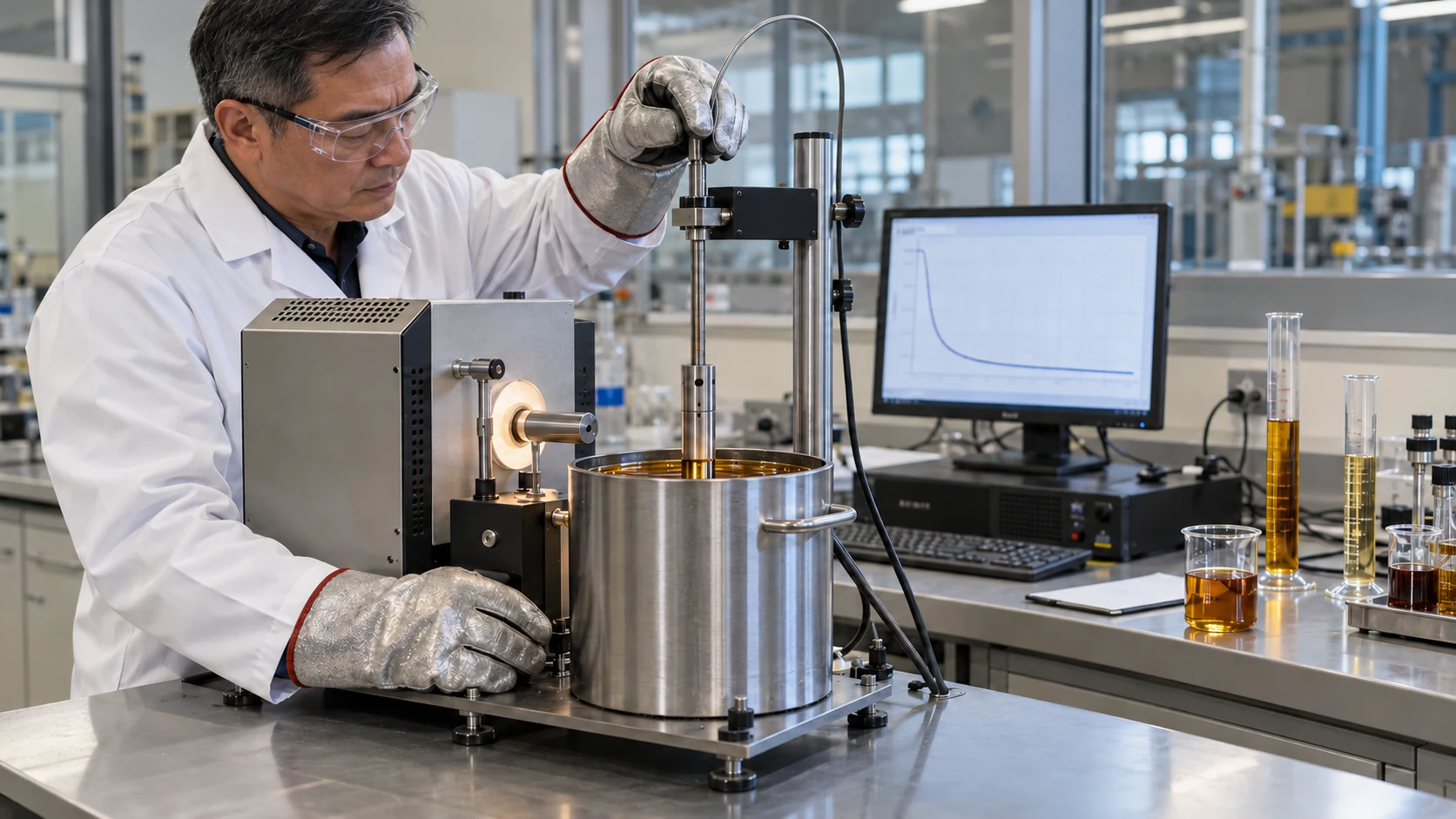
A quenchometer records how a heated test probe cools in a fluid sample. The cooling curve helps characterize quench behavior and supports comparison of fluid condition under defined test conditions.
QA can discuss the testing and documentation needed for your process. Provide your current quenchant, sample history and applicable test requirements when requesting support.
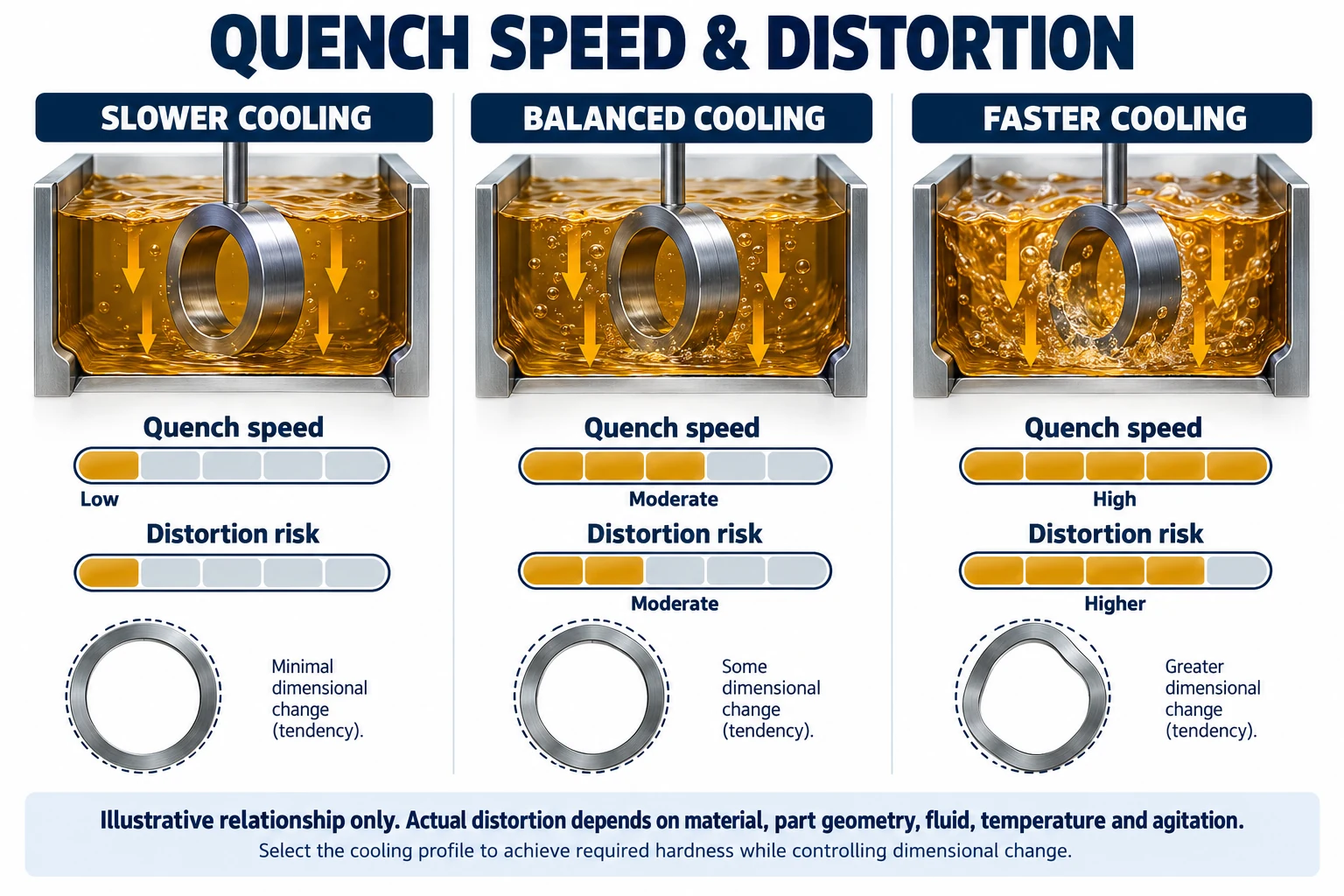
Cooling speed & dimensional control
The goal is a cooling profile that meets the required properties while controlling dimensional change. The illustration below explains a general tendency; it does not represent measured product performance.
Product selection
Share the material, part dimensions, required hardness, heat-treatment specification, current product and bath conditions. QA can help review available fluid options, technical information and supply needs.
Brands & sourcing support
Contact QA to discuss product selection and availability.


Contact QA for product information, technical support, pricing and availability.