
Reaming Coolants & Cutting Oils for Precision Hole Finishing
Explore reaming cutting fluids, hole preparation, stock allowance, tool alignment, blind-hole coolant delivery and material-specific fluid selection with QA Lubricants.
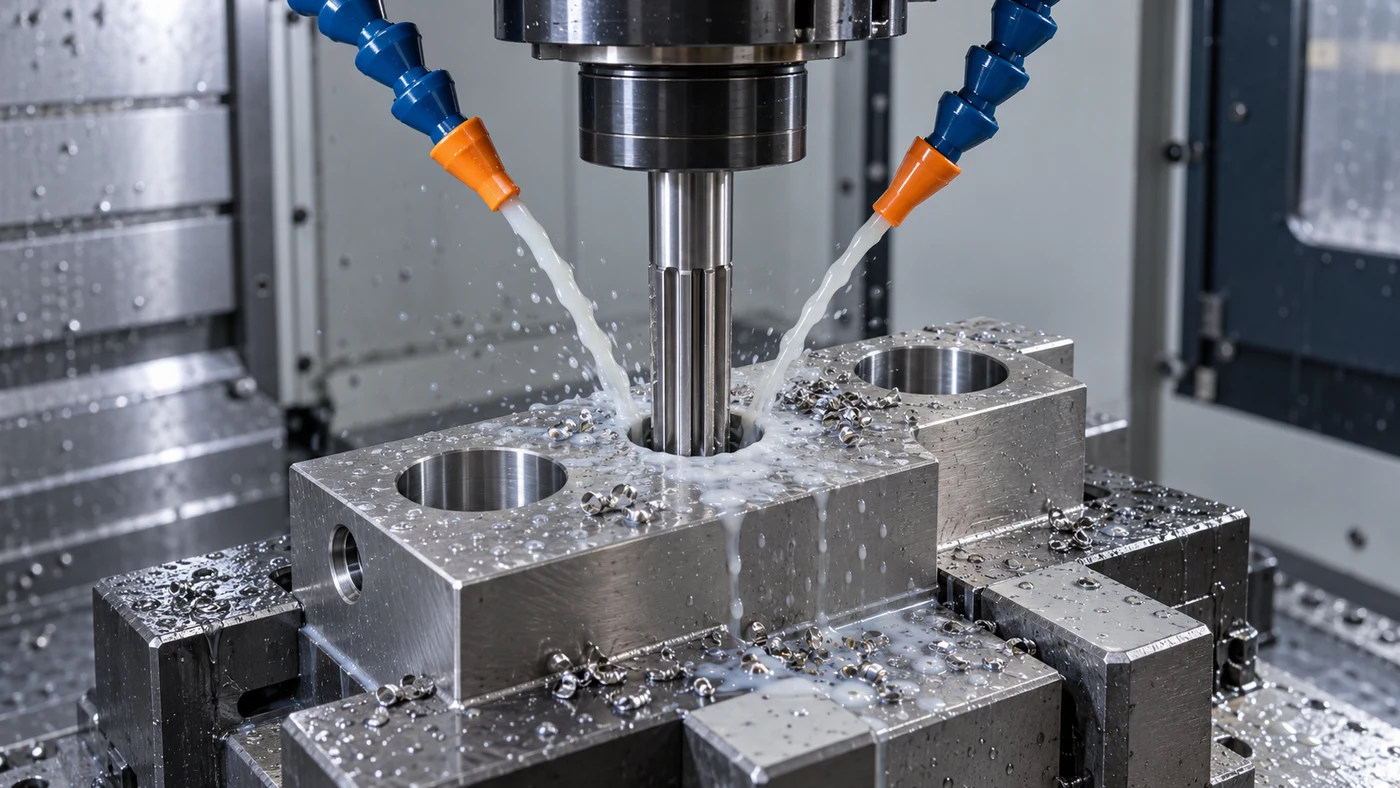
Watch: Reaming Coolants & Cutting Oils for Precision Hole Finishing
Reaming Finishes a Prepared Hole
Reaming removes a controlled amount of material from a prepared hole to develop the required size and finish. A conventional machine reamer has multiple cutting edges; it is not simply a drill run through the hole again. The complete process matters, from the initial hole to final inspection. Begin with the drawing: identify the finished diameter, permitted variation, depth, surface requirement and whether the hole is blind or goes through the part. Include any position or alignment requirement. Conventional reaming generally follows the existing hole, so do not expect a coolant change to correct a hole that began in the wrong place. The fluid supports the selected cutting process, while preparation, tooling, machine condition and measurement establish the rest of the system. A successful reaming trial should be judged against the complete part requirement, rather than a shiny surface alone.
Leave the Right Stock, in the Right Condition
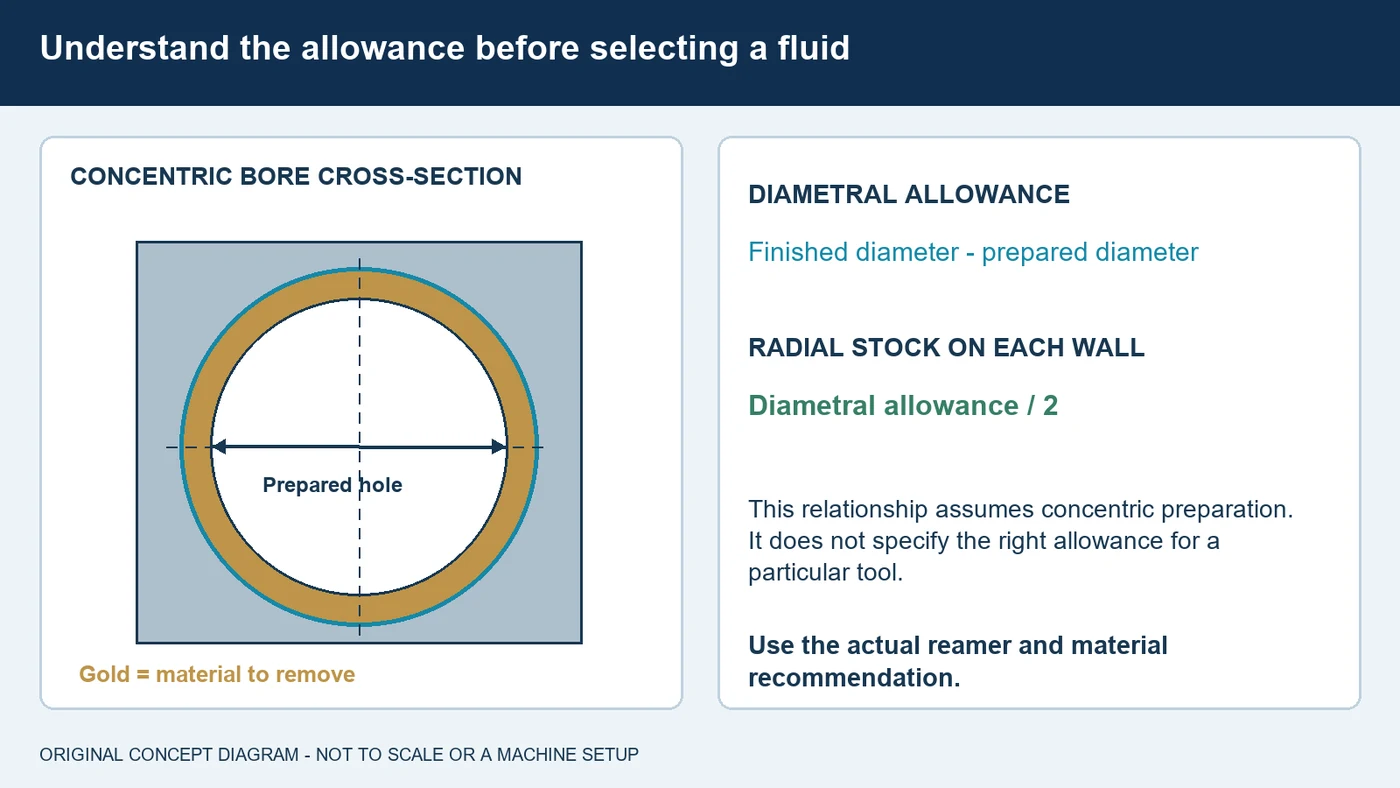
Before selecting a reaming cutting fluid, measure the hole you are asking the tool to finish. Compare its diameter, consistency and entry condition with the recommendation for that reamer and material. Too little remaining material can leave the cutting edges rubbing instead of making the intended cut; excessive stock can create an overload. Uneven preparation can make the engagement uneven as well. Be clear about the units and the allowance convention. Diametral allowance is the finished diameter minus the prepared diameter. For a concentric hole, the radial amount on each wall is half that difference. This distinction prevents an avoidable setup error, but it does not provide a universal stock recommendation. Check the actual prepared-hole measurements and the tool maker's instructions for the diameter, material and condition being machined. More lubricant cannot make an unsuitable allowance correct.
Match the Reamer to the Hole and Material
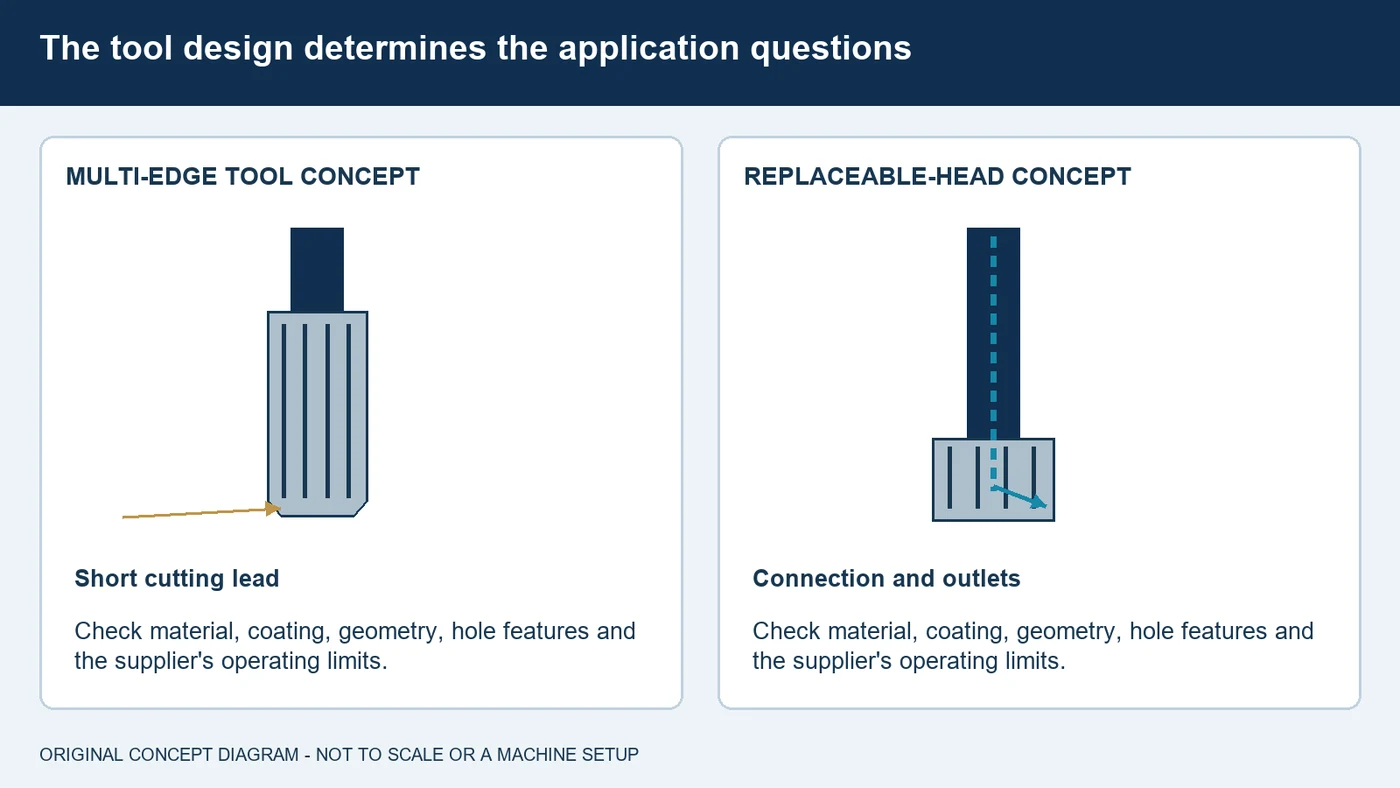
Reamers differ in their cutting materials, edge arrangement, lead geometry, flute form and fluid passages. Solid tools, replaceable heads and other precision designs have their own application limits and setup instructions. Some systems also use guide features or adjustable components. Choose the actual tool around the material, required bore quality, depth and features such as cross holes or interruptions. A straight-fluted tool and a helical-fluted tool need not handle chips the same way. Likewise, two reamers of the same nominal diameter may have different outlet positions or permitted operating conditions. Confirm the exact tool configuration rather than applying a rule from its appearance alone. Use the supplier's guidance for the finished size and any setting or reconditioning procedure. The material and the complete tool design help determine what cooling and lubrication arrangement is appropriate.
Control Runout, Alignment and Support
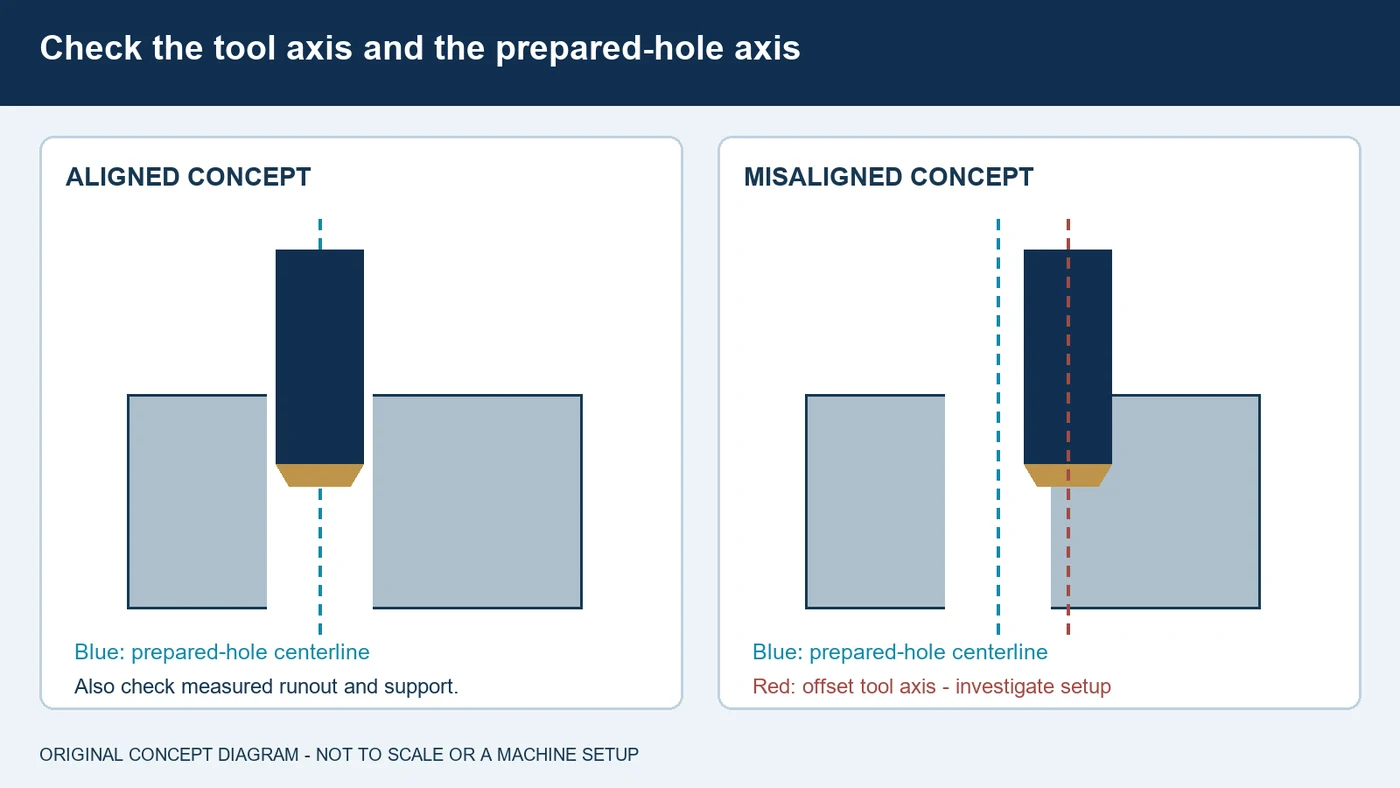
Precision reaming depends on how the tool is held and presented to the prepared hole. Inspect the cutting edges, mounting surfaces and holder, then verify runout and alignment using the shop's approved procedure. Keep the assembly supported and use the appropriate reach for the job. A misaligned or unstable assembly can create size and form problems that will not be solved by changing the fluid alone. Certain floating or compensating holders are designed to address particular alignment errors, but they are not interchangeable accessories for every high-performance reamer. Match the holder to the tool, machine and application, including its entry and operating instructions. Check the workholding and the actual position of the prepared bore as part of the same review. Record the setup used during a fluid trial so a mechanical change is not mistaken for a coolant improvement.
Reach the Cutting Edges and Clear the Chips
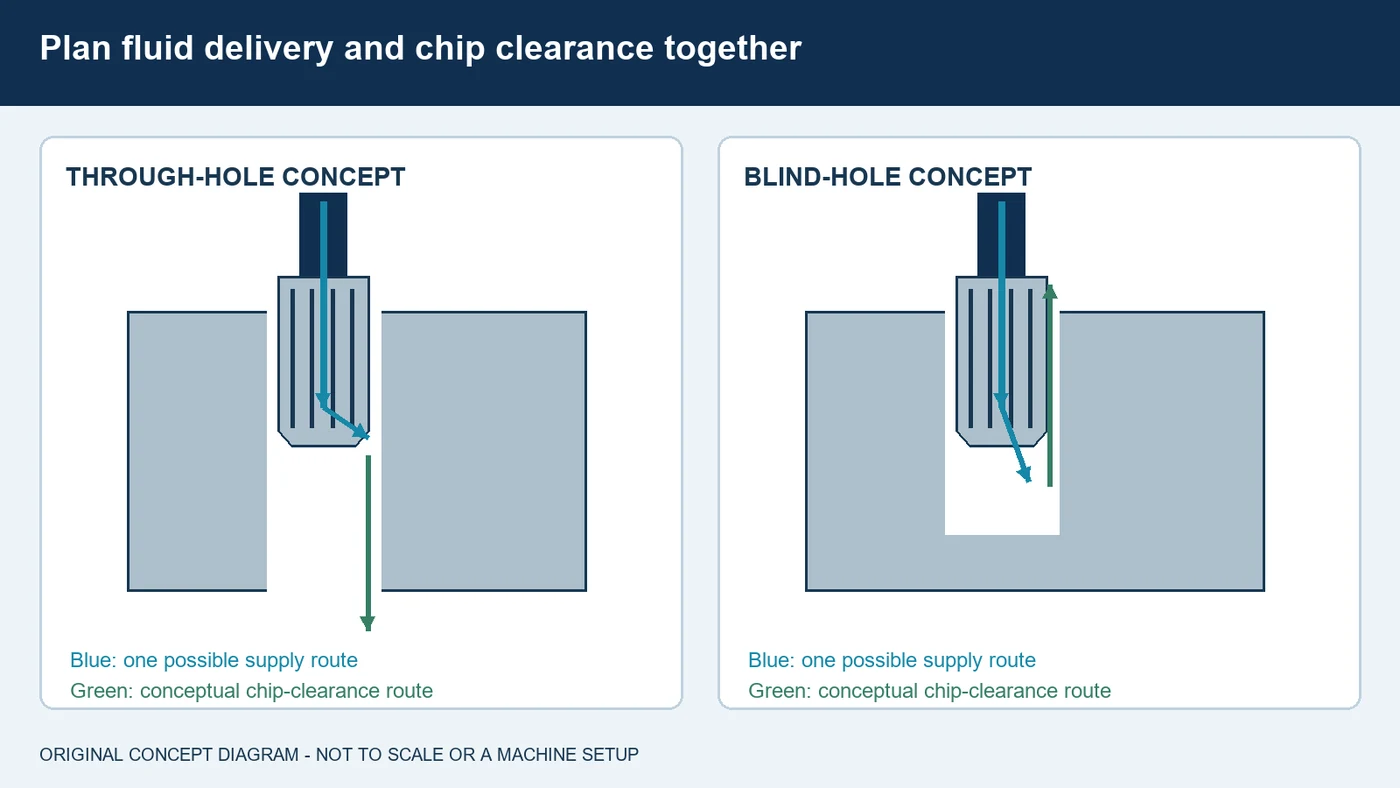
A visible flood of coolant around a reamer does not prove that the active edges are receiving the supply they need. Review the passages and outlets of the actual tool, the holder connection and the machine's available system. Internal delivery can bring fluid closer to the cutting zone, while an external arrangement has different access limits. Blind and through holes also create different chip-clearance problems. The direction of chip movement depends on the geometry and fluid arrangement; do not assume that every straight or helical flute behaves identically. Confirm the flow, pressure and filtration guidance for the specific combination. Check for blocked outlets or contamination through the approved maintenance procedure, and stop safely before adjustment. Raising pressure without checking the tool and machine limits is not a substitute for establishing a reliable supply and a clear route for chips.
Choose the Formulation Around the Material
For reaming, evaluate the actual coolant or cutting-oil formulation with the material, tooling and machine requirements. Water-miscible products and straight oils are not automatically interchangeable. Review lubrication at the cutting edges, material adhering to the tool, chip handling and the finished bore together. Aluminum and copper-containing alloys need attention to staining and additive compatibility, including active-sulfur restrictions where applicable. Stainless steels, titanium and nickel alloys require the exact material condition and tooling to be considered. Include the other alloys in a shared sump and any residue or downstream cleaning limits. Maintain a diluted coolant using its own application concentration and measurement instructions; a refractometer reading may require a product-specific conversion. Keep a straight oil within its own condition and contamination requirements. Compare supported candidates in a documented trial, rather than treating a stronger-looking mixture as proof of better performance.

Diagnose Size, Form and Finish Separately
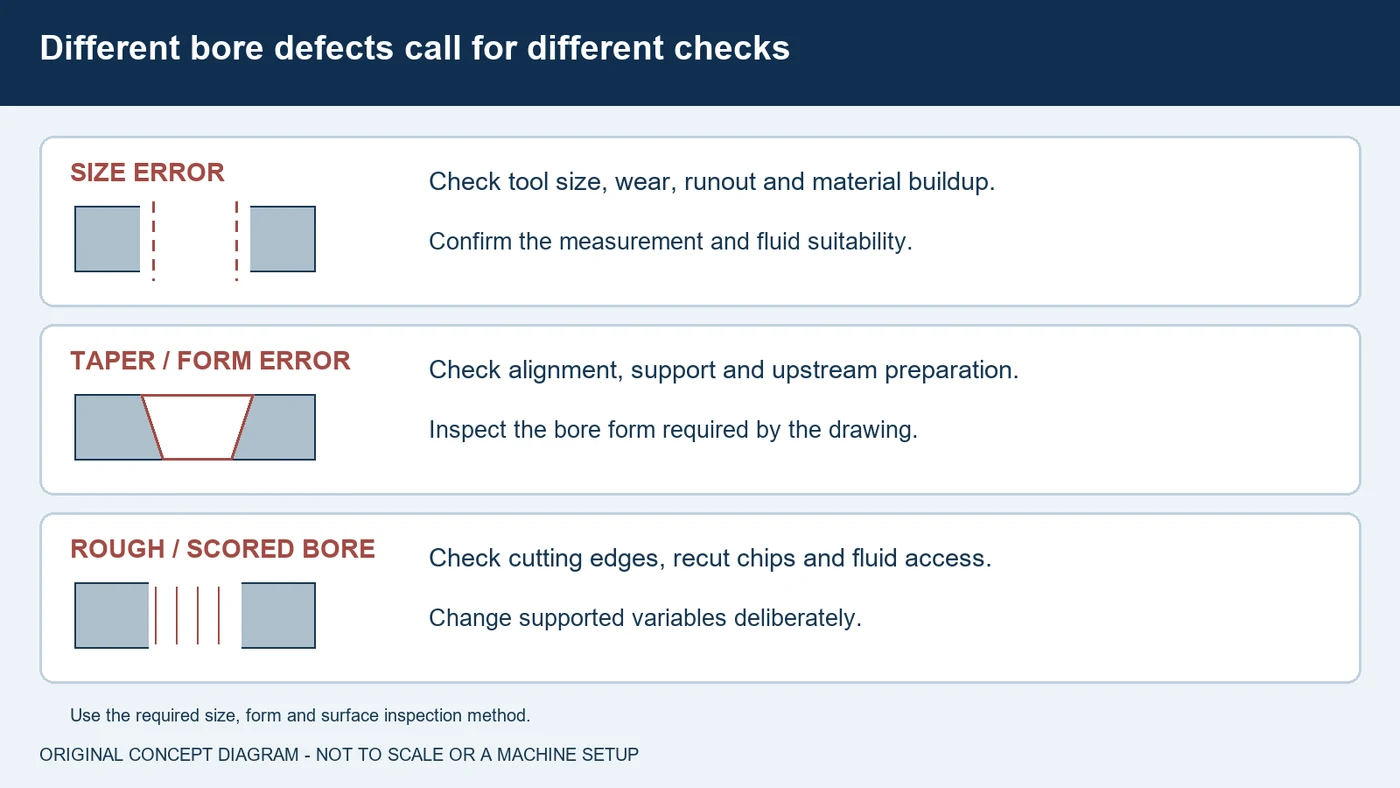
An oversized hole, an undersized hole and a rough bore can have different causes. Start by confirming the measurement and the part requirement, then inspect the tool, prepared hole and setup safely. Size error can involve tool dimensions, wear, runout, alignment or material buildup. A poor surface can involve damaged edges, unsuitable cutting conditions, chip recutting or an inadequate fluid supply. Taper or other form error calls for its own alignment and support review. Use the relevant supplier's troubleshooting instructions to choose the next check, rather than changing several variables at once. Measure with the gauges and procedure needed for the drawing, including features that a simple size check may miss. During a coolant trial, record the tool, material, preparation, delivery and fluid condition alongside the accepted bore measurements, tool use and cleaning results.
Bring QA the Complete Reaming Application
When you contact QA Lubricants about a reaming coolant or cutting oil, share the complete application. Include the material's grade and condition, the required hole diameter, depth, tolerance and surface finish. Tell us whether the hole is blind, through or interrupted, and provide the prepared-hole measurements. Identify the reamer, holder, machine and the supported fluid-delivery arrangement. Describe the current product, concentration or oil condition, maintenance practice and the problem you are seeing. Add any staining, cleaning or customer-process restrictions. QA has coolant and cutting-oil options and can help evaluate candidates against those requirements. Agree on the trial and inspection criteria before making a change, and keep the setup details with the results. Explore more machining guides at QA Lube dot com, or call one, eight seven seven, eight seven seven, six two two one.
Fluid selection by material
Use these as evaluation questions, not blanket product approvals.
| Material | What to evaluate | What to confirm |
|---|---|---|
| Carbon and alloy steels | Evaluate lubrication, adhesion control and chip removal with the selected reamer. | Grade, hardness, prepared-hole condition, tool material and dimensional acceptance. |
| Stainless steels | Review adhesion, work hardening and reliable fluid access to the active edges. | Exact alloy and condition, geometry, supported cutting data and cleaning requirements. |
| Aluminum alloys | Evaluate nonstaining lubricity and control of material adhering to the tool. | Alloy, temper, coating or cutting material, finish and additive compatibility. |
| Copper, brass and bronze | Check nonstaining fluid chemistry, particularly active-sulfur compatibility. | Exact alloy, discoloration limits and the other materials sharing the sump. |
| Titanium and nickel alloys | Evaluate formulation and delivery with the tool supplier for the actual application. | Alloy condition, bore geometry, tooling and any customer-process restrictions. |
| Cast iron and hardened materials | Use the strategy supported by the cutting material and reamer design. | Actual hardness range, chip or dust handling, permitted wet/dry method and fluid compatibility. |
Questions about reaming fluids
Can a reamer correct a misplaced drilled hole?
Conventional reaming generally follows the prepared hole. Establish the required position and direction in the upstream machining process; do not assume that changing the reamer or coolant will correct a location error.
How much stock should be left for reaming?
Use the recommendation for the actual reamer, material and diameter. Check whether the stated allowance is diametral or radial. Too little stock can prevent effective cutting, while too much can overload the tool; there is no one allowance for every job.
Should reaming use coolant or straight cutting oil?
Follow the machine and tool requirements, then evaluate the actual formulation, material compatibility, delivery, finish and downstream cleaning. The family name alone does not establish which product is suitable.
Do blind and through holes use the same coolant arrangement?
Not necessarily. The tool may use central, radial or external supply, and chip direction depends on its design and operation. Confirm the actual outlet configuration, available flow and chip-clearance route.
Will more coolant cure an oversized reamed hole?
Not by itself. Check tool size and condition, runout, alignment, material buildup, cutting conditions, measurement and fluid suitability together.
Can QA help select a reaming fluid?
QA has coolant and cutting-oil options. Share the material, required hole tolerance and finish, pre-hole measurement, reamer and holder details, machine guidance and the issue you want to solve.
Discuss your application with QA
QA Lubricants has coolant and oil options. Send us the operation, alloy, hardness, tooling, current fluid and the problem you want to solve.
Discuss My ApplicationShop Water Diluted CoolantsShop Straight Cutting OilsTechnical references
- Gühring: reaming principles, pre-machining and application checks
- MAPAL: reaming tool designs and cutting-material choices
- MAPAL: floating holders and application-specific alignment compensation
- Sandvik Coromant: reamer flute spacing, holders and internal coolant
- Allied Machine: ALVAN reaming systems, fluid configurations and troubleshooting
- Allied Machine: replaceable-head reamer configuration choices
- MAPAL: drilling and reaming within the bore-production sequence
- Blaser Swisslube: coolant concentration measurement
Original educational content and illustrations. Confirm current machine, tool and fluid instructions. Trademarks belong to their respective owners.