
Roll Grinding Coolants and Grinding Oils
Evaluate roll grinding coolants and oils for steel, iron, coated and covered rolls. Learn about crown, roundness, chatter, filtration and surface finish.
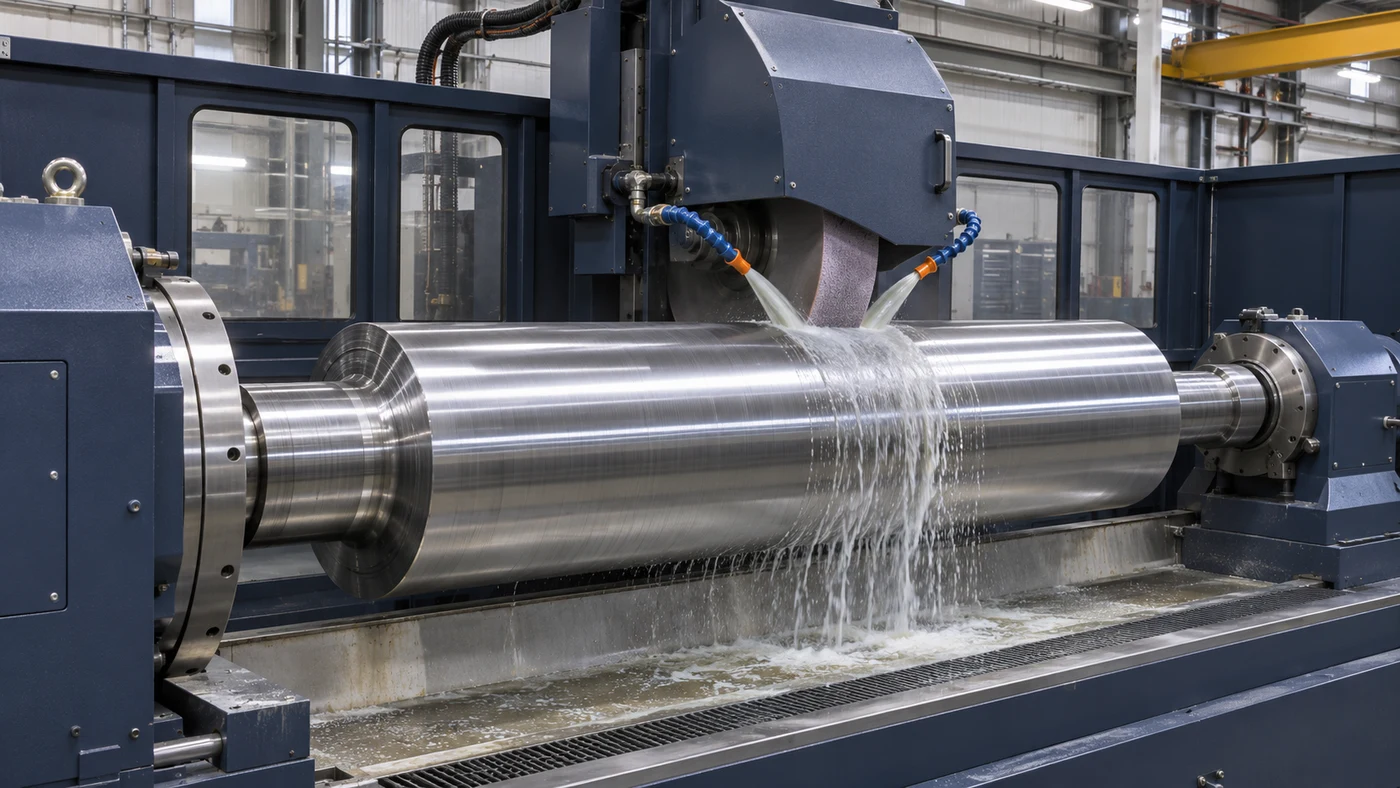
Watch: Roll Grinding Coolants and Grinding Oils
Roll Grinding: Restore the Working Surface
Roll grinding restores the working surface of rolls used in metal rolling, paper production and other industrial processes. The roll may need a defined cylindrical shape, a specified crown, a controlled surface texture, or removal of an acceptable amount of worn material. Start with its service duty and drawing. A steel work roll, an iron backup roll and a covered paper-machine roll are different applications. Record the actual surface being ground, including any coating or cover, rather than naming only the core material. QA has coolant and grinding-oil options for evaluation. This guide explains the selection questions that connect the roll, wheel, machine and fluid. Final acceptance comes from the specified measurements and inspection, not simply a bright-looking surface.
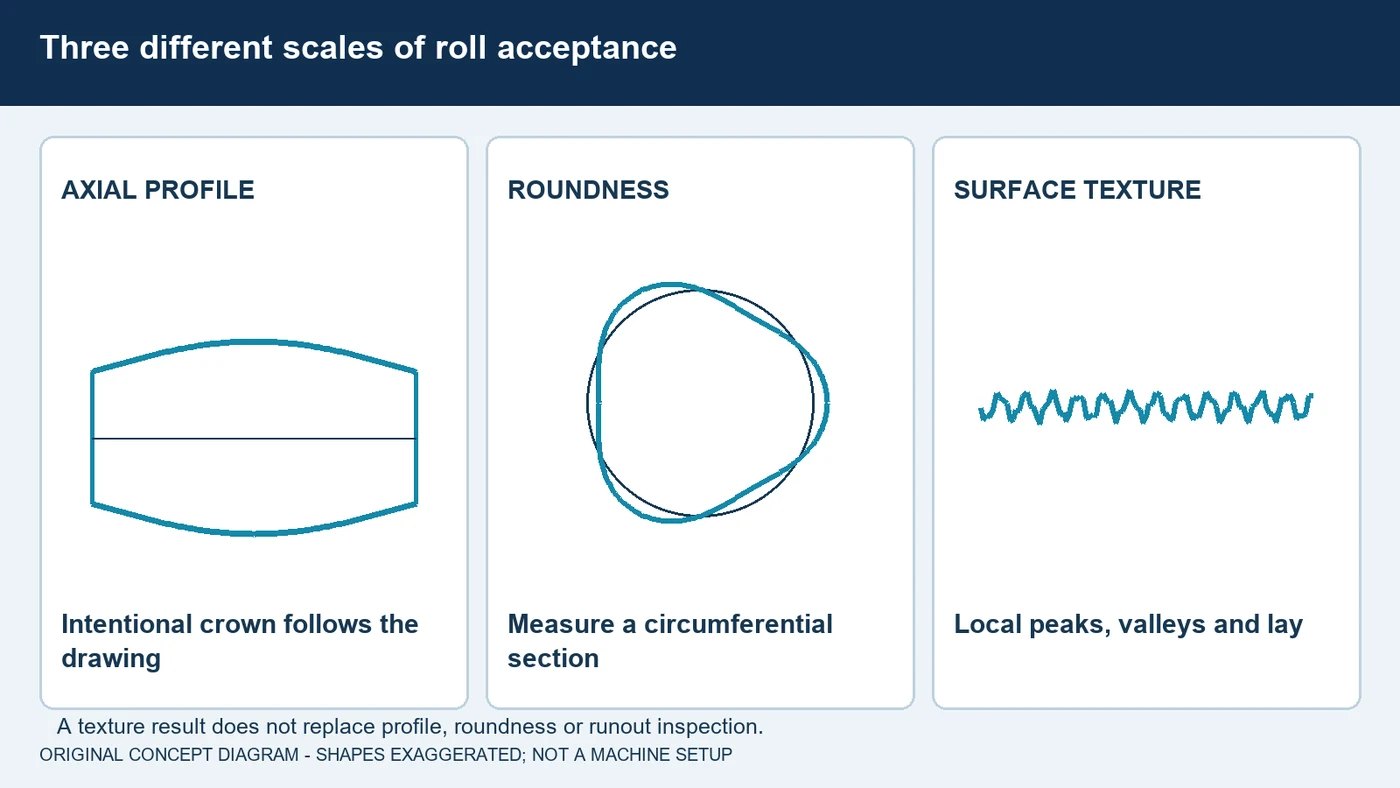
Separate Crown, Roundness and Surface Texture
A roll can have an intentional crown and still be correctly ground. Crown describes how diameter varies along the barrel according to the required profile. It is not automatically a defect to remove. Roundness concerns the shape around a circumferential section. Runout relates the measured surface to the selected rotation reference, so a round section alone does not establish acceptable runout. Surface roughness and periodic marks describe additional features at different scales. Keep these requirements separate in the inspection report. Temperature variations across a long roll can affect the measured profile, so record and stabilize the relevant conditions. A small roughness value cannot substitute for profile or roundness measurements, and a correct diameter at one station does not establish the full roll geometry.
Control Support, Wheel Wear and Traverse
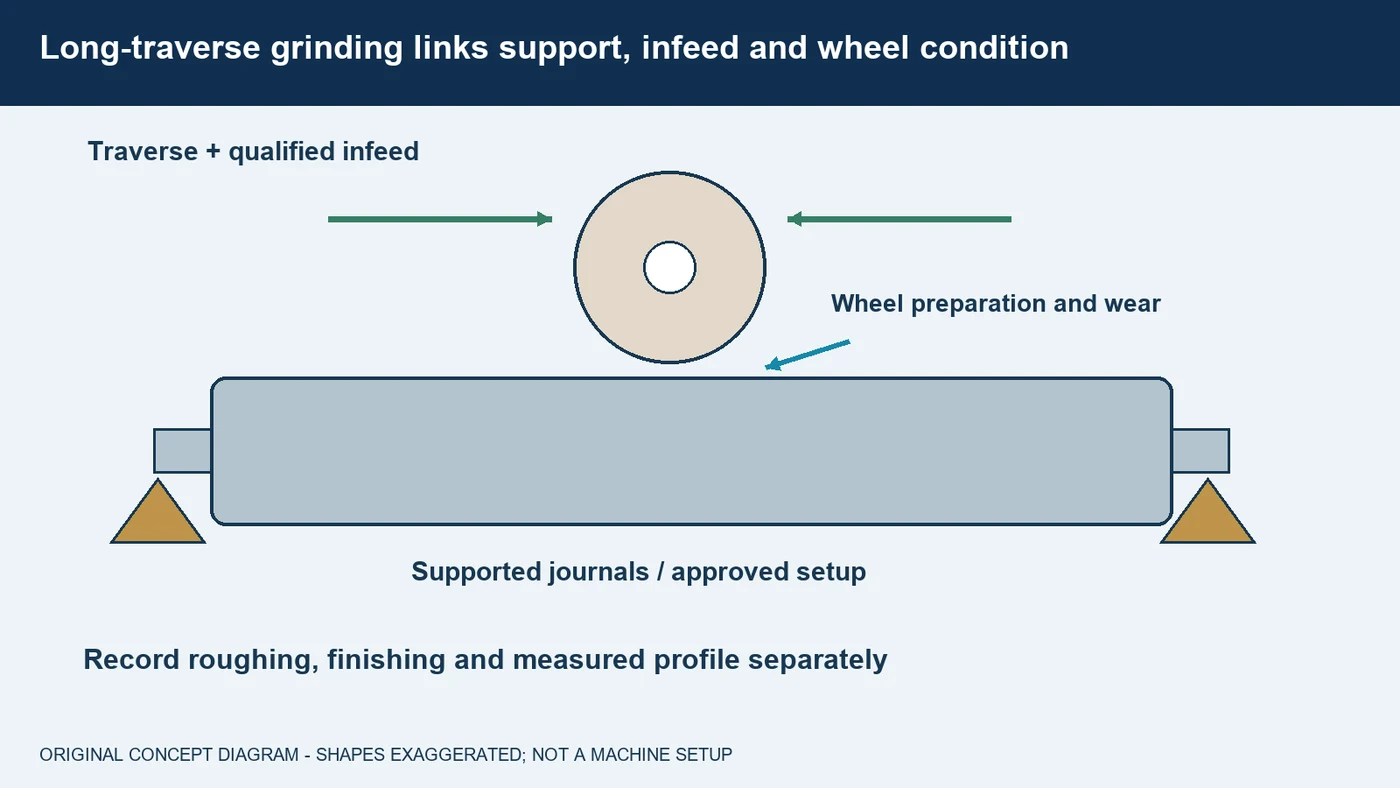
The roll, its journals, the support arrangement and the grinder form one mechanical system. Check the supported setup, alignment and relevant bearing or seat condition before changing the fluid. Follow the approved balancing and machine-maintenance procedures. On a long traverse, wheel wear and the infeed strategy can change the shape being produced along the barrel. A similar spindle-load reading is useful process information, but it is not proof that the whole roll has the correct contour. Record the wheel specification, prepared size, conditioning interval and supported cycle. Separate roughing, semi-finishing and final acceptance when comparing trials. Infeed examples from another roll shop are not universal settings; the roll length, diameter, material, target profile and machine control determine the qualified process.
Deliver Clean Fluid to the Active Contact
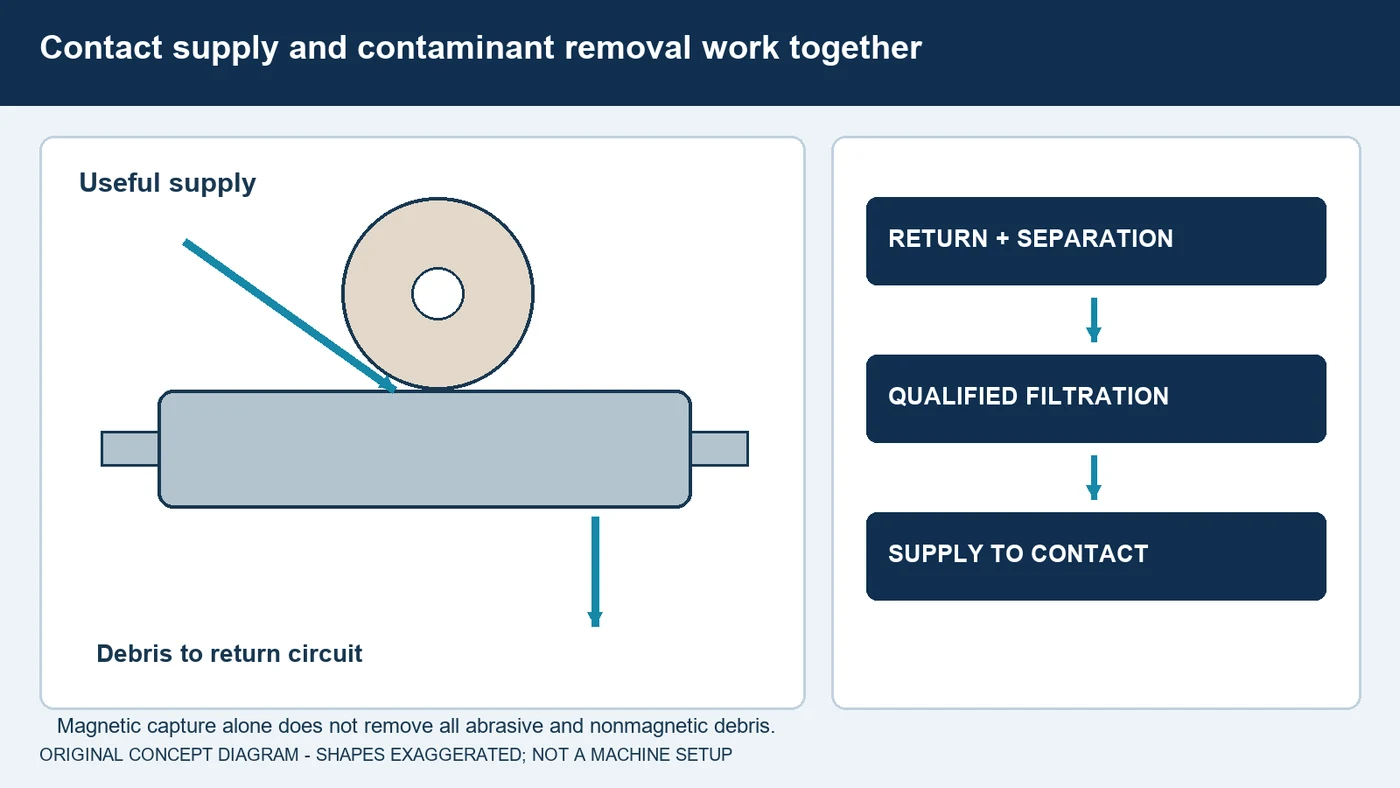
Useful coolant delivery reaches the wheel-to-roll interface and carries debris away. Splash elsewhere in the machine does not establish that the contact is supplied. Review targeting and clearance over the full traverse, including end regions and any changing wheel size. Confirm delivered supply with the actual pump, nozzle, filter and return circuit operating together. Separate interface supply from any approved wheel-cleaning duty. Recirculating metal and loose abrasive particles can create scratches, so inspect the separation and filtration system rather than treating every finish problem as a formulation problem. Magnetic separation alone does not capture every contaminant, including nonmagnetic material and abrasive debris. Select the required filtration with the equipment supplier and acceptance plan. There is no single pressure or filter rating suitable for every roll grinder.
Select for the Roll, Bond and Fluid System
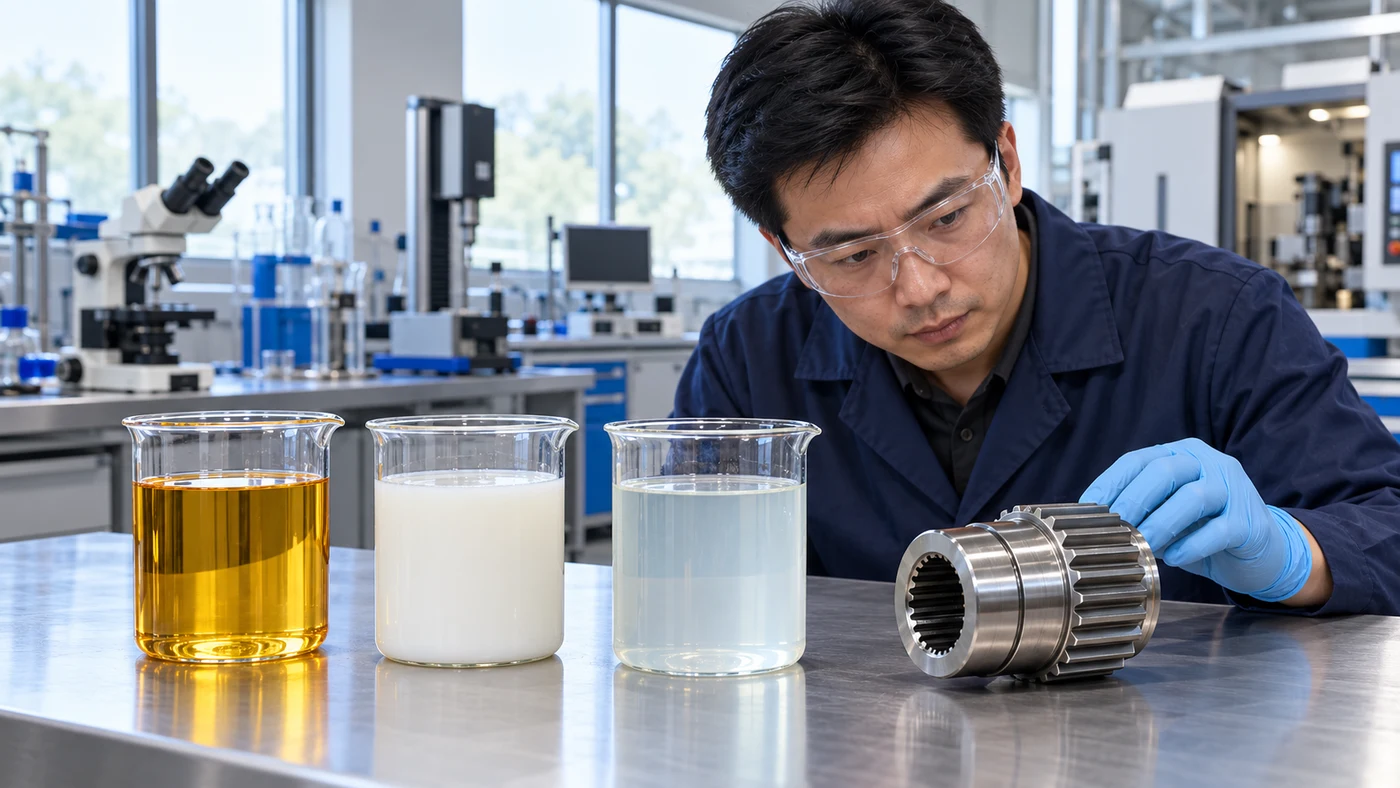
Roll grinding fluid selection begins with the machine-permitted fluid type, roll surface and grinding-wheel specification. Water-miscible synthetics, emulsions and other formulations offer different balances of cooling, lubrication, corrosion protection, foam behavior and debris handling. Straight oil requires a machine and protective systems suitable for that fluid; it is not a universal upgrade. Confirm the actual wheel-bond compatibility with the abrasive supplier, especially for legacy bond systems. For diluted coolant, use the specified mixing water and measure the working concentration using the product's refractometer factor. Record additions, contamination and fluid condition so trials are compared fairly. A water-softener setting alone does not establish the complete water chemistry. QA can help evaluate coolant and oil options against these application details without assuming one fluid family suits all rolls.
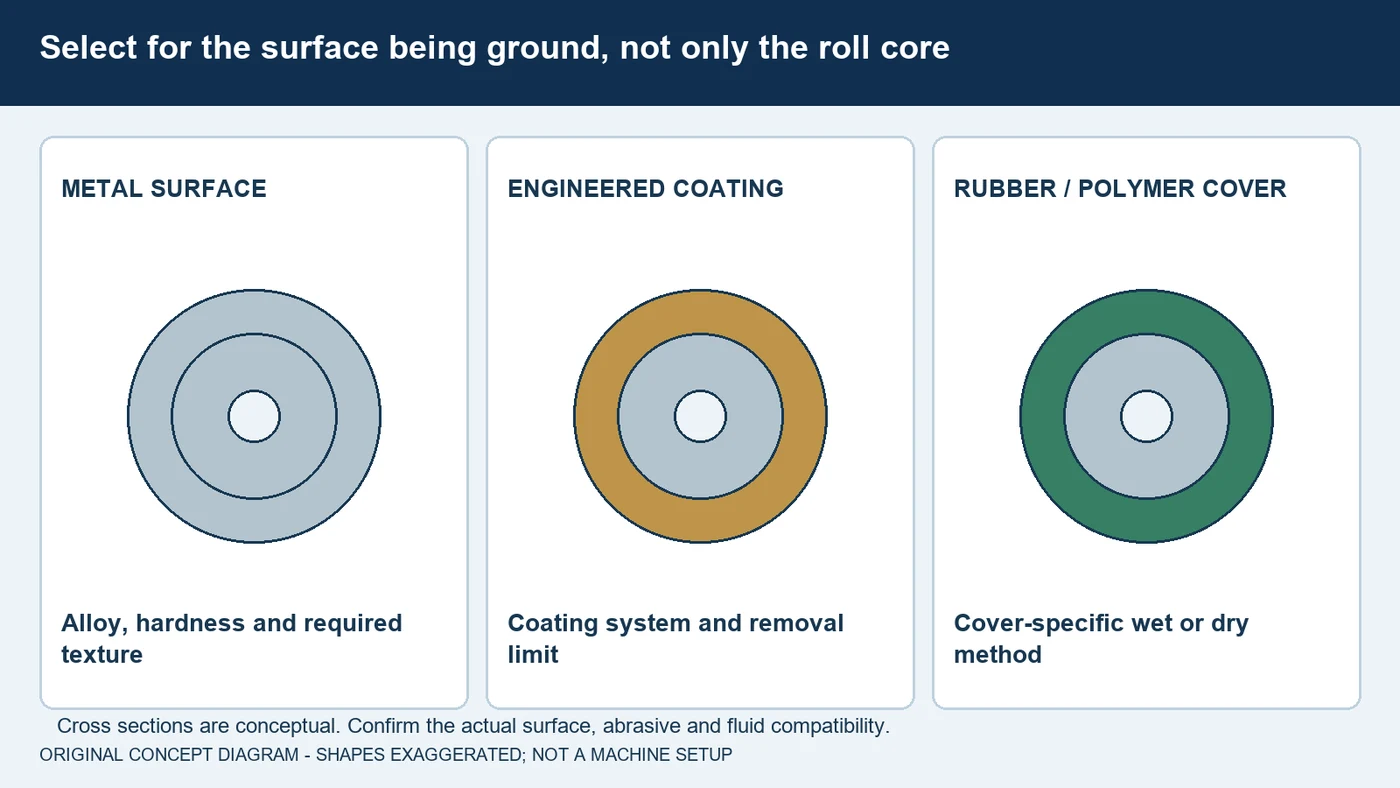
Metal, Coating and Cover Need Different Reviews
For hardened steel and iron rolls, review the actual alloy, hardness, stock allowance and surface-integrity requirements. Stainless and nonferrous roll surfaces add their own formulation and abrasive compatibility questions. A plated, sprayed or carbide-containing surface must be identified by its actual coating system; the underlying steel alone does not describe the grinding application. Include permitted removal and the required finish. Rubber, polymer and composite covers need separate instructions from the roll-cover supplier. Metal-roll wheel settings or a standard metalworking emulsion should not be transferred to those covers by assumption. Some covered-roll processes are wet and others dry, depending on the qualified method. Cover temperature, condition and remaining thickness also matter. Keep those distinctions visible when requesting a fluid evaluation or comparing grinding results.
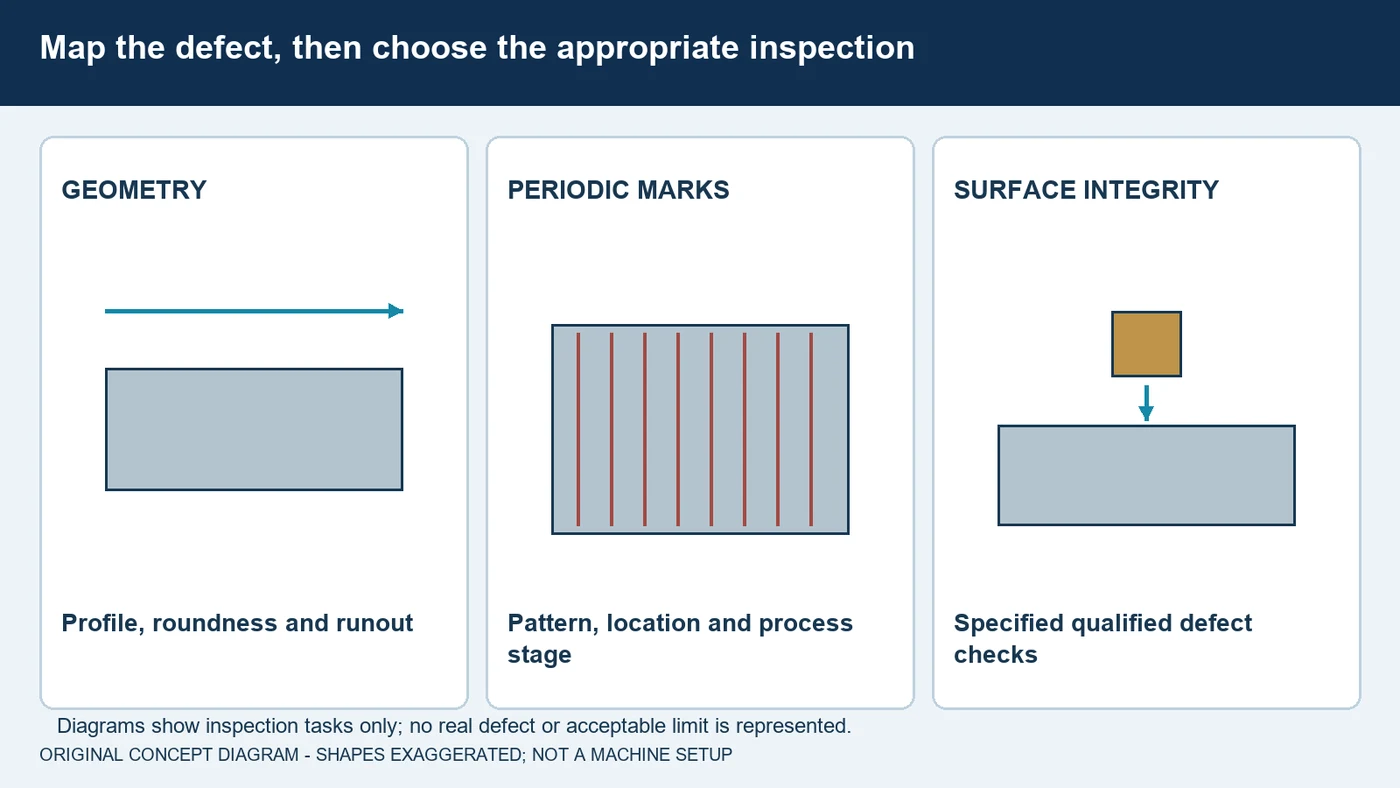
Diagnose Marks and Verify Surface Integrity
When a roll develops chatter, feed lines, scratches or an uneven finish, map the defect before making changes. Record whether it repeats around the circumference, along the barrel, near an end or after a conditioning event. Review wheel balance, machine vibration, support condition, dressing and clean-fluid delivery together. Several causes can create a similar visible mark. Compare measurements at consistent process stages instead of repeatedly changing both fluid and cycle. Inspection may include diameter and profile, roundness, roughness and the specified surface-integrity checks. Appropriate eddy-current, ultrasonic or optical methods address different inspection tasks and require qualified procedures. A polished appearance does not establish freedom from thermal damage or cracks. Release the roll against its actual drawing and inspection requirements, not a universal visual standard.
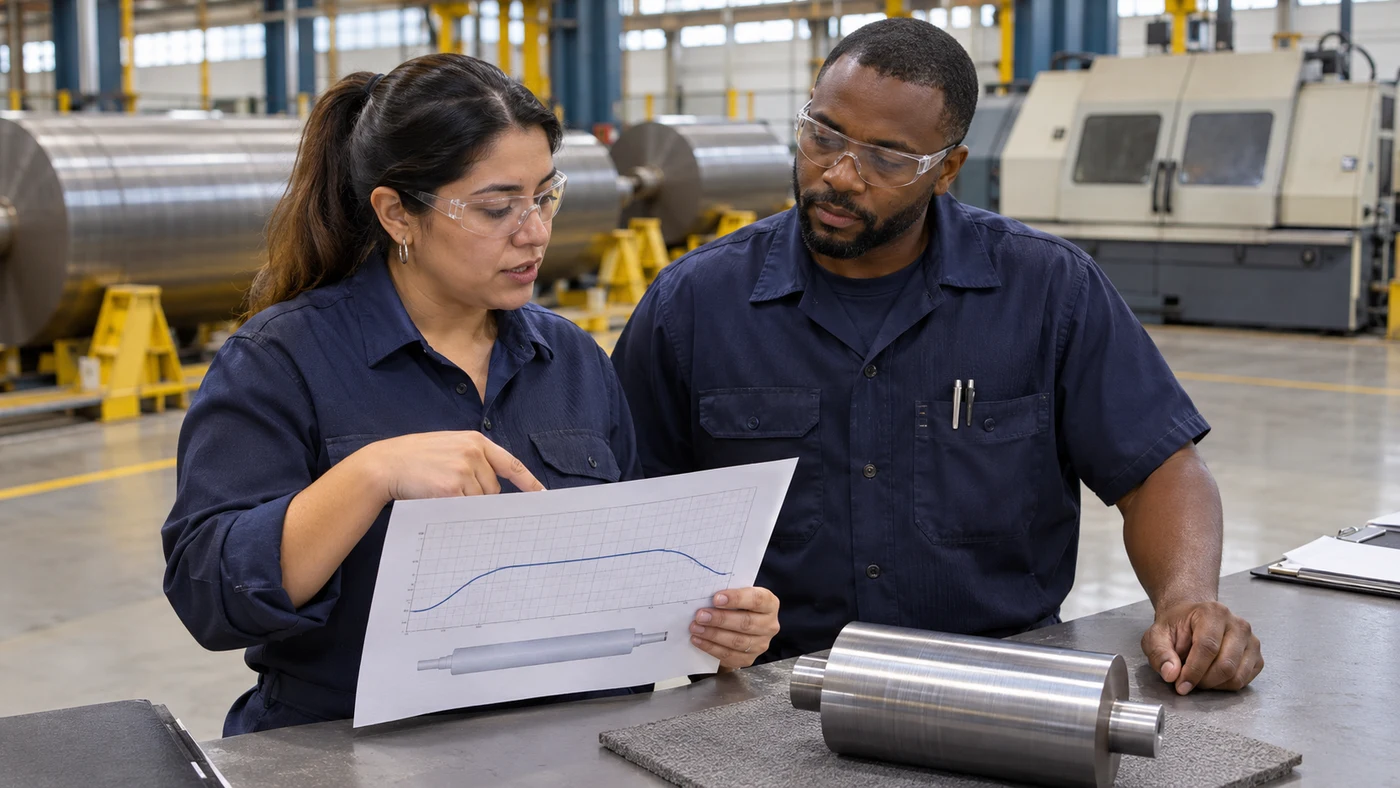
Build a Measured Roll-Grinding Fluid Trial
For a roll-grinding inquiry, send QA the roll material or exact coating or cover, barrel dimensions, hardness where relevant, and required profile and texture. Describe the service duty and the current problem using measurement records or clear defect photographs. Include the grinder, supports, wheel and bond, conditioning history, cycle and permitted fluid type. Add the supply arrangement, filtration, temperature and current maintenance records. For a water-mix system, include water analysis and measured working concentration. QA has coolant and oil options for evaluation. Agree on a controlled comparison and measure the accepted roll, wheel condition and fluid behavior together. Keep the roll manufacturer, abrasive supplier and equipment supplier involved when confirming the formulation and final operating instructions.
Fluid selection by material
Use these as evaluation questions, not blanket product approvals.
| Material | What to evaluate | What to confirm |
|---|---|---|
| Hardened steel and iron rolls | Match the actual alloy, hardness, stock allowance and surface-integrity requirement. | Wheel and bond, thermal conditions, corrosion protection and required defect inspection. |
| Stainless steel and nonferrous metal surfaces | Evaluate formulation compatibility and the required texture for the actual metal. | Material-specific corrosion or staining review, abrasive choice and debris removal. |
| Plated, sprayed and carbide-containing coatings | Identify the complete coating system and permitted removal; the core alloy is not enough. | Coating supplier instructions, compatible abrasive and fluid, thickness and acceptance checks. |
| Rubber, polymer and composite covers | Use the cover supplier's qualified wet or dry grinding method. | Cover chemistry, condition, remaining thickness, temperature and fluid compatibility. |
Questions about roll grinding fluids
Is crown on a roll always a grinding defect?
No. Crown can be an intentional axial profile. Compare the measured shape to the specified roll drawing rather than automatically removing every central diameter increase.
Does good surface roughness prove the roll is round?
No. Texture, axial profile, roundness and runout are separate checks. Use the specified measurements for each requirement.
Why can a roll still scratch when the coolant looks clean?
Appearance does not establish filtration performance. Review recirculating metal and abrasive debris, filter condition and useful supply at the contact.
Can one metal-roll coolant also be used on rubber-covered rolls?
Do not assume so. Covered rolls require their supplier's qualified process and formulation compatibility review; wet and dry methods differ.
What causes chatter during roll grinding?
Possible contributors include wheel balance, vibration, support and bearing condition, wheel preparation and fluid delivery. Record the pattern and review the whole process before changing several variables.
Which QA fluid should be used for roll grinding?
QA has coolant and oil options. Send the actual surface material, wheel and bond, machine-permitted fluid type, supply, filtration and acceptance requirements for evaluation.
Discuss your application with QA
QA Lubricants has coolant and oil options. Send us the operation, alloy, hardness, tooling, current fluid and the problem you want to solve.
Discuss My ApplicationShop Water Diluted CoolantsShop Straight Cutting OilsTechnical references
- Norton: steel-industry roll grinding and troubleshooting
- Valmet: practical roll grinding, geometry and balancing
- Norton: roll-grinding infeed and wheel wear
- Norton: coolant factors in roll grinding
- Norton: surface finish, delivery and machine condition
- Valmet: roll-grinding troubleshooting and covered-roll differences
- Herkules: roll measurement and inspection technology
- Valmet: polymer-cover process and grinding considerations
- Blaser Swisslube: measuring diluted coolant concentration
Original educational content and illustrations. Confirm current machine, tool and fluid instructions. Trademarks belong to their respective owners.