Sinker EDM Dielectric Fluids and Spark-Erosion Process Control
Sinker EDM dielectric-fluid guidance for conductive metals: shaped electrodes, gap recovery, deep-cavity flushing, filtration, electrode wear and surface integrity.
Watch: Sinker EDM Dielectric Fluids and Spark-Erosion Process Control
Sinker EDM: A Shaped Electrode and a Controlled Gap
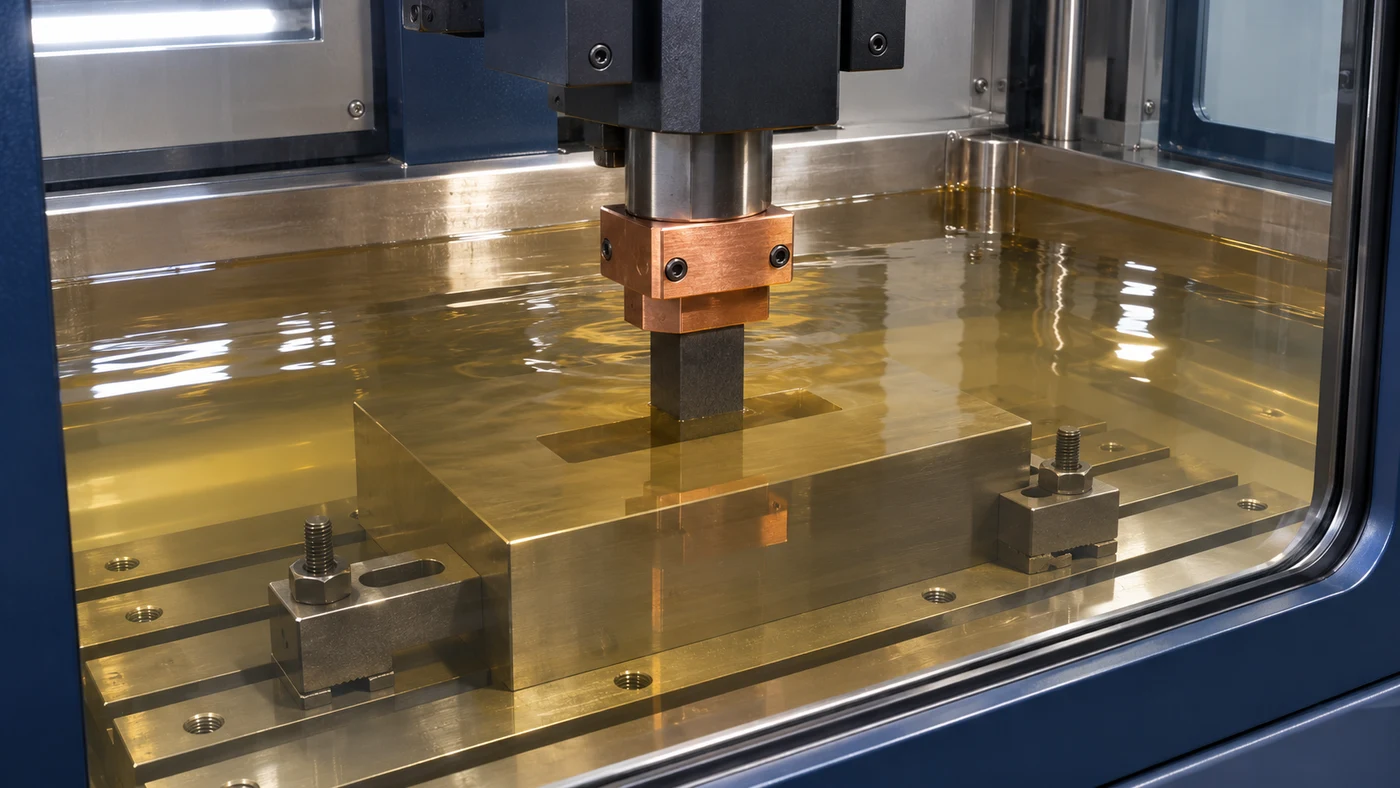
Sinker electrical discharge machining, also called ram EDM or die sinking, forms details in electrically conductive workpieces using controlled discharges across a gap. A shaped electrode approaches the workpiece without acting as a contacting cutting tool. This makes the process useful for mold cavities, narrow ribs and other details in hardened conductive metals. The electrode shape, discharge conditions and controlled motion all contribute to the resulting cavity. This is a different arrangement from wire EDM, which uses a traveling wire. Most conventional oil-based sinker systems work with the machining area submerged in a specified dielectric. The fluid is an electrical and thermal process medium, not simply a lubricant. QA has coolant and oil options for evaluation with your equipment and application requirements.
The Dielectric Must Recover Between Discharges
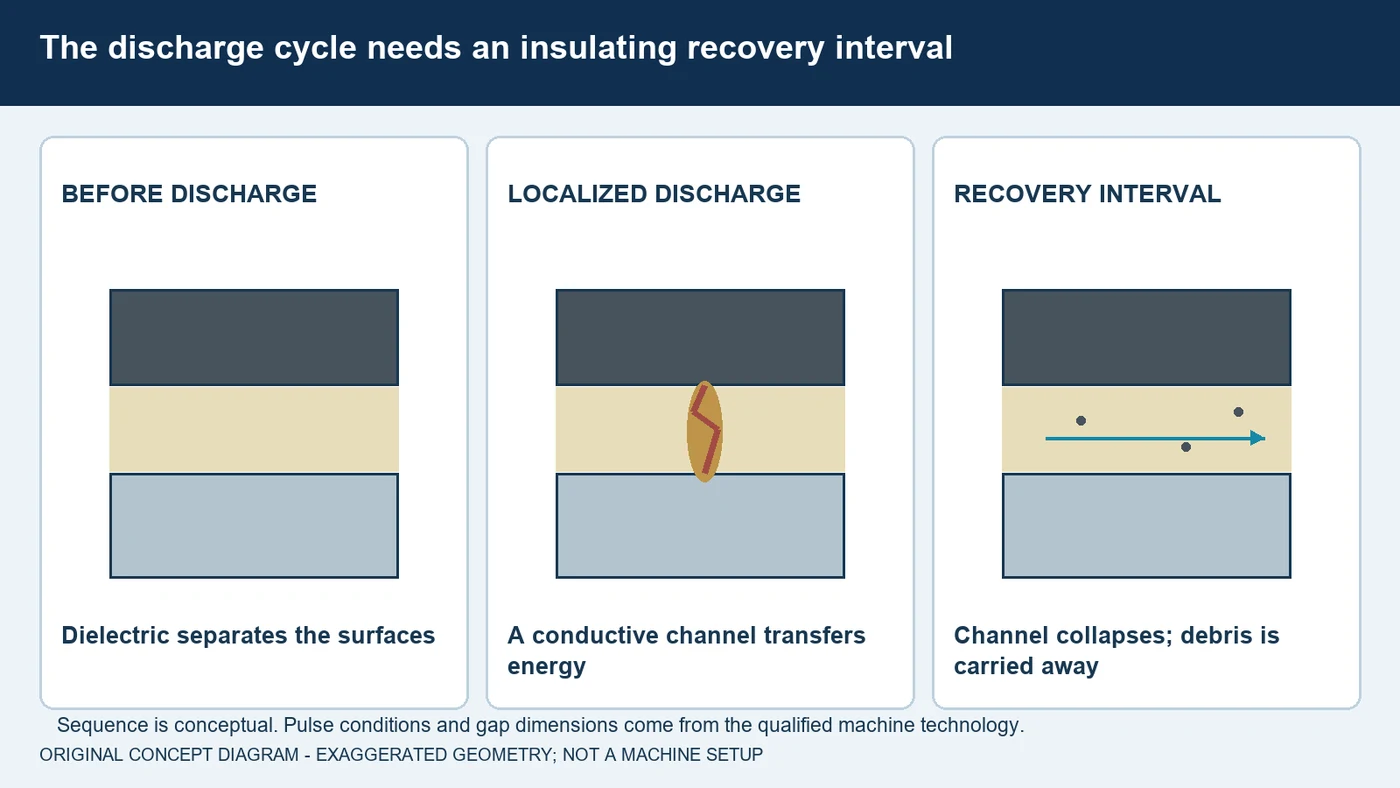
Before a discharge, the dielectric separates the electrode and workpiece electrically. Under the generator's controlled conditions, a localized conductive channel forms across the gap. Energy melts and vaporizes a small amount of material. When the pulse ends, the channel collapses and the fluid helps cool the area and carry away eroded particles. Insulating conditions must recover for the next controlled discharge. Repeated localized discharges produce the cavity surface. Debris left in the gap can interfere with that sequence, so flushing and electrical control belong in the same troubleshooting review. A clear-looking reservoir alone does not establish correct gap conditions. Use the machine's technology settings for the actual electrode, work material, geometry and dielectric rather than transferring a pulse recipe from another job.
Give Debris a Route Out of the Cavity
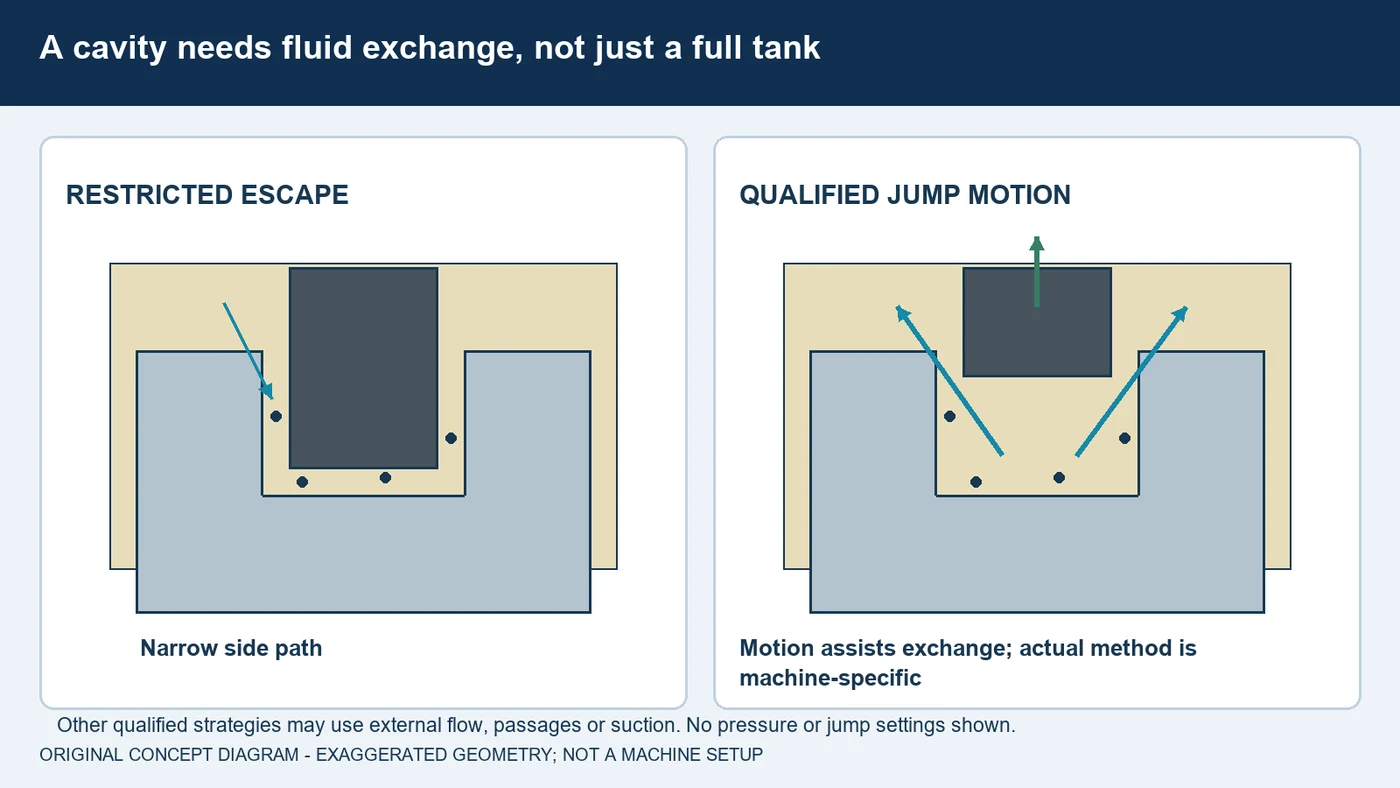
Deep ribs and enclosed details can restrict dielectric exchange around the electrode. Review how fresh fluid reaches the active gap and where contaminated fluid can leave. Depending on the machine and tooling, the qualified strategy may use external flushing, passages through an electrode or workpiece, suction, or programmed electrode motion. Jump cycles retract and return the electrode to assist fluid exchange. Modern controls may coordinate that motion with the discharge conditions. These strategies are not interchangeable on every setup, and more pressure alone does not establish better flushing. Follow the equipment supplier's method for the cavity and electrode strength. If the process becomes unstable with depth, examine access, debris evacuation, filters and the selected jump or orbit strategy before blaming only the fluid.
Account for Electrode Wear and the Machining Gap
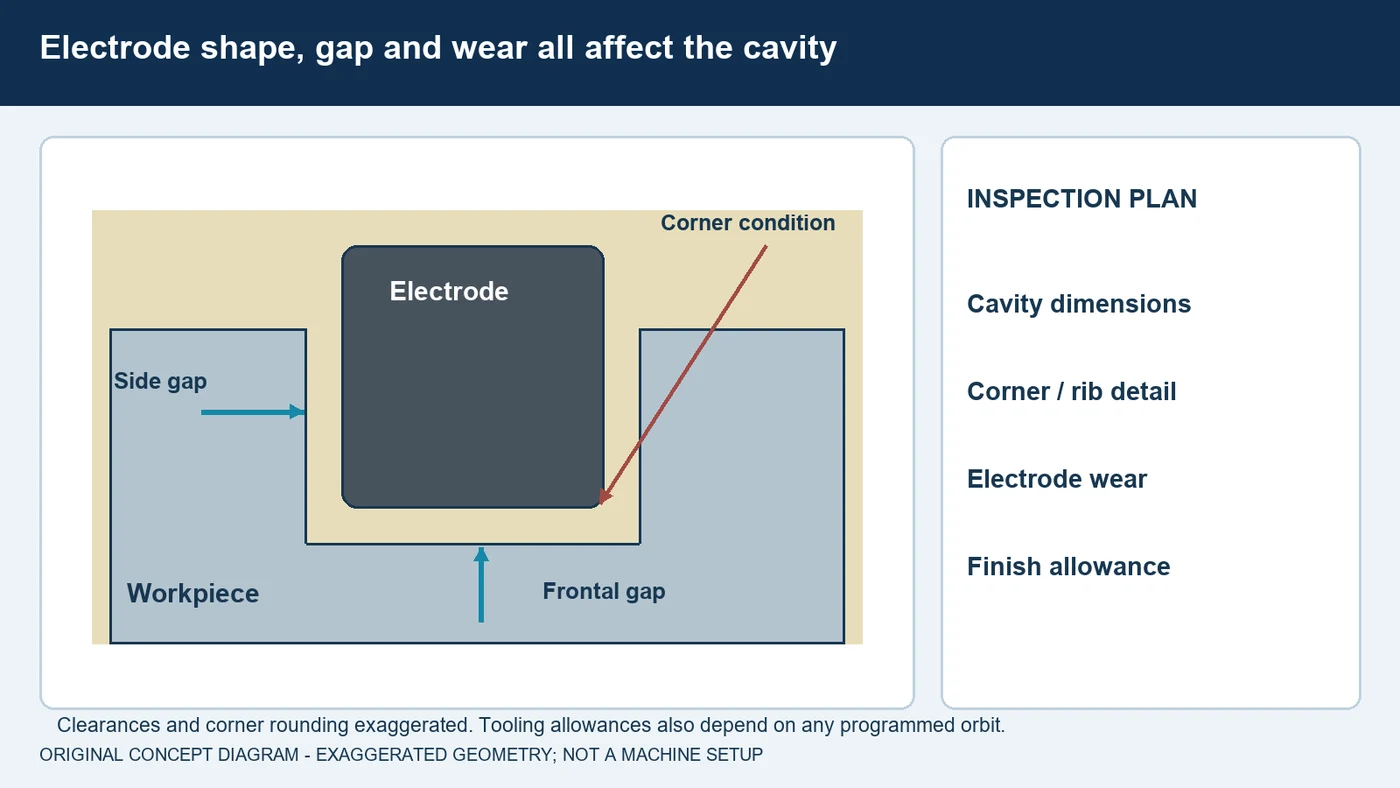
Graphite, copper and specialized electrode materials have different application characteristics. Selection must consider machinability, strength, detail retention, work material and the required surface. Graphite particle structure and consistency matter when producing fine electrode features and finishes. End, side and corner wear can change the result, so inspect the electrode where the drawing is most demanding. The final cavity is not an exact one-to-one copy of the electrode dimensions. Allowance for the discharge gap, electrode wear and any programmed orbit belongs in the qualified tooling and machining plan. Roughing and finishing may use different conditions or electrodes. Evaluate that complete sequence when comparing a dielectric, and check accepted cavity dimensions along with machining time and electrode consumption.
Choose an EDM Dielectric for the Qualified System
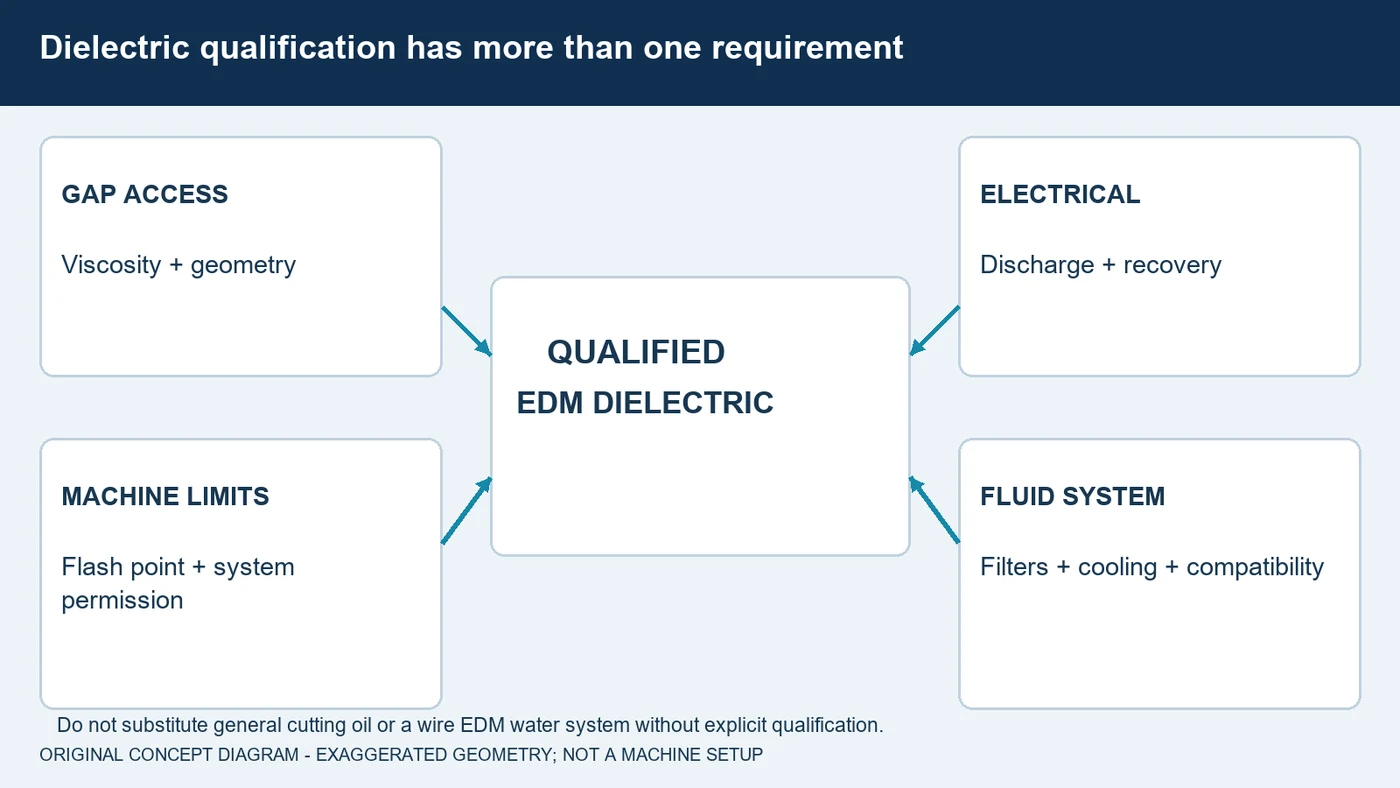
Select a fluid specifically qualified for the sinker EDM system and its roughing or finishing work. Mineral-based and synthetic formulations are available, but a base-oil label does not establish suitability. Evaluate viscosity and gap access together with electrical recovery, filter compatibility, thermal control and the machine's flash-point requirements. Published flash-point data is not a universal operating-temperature limit. Do not substitute ordinary cutting oil, hydraulic oil or a wire EDM water system without explicit equipment qualification. Review the proposed fluid's current technical data and safety data sheet with the machine supplier. Some specialized finishing systems deliberately use controlled powder additives. Those systems require compatible circulation, concentration control and separation; they do not authorize adding powder to a conventional dielectric tank.
Maintain Filtration and Thermal Control
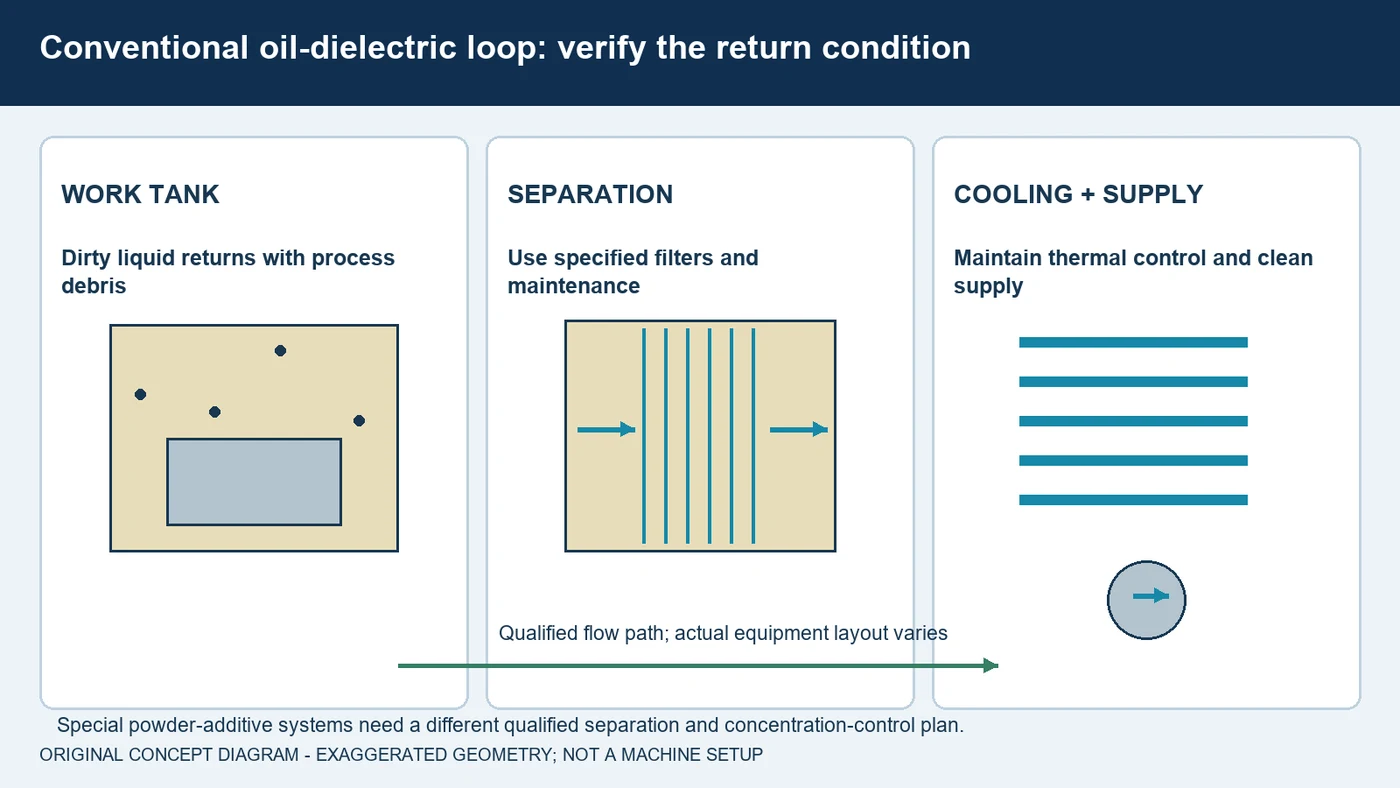
In a conventional oil-dielectric system, separation removes eroded workpiece material, electrode debris and process residues from the returning liquid. Maintain filters, pumps and cooling equipment according to the machine's instructions. Check supply and return conditions rather than judging the tank by appearance alone. Follow the qualified fluid-level and temperature controls, extraction arrangements and fire-protection requirements. Do not bypass interlocks to keep an unstable process running. Keep foreign oils, water and unqualified cleaners out of the dielectric circuit, and confirm any changeover procedure before mixing products. Investigate repeated instability using machine records and the supplier's fluid-condition checks. Record maintenance and top-ups so changes in the process can be traced. Deliberate additive systems need their own maintenance method rather than conventional filtration assumptions.
Inspect Surface Integrity as Well as Finish
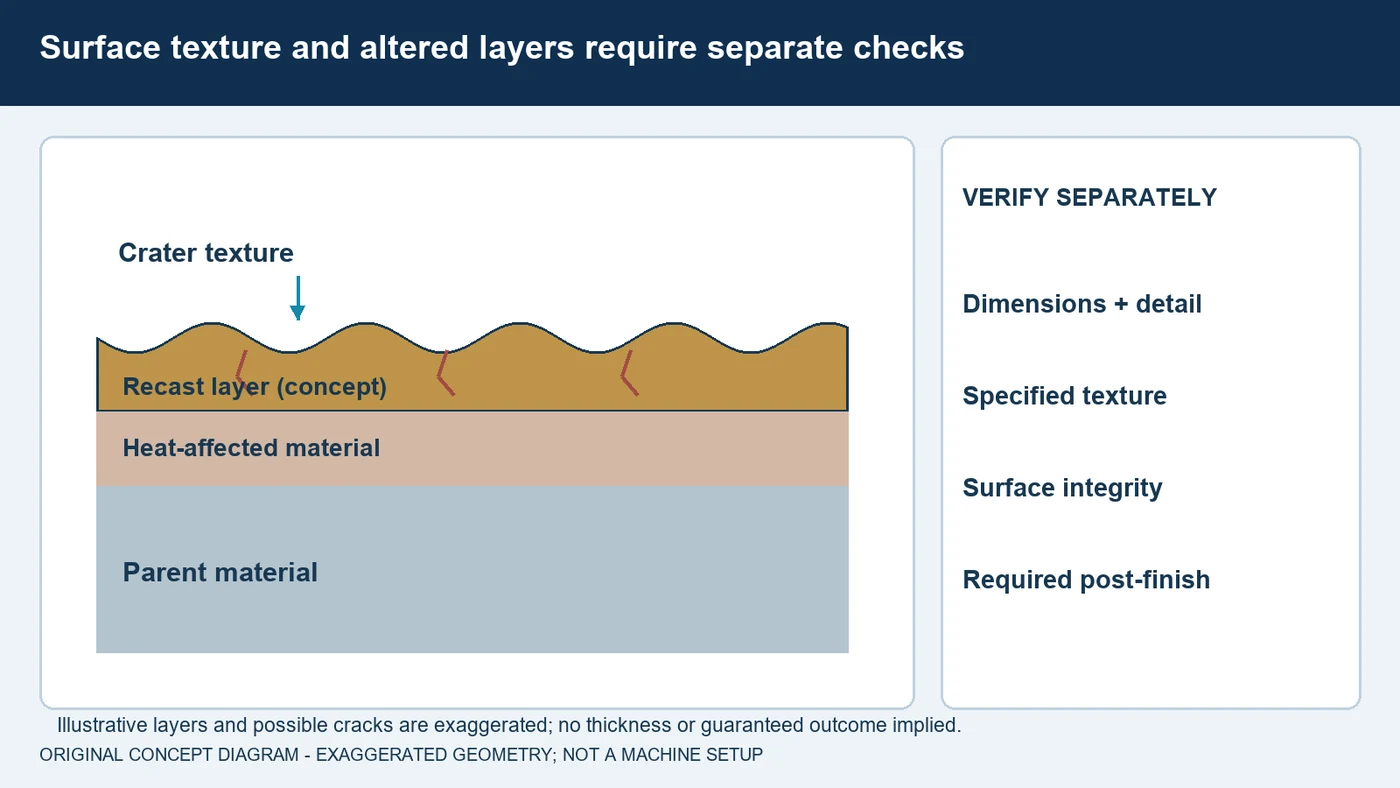
EDM is a thermal removal process. Some molten material can resolidify at the surface as a recast layer, with thermally affected material beneath it. Surface texture and subsurface integrity are related but different acceptance concerns. Pulse conditions, material properties and the finishing sequence influence the result. Do not assume that a visually smooth cavity has no altered layer or microcracking. Use the part specification and qualified inspection plan to establish what must be measured and whether additional finishing or layer removal is required. Hardened steel, nickel or titanium alloys and conductive cemented carbides cannot be assigned one universal discharge recipe. Review the actual grade, condition and application. Compare dimensions, corner detail and texture after the same cleaning and finishing sequence.
Plan a Controlled Sinker EDM Fluid Evaluation
Send QA the machine model, current dielectric, electrode material and grade, workpiece alloy and cavity drawing. Identify deep ribs, thin electrodes, blind details and the surfaces that cause concern. Include the roughing and finishing sequence, flushing arrangement, filter information and maintenance records. Describe instability, electrode wear, finish or dimensional problems with consistent measurements and photographs. QA has coolant and oil options for evaluation. Agree on a controlled comparison that tracks accepted cavity geometry, electrode condition, surface requirements, process stability and fluid maintenance together. Confirm the candidate fluid and the changeover plan with the equipment and fluid suppliers before production use. Keep machine-specific protections and instructions in place throughout the evaluation. A fluid recommendation should support the complete process rather than promise a result from viscosity alone.
Fluid selection by material
Use these as evaluation questions, not blanket product approvals.
| Material | What to evaluate | What to confirm |
|---|---|---|
| Hardened tool and alloy steels | Cavity detail, electrode wear, roughing-to-finishing allowance and fluid exchange. | Qualified dielectric and generator technology, dimensions, texture and specified surface integrity. |
| Stainless steel, nickel and titanium alloys | Actual alloy and heat-treated condition, geometry and application-specific surface requirements. | Material/electrode technology, flushing access and required altered-layer inspection or removal. |
| Copper and aluminum alloys | Electrical and thermal behavior of the actual alloy; electrode choice and cavity requirements. | Qualified machining sequence, wear compensation, dimensions and surface acceptance. |
| Conductive cemented carbides | Conductivity, binder composition, brittleness and permitted process route. | Grade-specific application review and inspection; do not generalize all carbides or ceramics as EDM-compatible. |
Questions about sinker EDM fluids
What is sinker EDM used for?
Sinker EDM forms cavities and details in electrically conductive workpieces with a shaped electrode and controlled discharges. Hardened mold and die details are common applications.
Is EDM dielectric the same as cutting oil?
No. The dielectric must support the intended electrical discharge and recovery as well as cooling and debris transport. Use a formulation qualified for the actual machine.
Can I use wire EDM water in a sinker machine?
Do not assume interchangeability. Conventional oil-based sinker systems and water-based wire systems have different requirements. Follow the specific equipment qualification.
Will more flushing pressure fix unstable machining?
Not necessarily. Check fluid access and escape, cavity depth, electrode condition, filtration and the machine-qualified flushing and control strategy.
Does a fine EDM finish mean no recast layer?
No. Texture and surface integrity require separate acceptance checks. Follow the drawing and qualified inspection or finishing requirements.
Which QA dielectric should I use?
QA has coolant and oil options. Provide the machine, work material, electrode, cavity, current dielectric and acceptance requirements so the complete application can be evaluated.
Discuss your application with QA
QA Lubricants has coolant and oil options. Send us the operation, alloy, hardness, tooling, current fluid and the problem you want to solve.
Discuss My ApplicationShop Water Diluted CoolantsShop Straight Cutting OilsTechnical references
- Makino: sinker EDM applications and machine systems
- Makino: ram EDM, dielectric and qualified additive systems
- oelheld: spark erosion, gap flushing and filtration
- Sodick: application-specific oil dielectric and insulation recovery
- Makino: jump flushing, orbit and electrode-wear tradeoffs
- POCO / Entegris: EDM electrode selection and wear
- oelheld: roughing and fine-work dielectric selection
- POCO / Entegris: EDM surface finish and altered metal layers
- oelheld: separate die-sinking, wire and hole-drilling fluid applications
Original educational content and illustrations. Confirm current machine, tool and fluid instructions. Trademarks belong to their respective owners.