
Superfinishing Oils, Coolants and Microfinishing Fluid Selection
Superfinishing oil and coolant guidance for metal journals, bearings and rollers: stone versus film tools, clean flushing, material compatibility and surface inspection.
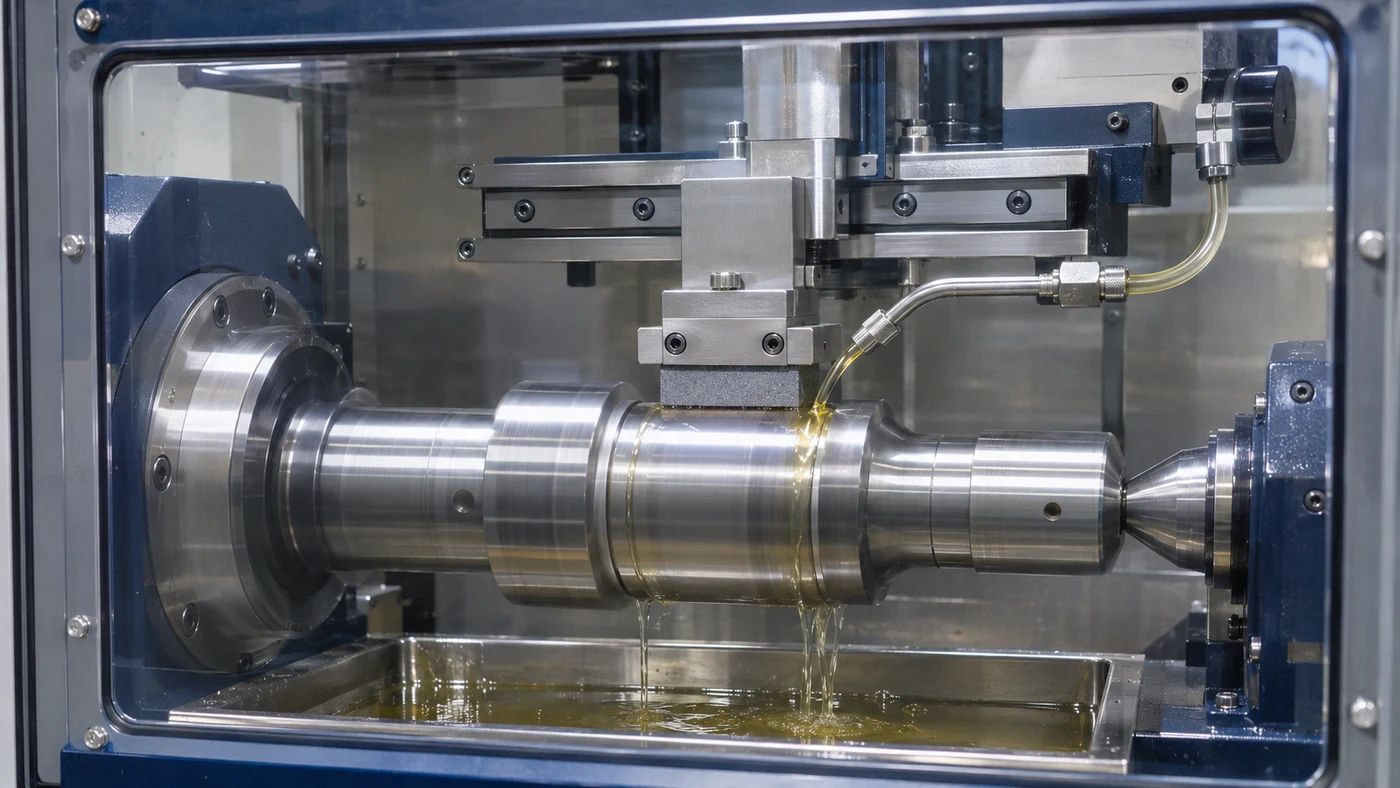
Watch: Superfinishing Oils, Coolants and Microfinishing Fluid Selection
Superfinishing Fluids for Functional Metal Surfaces
Superfinishing, also called microfinishing or short-stroke honing in many applications, refines a surface with fine abrasives. A common arrangement combines workpiece rotation with a short oscillation of the contacting tool. It is used on functional features such as bearing surfaces, shaft journals and hydraulic components after an earlier machining operation. The goal is a defined surface that works in its assembly, rather than brightness alone. Stone and abrasive-film systems use different contact and abrasive-renewal methods. Both need the correct process and fluid for the material and intended result. QA has coolant and oil options for evaluation. This guide covers superfinishing oil and coolant selection, clean flushing and the measurements that make a finishing trial meaningful.
Short Oscillation and Supported Contact Shape the Result
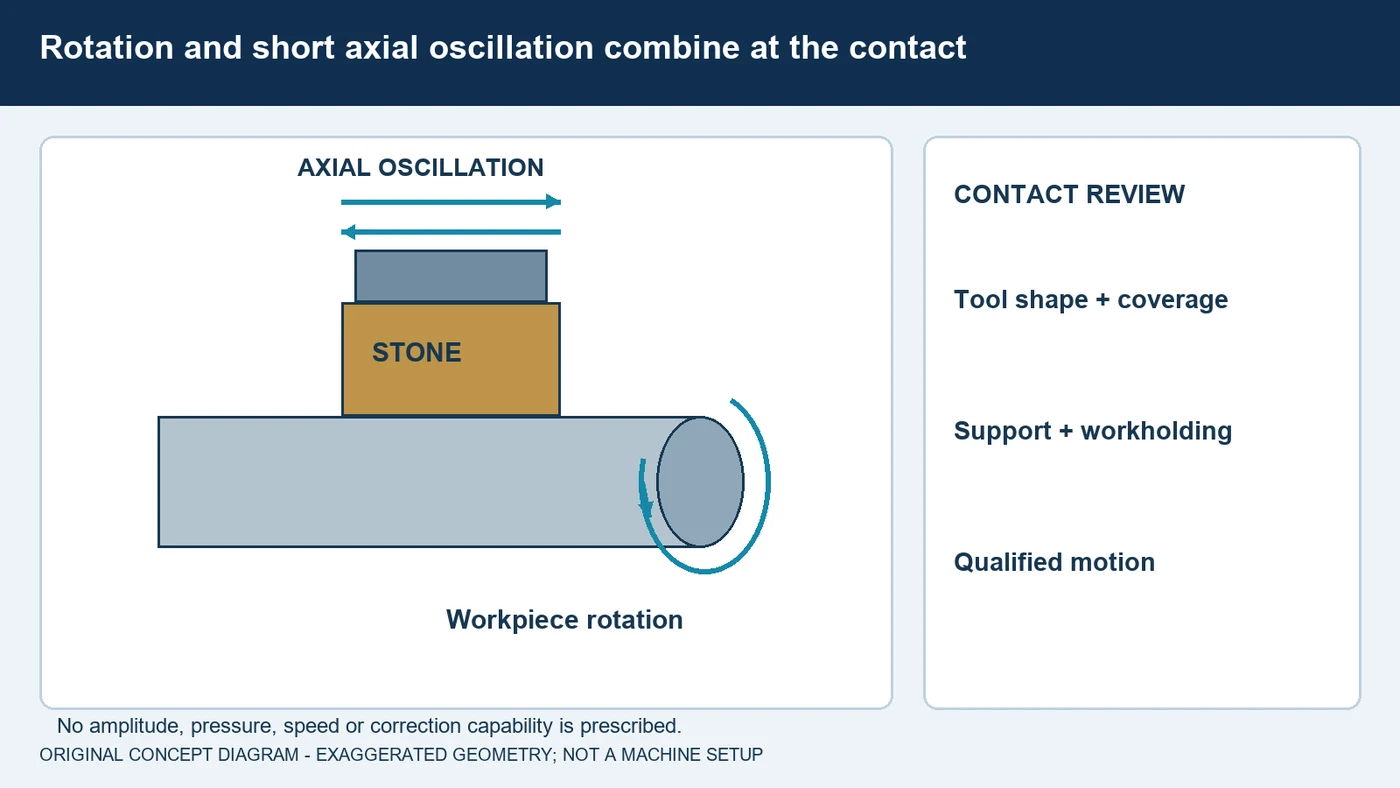
In a typical stone process, a shaped abrasive contacts a rotating surface while oscillating along the workpiece axis. The combined motion creates crossing abrasive paths. Contact coverage, tool shape and support influence how the process acts on existing surface peaks and geometric errors. A qualified stone arrangement can improve selected roundness or waviness errors, but superfinishing is not a promise to repair every out-of-tolerance part. Confirm the incoming form, allowance and the correction the equipment can actually perform. Shoulders, grooves, edges and interrupted features need their own access review. Keep the drawing and functional surface requirement in view when establishing the qualified motion and contact. Example amplitudes, pressures or rotation speeds from a supplier demonstration are not universal machine instructions.
Stone and Film Systems Renew Their Abrasives Differently
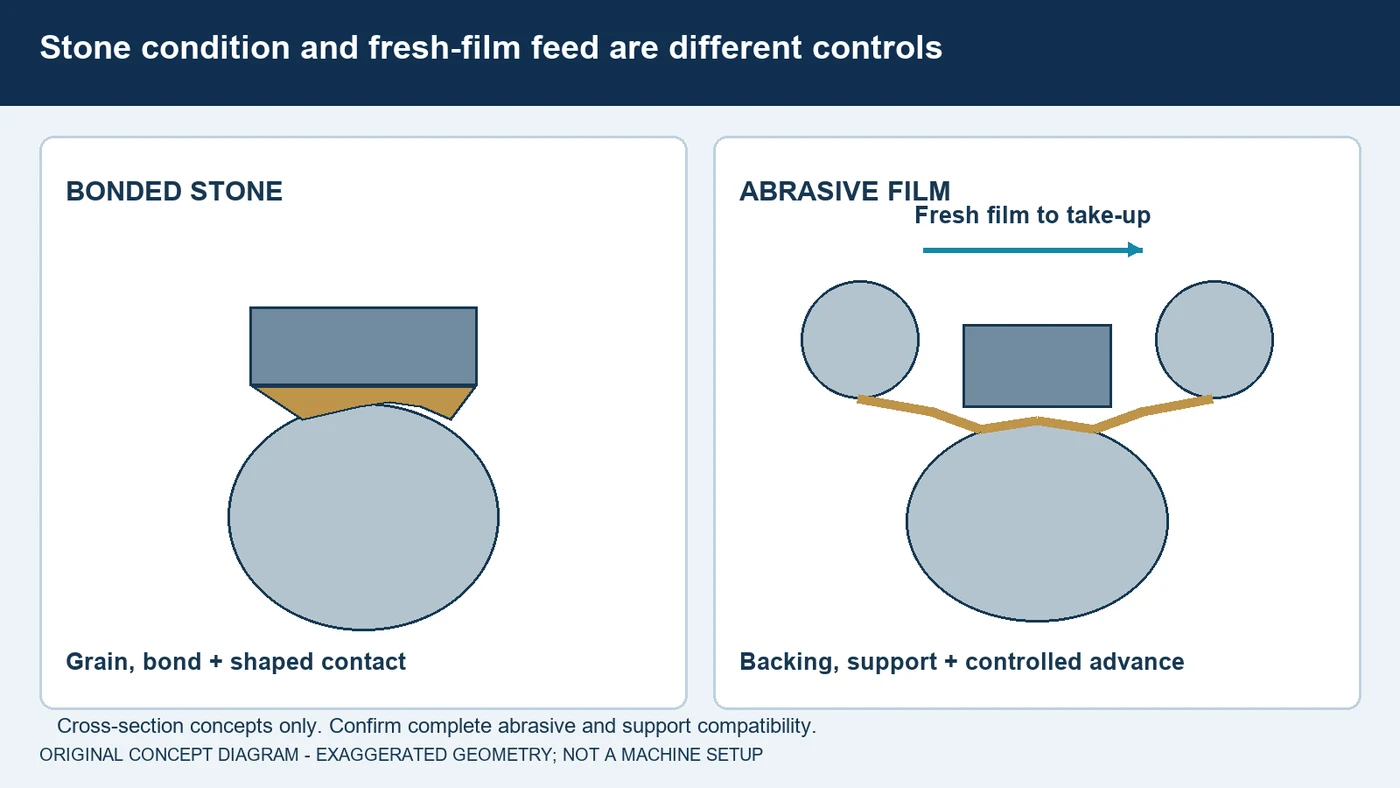
A bonded stone holds fine abrasive in a defined tool shape. Its grain, bond, condition and contact geometry belong to the process specification. A film system carries abrasive on a flexible backing and presents it with a shoe, shell or roller. Controlled advancement exposes fresh abrasive; film feed is a separate variable from workpiece rotation or tool oscillation. Include backing, coating, support and wet-use compatibility when selecting film, not just its nominal grain size. The exact alloy, hardness or surface coating affects abrasive choice. Do not assume that a finer final abrasive will remove every earlier scratch or shape error. Document the qualified sequence and the condition or consumption of the abrasive before evaluating a fluid change.
Design for the Specified Contact Surface
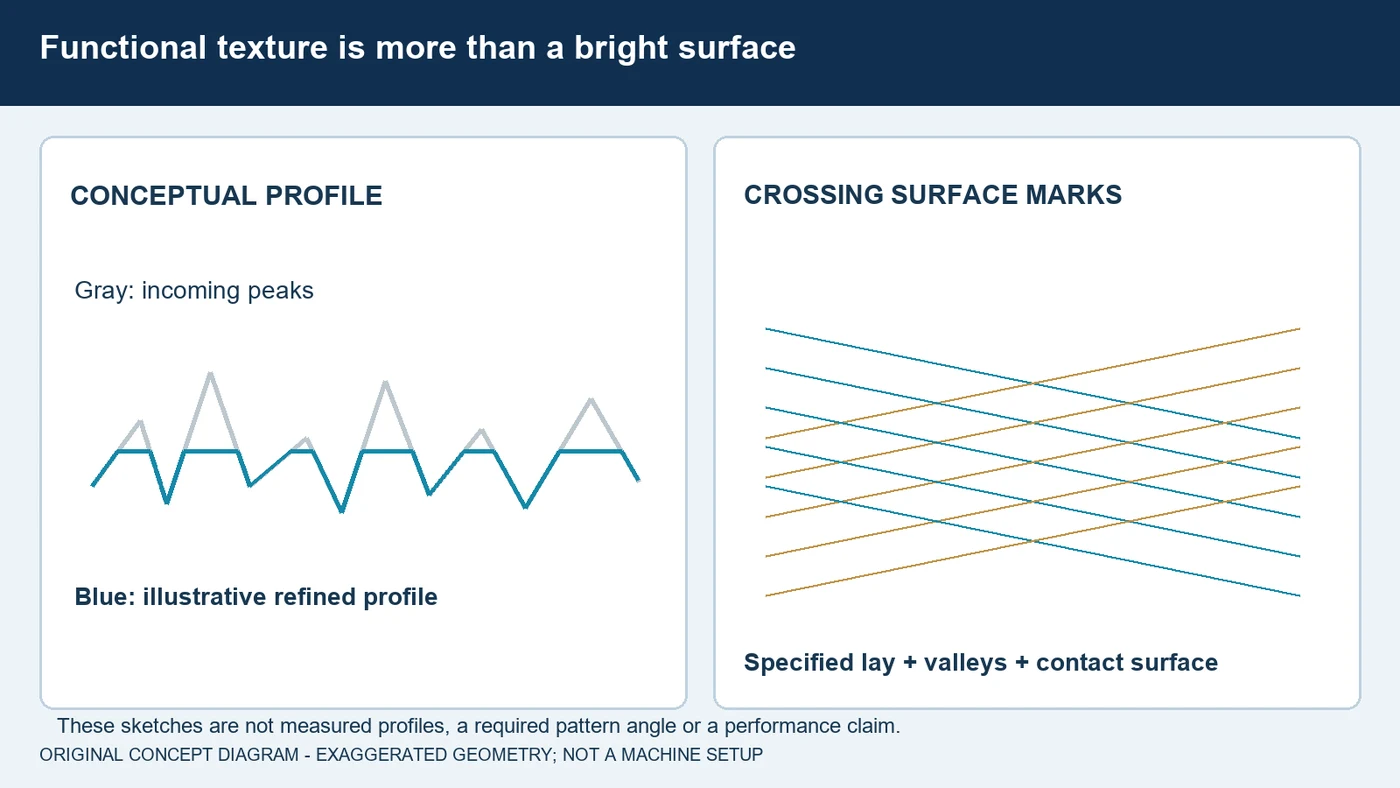
Superfinishing can create a surface with refined load-supporting regions and intersecting grooves. The resulting structure is relevant to contact and lubrication in the finished assembly. That does not mean the smoothest possible surface is automatically the correct one for a bearing, seal or journal. Required texture, directionality, valley structure and dimensional allowance depend on the component. A mirror-like appearance cannot prove that those requirements are met. Coated rollers and shafts also require control of remaining coating and local edge condition. Evaluate the surface against its drawing and qualified inspection plan. Keep cosmetic polishing, loose-abrasive lapping and the specific superfinishing operation distinct when discussing a fluid: similar-looking parts may have different processes and acceptance requirements.
Choose a Permitted Superfinishing Oil or Coolant
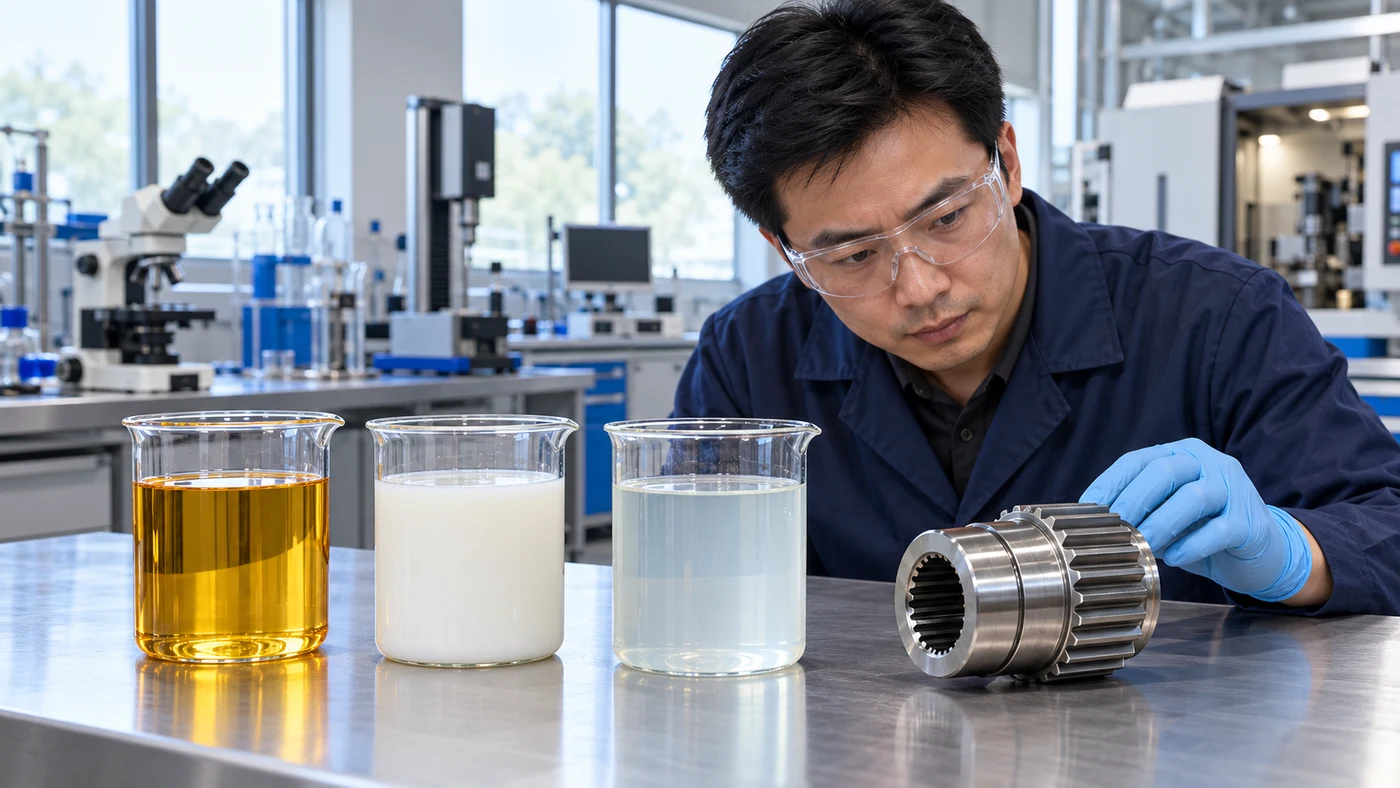
Many stone superfinishing applications use a specified low-viscosity oil. Qualified film processes may use oil or water-based coolant, depending on the system. These are application choices, not interchangeable recipes. Confirm the fluid permission for the machine, stone or film and contact support. Evaluate lubrication, removal of fine swarf, filterability and temperature behavior with the actual process. Temperature changes can also change oil viscosity, so compare maintained conditions. Review corrosion or staining, additive restrictions and residues on the exact alloy or coating. Some stone impregnations introduce compatibility limits of their own. For a water-mix process, include water quality, working concentration and foam behavior. QA has coolant and oil options; establish the complete application before selecting a formulation.
Keep Fine Debris Out of the Working Contact
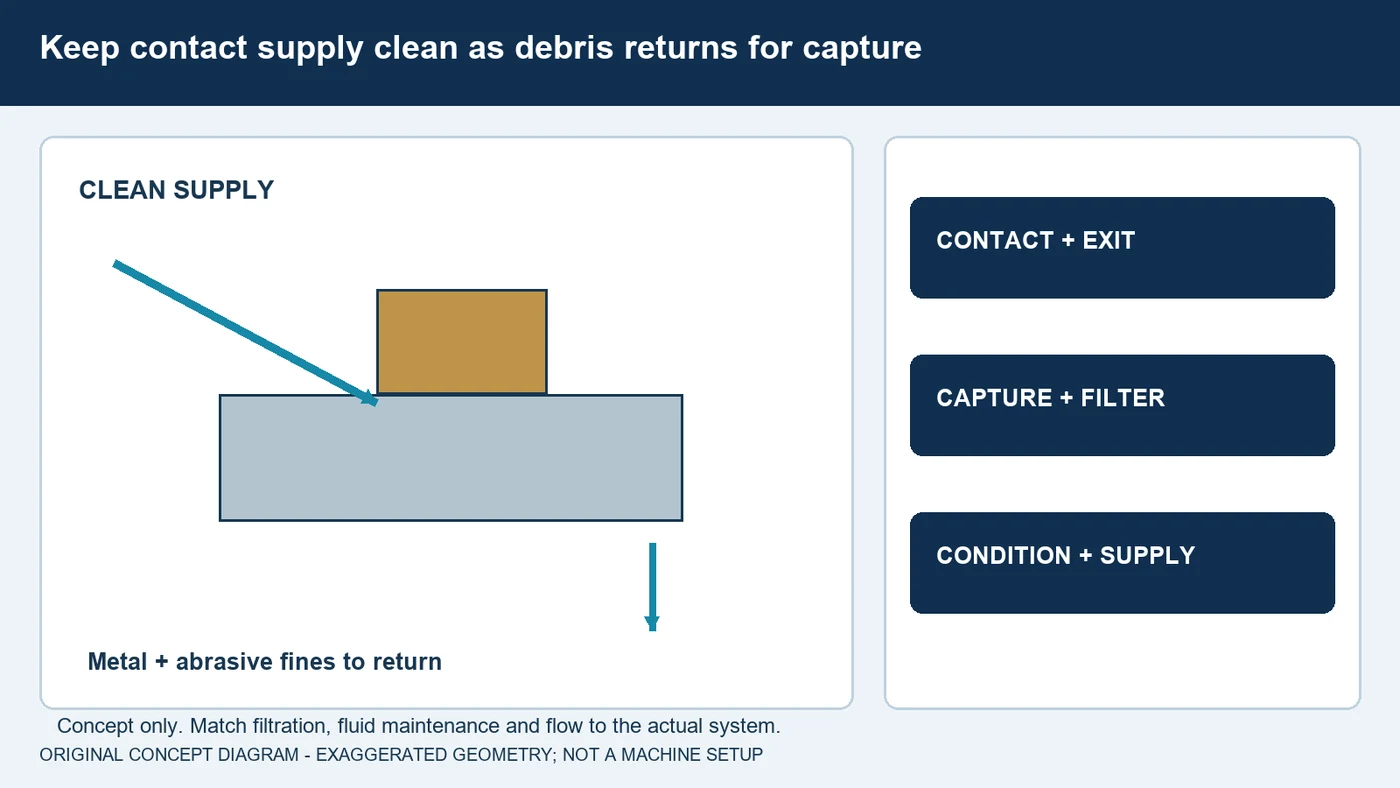
A fine abrasive finish can be spoiled by contamination returning to the contact. The fluid system must carry away removed metal and loose abrasive while providing the clean supply specified for the machine. Review targeting, access, return flow and filter condition together; visible splash does not demonstrate clean or effective contact supply. Select and maintain the filter for the actual debris and fluid rather than copying a micron rating from another installation. Keep dirty return and clean supply functions distinct. For diluted coolant, measure and record concentration with the product-specific correction factor and recommended method. For oil, use the specified condition and temperature checks. Clean fixtures and post-process handling matter too, because a finished surface can be scratched after it leaves the tool.
Measure Roughness, Waviness and Geometry Separately
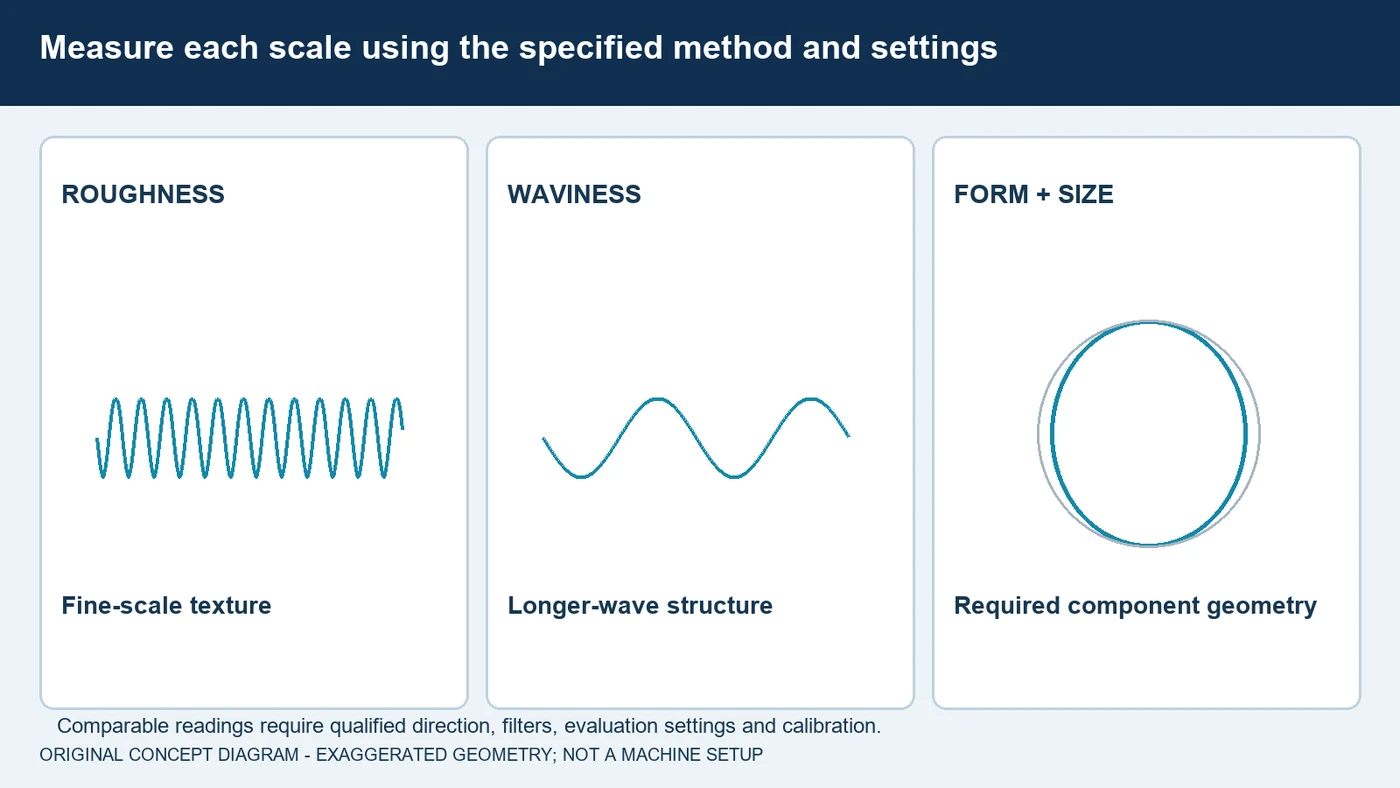
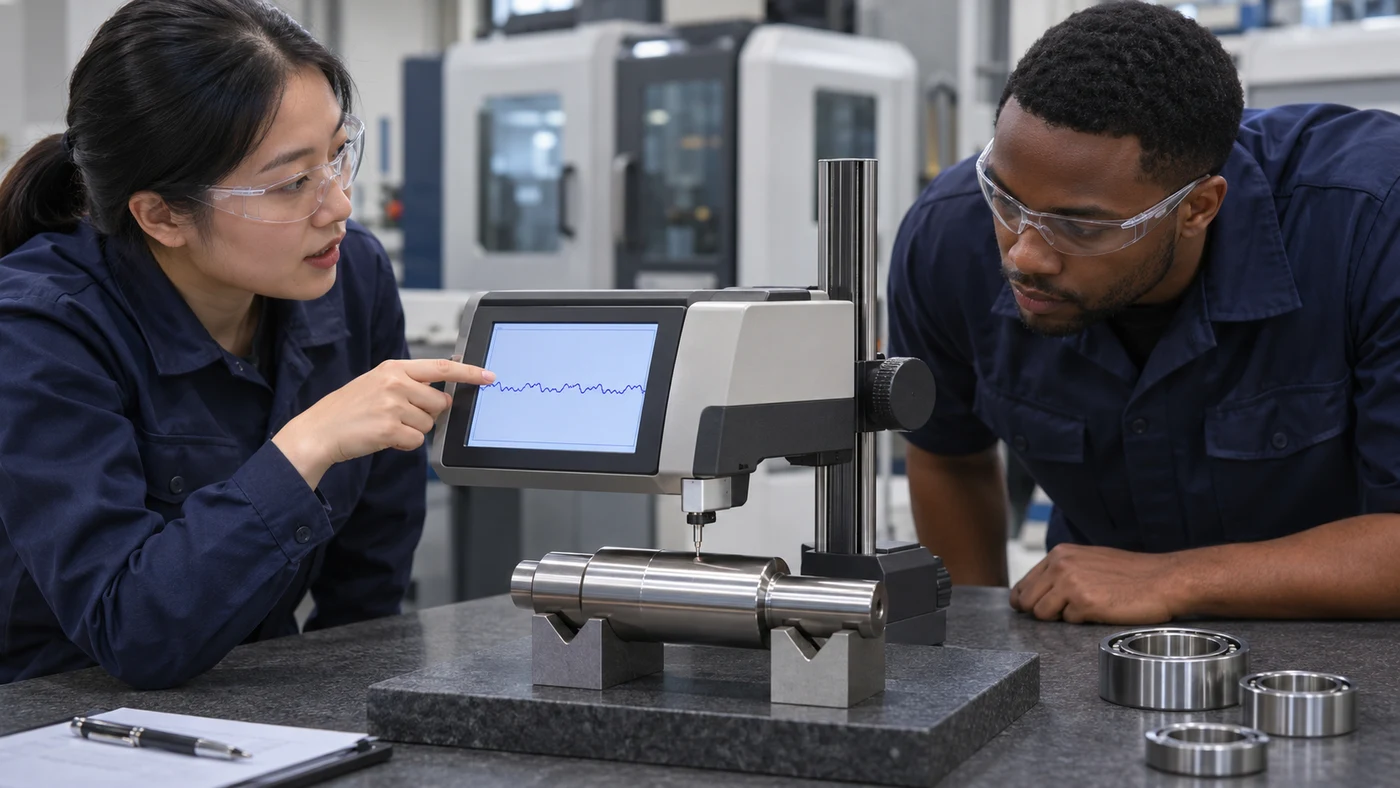
A surface-finish value answers a particular measurement question. Roughness, waviness and component form describe different scales of deviation. The selected measurement filters, direction and evaluation settings affect what is reported. Follow the part's specified method and keep those conditions consistent when comparing before-and-after results. Where required, include roundness, waviness, material-ratio or other functional texture assessments alongside the relevant roughness parameters. A lower average roughness does not alone establish correct size or freedom from all surface defects. Investigate isolated scratches for contamination and abrasive or handling damage. For repeating marks, review incoming geometry, workholding, tool condition and motion before changing multiple variables. Verify the required cleaning and final surface condition before the part moves to assembly.
Plan a Controlled Superfinishing-Fluid Trial
Send QA the component drawing, alloy, hardness or coating, incoming process and the permitted finishing allowance. Identify the bearing surface, journal, roller, seal feature or other area being finished. Provide the machine, stone or film specification, contact support and qualified process sequence. Include current fluid, delivery, filtration, temperature and maintenance records. For a diluted product, add water quality and measured concentration. Describe the concern with measurements, repeatable photographs and the point in the abrasive cycle where it appears. QA has coolant and oil options for evaluation. Compare accepted geometry, texture, abrasive behavior and cleanliness at similar conditions. Confirm the final formulation and maintenance instructions with the machine and abrasive suppliers before adopting the change in production.
Fluid selection by material
Use these as evaluation questions, not blanket product approvals.
| Material | What to evaluate | What to confirm |
|---|---|---|
| Hardened steel shafts and bearing surfaces | Identify hardness, incoming grinding or hard-turning condition and the required geometry and texture. | Qualified abrasive/support system, fluid type, clean supply and measured acceptance. |
| Cast iron journals and components | Review the actual grade, incoming surface and permitted finishing allowance. | Stone or film application, debris capture, corrosion control and specified texture. |
| Stainless steel and nonferrous alloys | Evaluate the exact alloy, loading behavior, staining and additive compatibility. | Compatible abrasive, stone impregnation or backing, residues and later cleaning. |
| Coated shafts and rollers | Identify coating chemistry, thickness, incoming defects and remaining-layer limits. | Qualified abrasive and fluid, local edge control, geometry and coating-specific inspection. |
Questions about superfinishing fluids
What is superfinishing?
A fine-abrasive machining process used to refine functional surface texture and, with suitable tooling, selected geometry. Many systems combine workpiece rotation and short tool oscillation.
Is superfinishing the same as cosmetic polishing?
The objective is a specified functional surface and acceptance result. Gloss alone does not establish texture, size, waviness or roundness compliance.
Can the same fluid be used with any stone or film?
Do not assume so. Confirm machine, abrasive, backing or stone impregnation, support, material and downstream compatibility.
Should I use oil or water-based coolant?
Use the fluid type qualified for the system. Many stone applications use a specified oil; permitted film applications may use oil or water-based coolant. QA can help evaluate the full application.
Does lower Ra prove the part is acceptable?
No. Follow all required geometry and functional texture checks, using comparable measurement filters and settings, as well as cleaning and surface-condition requirements.
Which QA product should I use for superfinishing?
QA has coolant and oil options. Supply the material, feature, equipment, abrasive, contact support, fluid system and acceptance requirements for evaluation.
Discuss your application with QA
QA Lubricants has coolant and oil options. Send us the operation, alloy, hardness, tooling, current fluid and the problem you want to solve.
Discuss My ApplicationShop Water Diluted CoolantsShop Straight Cutting OilsTechnical references
- Supfina: superfinishing technology, contact and surface structure
- Nagel: stone contact, oscillation and filtered rinsing fluid
- Nagel: process kinematics and roundness analysis
- Loeser: microfinishing film feed and contact roller
- 3M: microfinishing film construction, tools and applications
- ATLANTIC: stone bond, impregnation, coolant and filtration
- Norton: oil/water-compatible microfinishing film example
- Taylor Hobson: roughness, waviness and measurement cut-offs
- Taylor Hobson: form and surface finish of rolling elements
- Blaser Swisslube: product-specific concentration measurement
- Nagel: stone, tape and cup-wheel superfinishing systems
Original educational content and illustrations. Confirm current machine, tool and fluid instructions. Trademarks belong to their respective owners.