
Surface Grinding Coolants & Oils for Finish, Flatness and Burn Control
Review surface-grinding coolant and oil selection, wheel loading, dressing, grinding burn, coolant delivery, swarf filtration and material compatibility.
Watch: Surface Grinding Coolants & Oils for Finish, Flatness and Burn Control
Define the Surface-Grinding Application
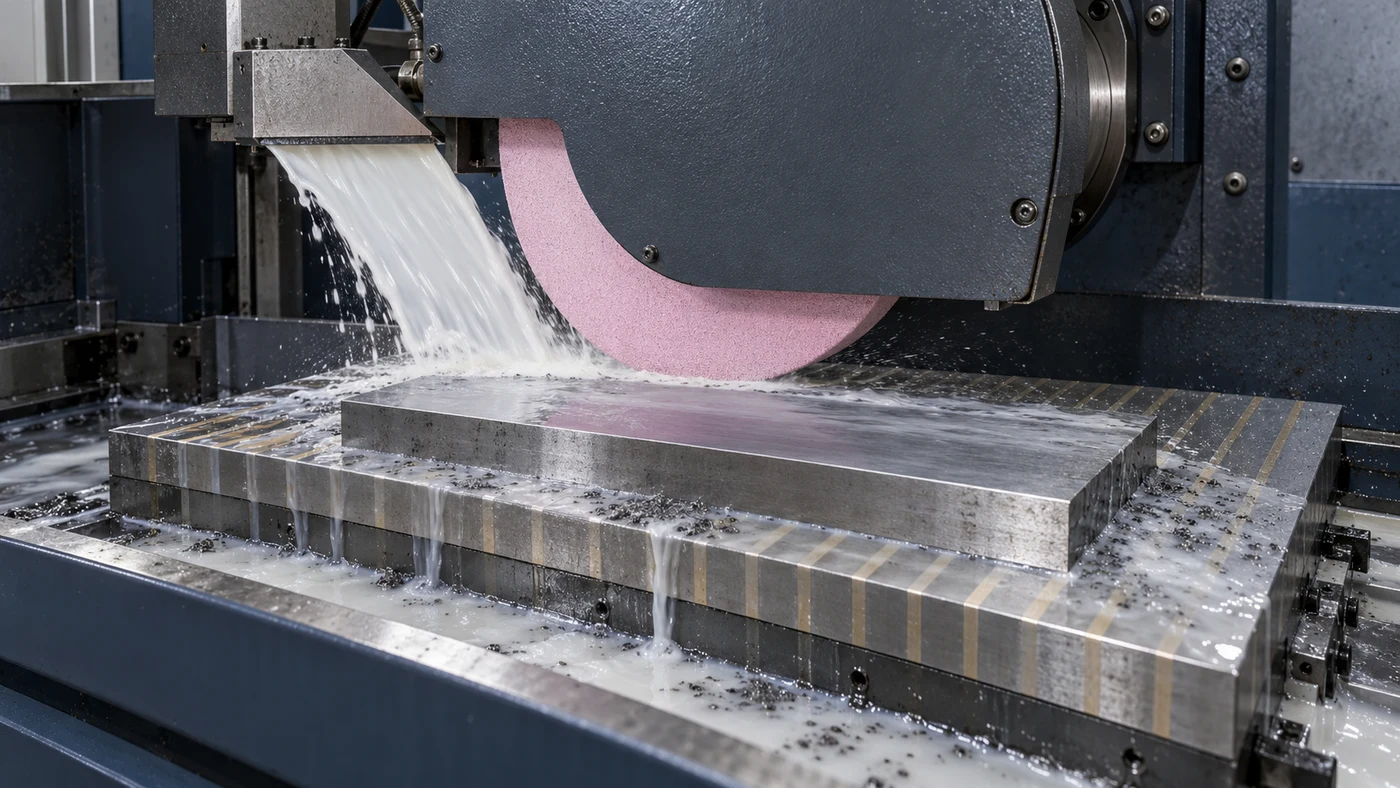
Surface grinding produces flat metal surfaces by removing material with an abrasive wheel. This guide focuses on the familiar horizontal-spindle, reciprocating-table arrangement, where the wheel's lower periphery works across the top of the part. Rotary-table and vertical-spindle methods have different contact conditions and need their own application review. Begin with the drawing: material grade and hardness, stock to remove, surface finish, flatness and parallelism. Include the workpiece dimensions and the way it will be supported. A magnetic chuck is useful only where the workpiece and holding arrangement are suitable; nonmagnetic material needs an appropriate alternative fixture. Record the machine, wheel, dressing system and existing fluid before changing the process. QA has coolant and grinding-oil options for evaluation. The aim is a coordinated application that produces accepted parts, rather than choosing a fluid from the word grinding alone.
Match the Wheel to Material and Contact
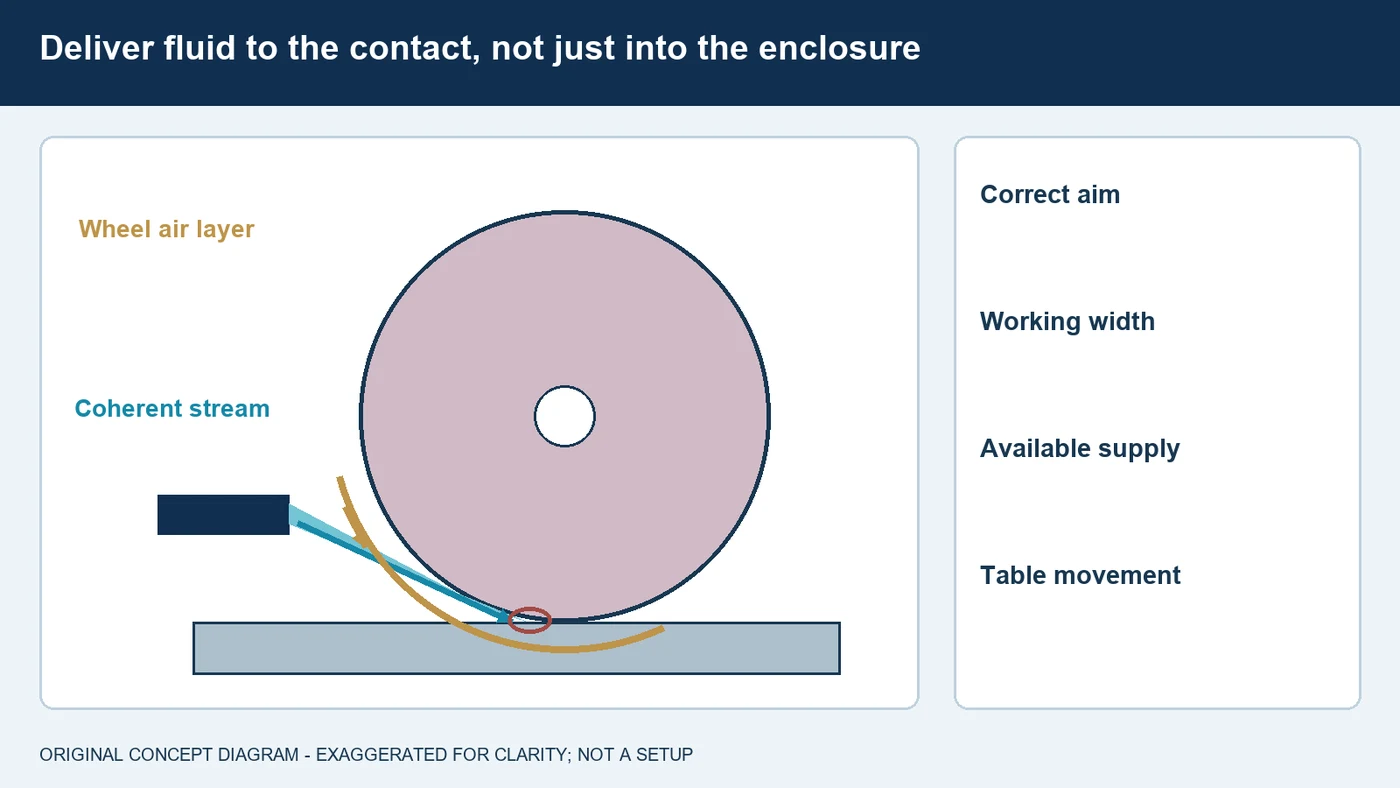
A wheel specification combines several different choices. Abrasive type, grain size, grade, bond and structure each influence how the wheel cuts and releases material. Grade describes the wheel's grain-holding strength, rather than the hardness of the abrasive itself. Material hardness, contact area, required finish and the machine's capability also belong in the selection. A wheel that remains dull instead of renewing its cutting edges can rub and generate unwanted heat. The answer is not always a finer grit or a harder wheel. Ask the abrasive supplier to match the complete specification to the actual job, including the planned coolant and dressing method. Conventional abrasives and superabrasives require different application decisions; do not transfer a specification between materials simply because the parts look similar. Keep the wheel's permitted use, speed and wet or dry requirements within its instructions and the equipment limits.
Separate Truing from Dressing
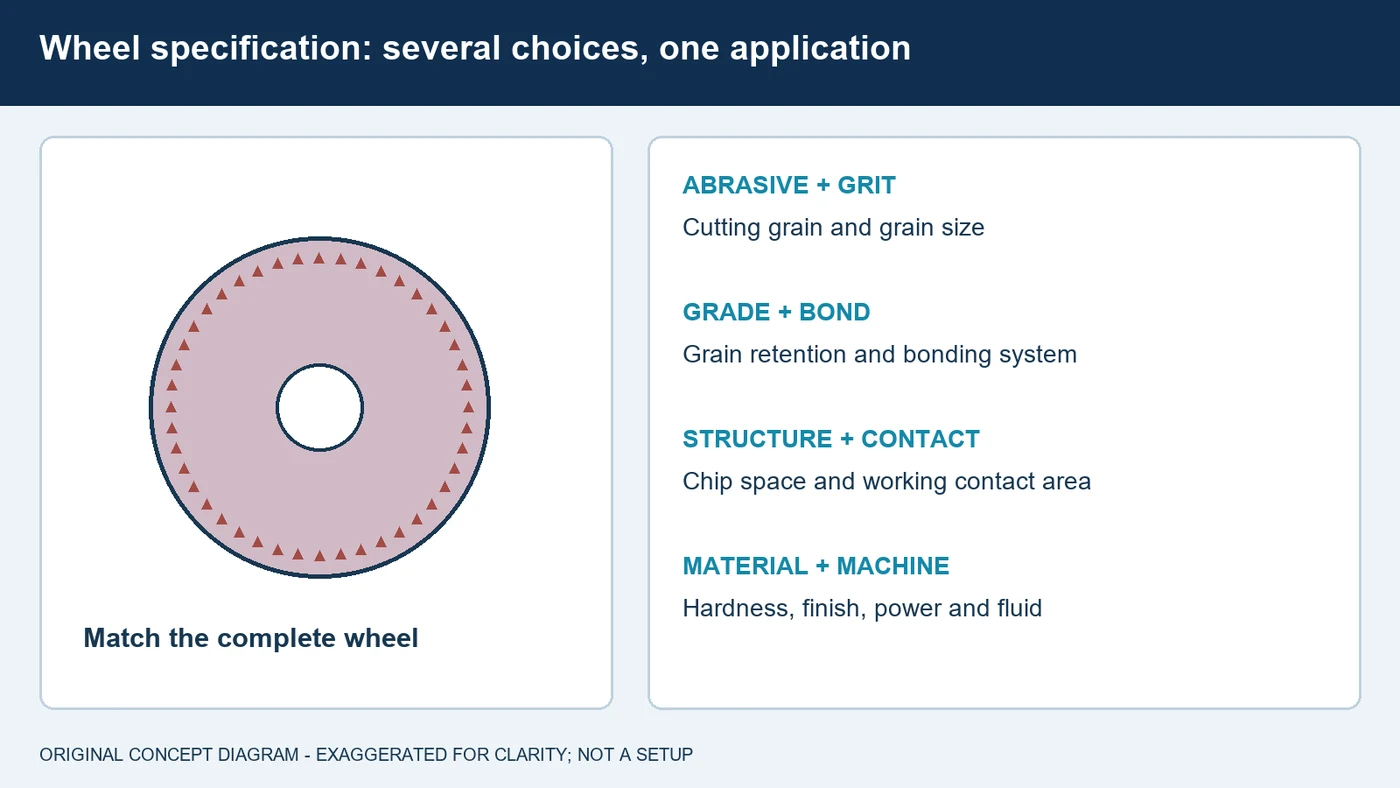
Truing and dressing address related but different conditions. Truing restores the working geometry and removes relevant wheel runout. Dressing renews the cutting face by removing dull material and loaded chips so fresh edges and space for swarf can do their job. Some systems combine these functions, but the purpose of each still matters. A wheel may have the intended shape and still cut poorly because its face is loaded or glazed. The dresser type and method must suit the abrasive and bond, whether conventional or superabrasive. Inspect the dresser and follow the wheel supplier's procedure instead of applying one dressing depth or traverse rate to every wheel. A dressing change can alter both surface finish and cutting behavior. Record how the face was prepared before a fluid trial, so a newly dressed wheel is not mistaken for proof that a different coolant alone solved the problem.
Reach the Wheel-Workpiece Contact
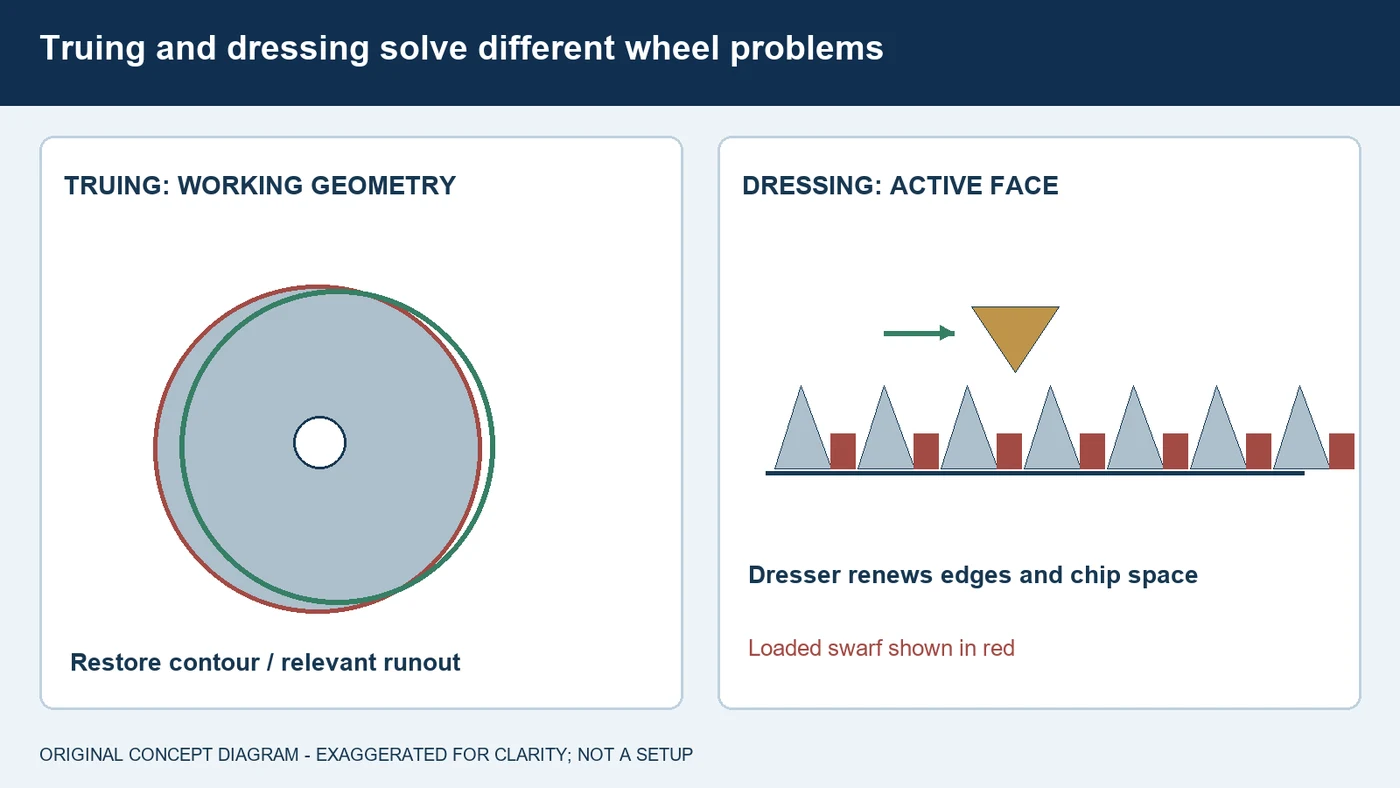
Visible coolant in the enclosure does not prove effective supply at the grinding contact. A rotating wheel carries an air layer that can deflect a weak or poorly directed stream. A coherent stream, correctly aimed for the wheel and nozzle arrangement, helps deliver fluid where it is needed. Review nozzle position, aperture, available flow and pressure as a system. Cover the actual working width and check that the supply remains effective through the table movement. More splash or higher pump pressure by itself is not the objective. The right arrangement depends on the machine, wheel speed, contact and nozzle design, so there is no single pressure setting for every surface grinder. Inspect the delivery while following the machine's operating and guarding procedures. Confirm the return path as well: fluid that cannot drain appropriately can carry grinding debris back into the working area.
Control Swarf, Filtration and Temperature
Grinding fluid carries fine metal particles and abrasive debris away from the operation. Those contaminants need an effective separation and filtration route before the fluid returns to the wheel. Suitable systems can include gravity or vacuum filtration, with tanks, pumps and temperature-control equipment matched to the installation. A magnetic separator, where fitted, does not remove every type of contaminant; the metal, abrasive and particle behavior still matter. Choose the filtration arrangement with the machine and system suppliers instead of specifying one micron rating for all surface grinding. Check filter condition, tank cleanliness, return flow and dependable supply at the nozzle. Temperature management also belongs in this review. Follow the equipment's requirements for stability and control rather than assuming the coldest possible fluid will give the best accuracy. Record the operating condition during trials and compare accepted parts under consistent inspection conditions.
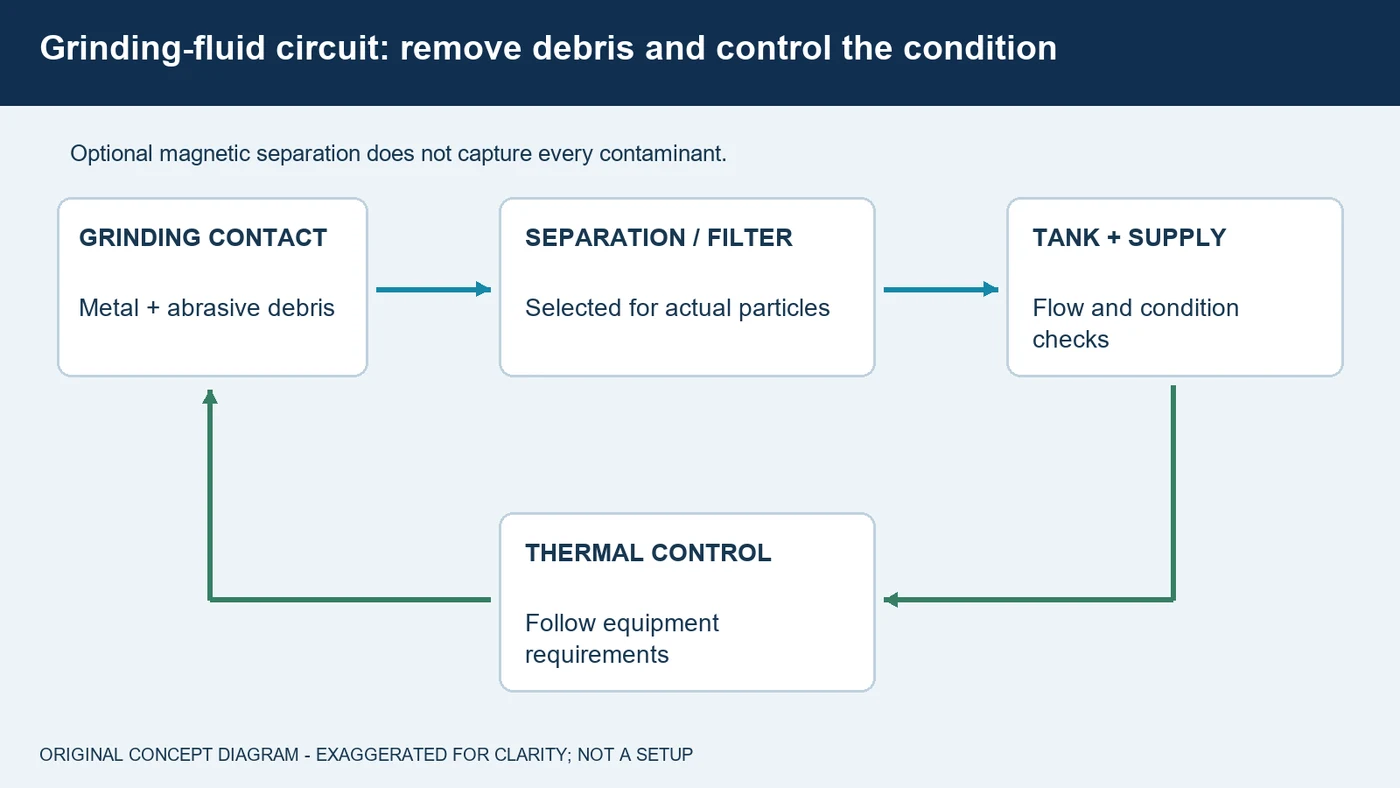
Match Fluid to Material, Wheel Bond and Later Work
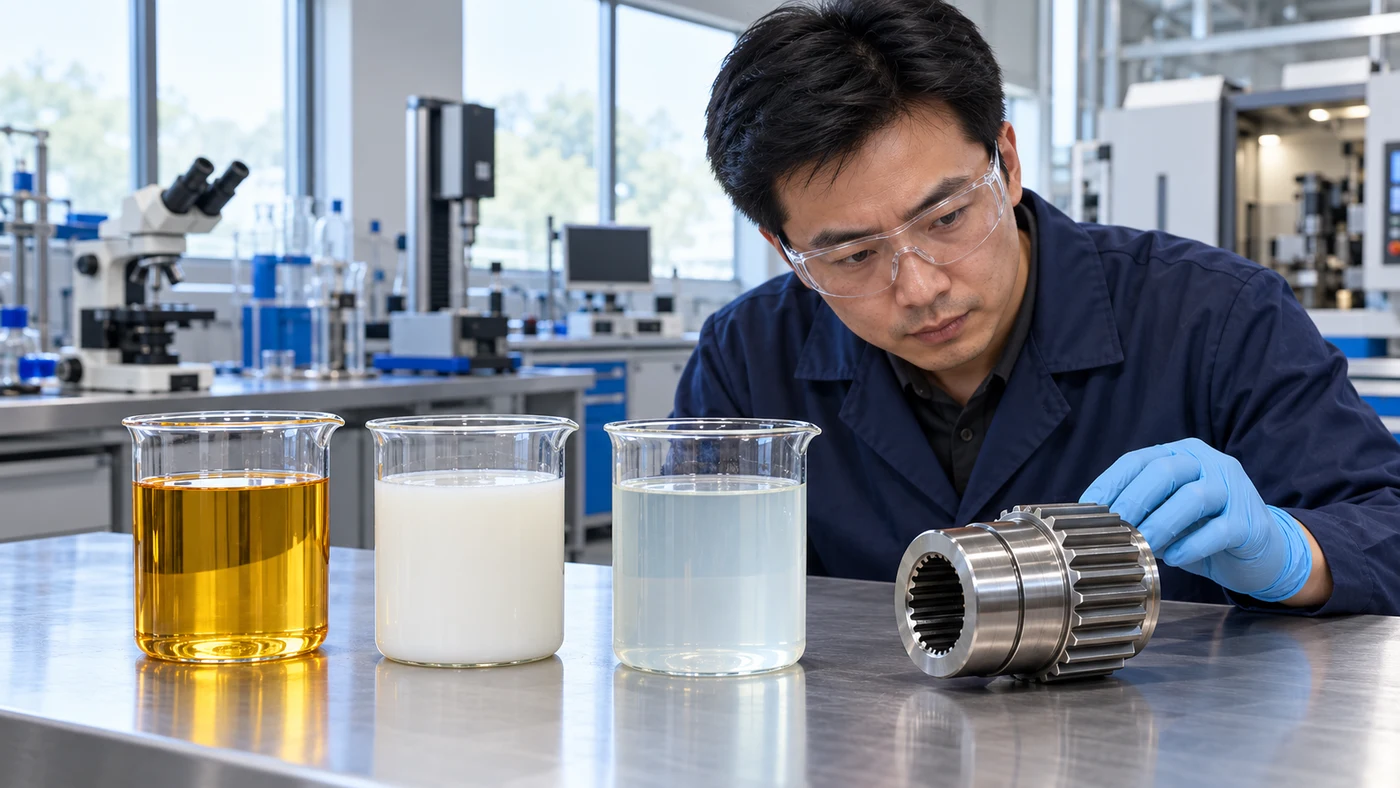
Water-miscible coolants and straight grinding oils offer different formulation choices. Review heat removal, lubrication, corrosion protection, foaming behavior and compatibility with the machine, wheel bond and work material. Include cleaning, storage and the next manufacturing step; a fluid that suits grinding may still leave an unsuitable residue for later work. Aluminum and copper alloys need specific staining and compatibility checks. Cemented carbide requires another review: cobalt-bonded material can need a formulation designed to limit binder leaching, together with the correct wheel and filtration arrangement. Confirm binder compatibility for the specific formulation before using it on carbide. For a water-miscible fluid, follow the product's mixing, water-quality and concentration guidance. A refractometer reading may require a formulation-specific factor. QA has coolant and grinding-oil options and can help evaluate the application, with the selected formulation confirmed against the actual materials and process.
Investigate Burn, Loading, Chatter and Flatness
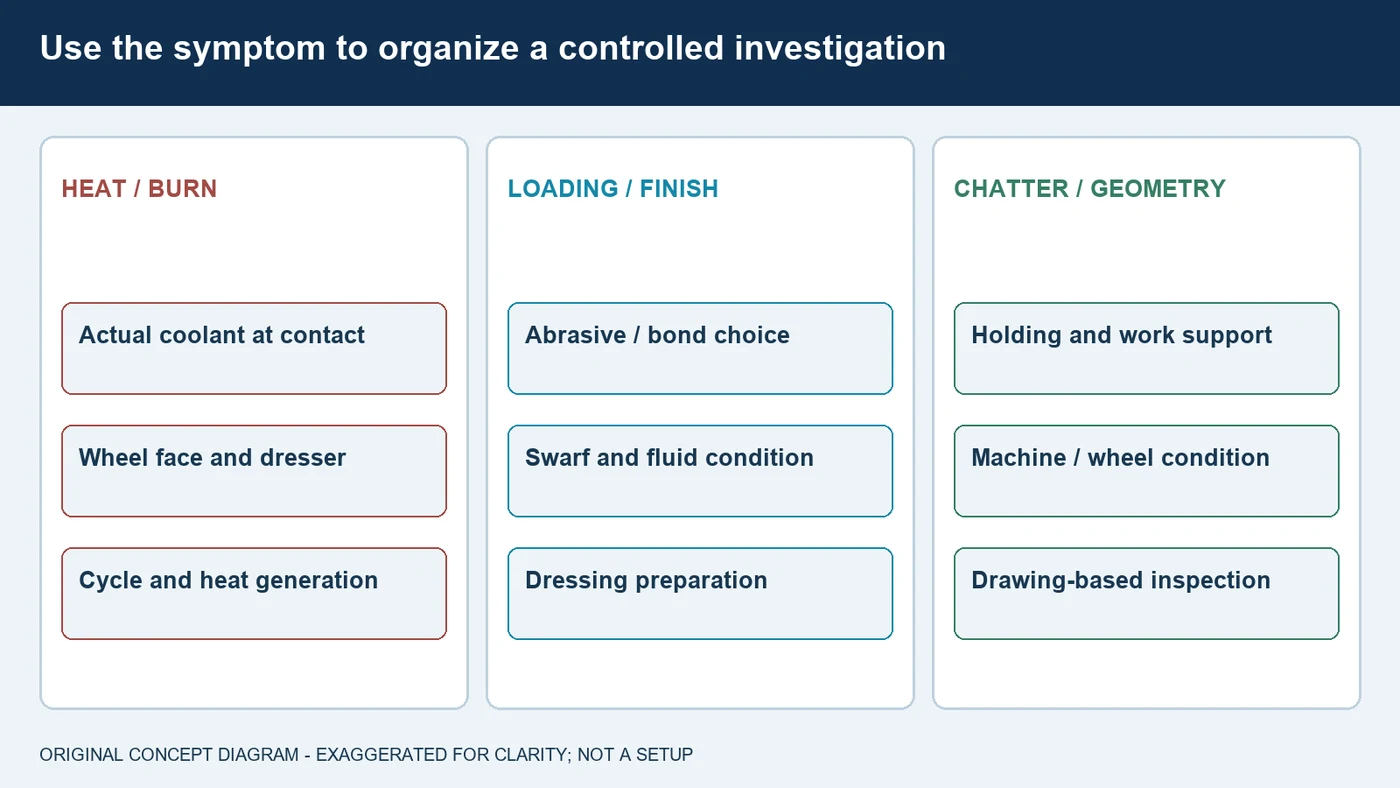
A grinding defect is evidence to investigate, not a diagnosis by itself. For burn or heat-related concerns, inspect coolant direction and available flow, the dressed wheel face and the material removed during the cycle. Loading and glazing also call for a review of wheel specification, dresser condition and fluid condition. Chatter can involve work support, machine vibration, mounting, balance or wheel geometry. These causes can overlap, so an arbitrary change of coolant or feed may hide the underlying problem. Use the wheel and machine suppliers' guidance when selecting a correction, then verify it with a controlled comparison. Flatness and parallelism require their own measurements using the drawing's acceptance conditions. A bright finish alone does not establish that every quality requirement has been met. Record the symptom, setup, fluid state and inspection results so the trial can be repeated and evaluated.
Bring QA the Complete Surface-Grinding Job
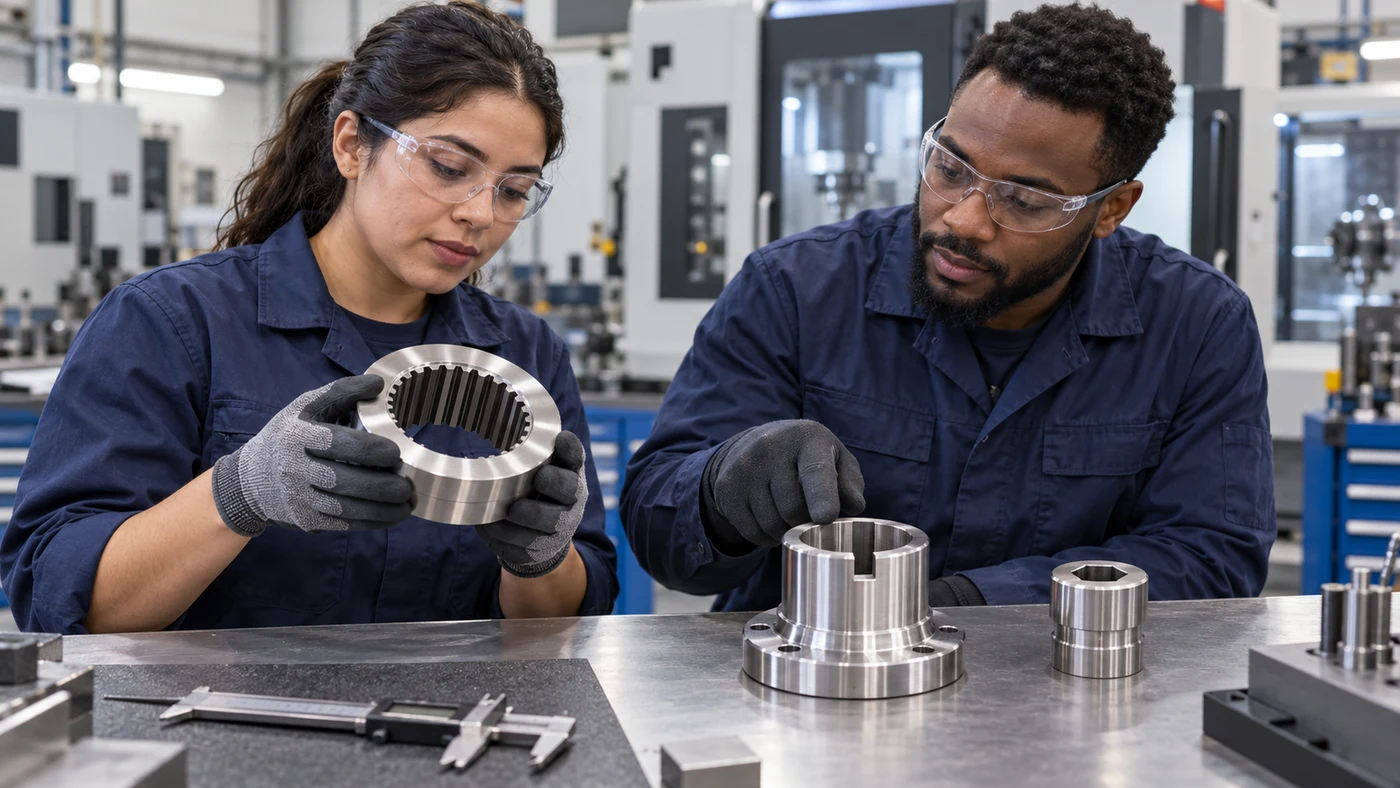
For a surface-grinding fluid review, send QA the material grade and hardness, part dimensions and required finish, flatness and parallelism. Include the machine arrangement, wheel specification, dressing system and holding method. Describe the current fluid and its condition, delivery route, filtration and temperature-control equipment. Explain what you want to improve: burn, loading, chatter, finish, corrosion, residue removal or repeatability of accepted parts. Photographs of the wheel and setup, together with actual inspection results, are more useful than simply saying the grinder is running hot. QA has coolant and grinding-oil options for evaluation; a grade recommendation should follow verification of these application details. Agree on the supported operating conditions, material and inspection plan with the relevant suppliers before a trial. Track the complete process and compare results against the same acceptance criteria before making a production decision.
Fluid selection by material
Use these as evaluation questions, not blanket product approvals.
| Material | What to evaluate | What to confirm |
|---|---|---|
| Carbon and alloy steels | Review hardness, contact area, heat control and corrosion protection. | Wheel specification, dressing, actual supply and drawing requirements. |
| Hardened tool steels | Evaluate the wheel and formulation for the actual hardness and quality requirements. | Heat-related defects, finish, geometry and required inspection. |
| Stainless steels | Review alloy-specific grinding behavior, lubrication and fluid compatibility. | Wheel condition, delivery and downstream cleaning requirements. |
| Aluminum and copper alloys | Require formulation-specific non-staining compatibility and loading review. | Appropriate wheel, fixture, filtration and residue removal. |
| Cast iron | Evaluate swarf handling, filtration and corrosion protection for the installation. | Material condition, wheel choice, tank maintenance and actual finish. |
| Cobalt-bonded cemented carbide | Require binder-compatible chemistry and a specifically qualified wheel/fluid application. | Leaching compatibility, wheel bond, filtration and supplier instructions. |
Questions about surface grinding fluids
Is grinding oil always better than water-miscible coolant?
No. Choose the actual formulation for the machine, wheel, material, quality requirements and downstream processing. QA has coolant and grinding-oil options for evaluation.
What is the difference between truing and dressing?
Truing restores working geometry and relevant runout. Dressing renews the cutting face and chip space. Some systems combine them, but the dresser and procedure must suit the wheel.
Why can a surface grinder burn parts even with coolant flowing?
Visible flow can miss the contact. Check direction and available supply alongside wheel condition, dressing and the grinding cycle. Review corrections with the equipment and abrasive suppliers.
What filter rating should surface-grinding coolant use?
Use the actual machine, wheel, material and system requirements. Metal and abrasive contamination differ, and a magnetic separator alone cannot remove every contaminant. No single rating fits every grinder.
Does a bright surface prove the part is acceptable?
Check all drawing requirements, including finish, geometry and any specified surface-integrity inspection. Appearance alone is not an acceptance plan.
What does QA need to review a surface-grinding fluid?
Send the material and hardness, drawing requirements, machine, wheel and dressing information, holding method, current fluid and delivery/filtration details, plus measured results.
Discuss your application with QA
QA Lubricants has coolant and oil options. Send us the operation, alloy, hardness, tooling, current fluid and the problem you want to solve.
Discuss My ApplicationShop Water Diluted CoolantsShop Straight Cutting OilsTechnical references
- Norton: improved surface-grinding practice
- Norton: seven factors in wheel specification
- Noritake: dressing and truing
- Cool-Grind: wheel air barrier and coherent coolant delivery
- Filtertech: metal-grinding fluid filtration systems
- FUCHS: cutting-fluid selection and application
- Blaser: coolant concentration measurement
- Master Fluid Solutions: carbide-specific fluid requirements
- Norton: precision grinding troubleshooting, page 240
Original educational content and illustrations. Confirm current machine, tool and fluid instructions. Trademarks belong to their respective owners.