
Thread Grinding Oils and Coolants
Explore thread grinding oils and coolants for precision screws, gages and internal threads, with guidance on pitch and lead, wheel profiles, delivery and inspection.
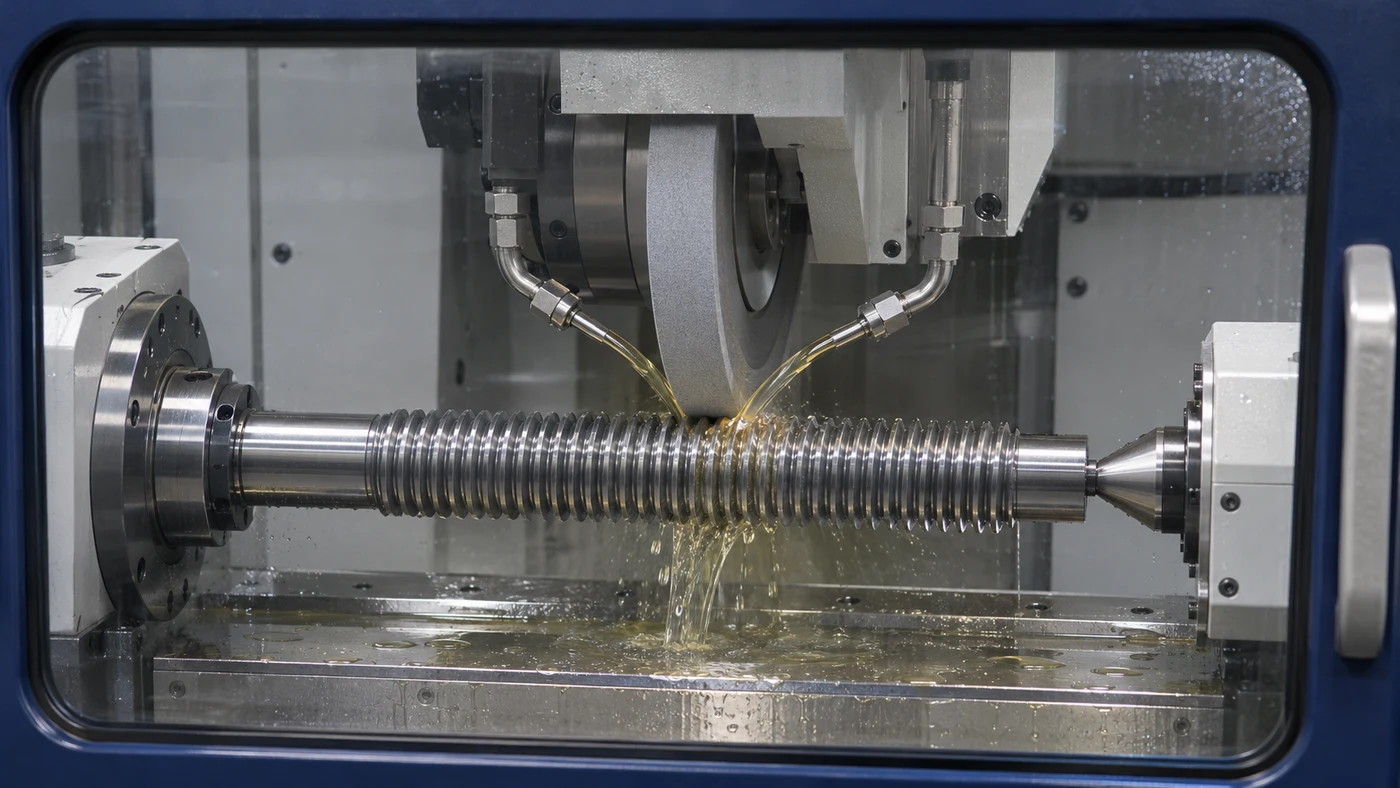
Watch: Thread Grinding Oils and Coolants
Thread Grinding: Precision Along a Helical Path
Thread grinding uses a shaped abrasive wheel and coordinated machine motion to generate or finish a helical surface. Applications include precision screws, thread gages, taps, worms and suitable ball-screw components. Internal thread grinders serve parts such as ball nuts and internal gages, with a different access problem from an external shaft. The selected process may finish a prepared thread or generate a feature using the supported cycle. Start with the component drawing, material, heat-treatment condition and incoming stock. An ordinary fastening thread and a precision motion-control raceway can have very different form and inspection requirements. QA has coolant and grinding-oil options for evaluation. Match the fluid to the actual wheel, machine, support, delivery and acceptance plan before comparing formulations.
Separate Pitch, Lead and Thread Form
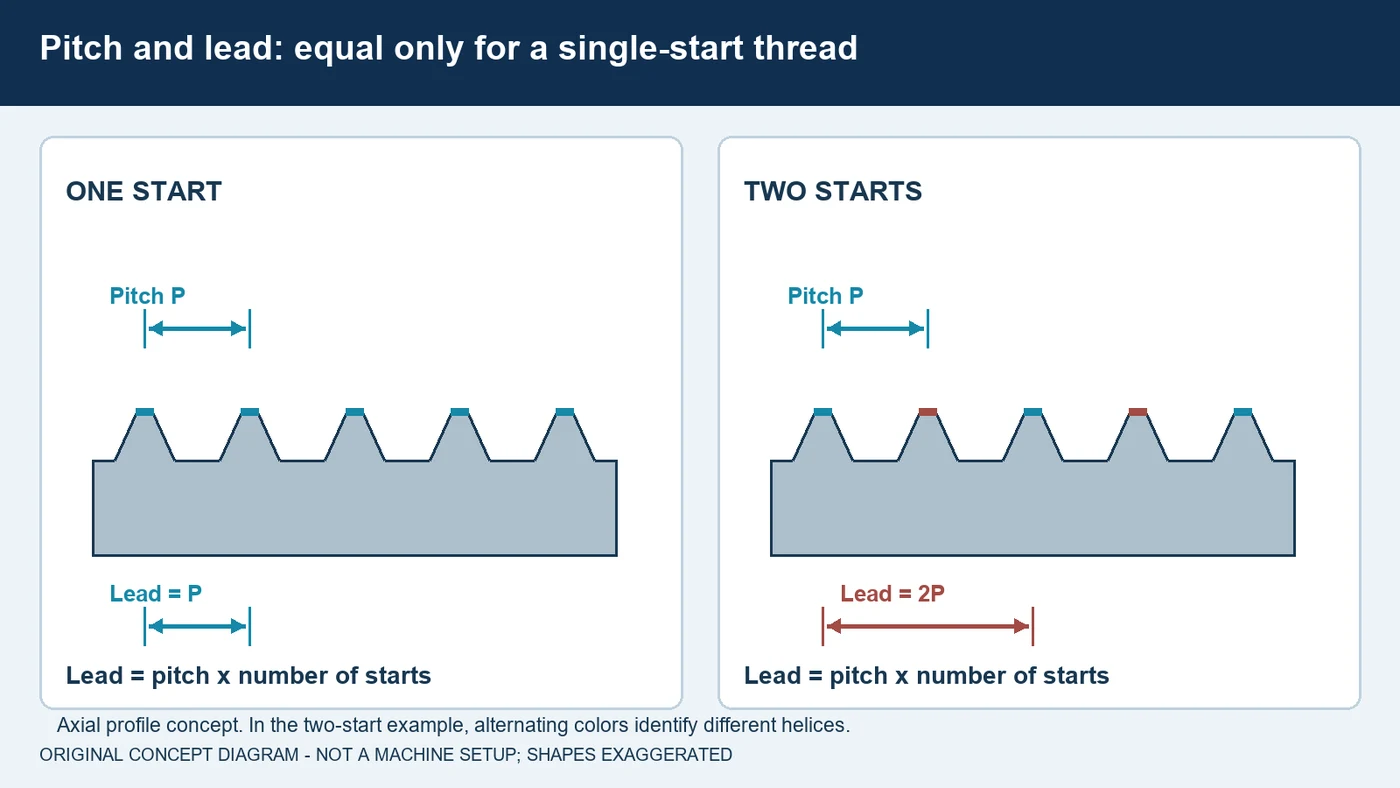
Pitch and lead describe different features of a thread. Pitch is the axial spacing between corresponding points on adjacent thread forms. Lead is the axial advance along one helix in a full revolution. They are equal for a single-start thread; for a multi-start thread, lead equals pitch multiplied by the number of starts. Include thread hand and start count in the process information. A V-thread, trapezoidal form and ball raceway are not interchangeable profiles, even if a diameter measurement appears similar. Flank geometry, root and crest details, relief and the relation to the part datums all matter. The supported grinding path and wheel preparation must account for that complete geometry. Do not infer a wheel setting from pitch alone or substitute a generic thread shape for the specified drawing.
Match the Wheel Arrangement and Grinding Cycle
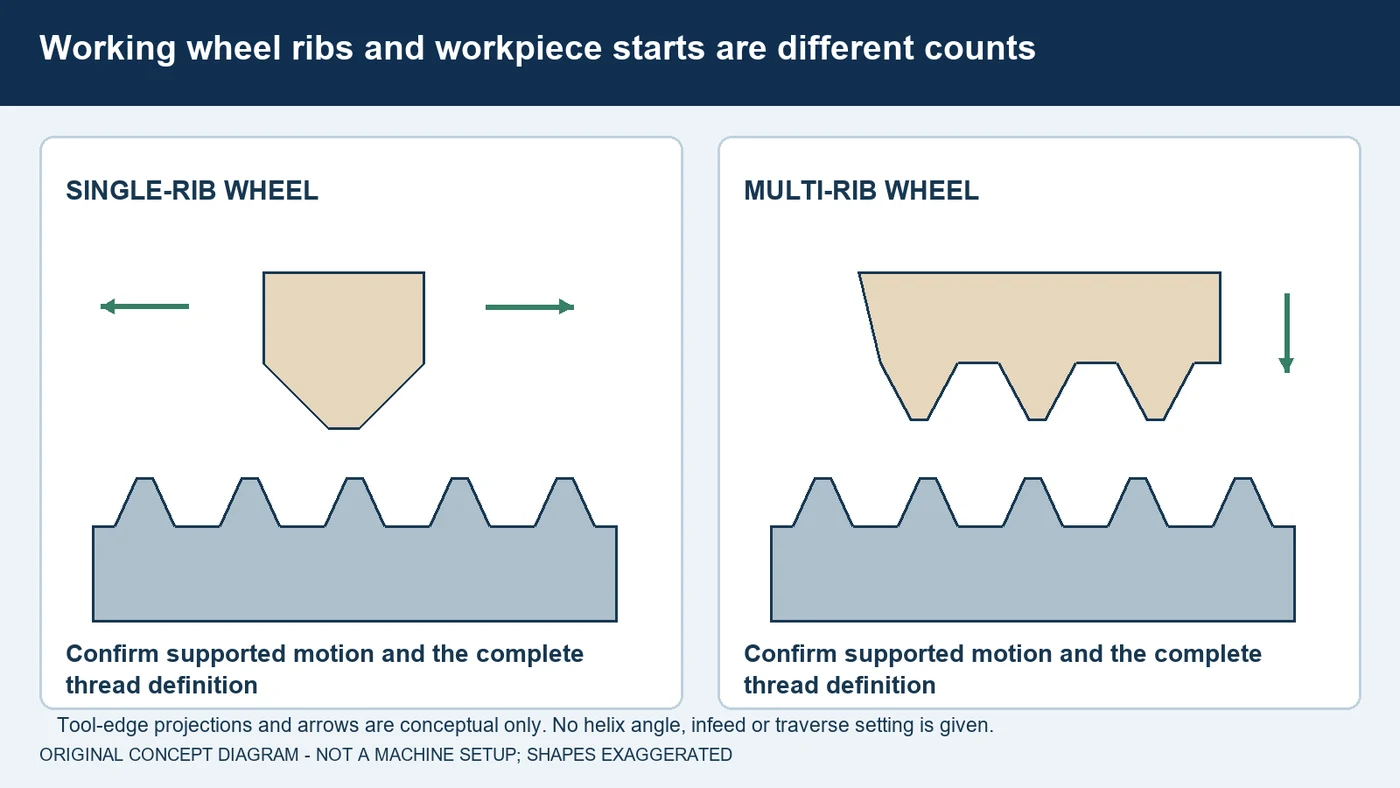
Thread grinding includes several wheel and motion arrangements. A single-rib wheel can follow the thread through coordinated rotation and axial travel. A multi-rib wheel presents several working profiles, and supported cycles can use traverse or plunge approaches. These are process families, not interchangeable setups. The machine, thread length, form, start count and incoming stock determine the qualified strategy. Internal grinding adds spindle and bore clearance, support stiffness and fluid access to that review. Long external screws need a suitable support arrangement and consistent reference conditions. Describe the actual cycle instead of assuming that a wheel with several ribs creates a multi-start thread. Rib count and thread start count are different information. Confirm permitted tool geometry, motion and support with the equipment and abrasive suppliers.
Preserve the Thread Profile and Cutting Face
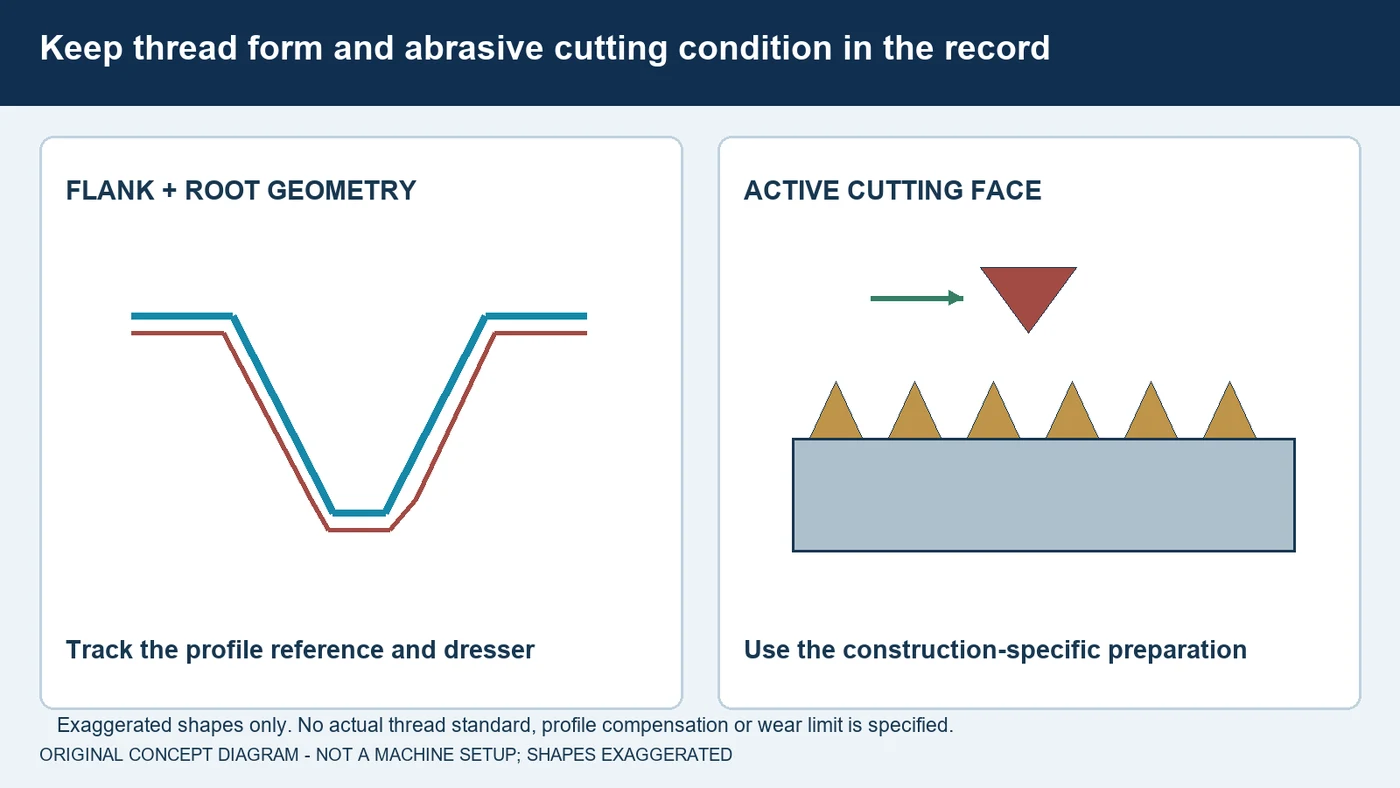
The prepared wheel profile influences the thread form, while the active cutting face affects how material is removed. Treat those as related but separate checks. Match the abrasive, bond and working geometry to the actual material, machine and feature. A suitable wheel for one tool steel or thread form is not a blanket selection for every alloy or component. Truing establishes geometry and alignment; dressing restores the working-face condition using a method appropriate to the wheel construction. Dedicated thread-profile dressing tools must also be kept in suitable condition. Record the wheel and dresser references, preparation history and supported compensation. Look for changes in flank form, root details or finish across the preparation interval. During a fluid trial, compare parts at similar wheel-conditioning stages and keep mechanical changes in the record.
Keep Fluid at the Active Thread-Grinding Contact
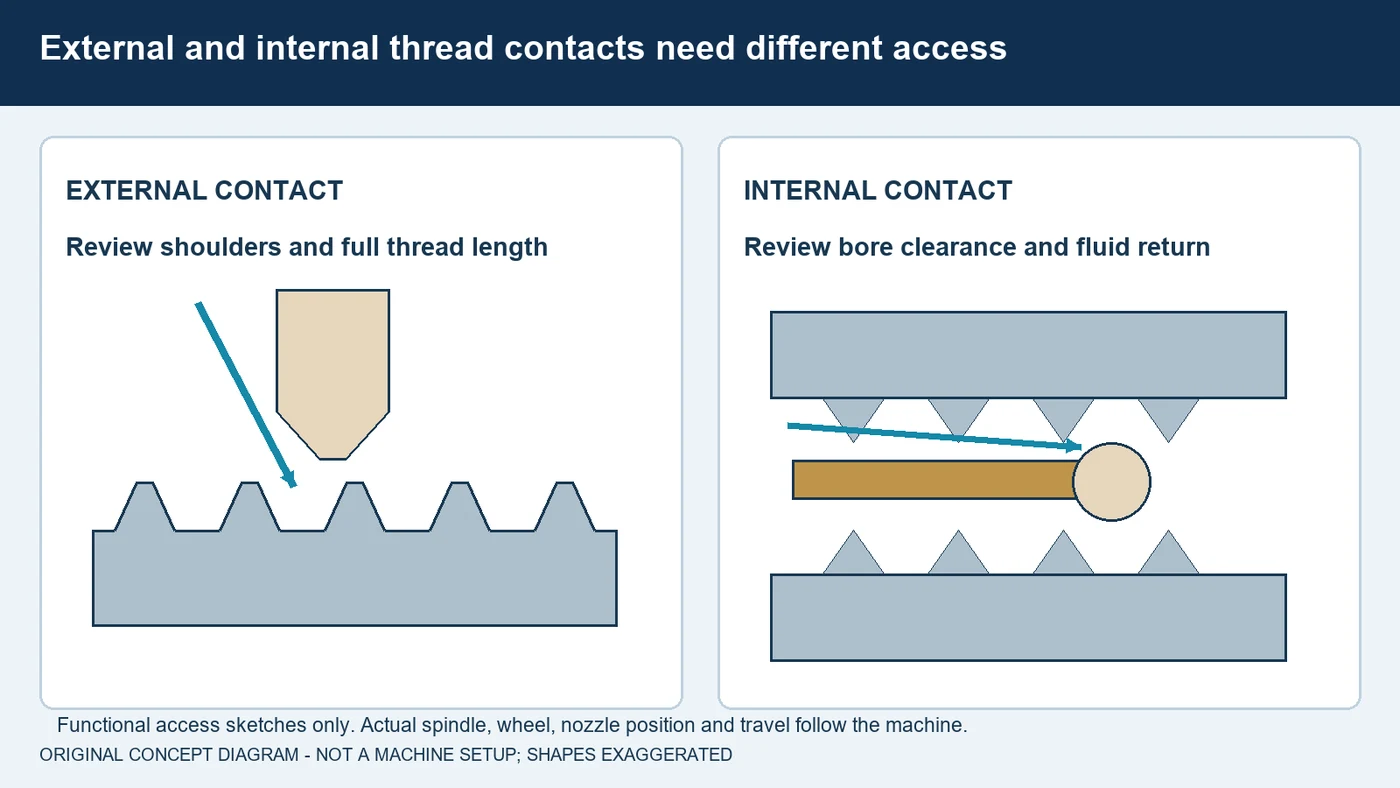
Useful fluid must reach the active grinding interface throughout the supported cycle. Check the arrangement at entry, along the thread, near a shoulder and at the exit or relief. An external nozzle position that wets a shaft may not supply a restricted internal thread contact. Include spindle clearance, bore depth, wheel size and return space in the internal-grinding review. For multiple working ribs, verify the relevant contact regions rather than relying on a single visible stream. Grinding supply and machine washdown can be separate duties, with different requirements. Review the nozzle, pump, filter and return together. Confirm delivered supply with the equipment and nozzle suppliers. More visible splash does not establish better contact access, and a pressure or flow published for one machine model is not a universal thread-grinding setting.
Select and Maintain the Complete Fluid System
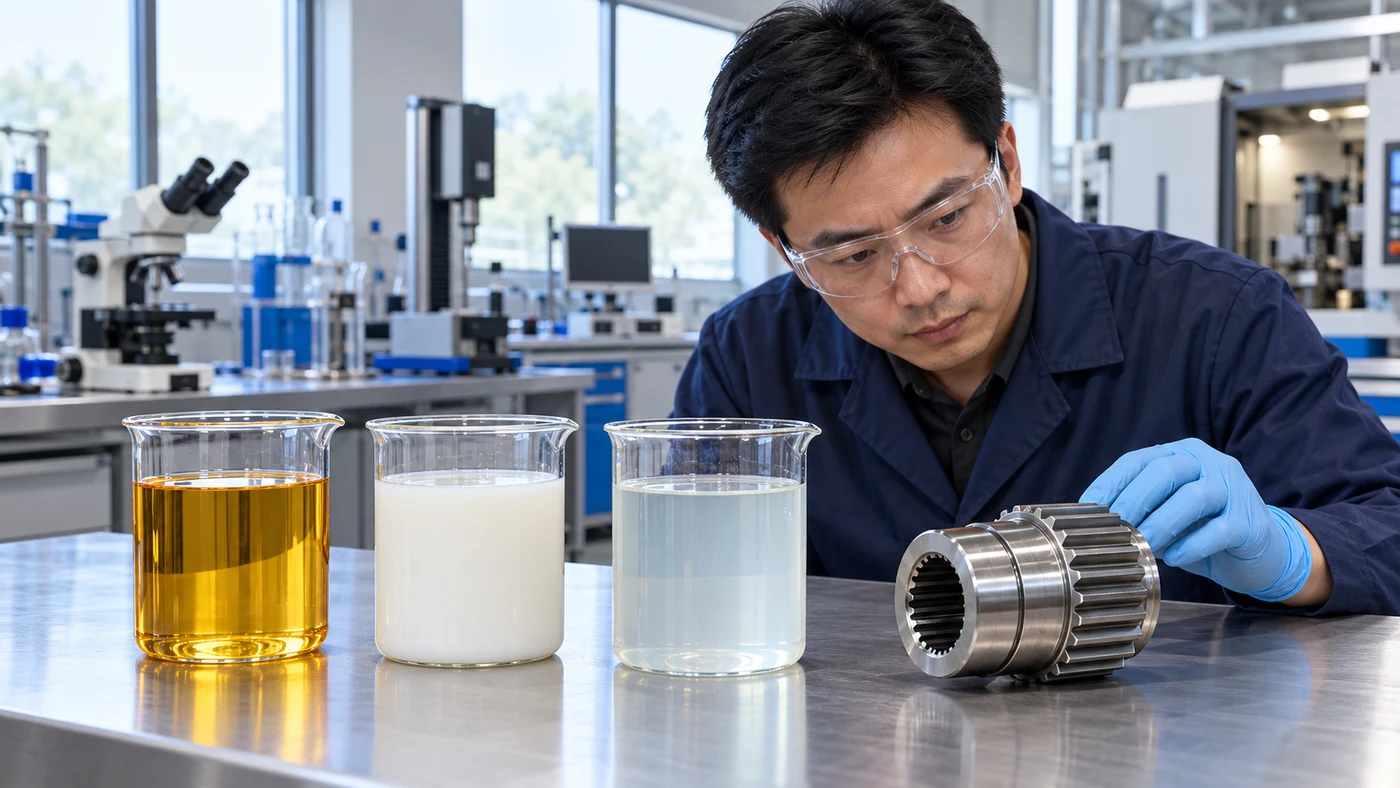
Select the permitted fluid type before evaluating a particular formulation. Review lubrication, viscosity, filtration behavior, foam and air release, corrosion protection, residues and downstream cleaning. The alloy, hardness and abrasive bond are part of the decision. If carbide-containing components are involved, explicitly confirm binder compatibility. Keep grinding debris out of recirculated supply and maintain the required temperature conditions. Startup and stabilized production should not be mixed indiscriminately in a precision thread trial. An oil temperature change can also change viscosity and delivery behavior. Where diluted coolant is permitted, follow the product's mixing and water-quality instructions and use the required refractometer factor. Keep the machine's extraction and protective systems appropriate to the approved fluid. QA has coolant and oil options for evaluation against the complete thread-grinding application.
Inspect Size, Helical Accuracy and Surface Condition
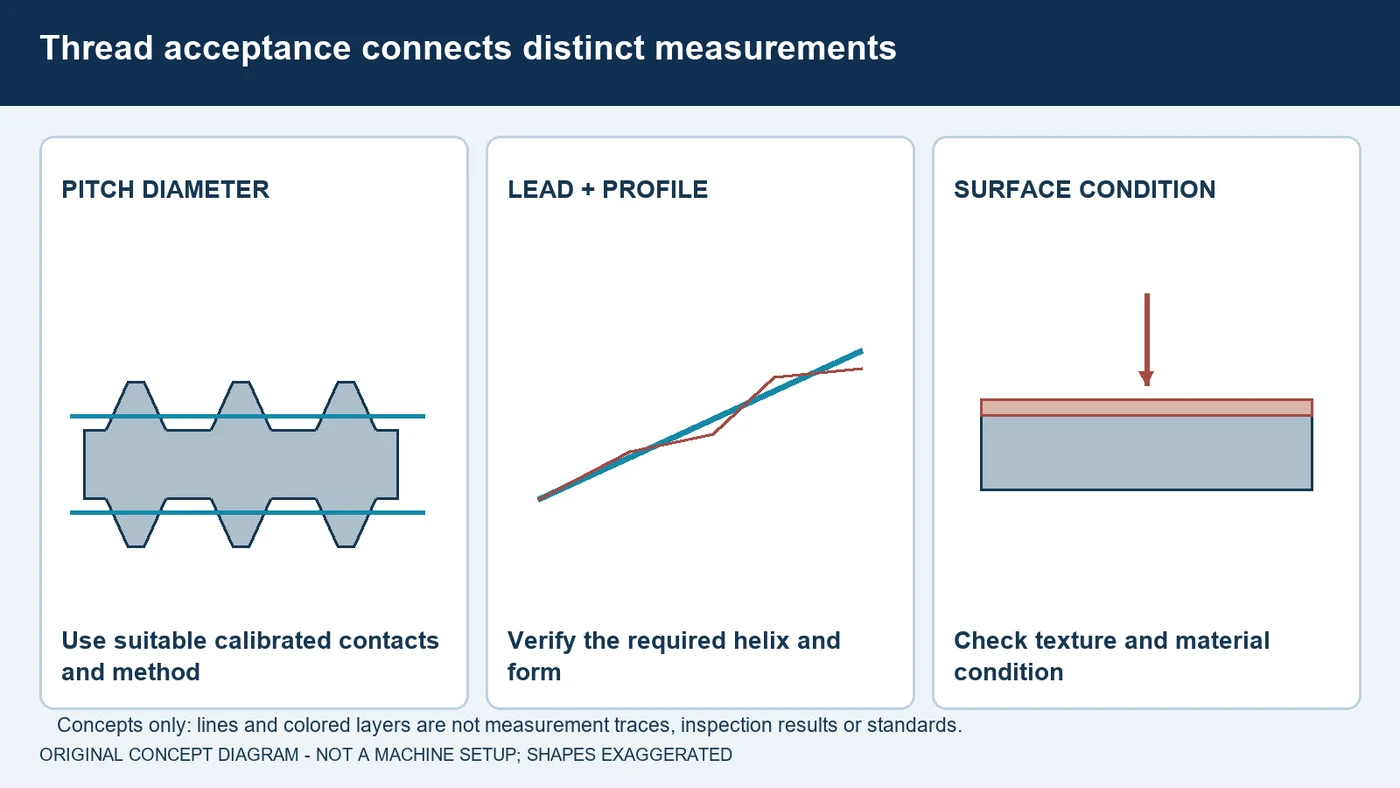
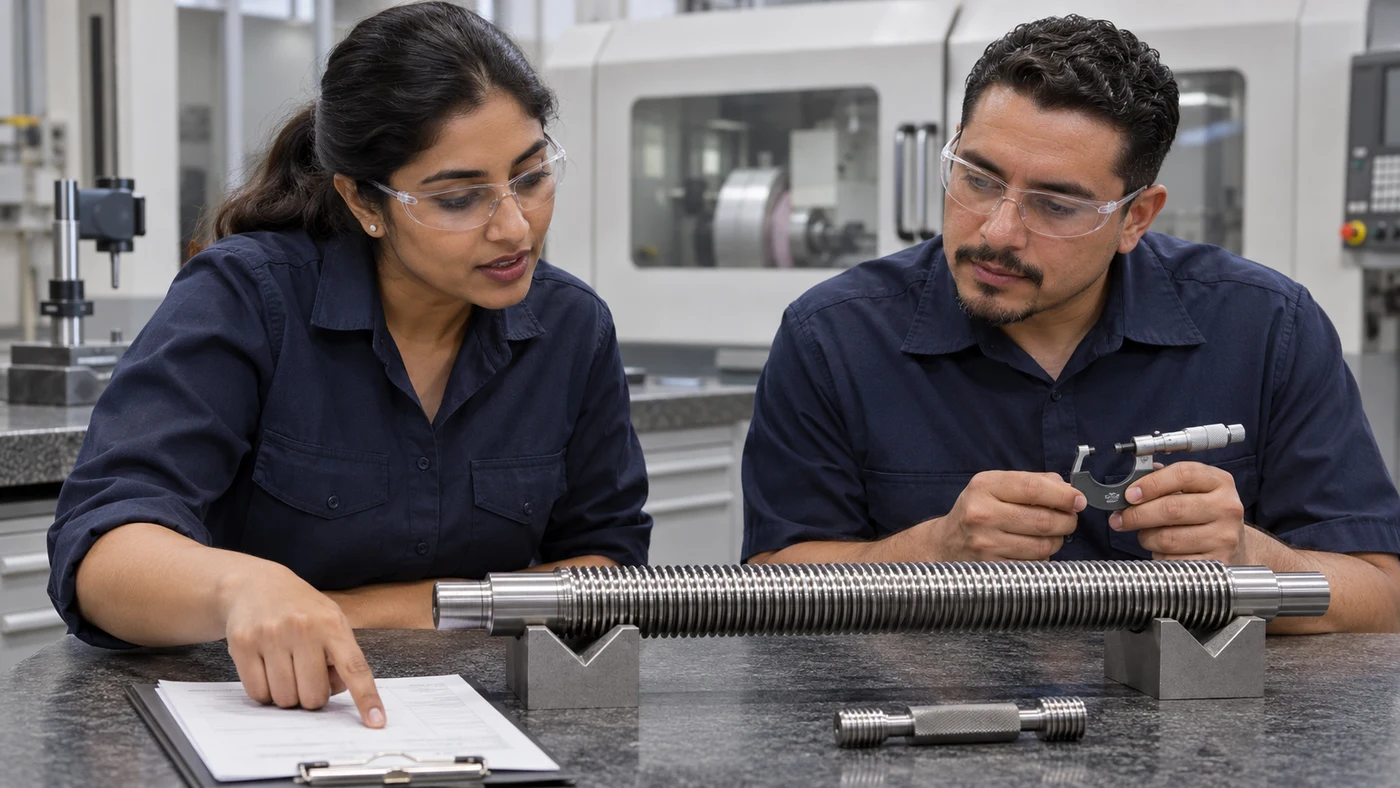
A major-diameter reading alone does not establish thread acceptance. Suitable thread micrometers and wire methods can help assess pitch diameter for the forms they support, but they do not replace every required lead or profile measurement. Use the actual thread form, calibrated contacts or wires, correct measuring method and controlled conditions. Ball-screw raceways and special profiles require their own qualified inspection approach. Verify the drawing's lead, profile, start relationships and datum requirements using capable equipment. Keep the workpiece and measurement temperatures consistent with the inspection procedure. Surface texture and material condition are separate from dimensional fit. A bright flank does not prove that thermal damage is absent. If results drift with startup, dressing or thread position, review support, geometry, conditioning, fluid delivery and temperature before changing the formulation.
Build a Measured Thread-Grinding Fluid Trial
For a thread-grinding inquiry, send QA the part drawing and thread form, hand, pitch, lead, start count and required length. Add the alloy, hardness, incoming stock and whether the feature is internal or external. Identify the machine, wheel arrangement, abrasive and bond, dresser, support and supported grinding cycle. Provide the current fluid, delivered supply, filtration, temperature and maintenance records. For diluted coolant, include water quality and measured concentration. Describe the concern with inspection data and note whether it follows startup, conditioning or a particular part location. QA has coolant and oil options. Agree on controlled trial conditions and compare accepted threads, wheel condition, preparation requirements and fluid maintenance together. Confirm the final formulation and operating instructions with the equipment, abrasive and fluid suppliers.
Fluid selection by material
Use these as evaluation questions, not blanket product approvals.
| Material | What to evaluate | What to confirm |
|---|---|---|
| Hardened alloy steels and precision screws | Evaluate actual hardness, stock distribution, lubrication and thermal sensitivity. | Machine-permitted fluid, supported wheel, lead and profile acceptance, and material-condition inspection. |
| High-speed and other tool steels | Review abrasive choice, fine-profile retention and cutting-face condition. | Wheel and bond, preparation interval, form details and fluid compatibility. |
| Stainless steels and nickel alloys | Confirm operation suitability, loading behavior, lubrication and cleaning requirements. | Actual alloy, wheel system, delivered supply and surface-condition checks. |
| Carbide-containing parts | Confirm the actual substrate and binder rather than transferring steel-fluid assumptions. | Formulation compatibility with binder, abrasive bond, filtration and subsequent processing. |
| Nonferrous or mixed-material work | First confirm the qualified finishing route and every alloy sharing the circuit. | Staining and residue compatibility, contamination, wheel loading and maintenance. |
Questions about thread grinding fluids
Is thread grinding the same as thread turning or thread rolling?
No. Grinding uses an abrasive wheel. Turning cuts with a defined cutting edge, while rolling forms material. Select the finishing route for the material, geometry and requirements.
What is the difference between thread pitch and lead?
Pitch is the axial spacing of adjacent thread forms. Lead is the axial advance along one helix in a full revolution. For an equally spaced multi-start thread, lead equals pitch multiplied by the number of starts.
Does a multi-rib grinding wheel automatically produce a multi-start thread?
No. The number of working wheel ribs and the number of thread starts are different information. Confirm the supported wheel arrangement, path and complete thread definition.
Can an external thread nozzle arrangement be used inside a nut?
Do not assume so. Bore clearance, spindle access, depth and return space can change the supply problem. Qualify the internal-contact arrangement with the equipment and nozzle suppliers.
Does measuring pitch diameter prove that the whole thread is acceptable?
No. Pitch diameter is one characteristic. The drawing may also require lead, profile, start relationships, runout, surface texture and material-condition checks.
Which QA fluid should be selected for thread grinding?
QA has coolant and grinding-oil options. Provide the thread drawing, material, machine, wheel, dressing, delivery and inspection requirements so the actual formulation can be evaluated.
Discuss your application with QA
QA Lubricants has coolant and oil options. Send us the operation, alloy, hardness, tooling, current fluid and the problem you want to solve.
Discuss My ApplicationShop Water Diluted CoolantsShop Straight Cutting OilsTechnical references
- Drake: external thread grinding applications and system requirements
- Drake: internal thread grinding applications and access
- Mitsui Seiki: thread grinding and dedicated inspection systems
- Tungaloy: thread geometry, lead and multiple starts
- ASM Handbook Committee: thread grinding process families
- Norton: thread grinding abrasive example
- A.L.M.T.: dedicated thread grinding dressing tools
- Norton: understanding truing and dressing
- STUDER: controlled grinding fluid delivery
- FUCHS: machining and special grinding oil selection
- UNITED GRINDING: clean fluid, filtration and thermal conditions
- Blaser Swisslube: diluted coolant concentration measurement
- Mitutoyo: screw-thread pitch diameter measurement
- Mitutoyo: three-wire measurement methods and limitations
- UNITED GRINDING: thermal damage and material-condition checks
Original educational content and illustrations. Confirm current machine, tool and fluid instructions. Trademarks belong to their respective owners.