
Thread Milling Cutting Oils & Coolants
Explore CNC thread milling, internal and external threads, cutter selection, coolant delivery, material compatibility and troubleshooting with QA Lubricants.
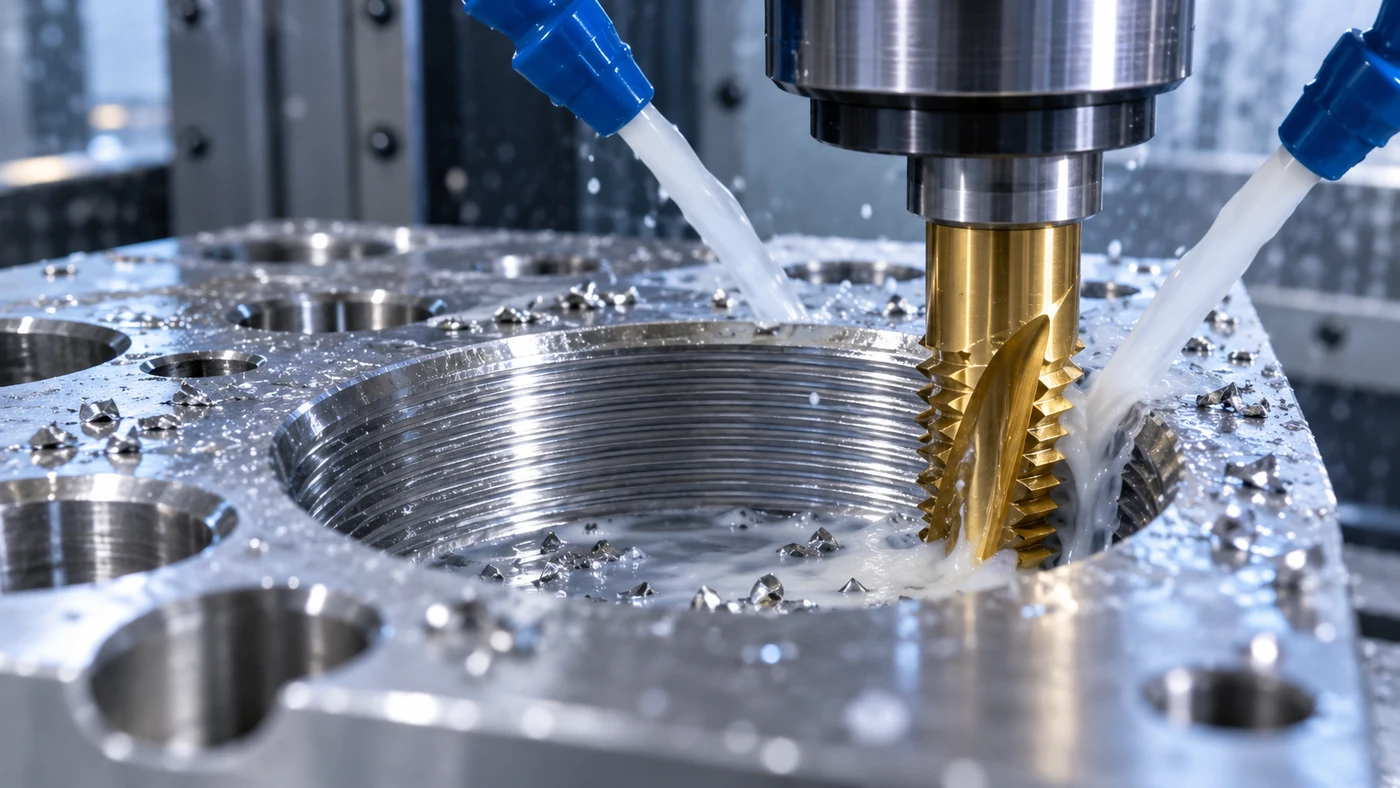
Watch: Thread Milling Cutting Oils & Coolants
Thread Milling: A Rotating Tool on a Helical Path
Thread milling creates a thread by combining cutter rotation with a controlled path around the thread axis and movement along that axis. It is different from driving a tap into a hole, and different from thread forming, which displaces the material. Internal thread milling works inside a prepared opening; external thread milling works around a feature such as a boss. A suitable CNC machine and control must support the required coordinated motion. This guide explains the process and the questions that help select a cutting oil or coolant for thread milling. Start with the drawing: identify the thread form, size, pitch, handedness, depth and acceptance requirements. Then confirm the tool, machine and permitted method. Fluid selection belongs within that complete process, rather than being a substitute for the correct geometry or program.
Understand the Orbit Before Changing the Feed
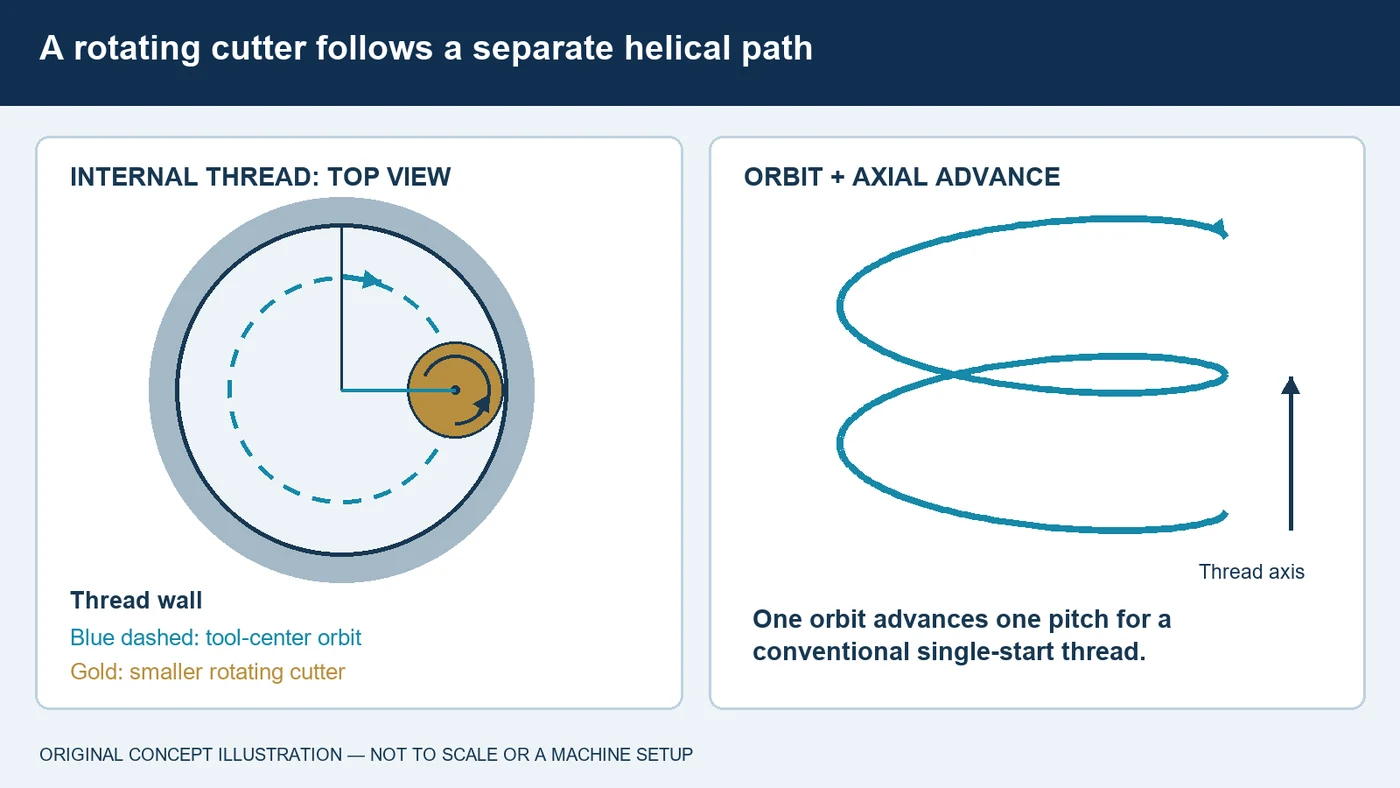
The tool center does not follow the same circle as the thread surface. For an internal thread, the center path is smaller than the surface being generated. External threading has a different geometric relationship. A feed value calculated for a straight milling path therefore may need correction before it becomes the programmed tool-center feed. Use the exact tool maker's calculation and confirm what the CAM system or control expects. If the correction is already included, applying it again creates a different error. For a conventional single-start thread, one complete orbit follows one pitch of axial progression; special thread forms need their own programming review. Check entry, exit, handedness, cutting direction, clearances and simulation with the approved procedure. Do not copy code or a feedrate from another thread size and assume it transfers.
Match the Cutter, Profile & Reach
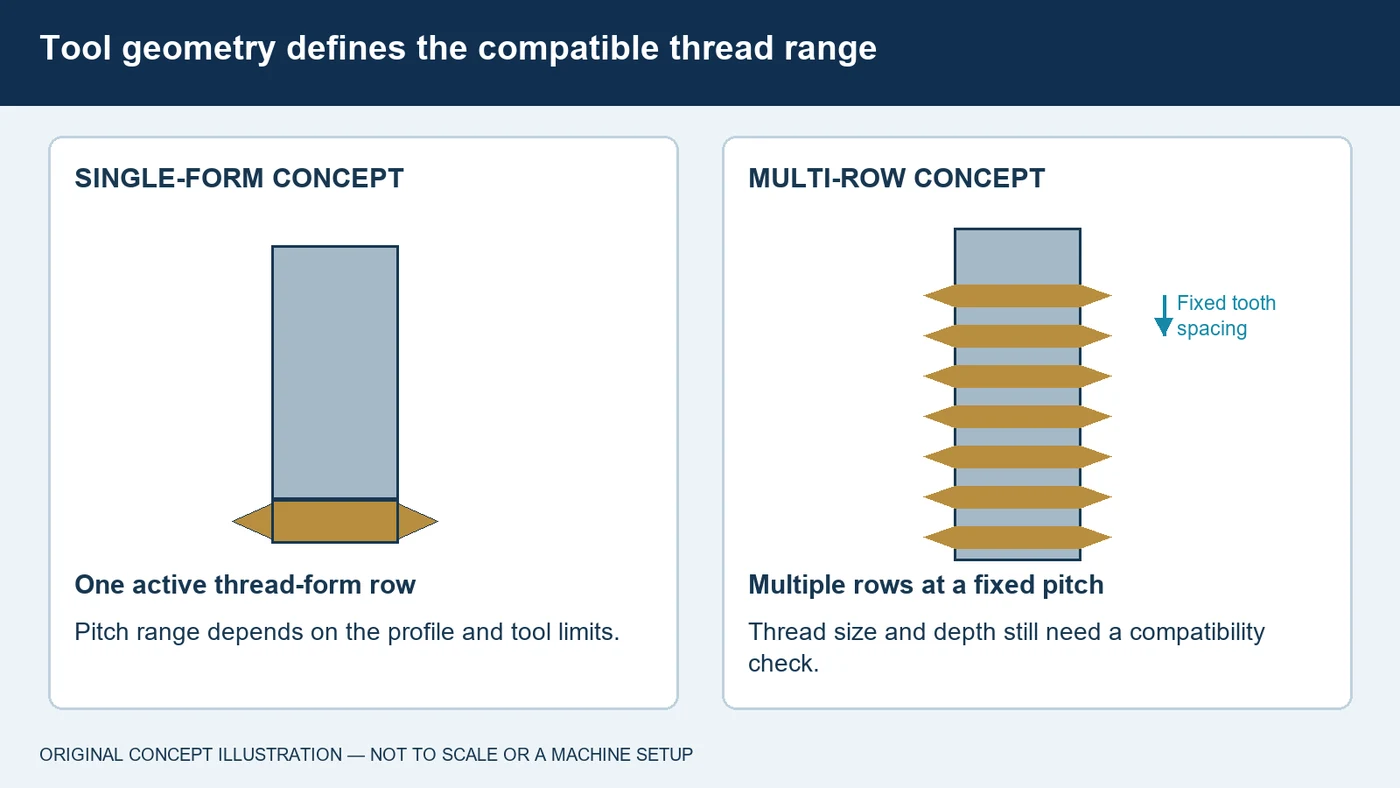
Thread mills include single-form, multi-row and indexable configurations. A single-form tool can cover a compatible range of pitches when its profile and dimensions permit it. A multi-row tool has teeth spaced for a particular pitch, so changing the program does not make it a universal pitch cutter. Internal and external applications may also require different tools. Confirm the manufacturer's supported thread dimensions and depth. For an ordinary thread mill, prepare the hole or external diameter correctly before threading; combination drill-and-thread tools are a separate case. Keep reach, holder accuracy and workpiece support within the application guidance. Long overhang and thin walls can change deflection and inspection results. Partial-profile tooling also leaves some thread features dependent on prior preparation. Check the complete required profile, not only whether a screw will enter.
Choose a Supported Wet or Dry Strategy
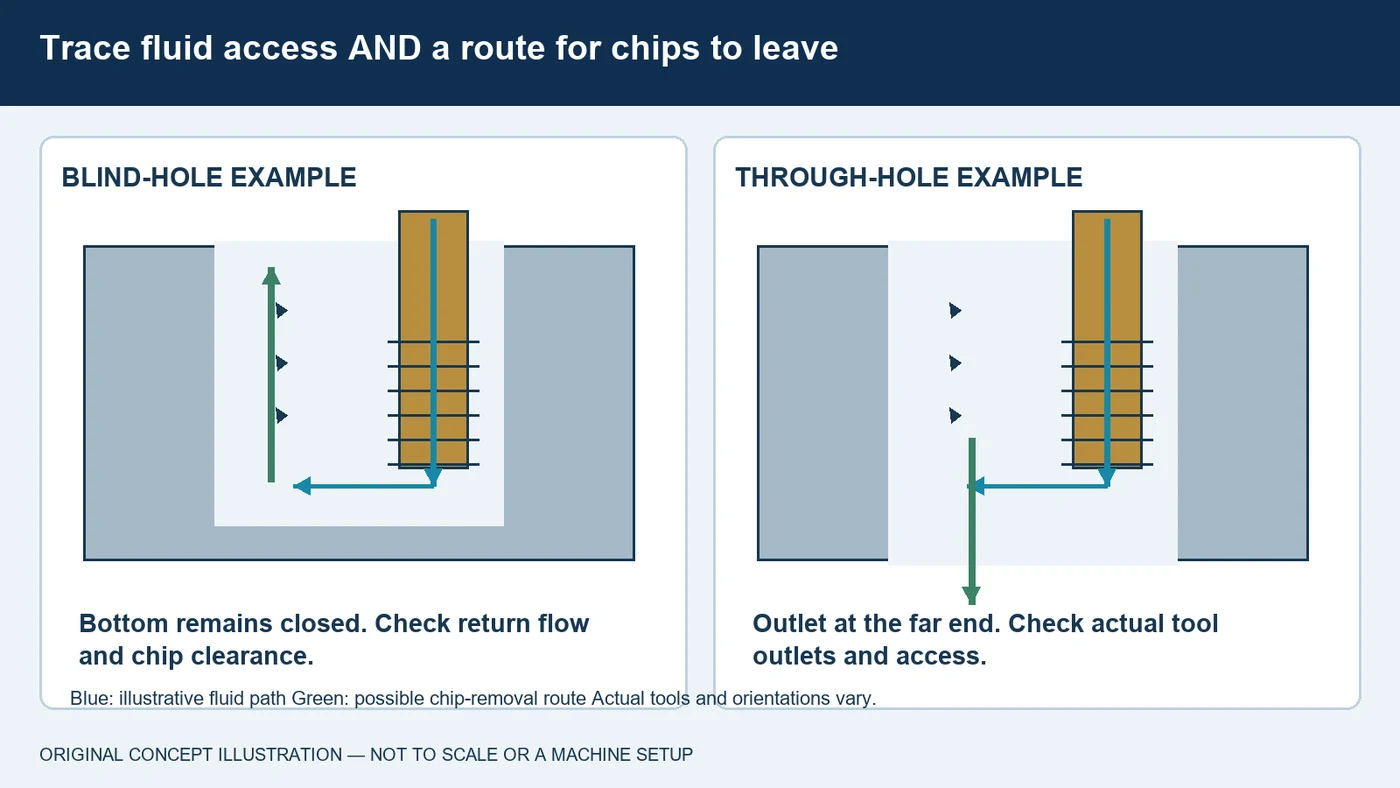
Thread milling is an interrupted cutting process, so fluid delivery must match the tooling strategy. Some manufacturer guidance favors dry machining for particular tooling, while other cutters incorporate coolant passages for specific applications. Treat those recommendations as tool and process guidance, not a universal rule. If wet machining is specified, evaluate consistent access to the cutting region through the entire path. An occasional splash is not the same as the intended supply. Inspect the tool's actual outlet arrangement: passages at the tip and outlets along the flutes direct fluid differently. A blind hole also needs a workable route for chips to leave; a through hole offers different access. Review the machine, holder, filtration and tool requirements together. Use only the supported supply arrangement and operating procedure, rather than increasing pressure by guesswork.
Select Fluid Around the Material & Machine
Where a wet process is appropriate, evaluate the actual formulation rather than rank fluid families by name alone. Water-miscible products and straight oils have different application and machine requirements. Aluminum thread milling calls for attention to adhesion, finish and nonstaining compatibility. Stainless, titanium and nickel-alloy applications need the exact material condition and tooling reviewed, especially when load, heat or tool wear changes. Copper-containing parts require a check of additive chemistry and staining limits. Include every material in a shared sump, along with cleaning, residue and downstream requirements. For a diluted coolant, use the product's specified concentration range and measurement method. An uncorrected refractometer reading is not automatically the working concentration. Do not add an unknown tapping oil to a coolant system to compensate for a program or delivery problem.

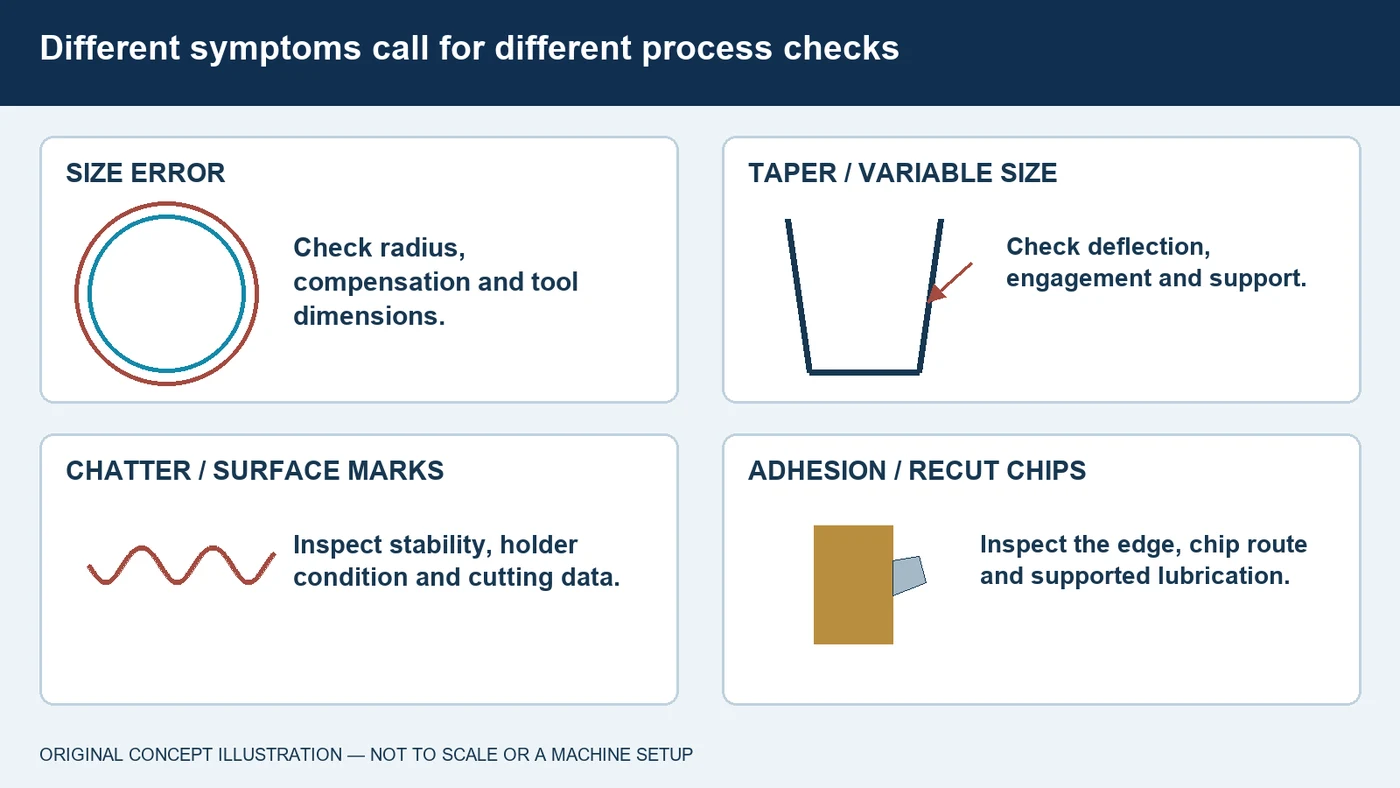
Diagnose the Symptom Before Changing Chemistry
A thread that measures too large or too small needs a review of the path radius, compensation and tool condition. Taper or inconsistent size can involve deflection, engagement, holder accuracy or workpiece movement. Chatter and a damaged surface call for a stability and cutting-condition check. Recut chips or material adhering to the edge also justify inspecting the chip path and the supported lubrication arrangement. Fluid condition can contribute, but it is only one part of the investigation. Record whether the problem appears at entry, near the bottom, during the main path or at exit. Keep a sample of the affected result and inspect the tool safely. Use manufacturer troubleshooting guidance to select the next step. Multiple passes can be appropriate for some applications, but their depth and sequence should come from the tool and process review.
Verify the Thread & Maintain the Process
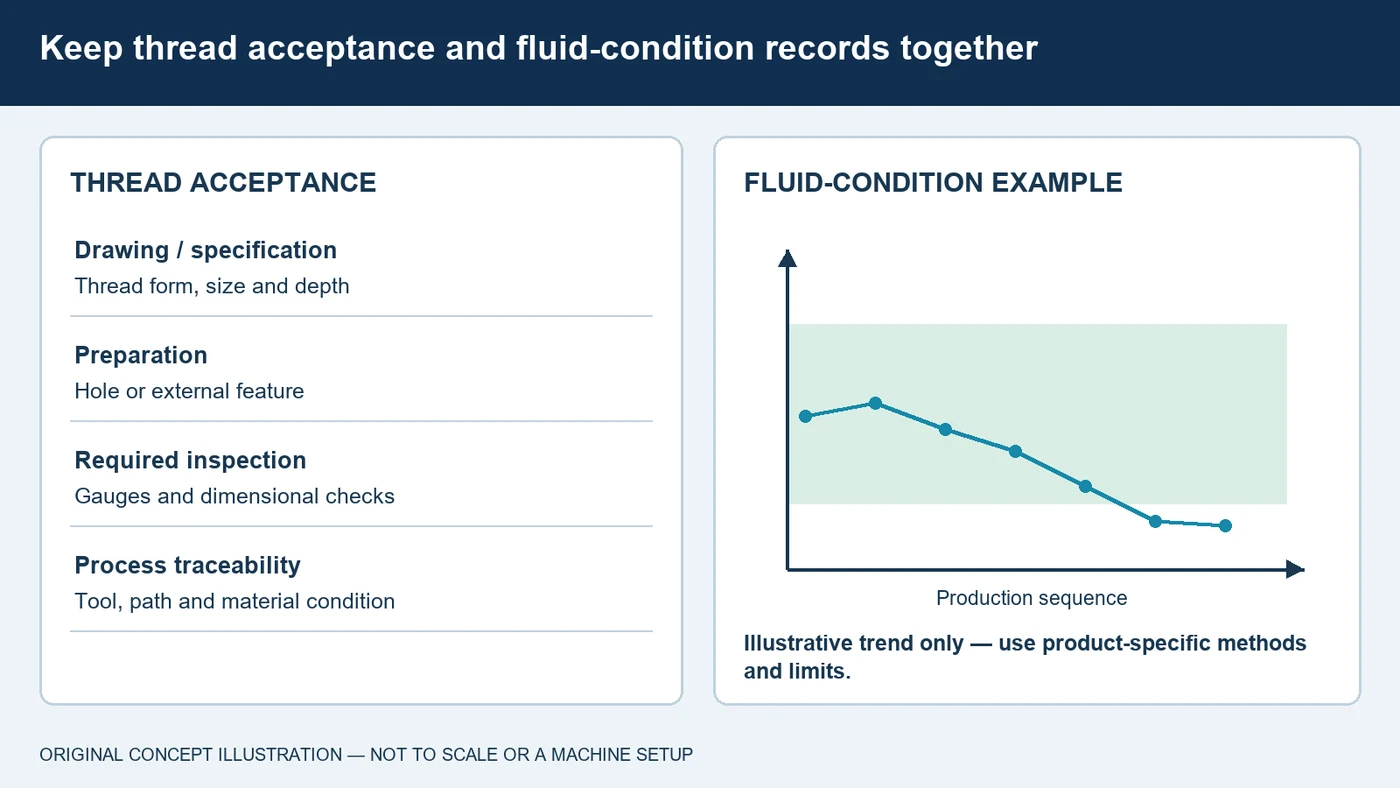
Inspect the finished thread against the drawing and the agreed quality procedure. Use the required gauges and dimensional checks, and include any specified profile or surface requirements. A good-looking surface or a mating fastener is not a replacement for that inspection. Compare results at the required locations when taper or depth is in question. Keep the prepared hole or external feature measurements with the thread record. During a trial, document the tool, path revision, holder, material condition and delivery arrangement. Track diluted-coolant concentration using the product-specific method, or apply the appropriate condition checks for a neat oil. Record top-ups, contamination and filtration changes. Compare conforming output, tool use and cleaning results under consistent conditions before attributing an improvement to a different cutting oil or coolant.
Bring QA Your Thread-Milling Application
For help with a thread milling coolant or cutting oil, send QA Lubricants the alloy and condition, thread form and dimensions, required depth and blind or through-hole configuration. Tell us whether the thread is internal or external. Include the cutter model and geometry, machine and holder, approved wet or dry guidance and the available delivery arrangement. Share the current fluid and its control method, plus the problem you want to solve: adhesion, surface finish, tool use, chip removal, thread acceptance or cleaning. QA has coolant and cutting-oil options and can help evaluate candidates for the complete application. Confirm machine, tool and fluid compatibility and define the trial's acceptance criteria before changing the process. Explore the machining learning center at QA Lube dot com, or call one, eight seven seven, eight seven seven, six two two one.
Fluid selection by material
Use these as evaluation questions, not blanket product approvals.
| Material | What to evaluate | What to confirm |
|---|---|---|
| Aluminum alloys | Evaluate nonstaining lubrication, adhesion control and chip removal. | Alloy and temper; tool geometry; residue, finish and cleaning requirements. |
| Carbon and alloy steels | Review the tool supplier's wet or dry strategy and the intended duty. | Grade, hardness, scale, thread dimensions and stability; do not transfer conditions from another steel. |
| Austenitic and other stainless steels | Evaluate adhesion, work hardening, fluid access and consistent production conditions. | Exact stainless grade, tool grade and path; distinguish chemistry problems from rubbing or excess engagement. |
| Titanium and nickel alloys | Review thermal and lubrication demands with tool and fluid suppliers. | Specific alloy, hardness, tool and machine-approved delivery; qualified process requirements. |
| Copper, brass and bronze | Evaluate nonstaining chemistry, including active-sulfur compatibility. | Exact alloy, staining limits, cleaning and other metals sharing the sump. |
| Cast iron and hardened steels | Start with the tool-specific machining and chip-management strategy. | Supported material range, hardness, dry/wet guidance, enclosure and extraction arrangements. |
Questions about thread milling fluids
Is thread milling the same as tapping?
No. A thread mill cuts while following a controlled helical path. A tap follows the thread lead into the hole; forming taps displace material rather than cut it. The machine capability, tooling and process checks differ.
Should thread milling run wet or dry?
Follow the exact cutter and application guidance. Some tooling guidance favors dry machining; other tools are designed for coolant delivery. When wet machining is specified, review consistent access and chip removal throughout the path. There is no universal coolant rule for every thread mill.
Can one thread mill make different threads?
Sometimes. Compatibility depends on cutter geometry, pitch or pitch range, thread profile, thread diameter, depth and internal versus external use. A multi-row cutter with fixed tooth spacing is not a universal multi-pitch tool.
Why does an internal thread milling program need a feed correction?
The cutter center follows a smaller circle than the internal surface being generated. Confirm whether the tooling calculator, CAM system or control already applies the required correction. Do not apply it twice.
Will more coolant fix a tight or tapered thread?
Not necessarily. Inspect the programmed radius and compensation, tool and holder condition, deflection, workholding, hole preparation and measurement procedure as well as fluid delivery. Use the symptoms to choose the next check.
Which QA fluid should I use for thread milling?
QA has coolant and cutting-oil options. Send the material and condition, thread specification, cutter, machine, delivery arrangement, current fluid and problem. A named grade recommendation requires review of that complete application.
Discuss your application with QA
QA Lubricants has coolant and oil options. Send us the operation, alloy, hardness, tooling, current fluid and the problem you want to solve.
Discuss My ApplicationShop Water Diluted CoolantsShop Straight Cutting OilsTechnical references
- Sandvik Coromant: thread milling process and machine capability
- Sandvik Coromant: cutter selection, profiles and holders
- Sandvik Coromant: application tips, paths and wet/dry considerations
- Carmex: thread mill configurations and coolant passages
- Harvey Performance: circular interpolation and adjusted feed
- Haas Tooling: thread milling setup and feedrate considerations
- Guhring: thread milling troubleshooting
- Sandvik Coromant: thread milling wear and troubleshooting
- Allied Machine: thread milling reference guide
- QualiChem: water-miscible machining fluid families
- Blaser Swisslube: product-specific coolant concentration measurement
Original educational content and illustrations. Confirm current machine, tool and fluid instructions. Trademarks belong to their respective owners.