Tool and Cutter Grinding Oils and Coolants
Explore tool and cutter grinding fluid selection for carbide and HSS tools, including fluting, gashing, clearance grinding, binder compatibility and resharpening.
Watch: Tool and Cutter Grinding Oils and Coolants
Tool and Cutter Grinding: Build or Restore the Cutting Geometry
Tool and cutter grinding creates or restores the geometry of cutting tools such as end mills, drills, reamers and suitable form tools. New-tool manufacture starts from a defined blank and process plan. Resharpening starts with an existing tool whose wear, damage and remaining geometry must be assessed. The fluid is selected for grinding that tool material. The alloy the finished cutter will eventually machine is separate information and does not by itself identify the grinding fluid. Establish the substrate, binder where applicable, coating condition, stock and required geometry. Also identify the actual machine and abrasive process. QA has coolant and grinding-oil options for evaluation with the wheel, delivery system and inspection plan. This guide covers grinding; combined grinding and electrical erosion require a separate review of each process.
Flutes, Gashes and Clearances Present Different Contacts
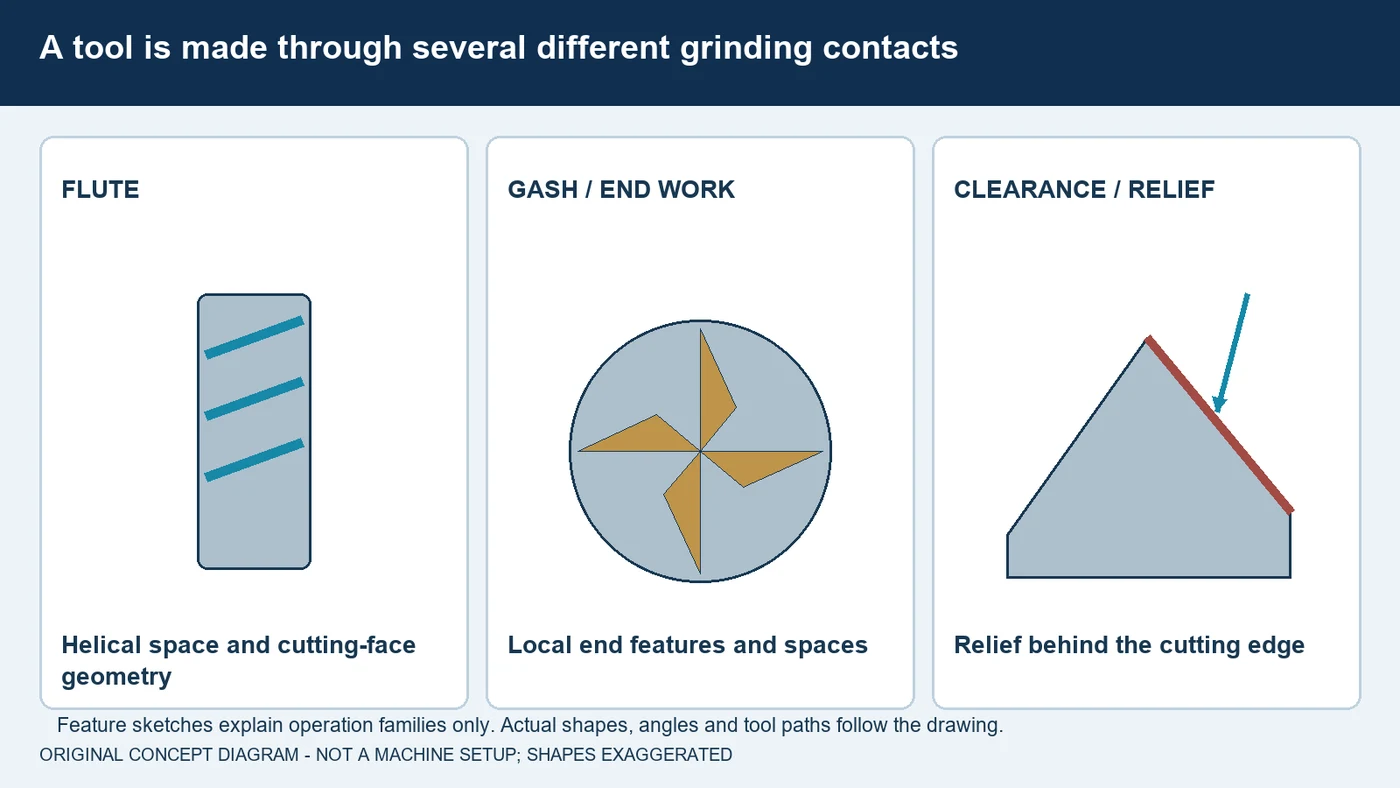
A cutting tool is made through a sequence of operations, not a single generic grinding contact. Flute grinding forms the helical chip space and associated cutting-face geometry. Gashing creates local spaces near the end of a tool, while clearance grinding establishes relief behind the cutting edge. Diameter, end geometry, corner radii and other features can add further operations. Their contact locations, working-wheel shapes and access conditions differ. Describe which operation is causing the concern. A supply arrangement that reaches a flute may be obstructed or poorly aligned during end work. Review the complete programmed cycle and supported wheel changes. Do not treat an illustrative cutter shape as the required tool drawing. Match every feature to the actual tool design, workholding and inspection method before evaluating a fluid change.
Match Abrasive, Bond and Working-Face Condition
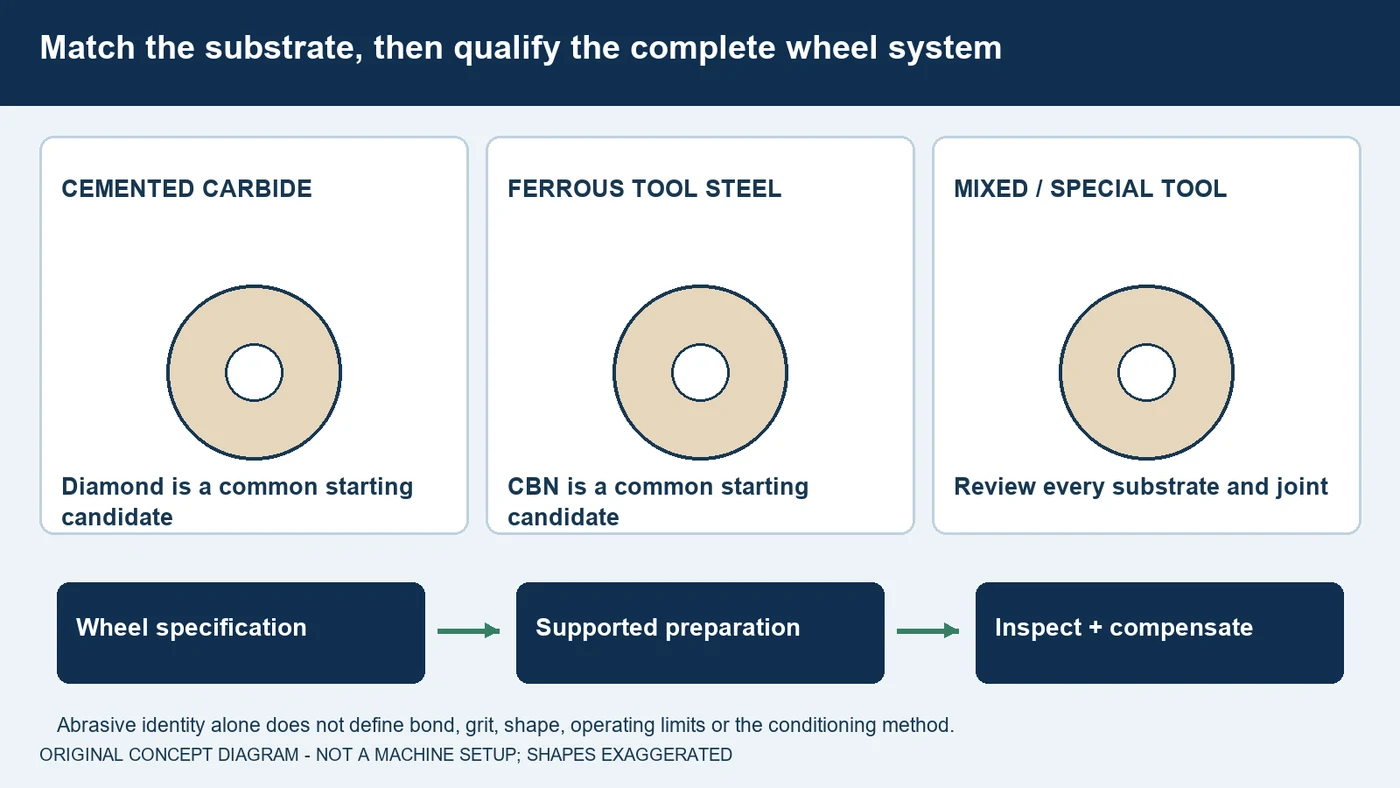
Diamond is commonly used for cemented-carbide tool grinding, while CBN is commonly associated with hardened ferrous tool materials such as high-speed steel. Those are starting points for supplier selection, not interchangeable wheel prescriptions. Mixed carbide-and-steel tools, brazed assemblies and unusual substrates need their own review. The bond, grit, concentration, wheel shape and supported preparation method all affect the application. Truing concerns geometry and alignment; dressing concerns the active cutting face. A wheel may lose a corner, load or dull in different ways. Keep the wheel and dresser references, preparation history and supported compensation with the process record. Compare fluid-trial tools at similar conditioning stages. Investigate changes in the working edge or wheel preparation before attributing form drift, edge damage or finish changes to the formulation.
Supply the Moving Grinding Interface Throughout the Cycle
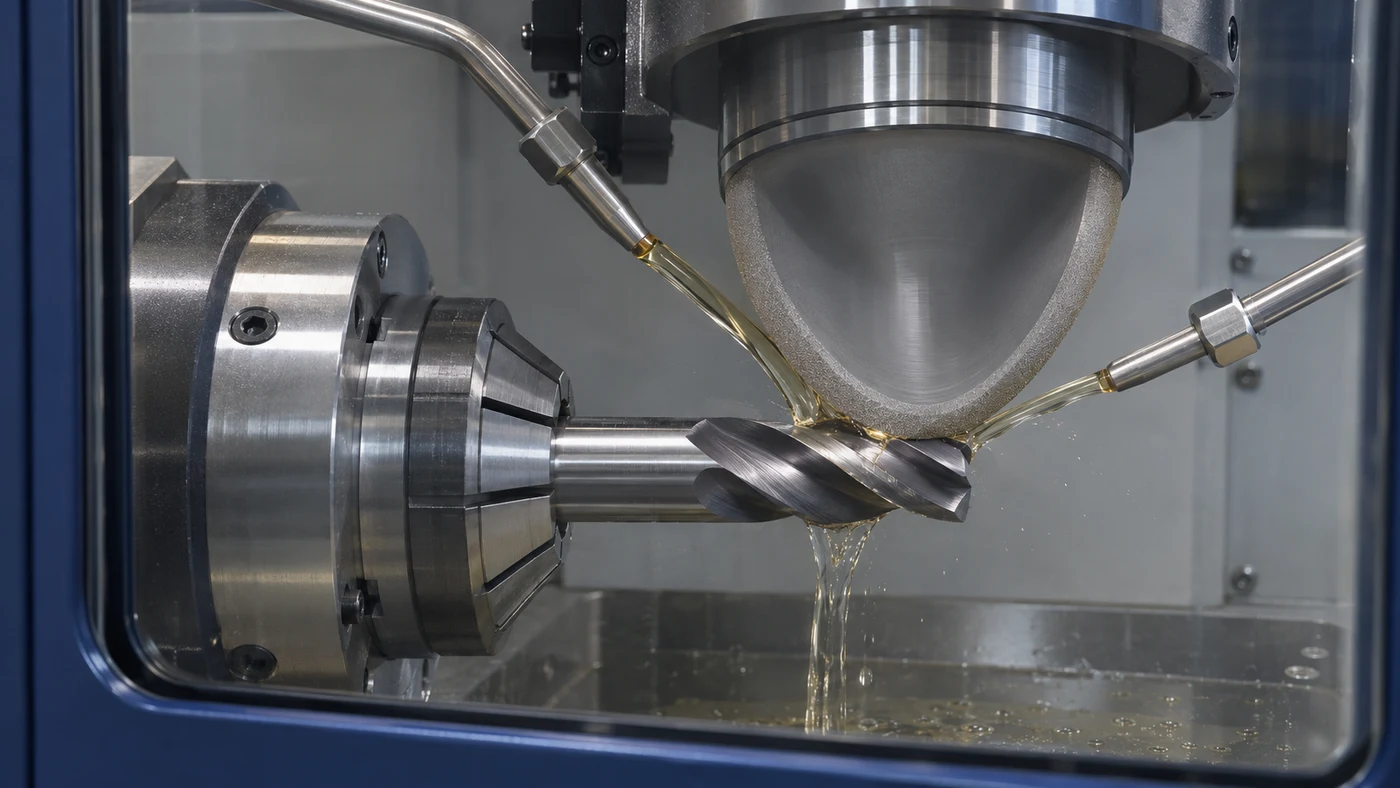
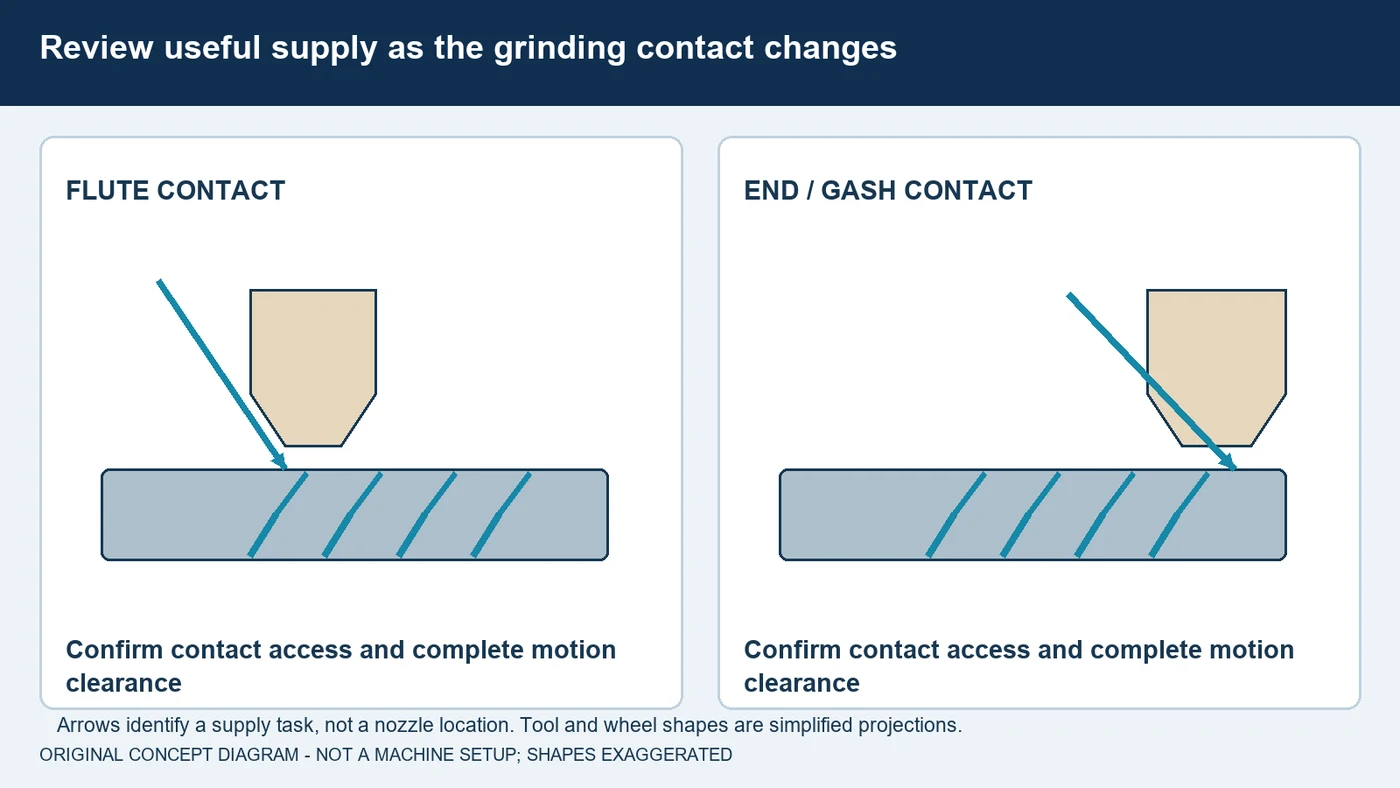
Grinding fluid must reach the active wheel-to-tool interface throughout the supported motion. A wet enclosure or a large splash does not establish useful supply at the contact. Check the nozzle arrangement during fluting, gashing, clearance work and transitions between them. Include wheel-pack changes, prepared wheel size, tool length and nearby workholding in the clearance review. Distinguish contact supply from separate wheel-cleaning or machine-wash duties. The nozzle, pump, filter and return circuit work together, so a restriction elsewhere can change the delivered supply. Use the machine and nozzle suppliers' qualified arrangement and document the operating conditions. Published jet speeds, pressures or productivity results from another installation are not universal tool-grinding instructions. Verify contact access and repeatability before comparing formulations under otherwise consistent conditions.
Confirm Binder Compatibility for Carbide Grinding
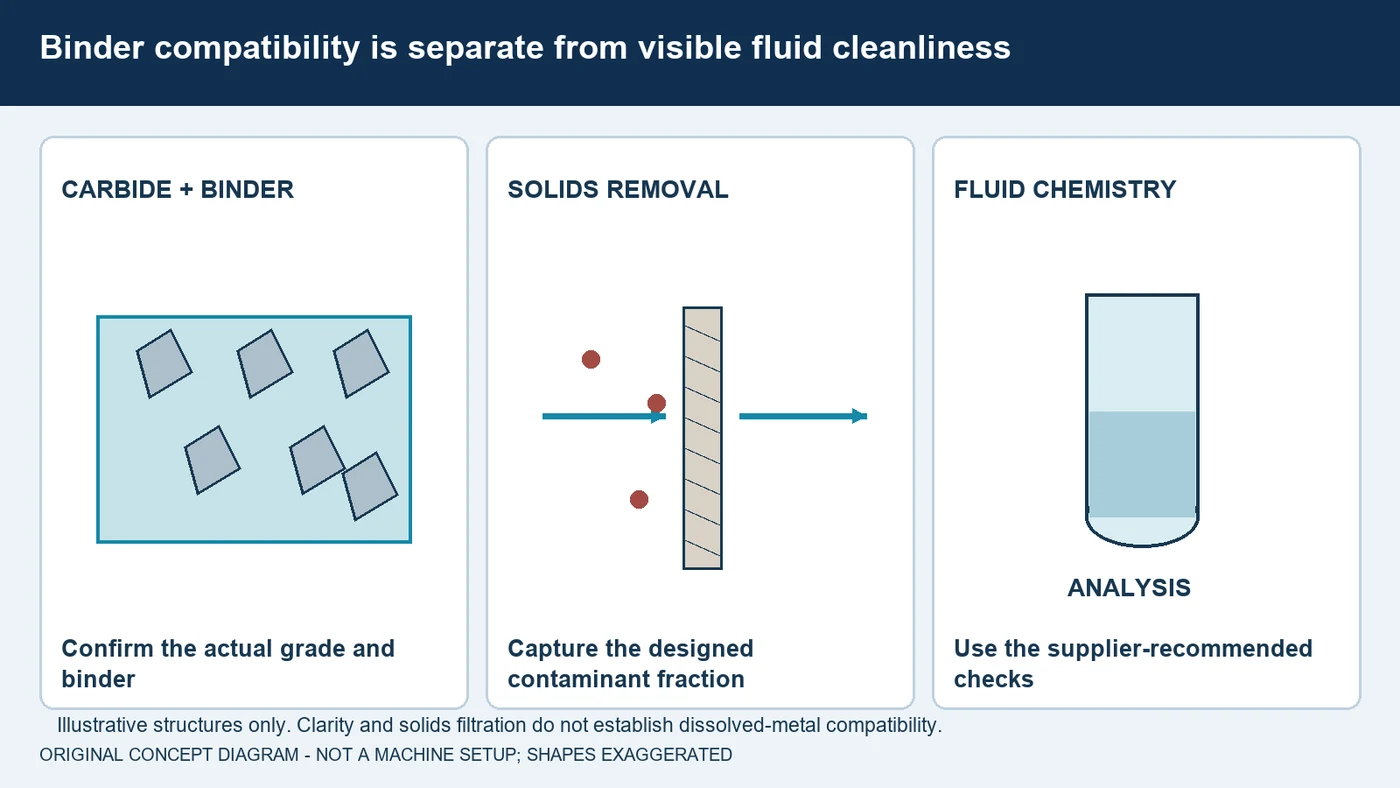
Cemented carbide contains hard particles held by a binder, often cobalt. The grinding fluid has to be compatible with that actual material system. Do not assume that every grinding oil prevents cobalt leaching or that every water-miscible fluid is unsuitable. Manufacturers offer formulation-specific approaches in both fluid categories; the selected product and machine must be evaluated together. Foreign fluids, including leakage from other lubrication circuits, can change the chemistry of an otherwise suitable sump. Review contamination and maintenance with the fluid supplier. Filtration removes the solids it is designed to capture; a clean-looking liquid is not proof that dissolved-metal chemistry is controlled. Use the recommended fluid-analysis and maintenance procedure. Keep the wheel bond, tool-cleaning requirements and any subsequent coating process in the compatibility review, rather than judging a fluid only by its appearance.
Keep Fluid Selection, Cleanliness and Temperature Together
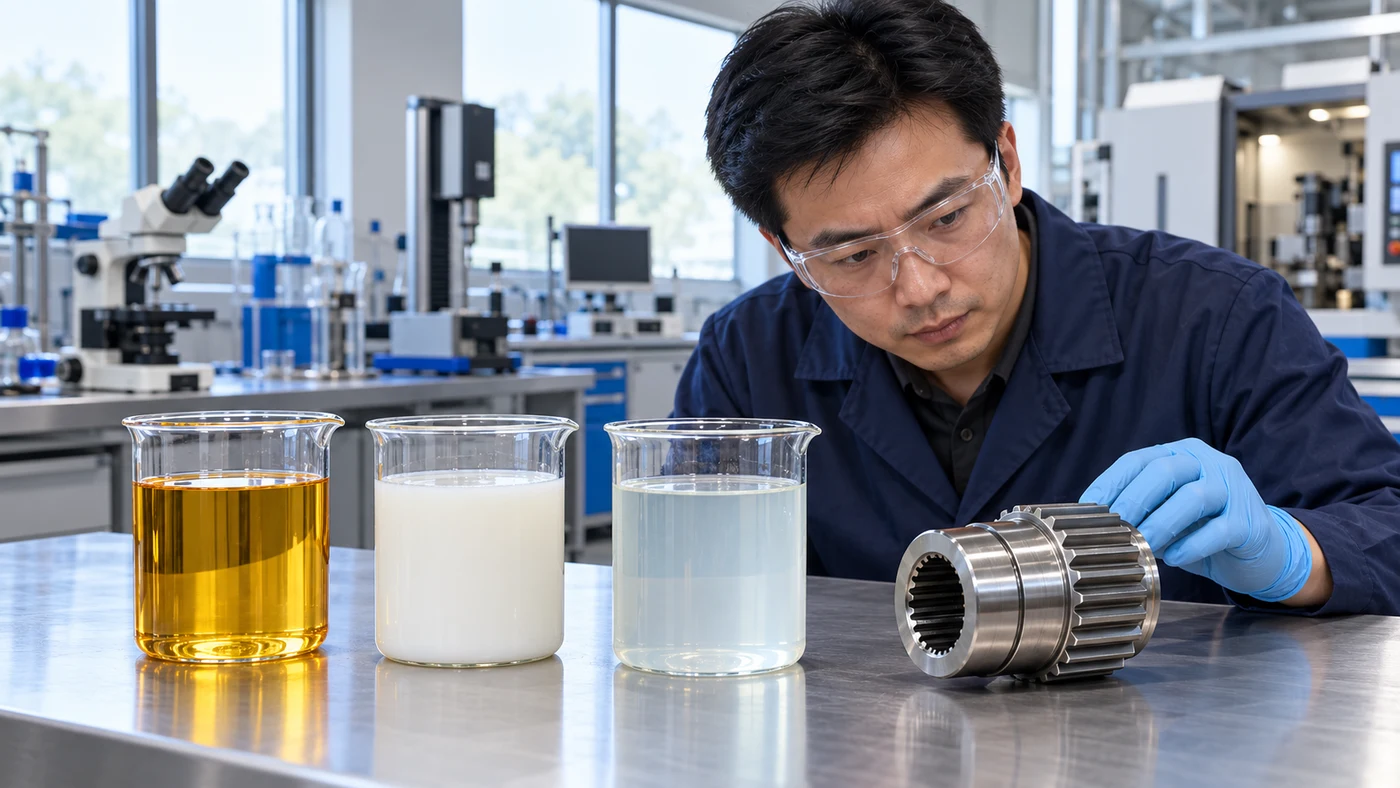
Tool grinding oils are often selected for suitable production systems, but the machine instructions and complete application determine the permitted fluid. Evaluate viscosity, lubrication, wetting, air release, foam control, filterability, corrosion protection and residues. Confirm compatibility with the actual substrate, binder, bond and machine materials. Keep metal and abrasive debris out of recirculated supply, and maintain the required fluid-temperature conditions. Where a water-miscible product is permitted, follow its mixing, water-quality and concentration instructions, including the correct refractometer factor. A machine that combines grinding and erosion can impose additional fluid requirements; do not transfer a grinding-only selection without confirmation. Keep extraction and protective systems suitable for the approved fluid. QA has coolant and oil options. Compare maintained fluids with recorded supply and temperature conditions instead of an uncontrolled sump change.
Verify Geometry, Edge Condition and the Resharpening Result
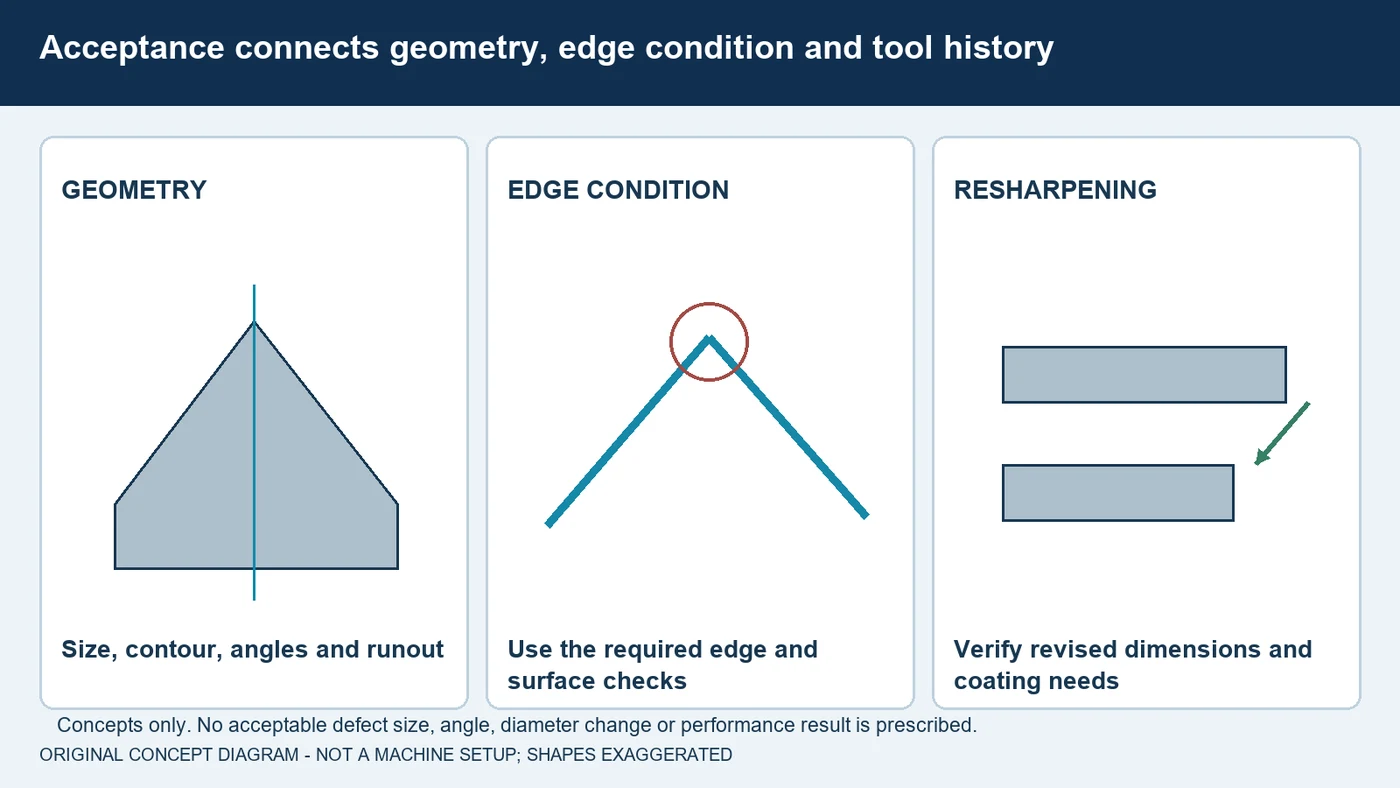
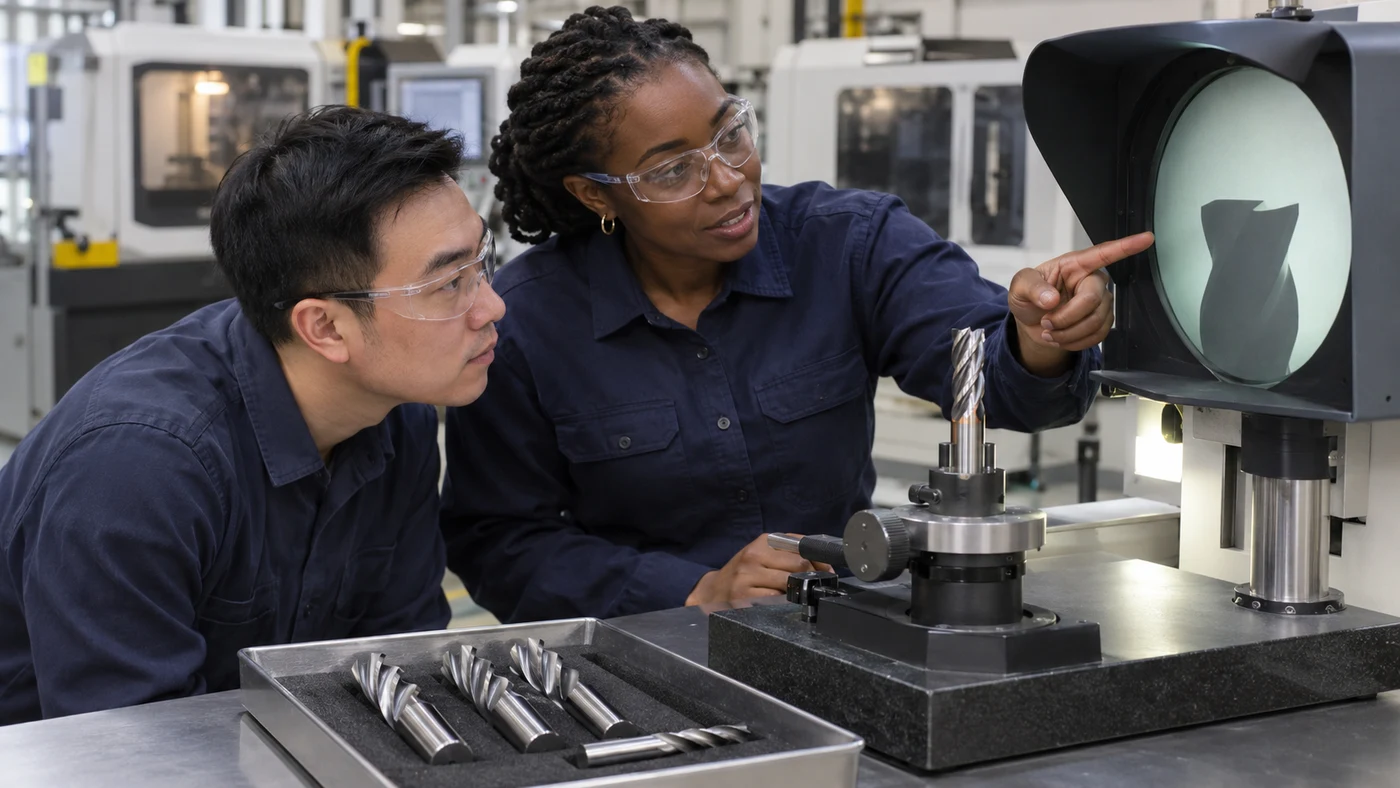
A shiny cutting tool is not proof that its geometry and edge condition are acceptable. Use capable inspection equipment and the actual drawing to check the required diameters, contours, rake, clearance, end features and runout. Inspect relevant edges and surfaces for damage using the specified method. A good diameter reading alone does not establish that every flute or end feature is correct, and appearance alone cannot rule out thermal damage. For resharpened tools, assess the incoming wear and record changes to dimensions, length or geometry. Review remaining coating and any stripping, cleaning, edge preparation or recoating requirements with the responsible suppliers. Do not assume a reground tool retains its original cutting data unchanged. Agree on the acceptance and subsequent machining trial needed before returning it to production.
Plan a Controlled Tool-Grinding Fluid Trial
For a tool-and-cutter grinding inquiry, send QA the tool drawing, substrate and binder, coating condition and whether the job is new manufacture or resharpening. Identify the problem operation, such as fluting, gashing or clearance grinding, and describe it with inspection data. Add the machine, wheel and bond, preparation interval, workholding and supported cycle. Provide current fluid details, delivered supply, filtration, temperature and contamination records. For diluted coolant, include water quality and measured concentration. Describe any subsequent cleaning, coating or cutting trials. QA has coolant and oil options for evaluation. Agree on controlled conditions and compare accepted geometry, edge condition, wheel preparation and fluid maintenance together. Confirm the final formulation and operating instructions with the equipment, abrasive and fluid suppliers before adopting the revised process.
Fluid selection by material
Use these as evaluation questions, not blanket product approvals.
| Material | What to evaluate | What to confirm |
|---|---|---|
| Cobalt-bonded cemented carbide tools | Confirm the actual carbide grade, binder and formulation-specific compatibility. | Machine-permitted fluid, wheel bond, contamination control, analysis and downstream coating needs. |
| High-speed steel and other ferrous tool steels | Evaluate abrasive selection, lubrication, thermal conditions and fine-edge requirements. | Qualified wheel and bond, conditioning, delivery and material-condition inspection. |
| Brazed carbide or mixed carbide-and-steel tools | Review every material, joint and grinding contact in the assembly. | Combined-material abrasive selection, formulation compatibility and cleaning requirements. |
| Coated tools being resharpened | Assess wear, damage, remaining geometry and coating condition before grinding. | Accepted dimensional changes, edge preparation, cleaning and any recoating process. |
| PCD, PCBN and other special tool materials | Identify whether the qualified process is grinding, erosion, laser processing or a combination. | Process-specific machine and fluid requirements; do not transfer a standard carbide recipe. |
Questions about tool and cutter grinding fluids
Is this fluid the coolant used when an end mill cuts a workpiece?
This guide addresses fluid used to manufacture or resharpen the cutting tool by grinding. The fluid used later for milling or drilling is a separate application decision.
Can the same nozzle setup serve fluting, gashing and clearance grinding?
Do not assume so. The contact location, wheel shape, tool motion and obstructions can change. Review useful supply and clearance throughout the supported cycle.
Must every carbide grinding application use oil?
No blanket rule replaces machine and formulation review. Specific oil and water-miscible products are designed for carbide applications. Confirm binder, wheel-bond and machine compatibility for the actual product.
Does clear-looking grinding fluid prove cobalt compatibility?
No. Appearance does not establish dissolved-metal chemistry or binder compatibility. Review the actual formulation, contamination and recommended analysis with the fluid supplier.
Can a resharpened tool return to its original cutting program unchanged?
Not automatically. Grinding can change dimensions, geometry and coating condition. Verify acceptance and the required subsequent machining trial before returning the tool to production.
Which QA fluid should be selected for tool and cutter grinding?
QA has coolant and grinding-oil options. Provide the tool material, drawing, operation, machine, wheel, delivery and acceptance requirements so a formulation can be evaluated.
Discuss your application with QA
QA Lubricants has coolant and oil options. Send us the operation, alloy, hardness, tooling, current fluid and the problem you want to solve.
Discuss My ApplicationShop Water Diluted CoolantsShop Straight Cutting OilsTechnical references
- WALTER: cutting tool types and manufacturing processes
- Norton Winter: flute, gash and clearance grinding wheel families
- Norton: diamond and CBN abrasive selection
- Norton: truing and dressing of grinding wheels
- ANCA: tool grinding coolant delivery considerations
- Blaser Swisslube: tool grinding fluids and cobalt compatibility
- Master Fluid Solutions: formulation-specific carbide grinding synthetic example
- oelheld: carbide grinding oil and foreign-fluid contamination
- UNITED GRINDING: clean fluid and filtration
- Blaser Swisslube: diluted coolant concentration measurement
- WALTER: cutting tool contour measurement
- Werth: tool geometry measurement
- WALTER: grinding and erosion are distinct processes
- UNITED GRINDING: thermal damage and appropriate verification
Original educational content and illustrations. Confirm current machine, tool and fluid instructions. Trademarks belong to their respective owners.