Wet Belt Grinding Coolants and Metal Finishing Fluids
Explore wet belt grinding coolant selection for steel, stainless steel, aluminum and other metals, including abrasive backing, contact support, filtration and finish control.
Watch: Wet Belt Grinding Coolants and Metal Finishing Fluids
Wet Belt Grinding: Define the Metal and the Result
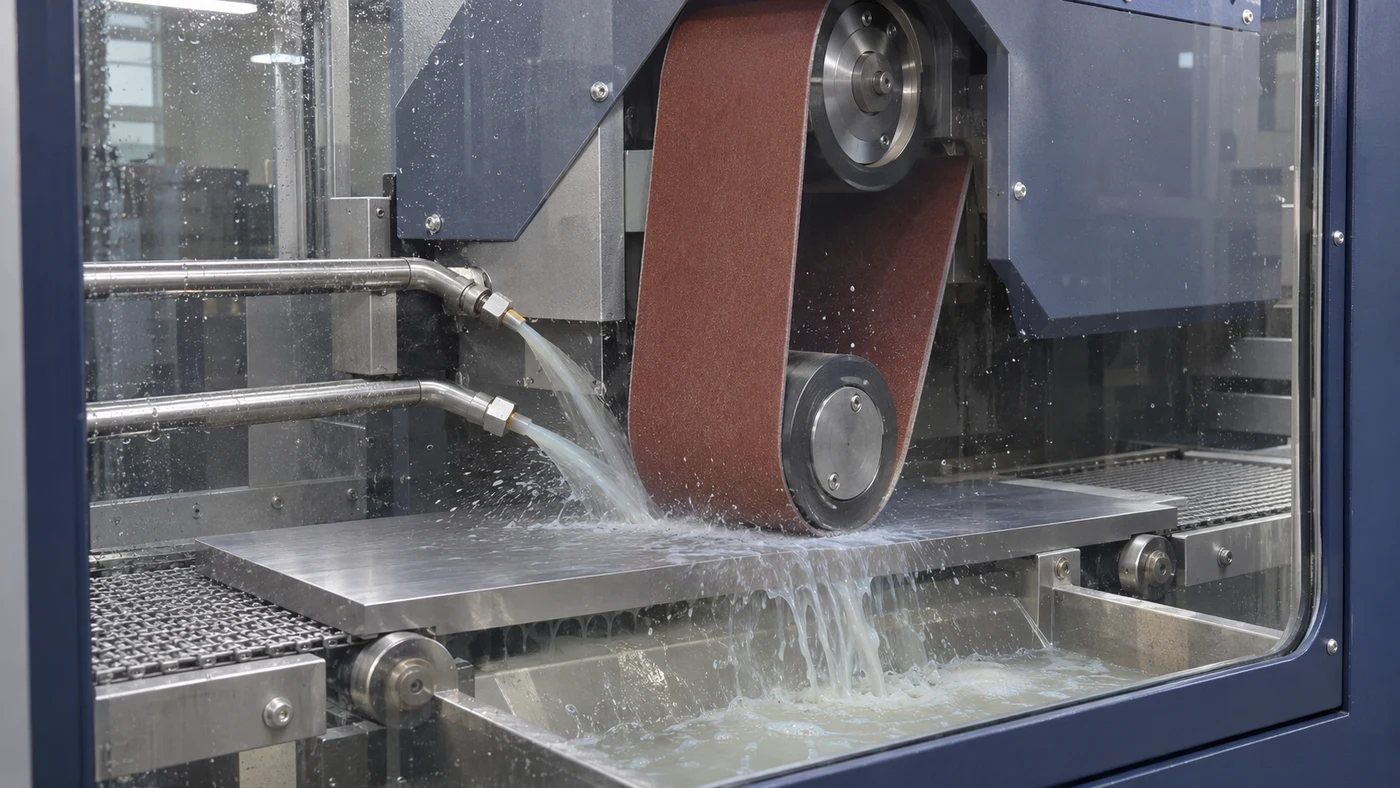
Belt grinding uses a moving coated abrasive to remove material or refine a metal surface. The job may involve stock removal, thickness control, blending, deburring or a specified grain finish. Those objectives need different process and inspection plans. A conveyor-fed wide-belt machine is also different from a contact-wheel grinder or a shaped-part finishing system. Identify the actual equipment and contact method before choosing a fluid. This guide focuses on qualified wet belt processes. Adding liquid to a machine or belt intended only for dry work is not a substitute for a wet-rated system. QA has coolant and oil options for evaluation with the equipment and abrasive suppliers. Begin with the alloy, incoming condition and required result so the fluid discussion is tied to the operation.
The Contact Support Changes the Grinding Action
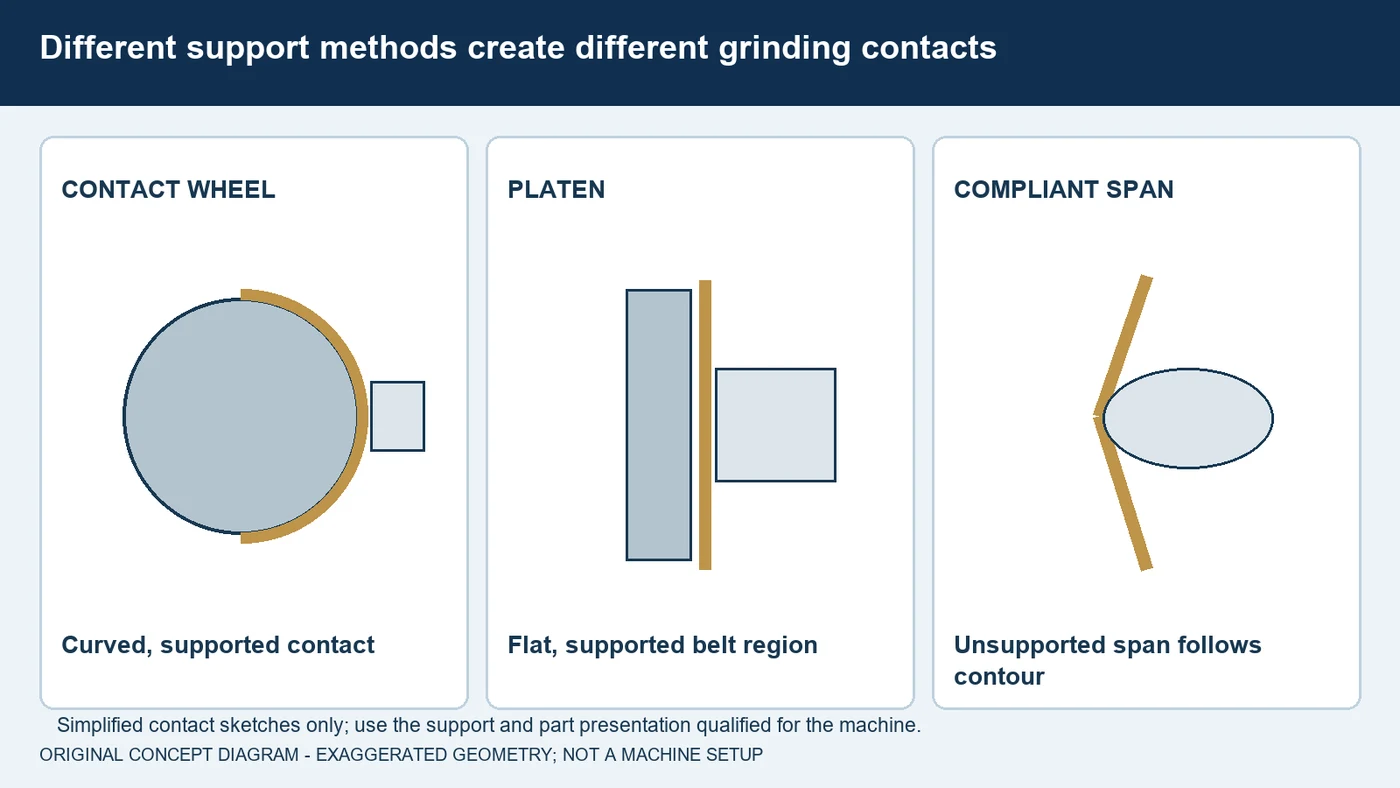
The abrasive grain is only one part of a belt-grinding system. A contact wheel supports the belt through a curved contact, while a platen provides a different supported surface. A compliant belt span can suit other contouring tasks. These arrangements should not be treated as interchangeable setups. Contact-wheel hardness, surface form and condition influence the effective cut and the resulting finish. The belt backing and the way the workpiece is presented also matter. A rigid thickness-grinding task and a contour-blending task do not have the same acceptance criteria. Record the qualified support arrangement and part path in a fluid trial. A worn contact surface, poor work support or changed presentation can alter the result even when the coolant formulation remains unchanged.
Select the Complete Belt, Including Backing and Joint
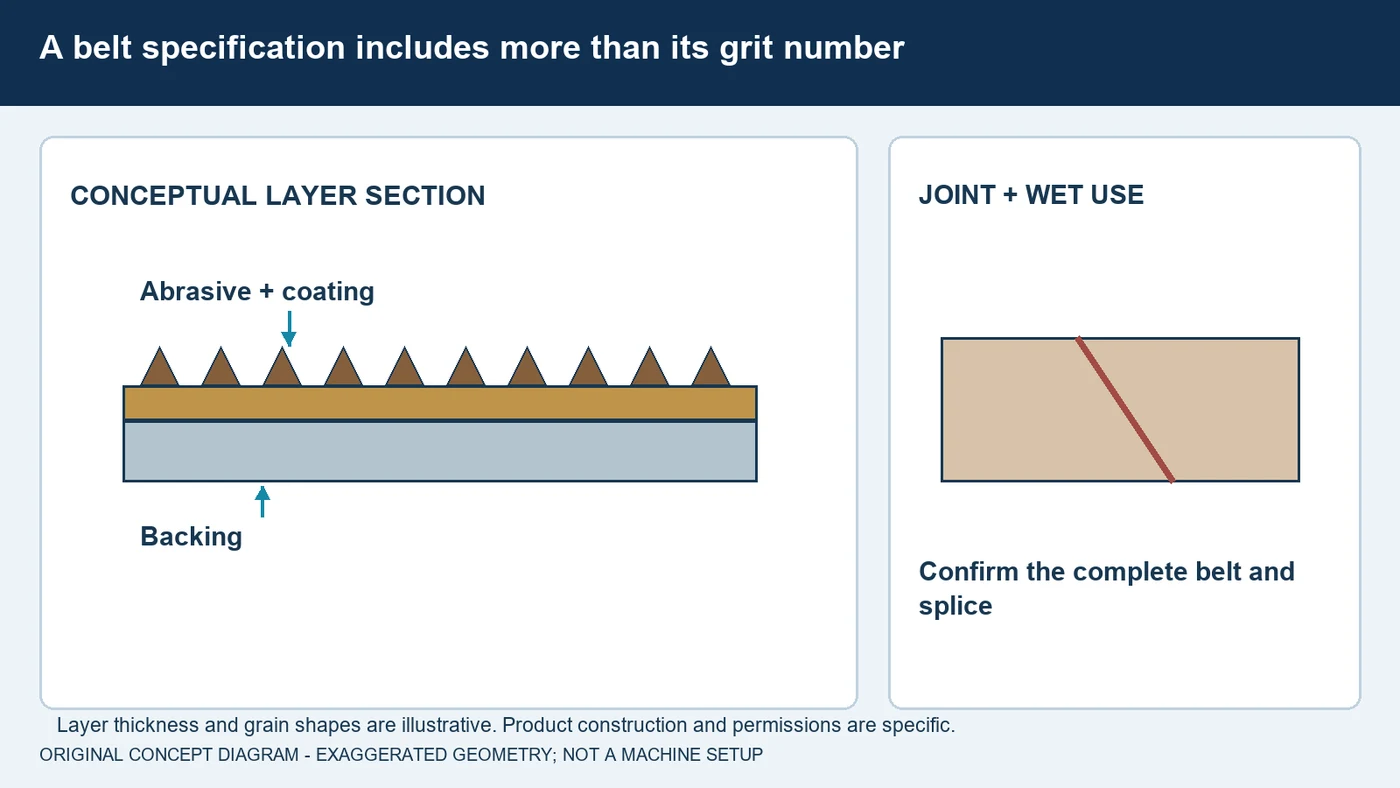
Choose the belt as a complete abrasive product, not just a grit number. Grain type, coating construction, backing stiffness, flexibility and joint design all influence how it performs on the machine. Some belts are specifically constructed for wet or dry operation; that permission cannot be assumed for every backing or splice. Confirm compatibility with the proposed fluid, temperature and operating limits using the abrasive supplier's instructions. Follow the specified installation direction and tracking procedure. For finishing, document the qualified sequence used to remove the previous step's marks rather than assuming that a final fine belt will erase every deep scratch. Inspect belts for damage and changes in cutting behavior. Keep belt age and the portion of its usable life comparable when evaluating a coolant change.
Put Fluid at the Belt-to-Metal Contact
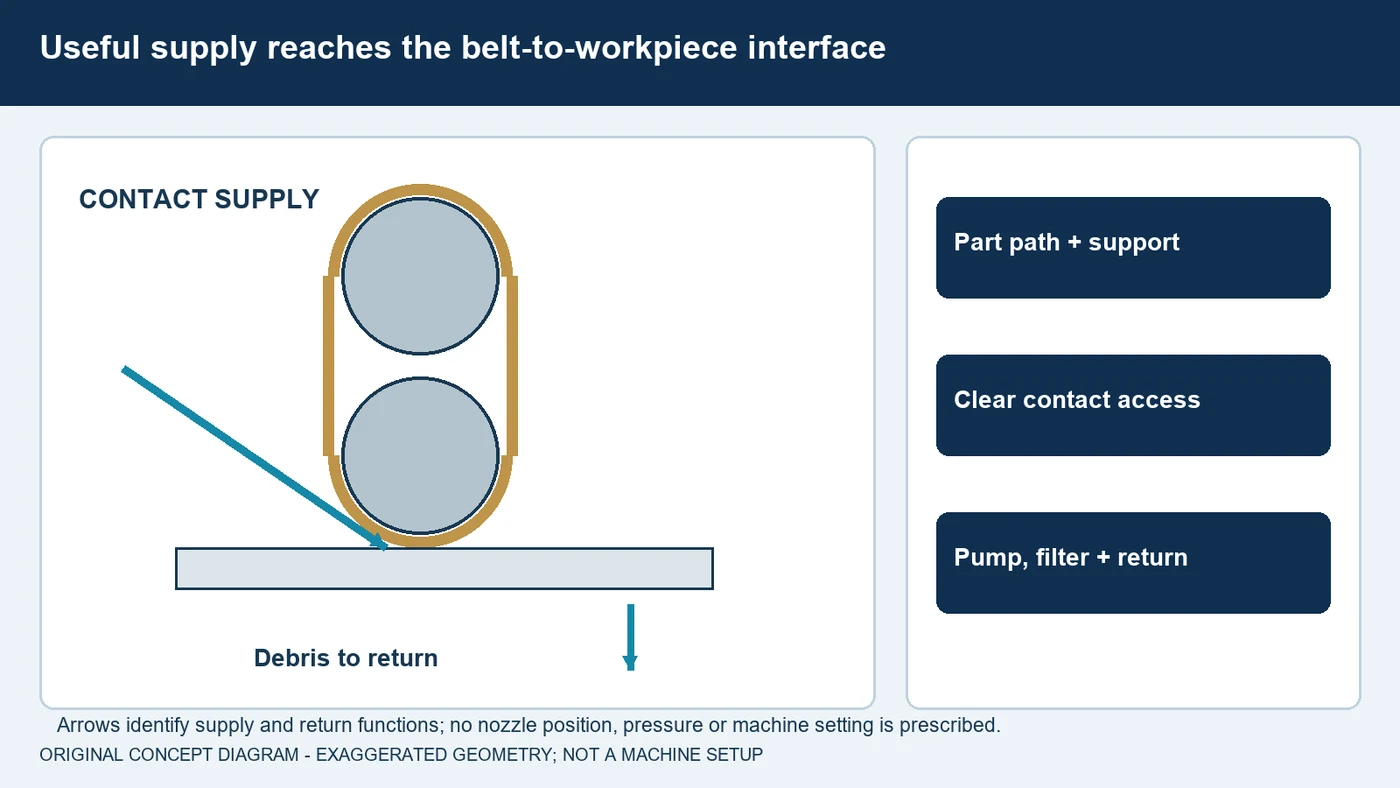
Useful coolant delivery reaches the interface where the abrasive belt meets the metal. Wetting a remote part of the belt or producing a large splash does not establish adequate supply to that contact. Review the arrangement as the workpiece enters, travels through and leaves the grinding head. Include part width, shape, hold-downs and nearby guards in the access review. Supply for the contact, machine washing and debris return may be separate duties. Confirm delivered flow with the actual pump, filter, nozzles and return circuit operating together. Work with the equipment supplier on the supported arrangement. Published pressures, belt speeds or flow examples from another process are not universal instructions. Keep targeting and supply consistent before attributing a finish or belt-life change to the formulation.
Match the Wet-Grinding Fluid to the Whole Application
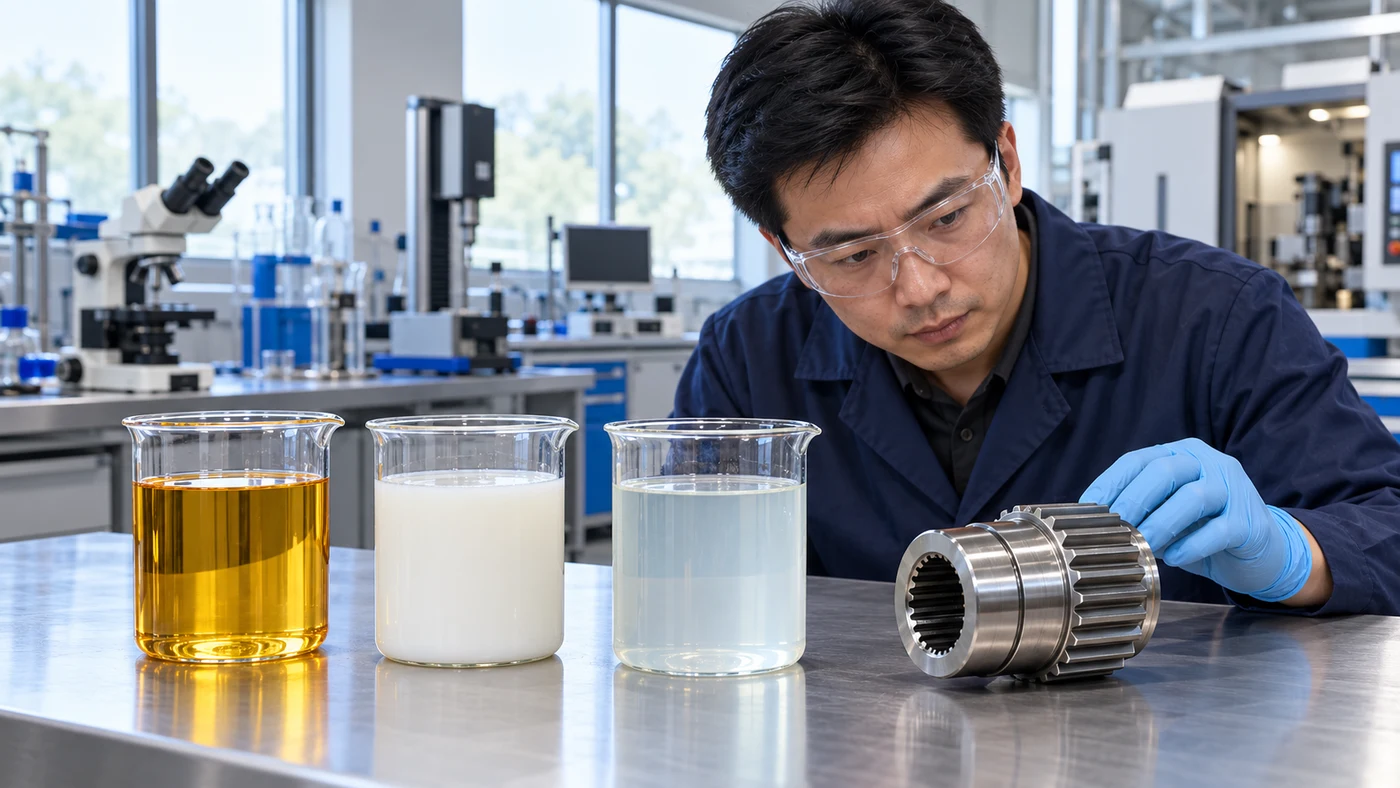
Carbon steel, stainless steel, aluminum, nickel alloys and titanium require material-specific abrasive and fluid review. Evaluate the actual alloy, hardness, surface treatment and removal task rather than transferring a recipe from a different metal. In a permitted water-mix process, consider cooling, lubrication, wetting, foam behavior, corrosion or staining, residues and filterability. Check the complete belt and contact-system compatibility. A neat oil is an option only where the machine, abrasive and protective systems permit it; wet operation does not by itself mean every liquid is acceptable. Include later cleaning, coating, bonding or other surface requirements in the selection. QA has coolant and oil options for evaluation. Agree on a formulation and maintenance plan for that system before comparing productivity or surface results.
Control Fines, Concentration and Carryover
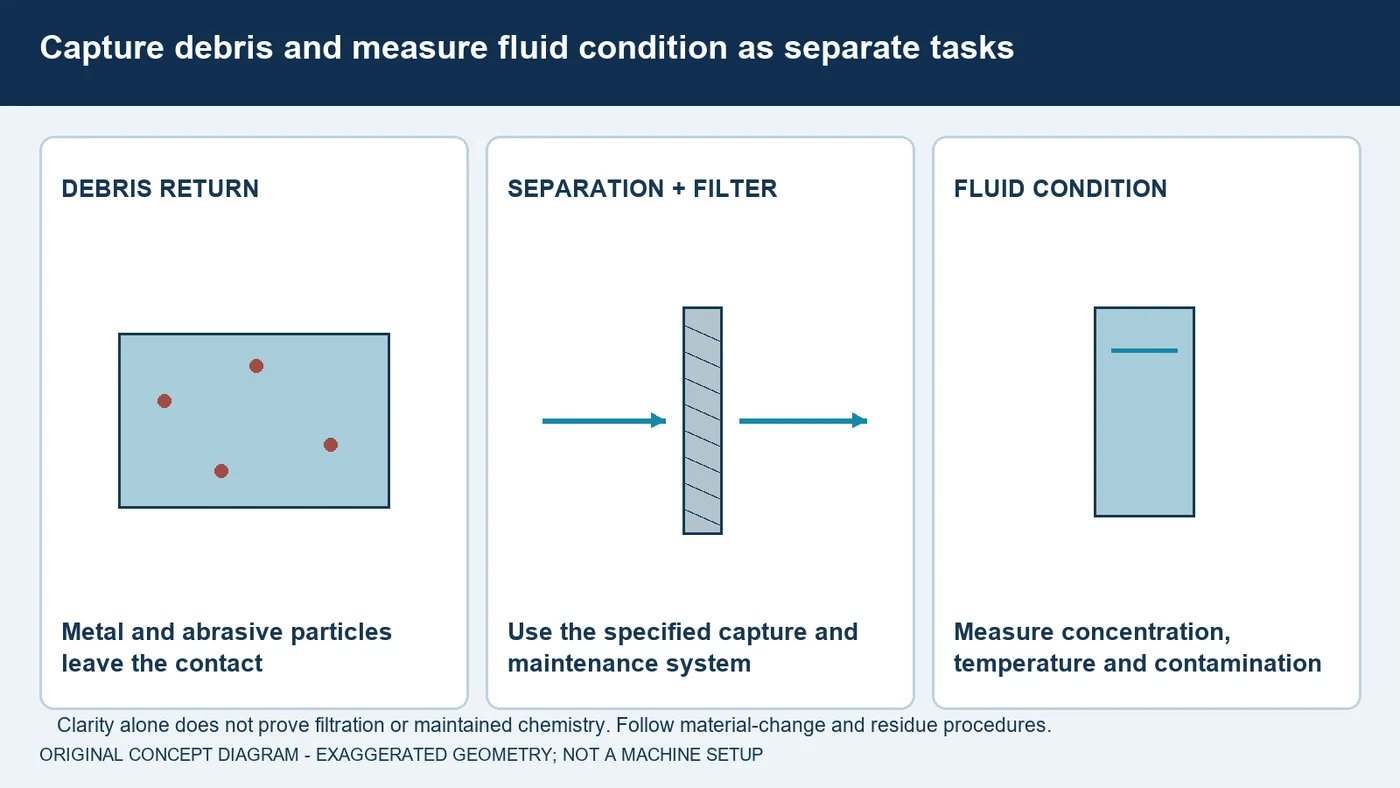
A wet belt system has to manage the metal and abrasive debris it produces. Filtration and return maintenance keep captured particles from repeatedly reaching the work. Inspect the specified filter media, sludge accumulation and supply conditions; a magnetic separator does not capture all nonmagnetic metal or abrasive particles. For diluted coolant, follow the recommended water quality and mixing instructions. Measure working concentration with the product-specific refractometer factor and record additions, temperature and contamination. For any permitted neat oil, use its specified condition checks instead of a dilution measurement. Follow the equipment supplier's material-change, cleaning and collected-residue procedures rather than assuming that every metal combination can share one system. Machine-integrated drying or air management also needs its own maintenance. A wet process still requires the controls specified for that equipment and material.
A Uniform Grain Finish Is Only One Acceptance Check
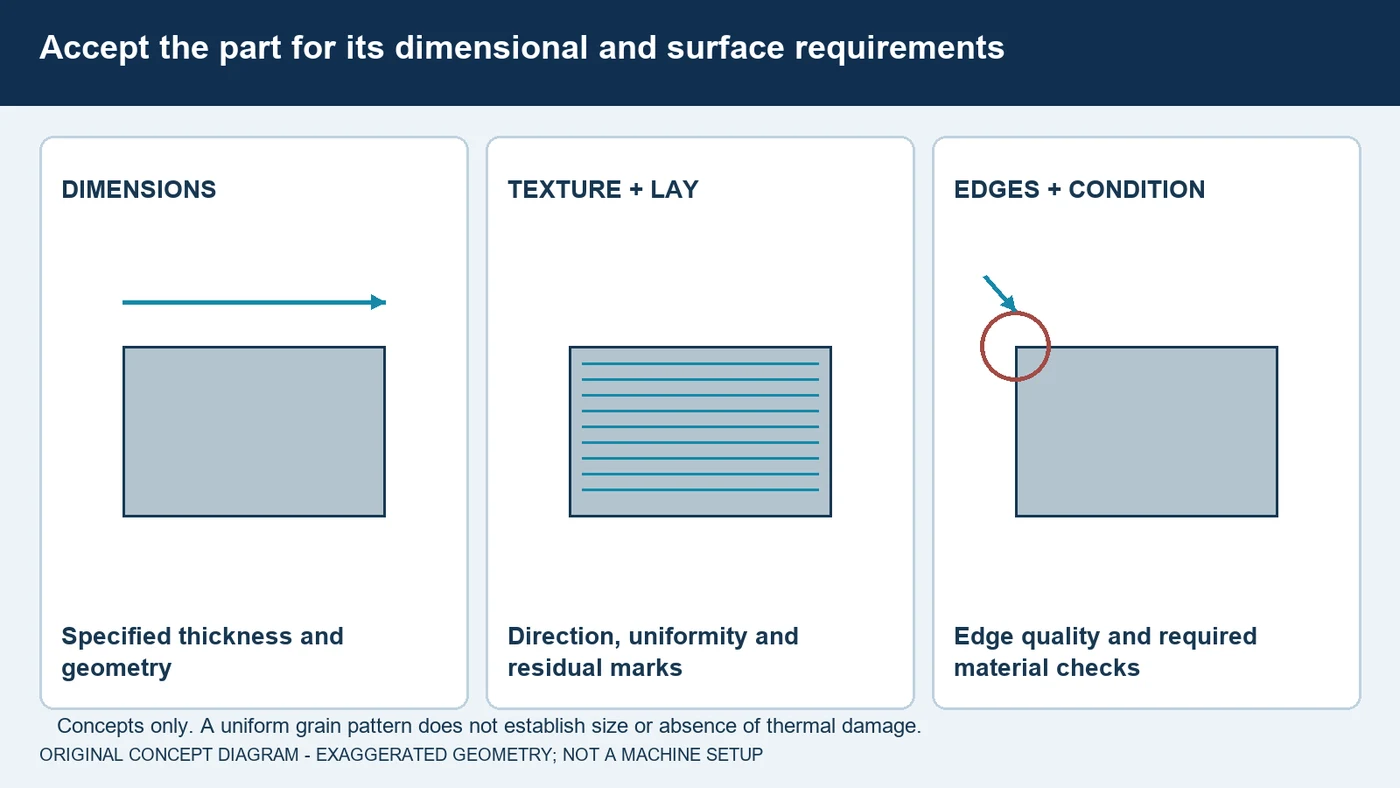
Inspect the feature the process is intended to produce. Precision sizing requires the specified thickness and geometry checks; decorative or functional finishing requires its own texture and scratch-pattern acceptance. A uniform grain appearance does not establish dimensional accuracy. Review directionality, residual deep scratches, bands, local over-grinding and edge condition using consistent inspection methods. If a periodic mark or sudden finish change appears, review the belt joint, tracking, contact support, part presentation and contamination before changing several variables at once. A finer abrasive is not an automatic cure for loading or excessive heat. Appearance alone also cannot establish freedom from thermal damage. Use the required qualified examination where material condition is critical. Compare accepted parts at similar belt-life and maintained-fluid conditions so the result is meaningful.
Plan a Controlled Wet Belt Grinding Trial
Send QA the alloy, hardness or treatment, incoming surface and operation goal. Identify whether the process removes stock, controls thickness, blends a contour, deburrs or creates a specified finish. Provide the machine, belt specification and joint, contact support, part path and qualified operating conditions. Add the current fluid, contact supply, filtration and maintenance records. For a water-mix system, include water quality and measured concentration. Describe the problem with measurements, consistent finish photographs and where it appears in the belt cycle. QA has coolant and oil options for evaluation. Agree on a controlled comparison and track accepted geometry or finish, belt behavior, debris handling and fluid condition together. Confirm the final formulation and instructions with the equipment and abrasive suppliers before making the production change.
Fluid selection by material
Use these as evaluation questions, not blanket product approvals.
| Material | What to evaluate | What to confirm |
|---|---|---|
| Carbon steel and cast iron | Match removal, sizing or finishing duty to the actual alloy and incoming condition. | Wet-compatible belt, corrosion control, debris handling and required dimensional checks. |
| Stainless steel | Evaluate the alloy, heat generation, loading behavior and required finish. | Qualified abrasive and fluid, contamination control, texture direction and downstream requirements. |
| Aluminum and other nonferrous metals | Evaluate the exact alloy, loading, staining and permitted wet-process conditions. | Equipment and abrasive permission, formulation compatibility, filtration and material-change procedures. |
| Nickel alloys, titanium and treated surfaces | Identify the actual material system and the required surface integrity or coating allowance. | Qualified belt and machine application, useful delivery, permitted removal and specified inspection. |
Questions about belt grinding fluids
Can coolant be added to any dry belt grinder?
No. Use a machine and complete belt system qualified for the wet application and proposed fluid. Adding liquid does not convert dry equipment into a suitable wet system.
Is a grit number enough to select a belt?
No. Grain, coating, backing, joint, flexibility, wet-use permission and contact support all contribute to the application.
Why does the contact wheel matter?
It supports the belt and influences the contact and cutting behavior. Its construction, hardness, surface form and condition should be included in the process review.
Does a uniform grain finish prove the part is the correct thickness?
No. Texture and dimensional acceptance are separate. Perform the measurements required for the actual part and operation.
Can one coolant be used for every metal in a wet belt machine?
Do not assume so. Confirm alloy, belt and fluid compatibility, equipment permission and the required material-change and residue-handling procedures.
Which QA fluid should I use for wet belt grinding?
QA has coolant and oil options. Provide the material, operation, machine, belt and contact support, delivery, maintenance and acceptance requirements for evaluation.
Discuss your application with QA
QA Lubricants has coolant and oil options. Send us the operation, alloy, hardness, tooling, current fluid and the problem you want to solve.
Discuss My ApplicationShop Water Diluted CoolantsShop Straight Cutting OilsTechnical references
- Timesavers: precision wide-belt metal grinding
- Timesavers: wet belt systems, filtration and drying
- Norton: coated-abrasive contact wheels and troubleshooting
- 3M: a water-resistant wet-or-dry belt construction example
- Norton: abrasive belt joints and their application
- 3M: wet grinding of hard-to-grind metals
- Timesavers: wet metal processing and paper-bed filtration
- Grindaix: grinding-fluid selection and useful contact supply
- Blaser Swisslube: concentration measurement and product correction factor
- Norton: process, infeed and part-presentation effects in belt grinding
- Norton: belt inspection, tracking and machine instructions
- UNITED GRINDING: thermal damage and appropriate examination
Original educational content and illustrations. Confirm current machine, tool and fluid instructions. Trademarks belong to their respective owners.