Wet Metal Polishing and Abrasive Deburring Fluids
Wet polishing and abrasive deburring fluid guidance for steel, stainless steel and aluminum: burr access, brushes, mass-finishing media, compounds and edge inspection.
Watch: Wet Metal Polishing and Abrasive Deburring Fluids
Wet Polishing and Abrasive Deburring: Define the Result
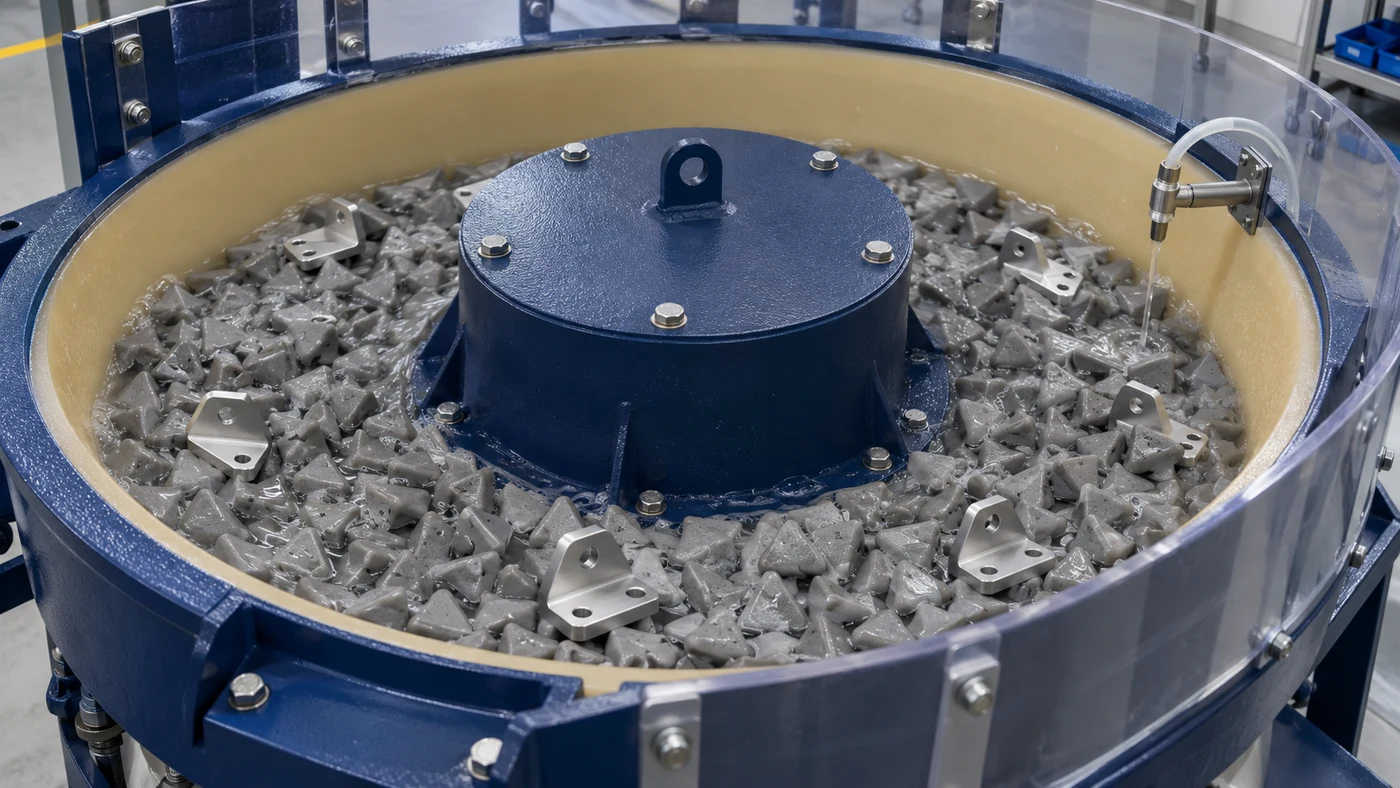
Abrasive deburring removes unwanted material left by machining or forming. Edge rounding creates a specified edge condition, while polishing refines the surface for a functional or appearance requirement. These goals can share equipment, but they are not the same acceptance test. Wet processes may use abrasive brushes, suitable finishing wheels or bulk media in vibratory and other mass-finishing machines. The fluid supports the chosen process; it does not make every abrasive suitable for every part. This guide covers mechanical wet finishing of metal components. Chemical or electrochemical finishing requires a separate application review. QA has coolant and oil options for evaluation. Start with the material, burr, feature access and required result before choosing a finishing fluid.
Analyze the Burr Before Selecting the Method
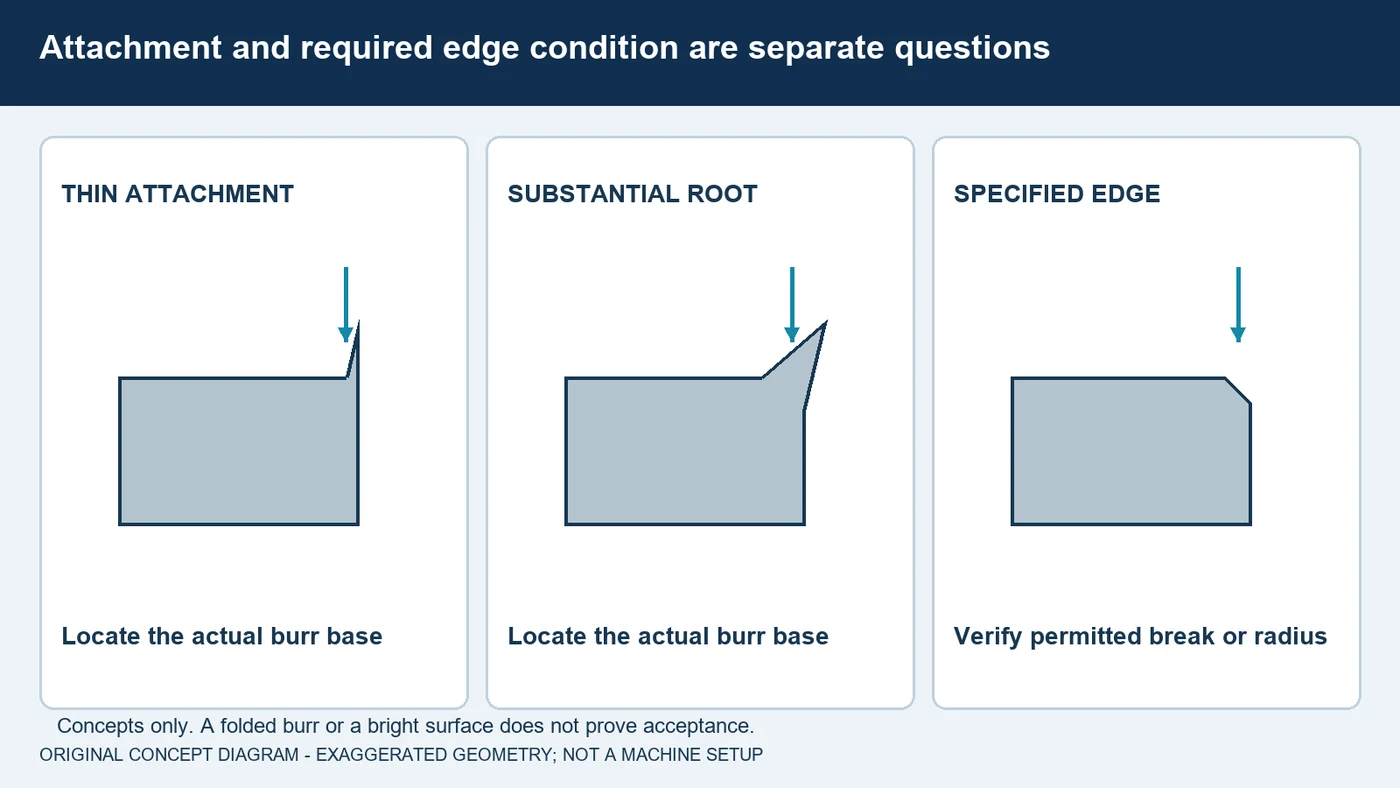
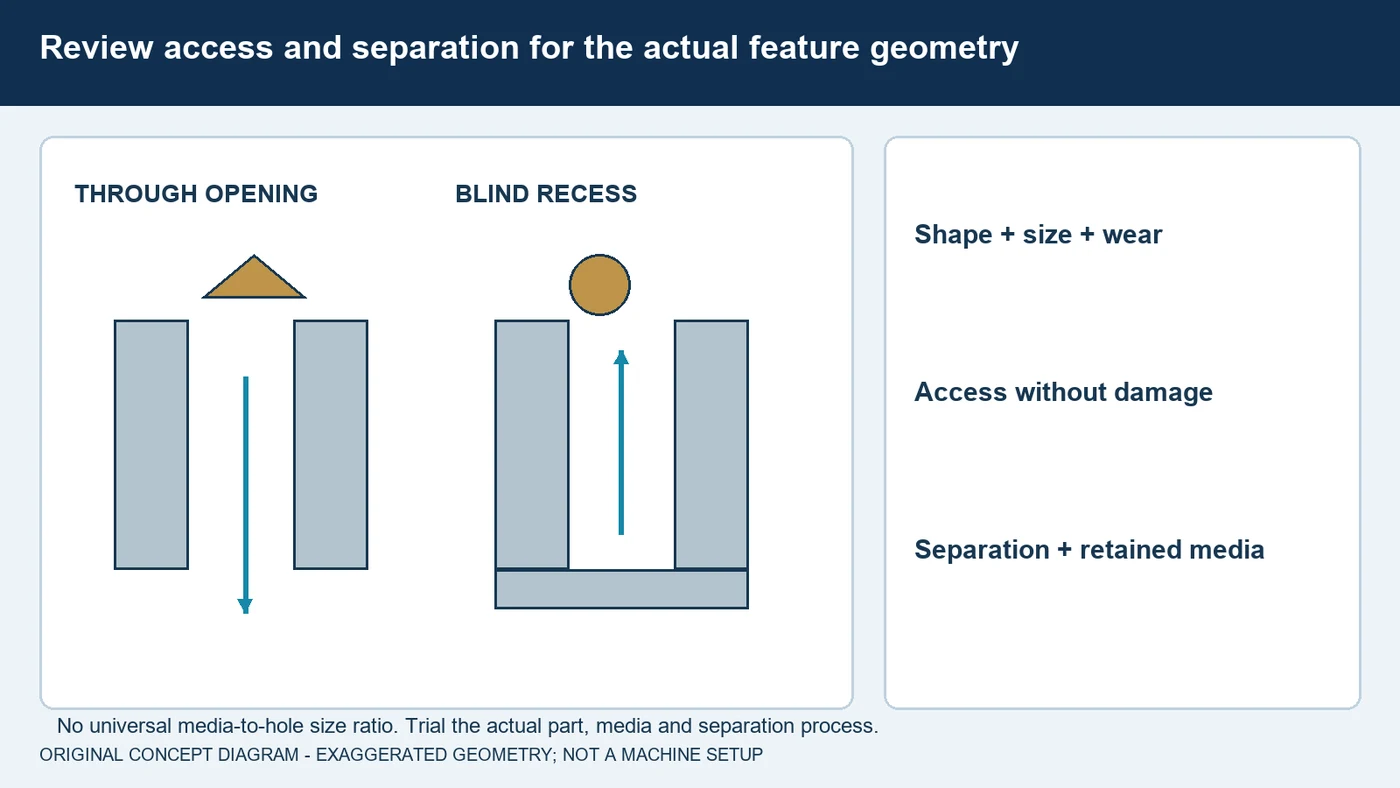
Burr size alone is not enough to select a deburring operation. Its root thickness, attachment, material and location influence how it can be removed. A lightly attached grinding burr is different from displaced material with a substantial base. Identify whether the feature lies on an outside edge, a through hole, a blind recess or a cross-hole intersection. The tool or media must reach that location without removing unacceptable material elsewhere. Establish the required edge condition and the features that must remain protected. Folding a burr over is not proof that it has been removed. If incoming burrs vary greatly, review the upstream cutting process as well as the finishing stage. A repeatable incoming condition makes fluid and abrasive comparisons more useful.
Localized Tools and Mass Finishing Have Different Contacts
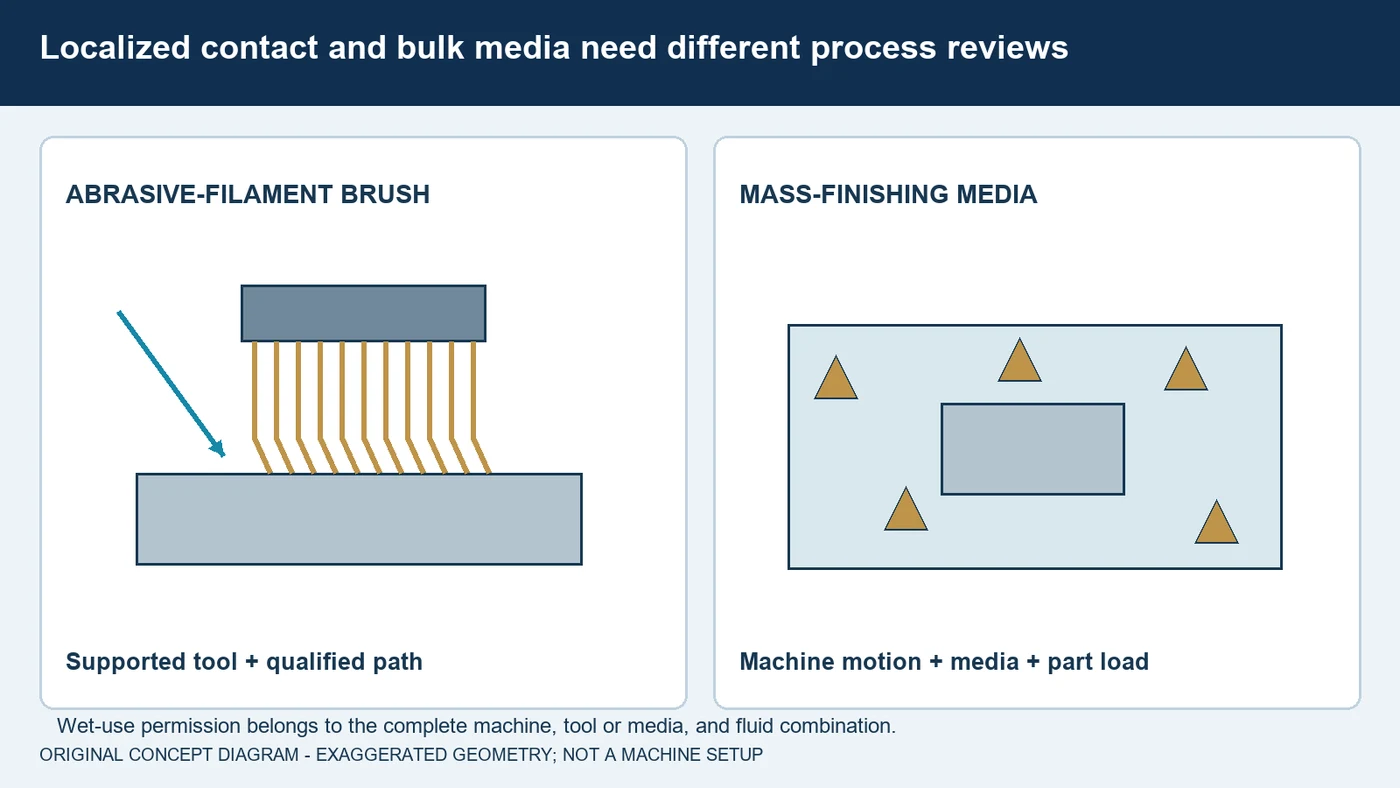
An abrasive brush presents grain in flexible filaments to a selected feature. A nonwoven finishing wheel uses abrasive within a conformable web. Their construction, support and application differ from loose media moving around parts in a mass-finishing machine. Choose the method for the burr and desired result, not merely the appearance of a sample. Automated brush systems may permit machining coolant, emulsion or other specified liquid, but that permission is product- and machine-specific. A dry tool or machine cannot be assumed suitable for wet use. Review tool condition, support, contact and the qualified travel path. For mass finishing, consider the machine motion, part loading and media movement together. Keep those process variables controlled when evaluating fluid performance.
Select Media for Access, Cutting Action and Separation
Mass-finishing media differ in composition, abrasive content, density, shape and size. These choices affect cutting action, surface texture and how the media approaches a feature. Ceramic and plastic-bonded media each include different formulations; one category is not a universal answer for an alloy. Consider access to holes, slots and recesses, plus the possibility of media lodging or parts nesting together. Review media condition and wear as part of the process, not only the dimensions of a new sample. Confirm the separation method and inspect locations where media or residue could remain. Delicate parts may need a different load or workholding strategy from robust components. A successful trial must meet geometry and surface requirements without unacceptable impacts or edge removal.
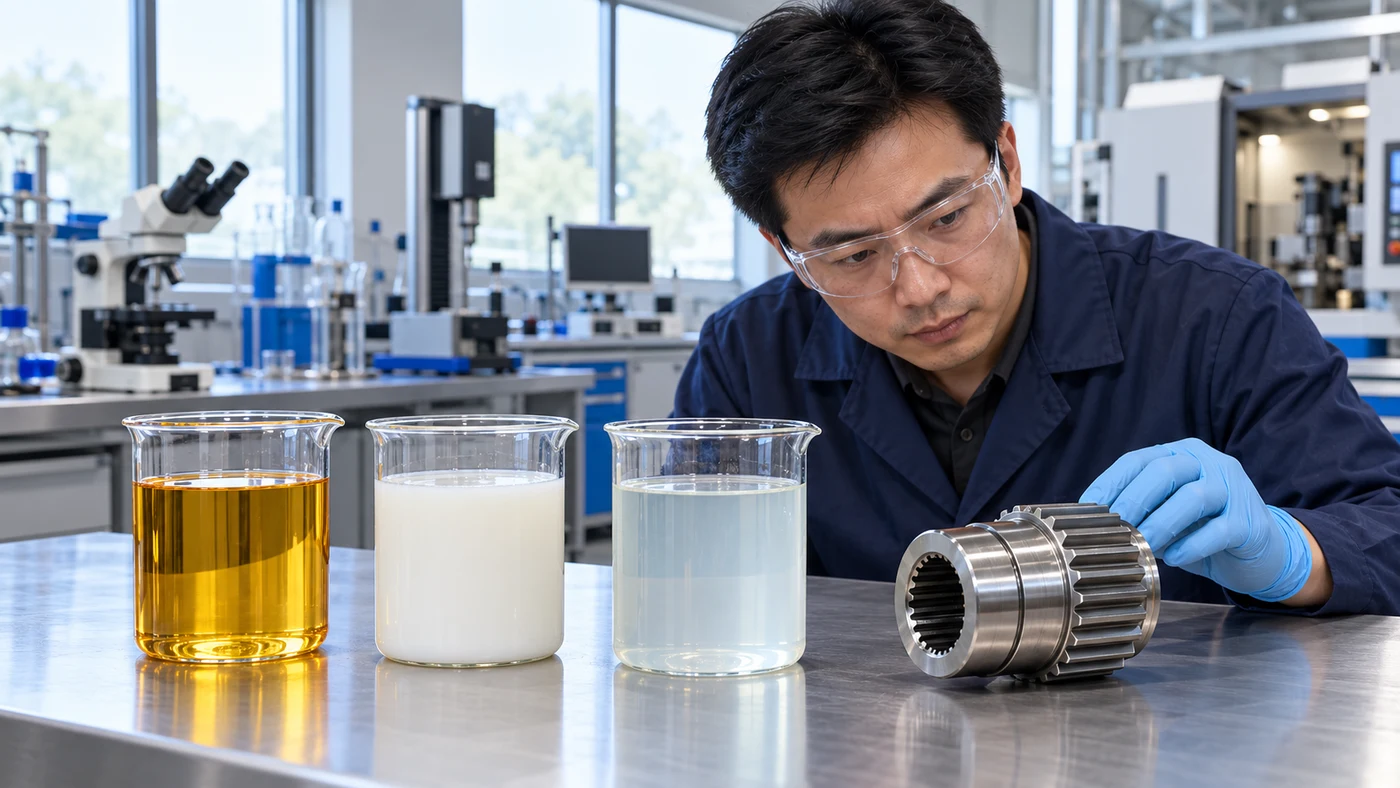
Choose a Finishing Compound for the Whole System
Wet mass finishing commonly uses water with a formulated compound. That liquid helps transport removed material and keeps the media working surface active. Depending on the application, the compound may also support cleaning, lubrication, surface protection or a particular finish. Compounds can be liquid, powder or paste, and some contain additional abrasive. They are not interchangeable with an ordinary machining coolant. Evaluate the actual alloy, media, incoming soils, desired finish and process-water system. Include corrosion or staining, foam behavior and downstream coating or assembly requirements. Specialized machines may use an oil process instead of water and compound; use that only where the complete system is designed for it. QA has coolant and oil options for evaluation with the process supplier.
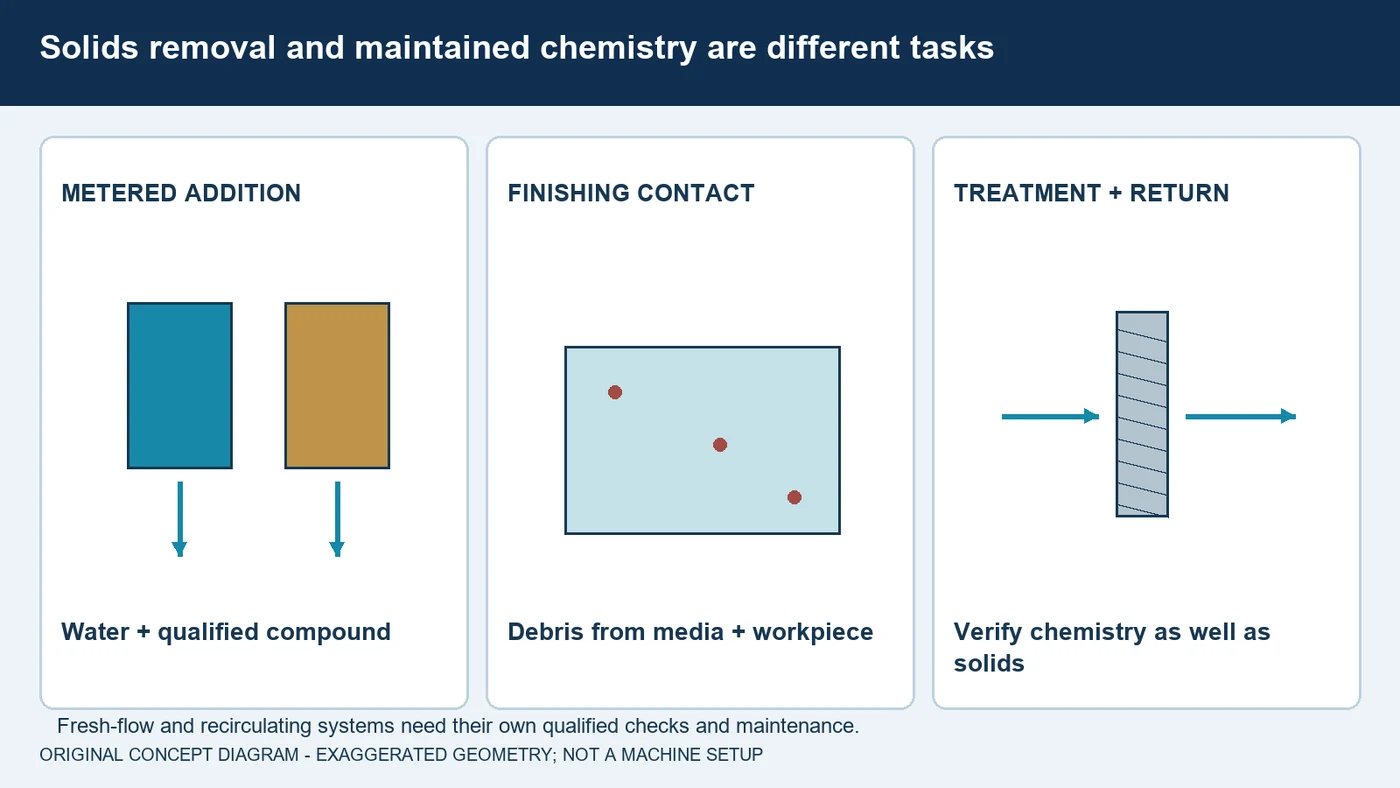
Control Dosing, Debris Removal and Process-Water Condition
Keep the specified water and compound additions repeatable. A change in liquid supply or chemistry can change the working conditions even when the media stays the same. Review metering equipment, drains and liquid access with the actual load in place. Some systems use fresh-water flow; others clean and recirculate process water through a compatible treatment system. Solids removal alone does not prove that the returned liquid has the correct chemistry. Follow the supplier's checks for concentration or dosing, contamination, foam and the required operating condition. Avoid transferring a machining-coolant refractometer factor to an unrelated finishing compound. Maintain separation and cleaning equipment, and handle collected material and spent liquid according to the applicable site procedures. Record changes before comparing accepted-part results.
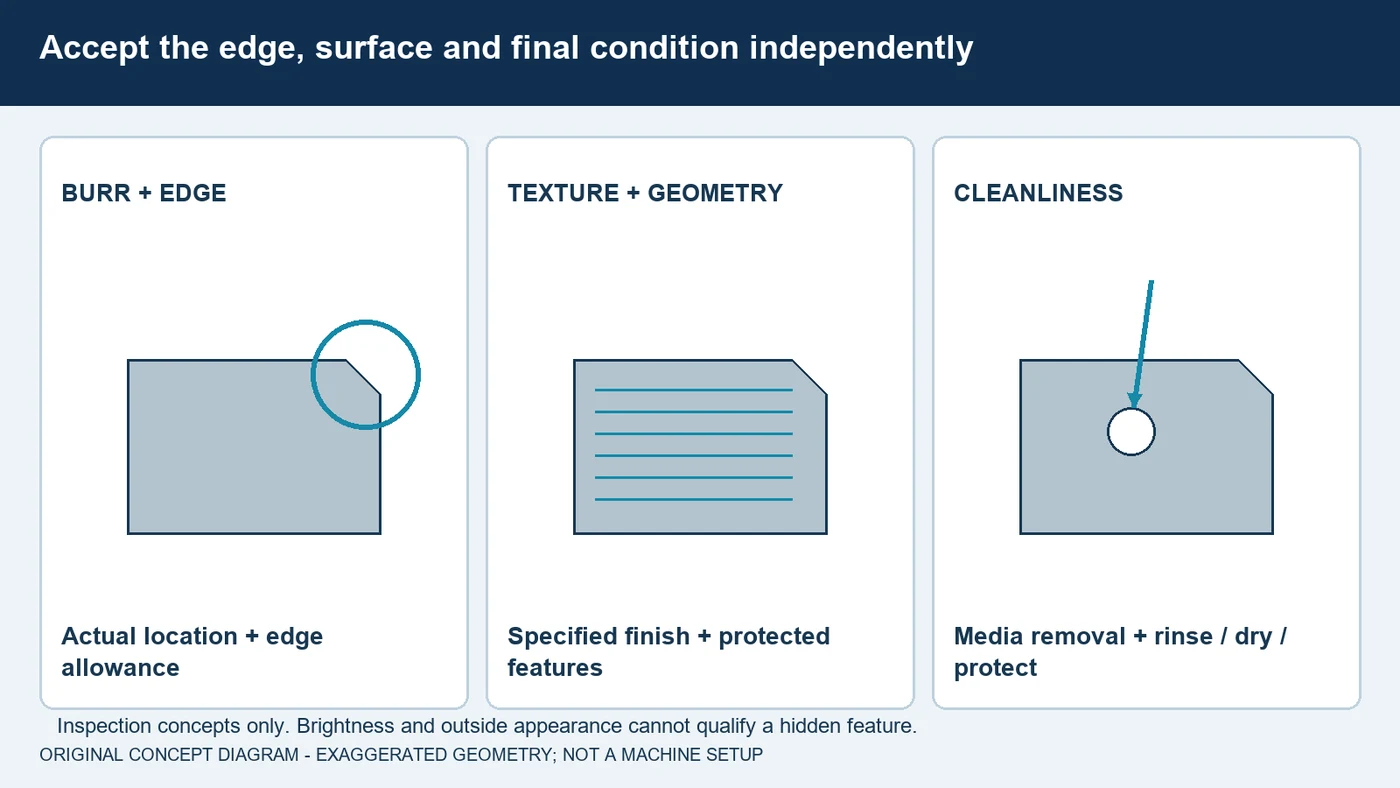
Verify the Edge, Surface and Final Cleanliness
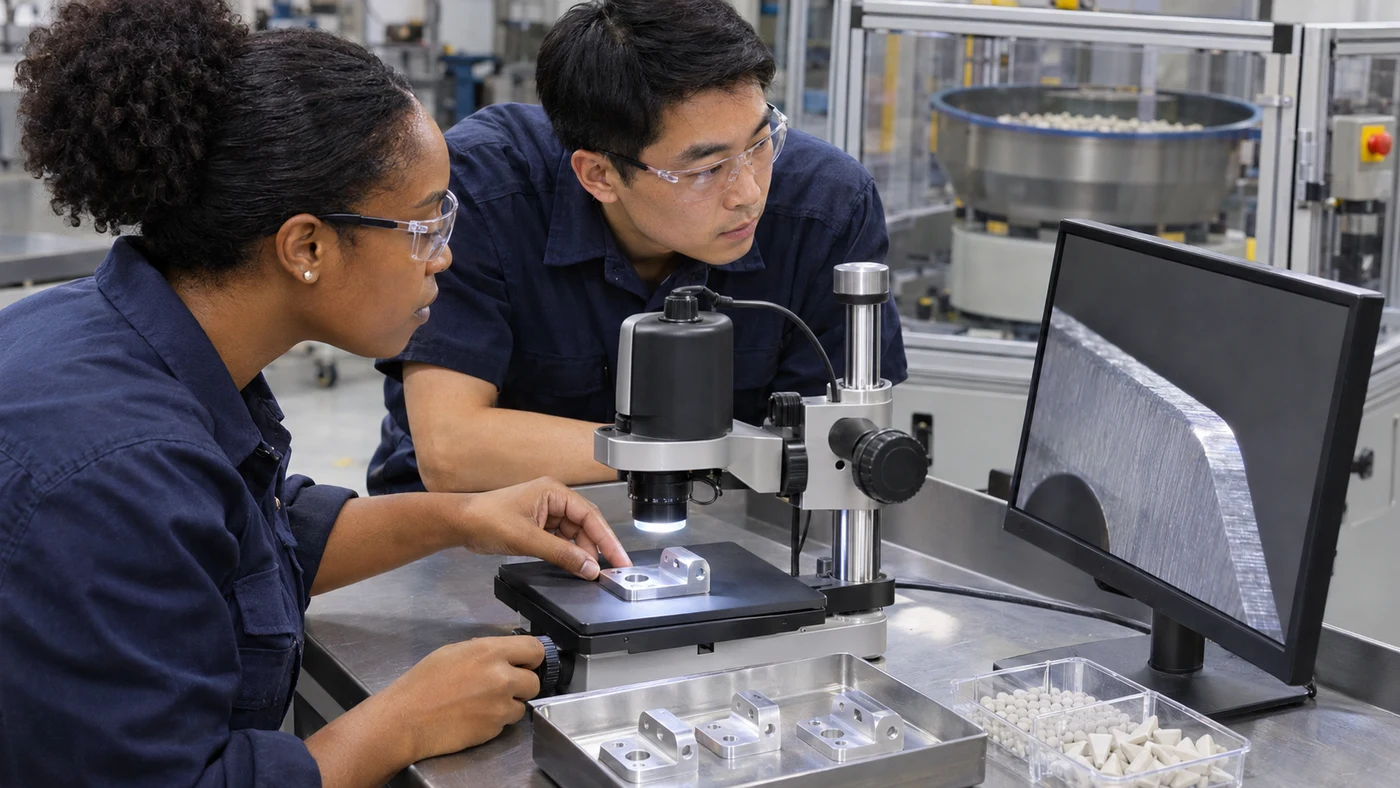
Inspect the feature that the operation is intended to finish. A bright outside surface does not establish that a hidden burr has been removed. Use the required access, magnification or other inspection method for the actual location. Check edge radius or break, hole dimensions, contact surfaces and other protected geometry where specified. Surface texture needs its own measurement method and settings; appearance alone is not a complete acceptance test. Examine isolated scratches or dents for abrasive, contamination or part-contact causes. Verify that media has been separated and that the approved rinsing, drying or protection steps leave the part suitable for its next operation. Compare results after the same cleaning and handling sequence so residue differences are not mistaken for a change in the metal surface.
Plan a Controlled Polishing or Deburring Trial
Send QA the part drawing, alloy, hardness or coating, incoming operation and a clear description of the burr or finish problem. Identify the locations that need treatment and the dimensions or edges that must be protected. Include the machine, brush or finishing-media specification, workholding or load arrangement and qualified sequence. Provide current fluid or compound, dosing, water quality, separation and maintenance records. Show the concern with consistent photographs and the relevant edge or surface measurements. QA has coolant and oil options for evaluation. Agree on a comparison that tracks accepted burr removal, edge condition, finish, geometry, media behavior and cleanability together. Confirm the final formulation and instructions with the equipment and abrasive suppliers before adopting the change in production.
Fluid selection by material
Use these as evaluation questions, not blanket product approvals.
| Material | What to evaluate | What to confirm |
|---|---|---|
| Carbon and alloy steels | Identify burr strength, hardness and required edge or surface result. | Qualified abrasive and compound, corrosion protection, dimensional acceptance and final cleaning. |
| Stainless steel and nickel alloys | Review the alloy, surface requirements, feature access and incoming burr condition. | Compatible tools/media and fluid, contamination control, edge measurements and downstream suitability. |
| Aluminum, brass and other softer metals | Evaluate part impact, unwanted edge removal, staining and retained media or residue. | Compatible chemistry and abrasive, protected features, separation and cleaning. |
| Coated or delicate components | Identify the coating, layer allowance, functional contacts and permitted treatment. | Qualified process contact, workholding or load, coating integrity and application-specific inspection. |
Questions about polishing & abrasive deburring fluids
Are deburring and polishing the same operation?
No. Burr removal, specified edge rounding and surface polishing have different goals and acceptance checks, even when equipment can perform more than one task.
Can finishing fluid remove a burr the media cannot reach?
Do not rely on that. A mechanical finishing process needs tool or media access to the feature. Review hidden intersections, recesses and separation.
Can regular machining coolant replace a mass-finishing compound?
Not without qualification. The compound, media, equipment, water system, material and downstream requirements form one process.
Can every brush or finishing wheel run wet?
No. Confirm permission for the specific abrasive, support and machine, plus the proposed liquid and operating instructions.
Does a shiny part prove it is deburred?
No. Inspect the actual burr location, edge limits and protected geometry, then verify texture and final cleanliness as required.
Which QA fluid should I use?
QA has coolant and oil options. Provide the material, burr, feature, equipment, tool or media, liquid system and acceptance requirements for evaluation.
Discuss your application with QA
QA Lubricants has coolant and oil options. Send us the operation, alloy, hardness, tooling, current fluid and the problem you want to solve.
Discuss My ApplicationShop Water Diluted CoolantsShop Straight Cutting OilsTechnical references
- Rösler: mass finishing processes and equipment
- Osborn: burr location, accessibility and attachment strength
- Osborn: automated abrasive brushes and wet applications
- 3M: nonwoven abrasive deburring and finishing wheels
- Rösler: media composition, shape and separation
- ActOn: selecting mass-finishing media and compounds
- Rösler: compounds and their process roles
- OTEC: wet finishing water and compound functions
- OTEC: material-specific compound selection
- Walther Trowal: process-water circulation and separation
- OTEC: machine-specific water/compound and oil processes
- Taylor Hobson: surface texture measurement and filters
Original educational content and illustrations. Confirm current machine, tool and fluid instructions. Trademarks belong to their respective owners.