Wire EDM Dielectric Water, Flushing and Fluid-System Control
Wire EDM fluid-system guidance for conductive metals: dielectric water conductivity, filters and resin, nozzle flushing, wire selection, corrosion and skim-cut inspection.
Watch: Wire EDM Dielectric Water, Flushing and Fluid-System Control
Wire EDM: A Traveling Electrode Cuts the Profile
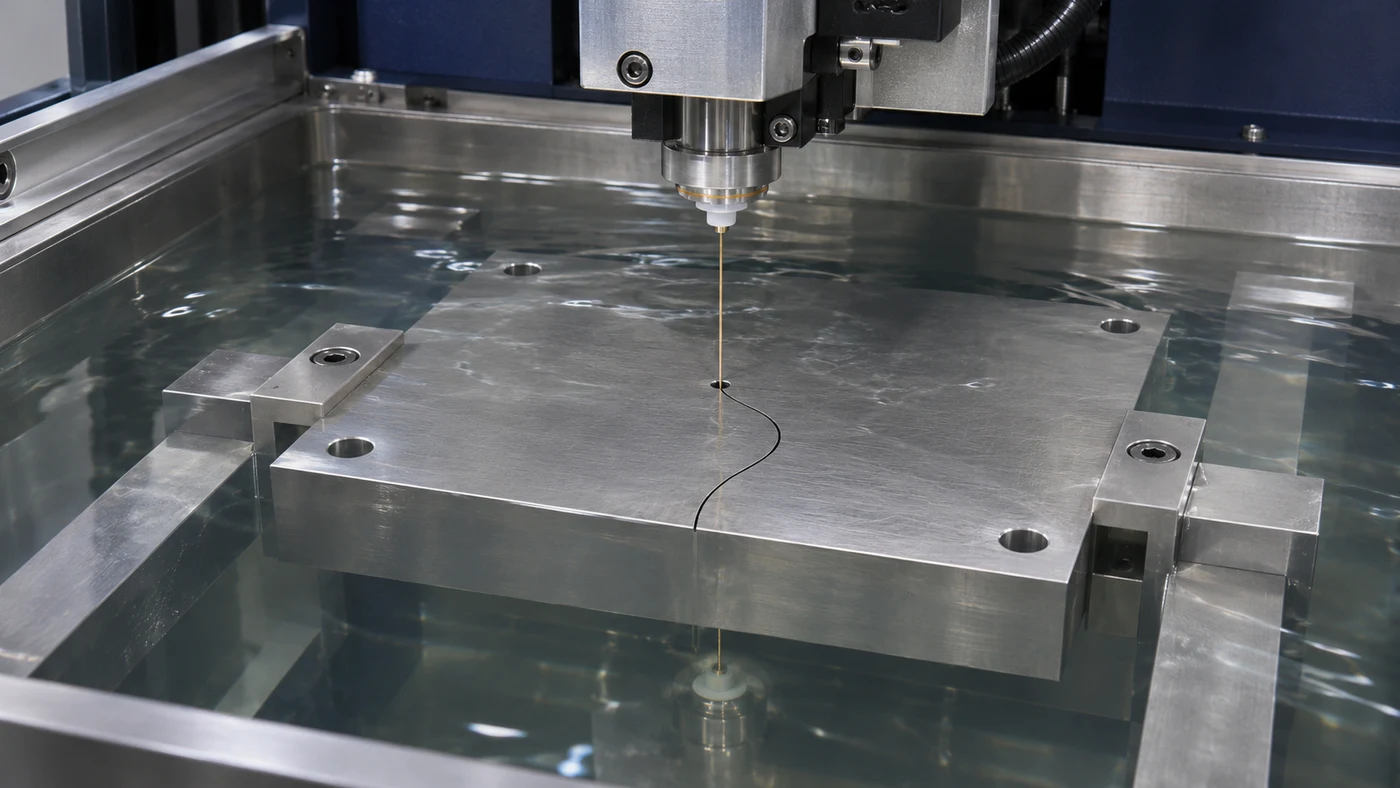
Wire electrical discharge machining uses a continuously traveling metal wire as an electrode. Controlled discharges remove material across a small gap while the programmed relative motion traces a profile through the workpiece. The wire does not act like a contacting saw blade. This process is useful for punches, dies and intricate conductive components, including hardened materials. Many machines operate with the cut submerged in a controlled water dielectric; specialized wire machines use oil. Neither arrangement should be treated as an ordinary machining-coolant system. Geometry, wire, electrical technology and fluid condition must work together. QA has coolant and oil options for application review. Confirm the equipment's dielectric requirements before considering a fluid or maintenance change.
Match the Wire, Guides and Contour Requirements
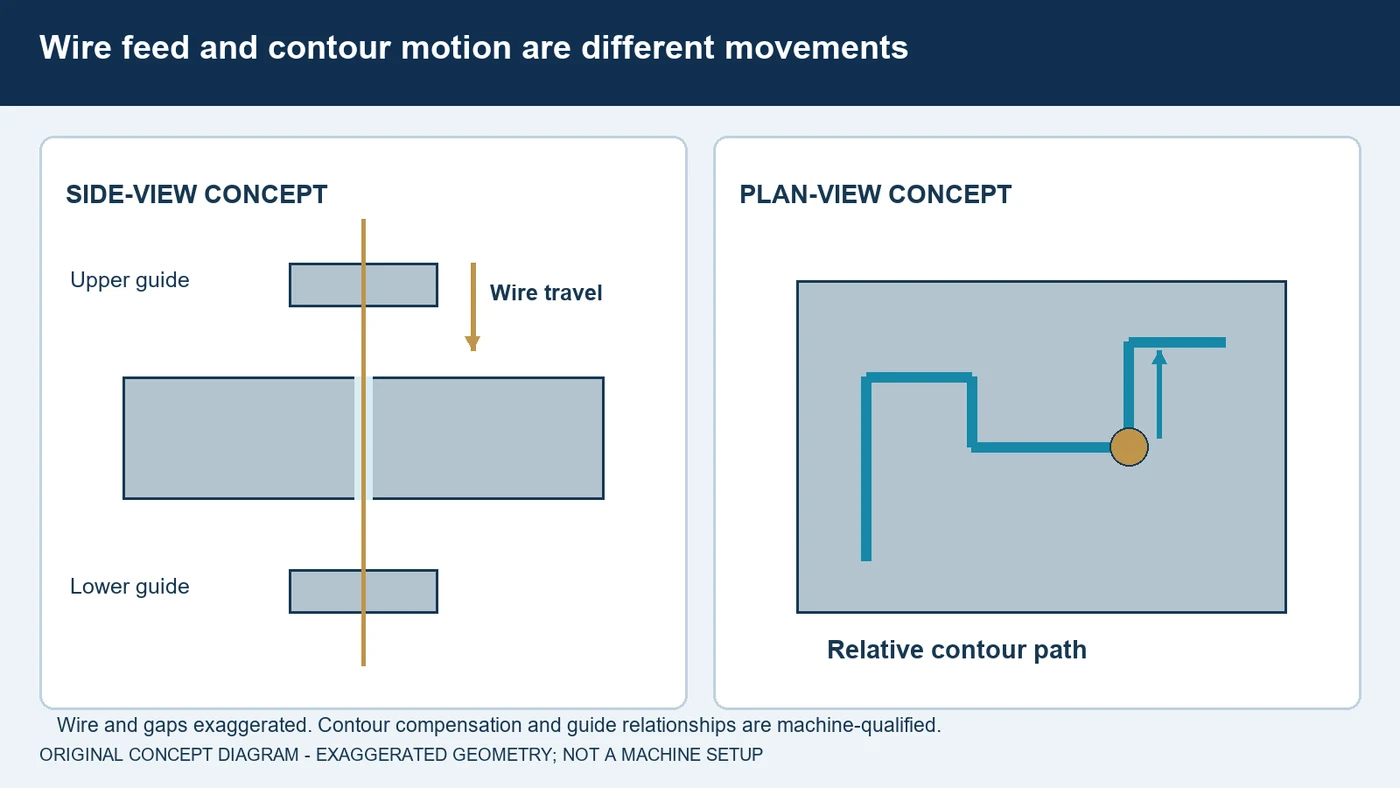
Plain brass, coated and specialty wires serve different applications. Select the wire with the machine supplier's technology for the work material, thickness, geometry and finish. Diameter affects access to small features, but it is not the only selection variable. Guide compatibility, wire strength, feed and tension control also matter. Inspect guides and electrical contacts and maintain the wire transport system. Used wire is a process consumable rather than fresh stock to rewind for the next job. For taper work, the relationship between upper and lower guide positions becomes part of the geometry. Review actual corner and straightness results instead of assuming that a different wire alone will correct a setup or flushing problem.
Control Water Conductivity Within the Required Range
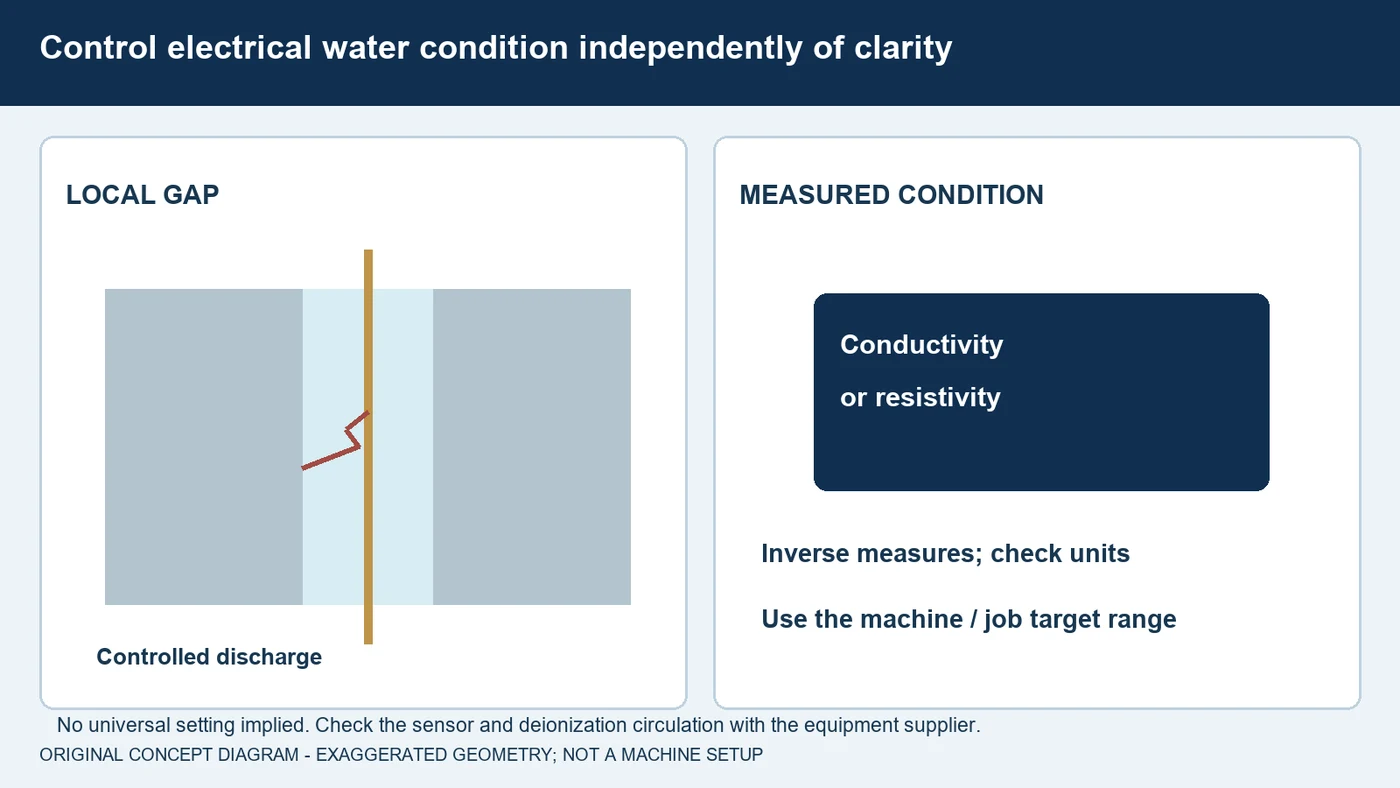
Water-based wire EDM needs controlled electrical properties. Deionization resin removes dissolved ions so the system can maintain its specified conductivity or resistivity. These are inverse measures, not two unrelated fluid characteristics. The target depends on the machine and machining technology; the lowest possible conductivity is not a universal objective. Check the actual units, specified range and condition of the measuring sensor. If the system cannot maintain its setting, review resin condition and circulation with the equipment supplier. Do not use tank clarity or an ordinary coolant concentration reading as proof of correct dielectric condition. Record the water reading with the job so an unstable cut can be compared with its qualified operating condition.
Maintain Flushing at Both Sides of the Cut
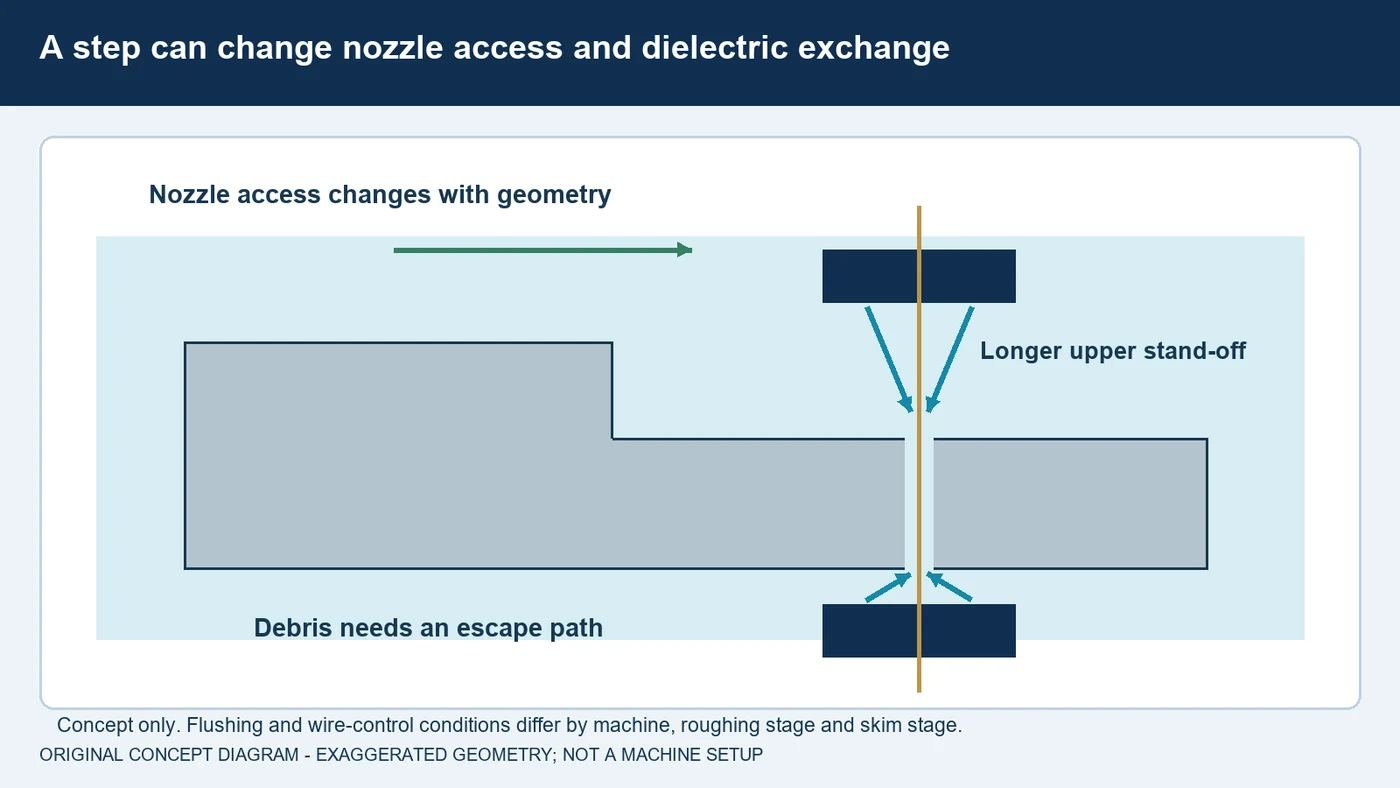
The dielectric cools the wire and workpiece and carries eroded debris out of the slot. Upper and lower flushing conditions may differ, especially around steps, openings, tapers or fixtures that restrict nozzle access. Inspect the nozzle condition and the actual fluid path through the work. A full tank does not guarantee effective exchange inside every cut. Use the machine's qualified strategy for the particular roughing or finishing stage. Increasing pressure without reviewing wire behavior and workholding can create a different problem. If wire breaks or accuracy changes in a particular location, compare local thickness, fluid escape, nozzle separation, wire condition and the selected technology. Keep the complete machining sequence in view when troubleshooting.
Filters and Resin Perform Different Jobs
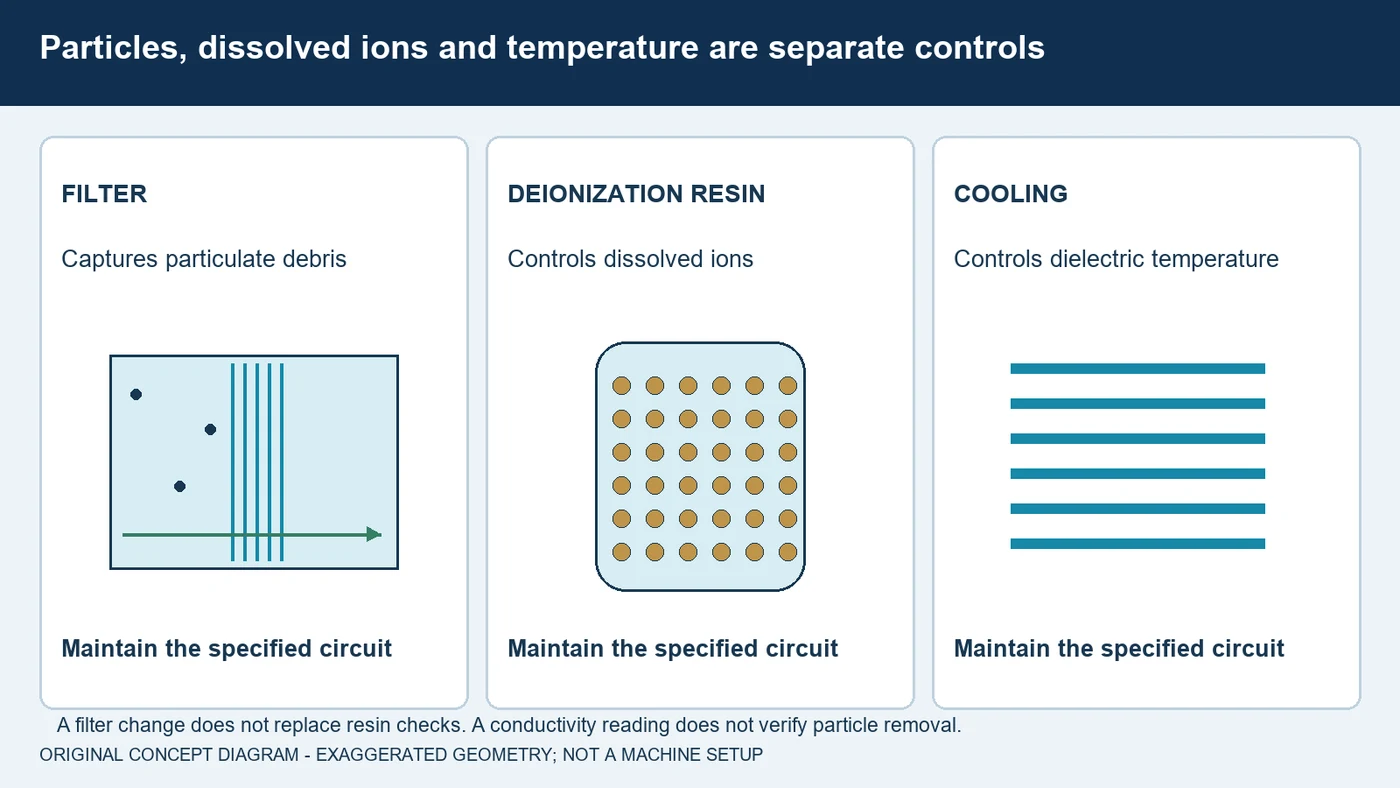
Main filters remove particulate debris from the returning dielectric. Deionization resin conditions dissolved ions; replacing one does not automatically restore the function of the other. Maintain both circuits, the clean-water supply and the cooling system according to the machine's instructions. Check water level, leaks, blocked flow and filter-change indications. Keep guides, contacts, threading equipment, tank surfaces and seals clean using the specified procedure. Process debris can accumulate away from the visible cut. Confirm cleaner compatibility and prevent unqualified chemicals or foreign oils from entering the water circuit. Record maintenance, water additions and measured condition rather than relying only on a calendar interval. Changes in temperature and contamination can affect consistency even when the program remains unchanged.
Qualify Corrosion Control and Oil-Based Alternatives
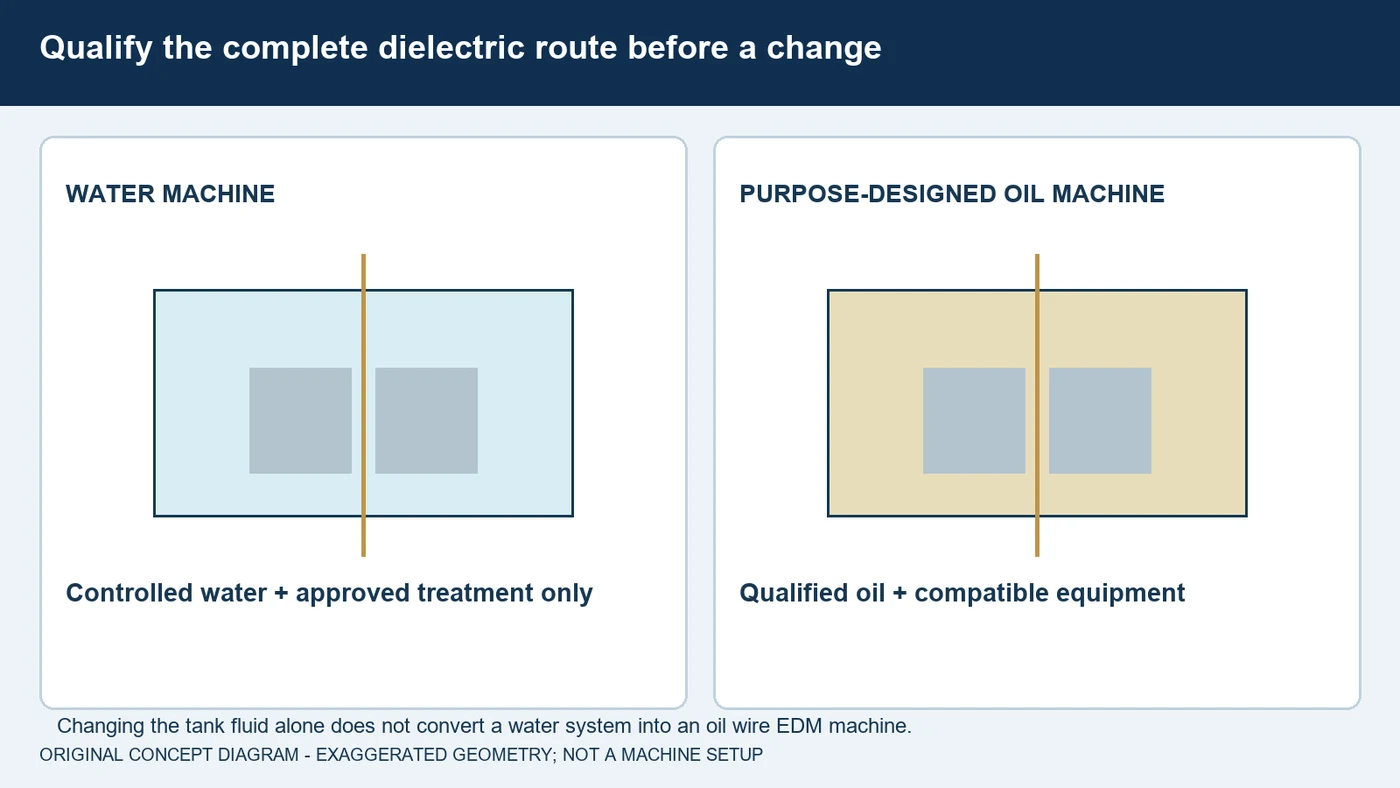
Material compatibility deserves a separate review. Water-based machining can raise corrosion or electrochemical concerns, including binder loss in susceptible cemented carbides. The actual alloy, grade, exposure and generator technology matter. Some equipment suppliers offer specific water-system inhibitors with defined electrical-condition and maintenance instructions. That is not permission to add an ordinary coolant concentrate or general rust preventive. Confirm the complete chemical application with the supplier. Purpose-designed oil wire EDM systems are another option for certain precision applications, but oil is not a drop-in replacement for a water machine. Review equipment compatibility, filtration, thermal control and the required protections together. After machining, follow the qualified cleaning, drying and protection sequence for the part.
Evaluate Roughing, Skim Cuts and Final Part Condition
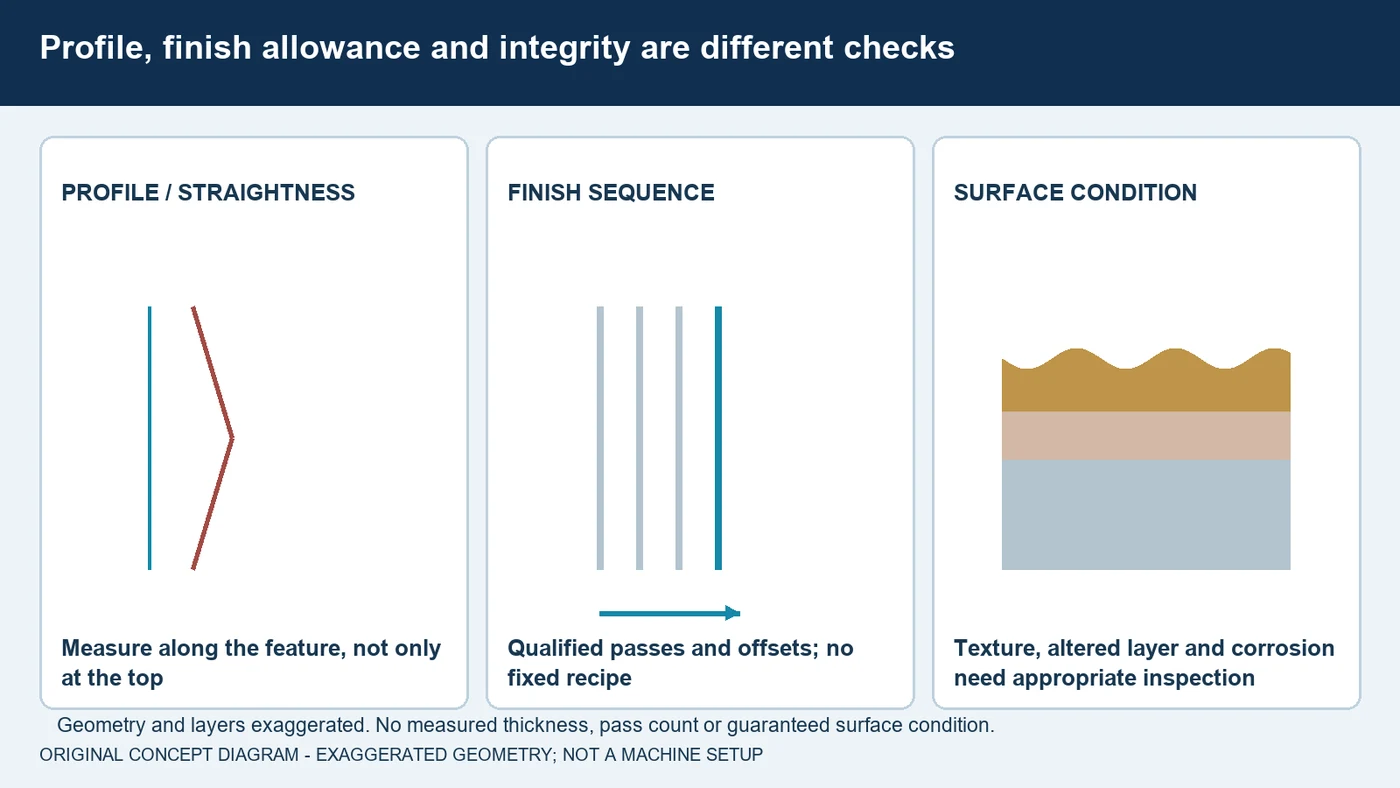
A rough cut establishes much of the geometry, and qualified skim cuts refine the result using their own conditions and offsets. A fast first pass is not a complete measure of productivity if it leaves a shape that requires extensive correction. Review thickness, corners, taper, workholding and the approved cutting sequence together. Use the drawing's dimensional and surface requirements to select inspection locations. Surface texture alone does not establish subsurface integrity: electrical discharge machining is a thermal process, and altered material can remain near the surface. Confirm any required integrity checks or post-finishing rather than assuming a smooth face is unaffected. Compare parts after the same cleaning and handling steps so deposits or corrosion are not confused with the intended finish.
Build a Controlled Wire EDM Application Review
Send QA the machine model, water- or oil-dielectric specification, work material and drawing. Include wire type and diameter, workpiece thickness, taper or corner requirements and the roughing-to-finishing sequence. Show the problem location and provide fluid readings, filtration and resin information, nozzle access and maintenance history. For corrosion concerns, identify the alloy or carbide grade and the immersion, cleaning and protection steps. QA has coolant and oil options for evaluation with your process suppliers. Agree on a controlled comparison of accepted geometry, surface requirements, cut stability, wire behavior and maintenance demands. Confirm the candidate chemistry or process change with the equipment supplier before production use. Keep the applicable machine instructions in place throughout the trial.
Fluid selection by material
Use these as evaluation questions, not blanket product approvals.
| Material | What to evaluate | What to confirm |
|---|---|---|
| Hardened tool and alloy steels | Profile, straightness, corners, required texture and the complete rough/skim sequence. | Qualified wire, dielectric, flushing, temperature control, surface integrity and corrosion protection. |
| Stainless steel, nickel and titanium alloys | Actual alloy and application requirements, electrochemical effects and finishing condition. | Qualified generator technology, dielectric chemistry, cleaning and specified inspection. |
| Aluminum and copper alloys | Grade, thickness, cut stability, surface condition and dimensional requirements. | Wire and machine technology, debris control and compatible cleaning/protection. |
| Conductive cemented carbides | Grade, binder, immersion exposure and susceptibility to binder loss. | Equipment and fluid compatibility, integrity inspection and a qualified material-specific process route. |
Questions about wire EDM fluids
Is wire EDM coolant an ordinary machining emulsion?
Usually not. Many wire EDMs use controlled deionized water, while purpose-designed machines may use oil. Confirm the actual equipment specification.
Do filters and deionization resin do the same thing?
No. Filters capture particles. Resin controls dissolved ions and therefore electrical water condition. Both need their own maintenance checks.
Should the water have the lowest possible conductivity?
Follow the specified range for the machine and application. A universal minimum is not a suitable operating instruction.
Can I add a rust preventive to wire EDM water?
Only with qualification for that machine and dielectric system. Electrical condition, filtration, residues, material compatibility and instructions must be reviewed.
Can an oil dielectric replace water in my machine?
Do not assume that. Oil wire EDM is a purpose-designed equipment application, not a tank-fluid conversion.
Will skim cuts always remove all affected material?
No universal guarantee applies. Qualify the sequence against the drawing, dimensions, texture and any required surface-integrity checks.
Discuss your application with QA
QA Lubricants has coolant and oil options. Send us the operation, alloy, hardness, tooling, current fluid and the problem you want to solve.
Discuss My ApplicationShop Water Diluted CoolantsShop Straight Cutting OilsTechnical references
- Sodick: wire EDM process and water/oil machine families
- Makino: wire EDM guides, water conductivity and process planning
- Makino: wire transport, tensioning and upper/lower flushing
- Sodick: wire materials and guide maintenance
- bedra: wire selection by machine and application
- SST / Makino: routine wire EDM maintenance
- Makino: dielectric water filter maintenance
- Mitsubishi Electric: wire EDM finishing, anti-electrolysis and thermal conditions
- Sodick: water-wire EDM inhibitor is a qualified chemical application
- oelheld: specialized oil dielectric for wire EDM
- Sodick Europe: skim cutting and wire-surface management
- POCO / Entegris: thermal EDM surface alteration and integrity
Original educational content and illustrations. Confirm current machine, tool and fluid instructions. Trademarks belong to their respective owners.